
If you're carrying oversized suitcases, camera cases, or multiple bags, the most practical Osaka to Kyoto transport plan centers on minimizing transfers, avoiding stairs and busy pedestrian connections, and picking stations with good luggage-handling options. Start by choosing trains and departure/arrival stations that match your hotel locations and offer easy platform access, elevators, or locker options. Consider door-to-door choices—taxi, private transfer, or a luggage-forwarding service—when carrying very heavy or bulky items. Make a shortlist of routes, then verify platform access, station layout maps, and baggage policies with the operator or booking page before buying tickets. This article explains the tradeoffs between convenience, cost, and schedule flexibility so you can decide which station or terminal choices reduce stress and save time when traveling between Osaka and Kyoto with extra luggage.
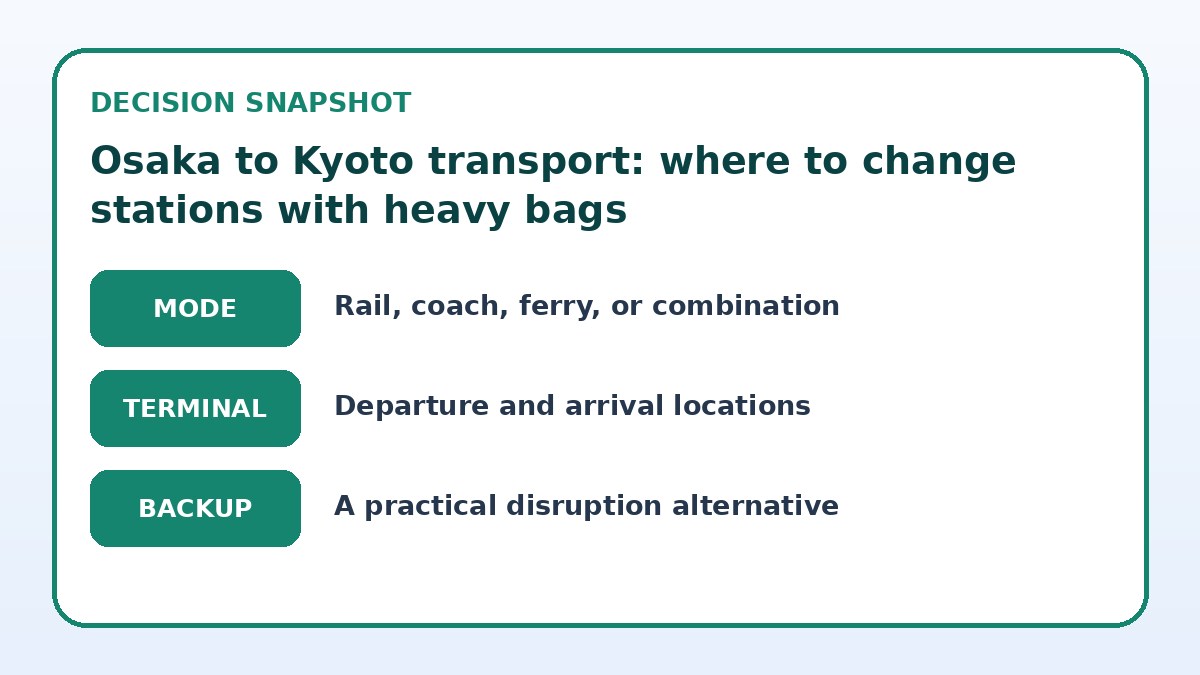
See current options before you compare the details
Availability and final conditions change. Open Trip.com now or keep reading for the practical comparison.
Pick the right arrival and departure stations
Osaka and Kyoto each have several major stations and terminals; which you choose affects how many times you'll handle bags. In Osaka, options include larger hubs and terminals that connect to regional lines; Kyoto's main hub handles most intercity traffic. When you have extra luggage, prefer stations whose layouts minimize platform changes and stair use. Look for stations with multiple entrances and exits close to taxi ranks, elevator clusters, or sheltered drop-off areas so you can get from vehicle to platform with fewer steps and less carrying.
To decide between stations, map the walking route from station exits to your accommodation and note elevation changes, underpasses and staircases. If your hotel is closest to a smaller or side station, it may still be the better choice despite fewer services—shorter last-mile travel often beats a longer train ride plus heavy lifts. Where practical, prioritize stations that explicitly advertise step-free access or barrier-free routes; if the operator's site lacks clear details, contact station customer service or check recent traveler photos and reviews to confirm accessibility.
Train types, transfers and luggage handling considerations
Different train types and services handle luggage differently and the number of transfers directly affects how often you must move bags. Express or limited-stop services usually mean fewer changes and a simpler transfer experience, but you still need to confirm the station platform layout. Local trains often stop at smaller stations closer to hotels but can require switching lines more than once, increasing the burden of carrying or stowing your luggage. Evaluate direct versus connecting options based on total door-to-door time and the effort of each transfer.
Check baggage rules and carriage layouts on operator pages for any limits on large suitcases or required storage areas. Even when trains technically accept luggage, peak times and crowded trains make stowing and accessing bags difficult. If a service has designated luggage zones or larger vestibules, that can be a decisive advantage. When comparing options, weigh the frequency of trains against the comfort of fewer transfers: a slightly longer direct service with room to store bags may be preferable to a faster route that forces multiple platform changes.
| Approach | Best for | Tradeoff to check |
|---|---|---|
| Direct express train between main stations | Travelers who want fewer transfers and can manage luggage to/from station platforms | May involve longer walks inside big terminals and limited storage space during crowded periods |
| Local train plus short taxi at one end | Those seeking a balance of lower cost and reduced carrying for last-mile travel | Requires coordinating two services and may be slower overall than a direct service |
| Taxi or private door-to-door transfer | Groups, elderly travelers, or anyone with very heavy or fragile luggage | Higher cost but minimal transfers and nearly zero carrying; traffic can add unpredictability |
| Luggage-forwarding service with light travel by train | Hands-free travelers who can wait for bags to arrive at the hotel | Bags may arrive hours after you do and you must confirm the hotel accepts deliveries |
Ready to check the option that fits your plan?
Use your exact dates and traveler details so the provider page can show the current total and conditions.
Terminal transfers, taxis and door-to-door alternatives
Sometimes the simplest solution is to avoid public-transfer hassle altogether. Taxis and private transfers take you directly between hotels or from airport terminals to accommodation and eliminate repeated lifts; they are especially useful with many heavy or bulky items, elderly travelers, or tight time windows. When using a taxi, make sure the chosen drop-off and pick-up points at each station are convenient and that drivers can access curbside areas—some busy terminals have designated ranks you should use to avoid long walks. For budget-conscious travelers, combine a short taxi with a single-station train ride to balance cost and convenience.
Luggage-forwarding services let you send bags ahead to your Kyoto hotel, leaving you to travel light by train or taxi. This approach is popular in Japan but requires confirmation on the provider's delivery timing, drop-off procedures, and what paperwork the hotel needs to accept external deliveries. If you plan to forward luggage, schedule the service with enough buffer so bags arrive after your train but before you need them, and verify that your accommodation will hold and deliver them to your room on arrival.
Before you book
- Map exact station exits and confirm elevator locations for both your Osaka departure and Kyoto arrival stations.
- Check the train’s carriage layout and baggage policy on the operator’s booking page for large suitcase rules.
- Decide whether to reserve seats on services offering reservations to secure space for luggage.
- If using taxis, arrange pickup/drop-off at official station ranks to avoid long walks with bags.
- If forwarding luggage, book delivery with a buffer and confirm the hotel will accept and hold the shipment.
- Pack a small day bag with essentials you might need if luggage forwarding is delayed or a transfer is late.
Practical checks before you book
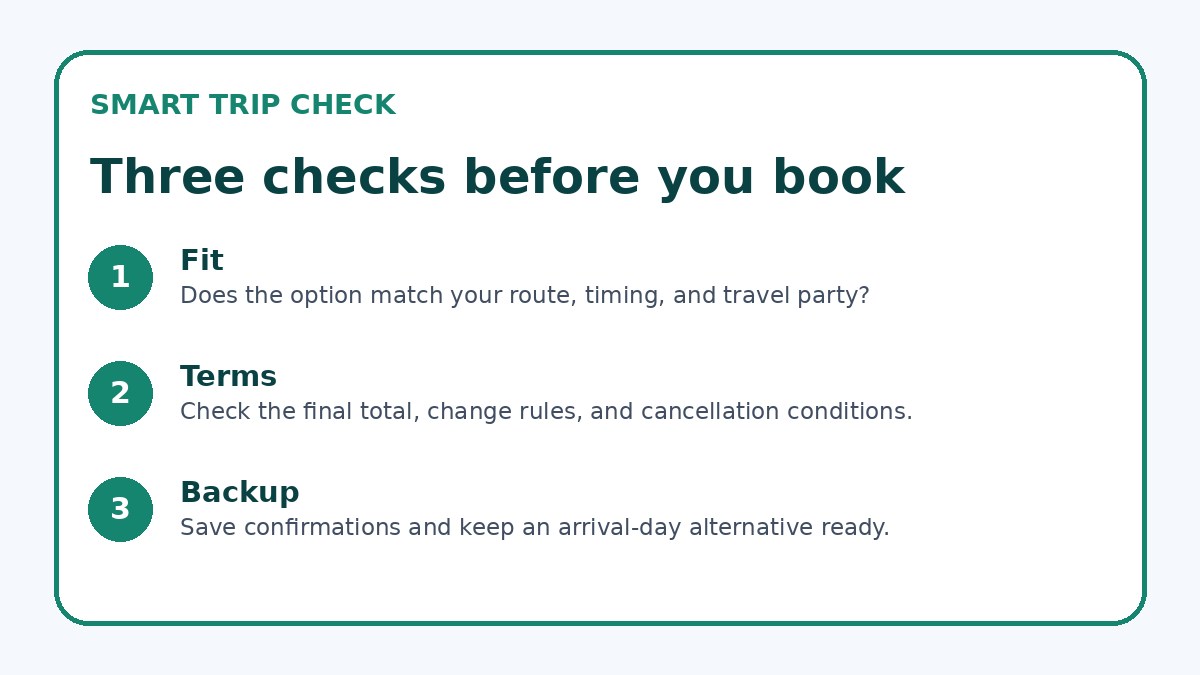
Before purchasing tickets or booking transfers, inspect station maps, elevator locations, and recorded access routes. Look at official operator pages or station diagrams to find which exits connect to taxis, bus bays, and elevators. Confirm whether the trains you plan to use have level boarding or require steps and whether reservations or seat assignments are available—reserved seats reduce the risk of having to stand and juggle luggage. If transfers are needed, tally door-to-door walking distance and the number of stairs or escalators you will face.
Confirm the booking details that change most often on the provider's final page: current train times, platform assignments, luggage restrictions, and any required seat reservations. If you intend to use a luggage-forwarding company or a private transfer firm, verify delivery windows, cancellation terms, and identification requirements for pickup. Trip.com can be used as one place to compare service availability and current conditions, but always cross-check critical station access and baggage details with the operator or booking confirmation before relying on them.
Frequently asked questions
Can I bring oversized suitcases on intercity trains between Osaka and Kyoto?
Most intercity services allow normal checked luggage but rules and available storage differ by operator and train type. Always check the carrier’s baggage policy on the final booking page. Look for mentions of size limits, recommended storage areas, and whether there are dedicated luggage racks or overhead space. If trains show limited space or you travel at peak times, consider seat reservations, a taxi for door-to-door convenience, or a luggage-forwarding service to avoid the risk of having to stand or move bags frequently during the journey.
Where is it easiest to get a taxi with lots of luggage at Osaka and Kyoto stations?
Major station complexes tend to have designated taxi ranks near main exits and covered curbside areas designed for luggage loading. Smaller or side stations may have fewer taxis on hand, but can still be convenient if your hotel is nearby. Check station maps to find the closest official taxi stand and whether it is level with the exit you plan to use. If you require assistance, station staff can usually direct you to the most accessible rank; confirm pickup points in advance with the hotel or transfer provider when possible.
Is luggage forwarding a reliable option between Osaka and Kyoto?
Luggage-forwarding services are commonly used and can be reliable if scheduled correctly, but delivery windows vary by provider and hotel acceptance policies. When using such a service, check pickup deadlines, expected delivery timing, and what identification the hotel needs to receive the bag. Leave a cushion of extra time in case of delays and verify on the provider’s booking page whether same-day or next-day delivery is available for your route. If your schedule is tight or you need immediate access to equipment or valuables, traveling with at least one carry-on is still wise.
Final planning note
When traveling from Osaka to Kyoto with extra luggage, the best option depends on how much carrying you can tolerate, how flexible your schedule is, and whether you prefer lower cost or lower effort. Start by selecting stations that minimize platform changes and provide step-free access, then choose between direct trains, local services plus short taxis, full door-to-door transfers, or luggage-forwarding based on your comfort with handling bags. Always verify train baggage policies, station elevator locations, reservation availability, and any luggage-forwarding details on the provider’s booking page before committing. With a few pre-trip checks and the right mix of station choice and transfer method, you can move between Osaka and Kyoto with far less strain and more predictability.
Continue planning
Check current options and final conditions
Use the provider page to confirm live availability, the final total, cancellation terms, and every condition that matters to your trip.
This evergreen planning guide was created with AI-assisted drafting and a structured quality review. It does not display live prices, schedules, availability, visa guidance, or provider rankings. Verify current details before booking. Some links are affiliate links; we may earn a commission at no additional cost to you.