
If you’re traveling from New York City to Los Angeles for the first time, focus first on choosing the flight pattern and seat that give you the most rest and least stress. For many travelers a nonstop flight is the simplest: shorter total travel time and fewer touchpoints. But a carefully chosen one-stop itinerary can lower perceived fatigue if it shortens a red-eye gap or offers a longer daytime break. Decide whether you prefer to arrive refreshed in the evening or early morning in Los Angeles, then compare departure times, total elapsed time, and layover lengths. Check airline seat maps, legroom specs, and whether the carrier offers inflight Wi‑Fi and power—a few practical details make long-haul connections far more comfortable than the schedule alone.
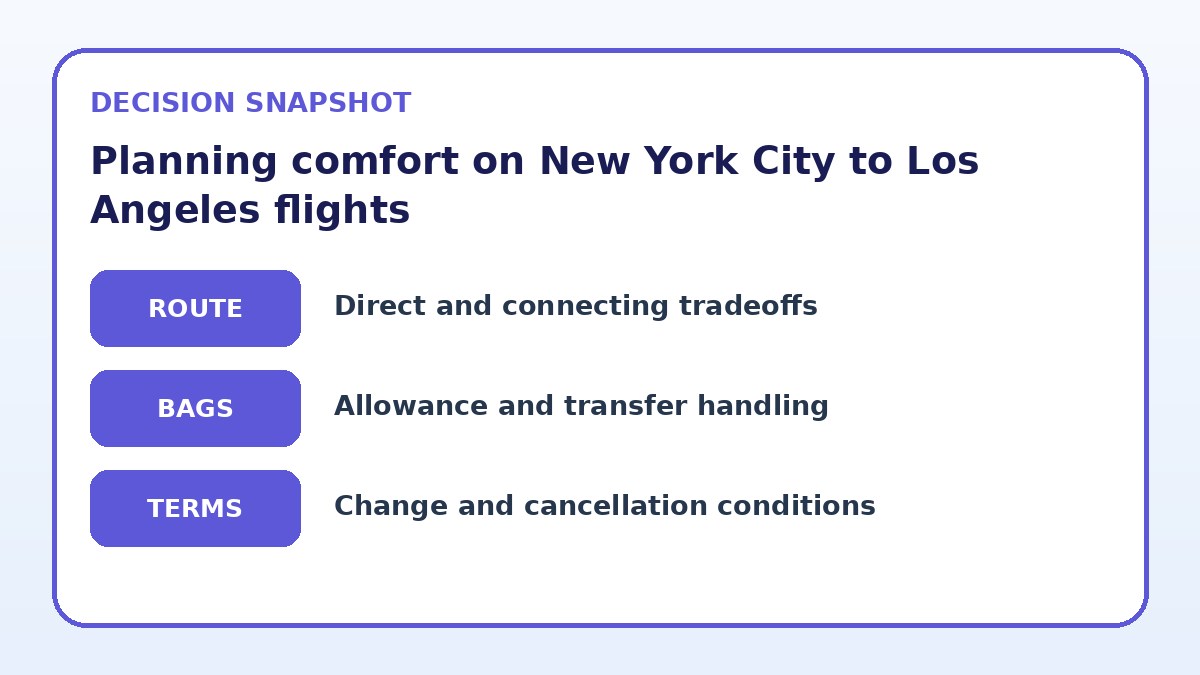
See current options before you compare the details
Availability and final conditions change. Open Trip.com now or keep reading for the practical comparison.
Choosing between nonstop and connecting flights
Nonstop flights are appealing for the straightforward benefit of fewer interruptions: once you board, you’re committed to the single journey. For first-time visitors, that simplicity often reduces stress because there are no extra check-ins, gate changes, or risk of missing a tight transfer. Nonstops also minimize exposure to multiple airport security lines and crowd shifts. However, nonstop departure times or seat options you prefer might be limited, and the nonstop cabin may feel more crowded on popular times of day.
A connecting itinerary gives more schedule flexibility and sometimes wider seat availability at similar fares, and it can be useful if an inbound or outbound time suits your sleep and arrival preferences better. The tradeoff is extra handling: you’ll move between gates, possibly between terminals, and keep an eye on two separate boarding times. If you opt for a connection, favor layovers long enough to navigate the terminal, grab a comfortable snack, and use a restroom without rushing—especially important for travelers who value a calm, predictable journey over marginal savings.
Picking the best seat and cabin for comfort
Seat selection is one of the highest-impact choices you can make before departure. Window seats let you lean during sleep and are less disturbed by aisle traffic, while aisle seats help you stretch your legs and visit the restroom without stepping over neighbors. Exit rows and bulkhead seats typically offer more legroom, but check whether these seats have immovable armrests, restricted under-seat storage, or limited recline. If traveling with a companion and conversation or shared space is important, select seats that keep you together rather than split across a cabin.
Upgrading to a premium economy or domestic first-class cabin increases legroom, recline, and often better meal and service options—worth it when comfort matters more than saving a few dollars. If you prefer not to upgrade, reserve seats nearer the front of the economy cabin for quicker boarding and deplaning. Always verify the seat map on the airline’s official booking page since third-party sources may show outdated charts. When comparing options, factor in power outlets, inflight entertainment, and Wi‑Fi availability if staying connected will affect your comfort or work needs.
| Approach | Best for | Tradeoff to check |
|---|---|---|
| Nonstop flight | Travelers prioritizing simplicity and shorter total travel time | Fewer schedule options and possibly limited preferred seats |
| One-stop itinerary with long layover | Those who prefer a relaxed transfer and time to stretch or nap between flights | Longer total elapsed travel time and more time spent in airports |
| Red-eye overnight flight | Travelers wanting to sleep on the plane and maximize daytime at arrival | Harder to sleep for some passengers; arrival time and circadian impact vary |
| Upgraded cabin or premium economy | Passengers valuing extra legroom, recline, and clearer service amenities | Higher fare cost that must be balanced against comfort benefits |
Ready to check the option that fits your plan?
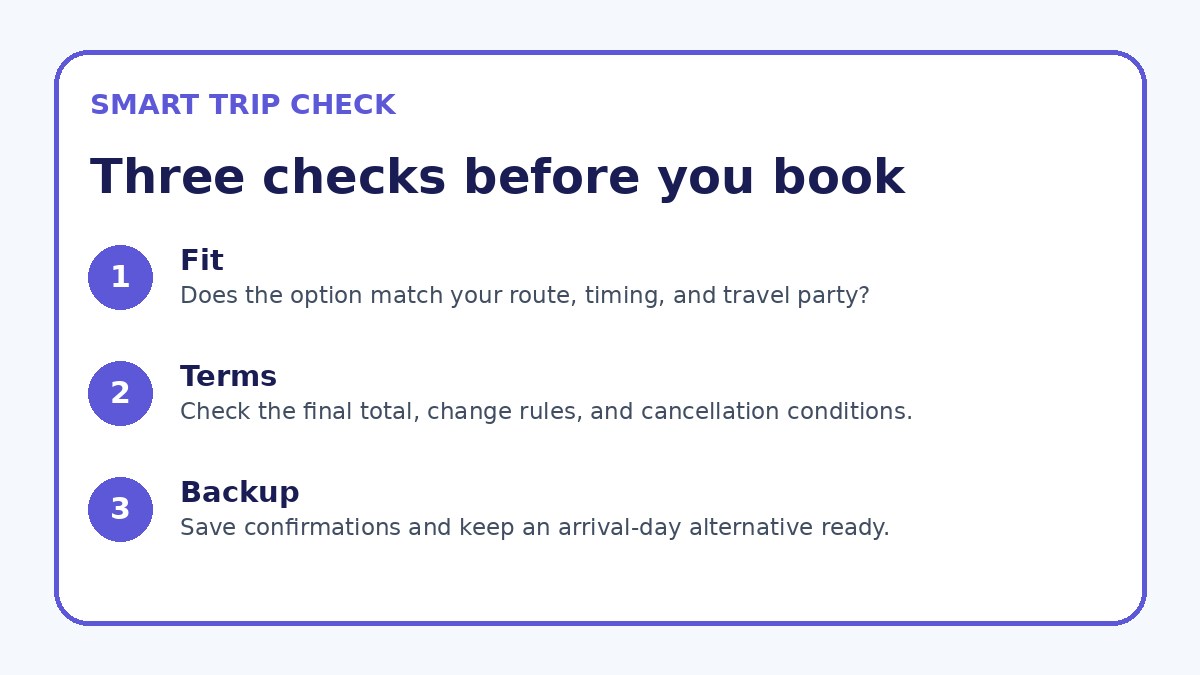
Use your exact dates and traveler details so the provider page can show the current total and conditions.
Timing, sleep strategy, and layover planning
Think about how you want to feel on arrival in Los Angeles: energized and ready for the day, or arriving late to sleep and recover? If you want to land in the evening and sleep that night, pick an afternoon or early evening departure from New York to arrive late local time. For those who want to maximize first-day activity, an early morning arrival works better but requires an overnight flight and careful sleep planning on the plane. Consider how jet lag and the three-hour time difference will affect you and plan naps or meal timing accordingly during the flight.
When a connection is part of your plan, choose layovers that reduce stress rather than shaving minutes. A 60-minute window might be possible at a single terminal but leaves little room for delays; 90–150 minutes is a safer buffer for most domestic connections, and more time is wise when switching terminals. Use layovers as restorative breaks: walk to stretch, hydrate, and do simple stretches. If the airport has lounges available for purchase or via day passes, a lounge can provide a quiet place to rest and recharge without committing to a hotel.
Before you book
- Compare nonstop versus one-stop itineraries and choose the pattern that matches your arrival-energy preference.
- Select your seat on the airline’s official booking page and confirm legroom, recline, and exit-row restrictions.
- Plan for minimum practical connection time—90–120 minutes for most domestic transfers, longer if changing terminals.
- Pack a carry-on comfort kit: neck pillow, eye mask, earplugs/headphones, compression socks, and a lightweight blanket.
- Charge devices, bring a power bank, and download entertainment in case onboard Wi‑Fi is unavailable or spotty.
- Review the airline’s baggage rules and boarding procedures on its final booking page before you travel.
Practical pre-flight and in-flight comforts
Before you leave home, pack a small carry-on with items that improve comfort: layered clothing for temperature swings, a neck pillow, noise-reducing earplugs or headphones, an eye mask, hand sanitizer, and basic toiletries. Keep a printed or digital copy of your itinerary and mobile boarding pass in an easily accessible place. Charge devices fully, bring a power bank, and download entertainment to avoid relying on uncertain inflight Wi‑Fi. Confirm baggage allowances on your carrier’s booking page and consider a single carry-on plus a personal item to keep essentials at hand.
On board, stay hydrated and avoid excessive alcohol and heavy meals that can worsen fatigue. Move your legs periodically and perform simple ankle and calf exercises to promote circulation. Use a light blanket or extra clothing layers for temperature control, since cabin climate can vary. If you have mobility concerns or need assistance between gates, request help from the airline when booking or at check-in; they can advise on minimum connection times and assist you during transfers. For a quick comparison of schedules and seat options, Trip.com can be used to view current availability, but always verify final details on the airline’s booking page.
Frequently asked questions
Is a nonstop flight always the most comfortable choice from New York City to Los Angeles?
Not always. Nonstops reduce touchpoints and the chance you’ll be delayed between flights, which often makes them feel simpler and less stressful. However, comfort depends on factors beyond nonstop status: departure time, seat pitch, cabin crowding, and whether the flight schedule fits your sleep plan. For some first-time visitors, a well-timed one-stop itinerary that allows a daytime break or an easier red-eye may feel less tiring than a nonstop that forces you into an unfavorable sleep pattern. Check seat maps and departure times when deciding.
How long should I plan for a layover if I choose a connecting flight?
For domestic connections between New York City and Los Angeles, a typical safe range is 90–150 minutes, depending on airport layout and whether you need to change terminals. Shorter connections can work if both flights are on the same carrier and the airport is efficient, but they allow little margin for delays, security lines, or gate changes. If you need to retrieve luggage, change terminals, or want time to rest or eat, allow extra time. Always verify the minimum connection time listed by the operating airline before booking.
What should I bring onboard to make a five- to six-hour coast-to-coast flight more comfortable?
Bring a small hand-carry with layered clothing, a compact neck pillow, an eye mask, earplugs or noise-cancelling headphones, and a refillable water bottle to stay hydrated after security. Pack basic toiletries and moist towelettes for freshness, and compression socks if you’re concerned about circulation on longer flights. A charger or power bank and pre-downloaded entertainment will avoid reliance on inflight systems. If you have special medical or mobility needs, carry relevant documentation and notify the airline ahead of time for assistance.
Final planning note
Planning a comfortable New York City to Los Angeles flight as a first-time visitor comes down to three main choices: flight pattern (nonstop versus connection), seat and cabin, and timing relative to your sleep preferences. Start by deciding how you want to arrive—ready for the day, or arriving late to sleep—then use that preference to filter schedules. Reserve thoughtful seats, allow sensible connection buffers if you’re stopping, and pack a carry-on comfort kit that addresses sleep, noise, and hydration. Verify all seat maps, baggage rules, and minimum connection times on the airline’s booking page before finalizing. Small, deliberate choices made before you book will deliver the most consistent improvement in comfort on the coast-to-coast trip.
Continue planning
Check current options and final conditions
Use the provider page to confirm live availability, the final total, cancellation terms, and every condition that matters to your trip.
This evergreen planning guide was created with AI-assisted drafting and a structured quality review. It does not display live prices, schedules, availability, visa guidance, or provider rankings. Verify current details before booking. Some links are affiliate links; we may earn a commission at no additional cost to you.