
If you’re a first-time traveler moving between London and Paris and want a comfortable long-haul connection, start with three clear priorities: minimize stressful transfers, preserve sleep and rest windows, and guarantee easy luggage and boarding rules. For most visitors that means weighing direct crossings against one-stop itineraries that offer better schedule fit or lower jet-lag risk. Comfort isn’t just seat pitch — it’s arrival time, airport transfer ease, baggage policy, and the predictability of connections.
Decide whether you value a single fast hop (train or short flight) or prefer a connection that spaces out travel time for sleep, meals, or sightseeing. Below you’ll find practical decision criteria to compare options, tradeoffs to expect, and a checklist to use before booking. Where provider-specific facts matter — for example baggage allowances, transfer times between terminals, or minimum connection times — check the airline, airport, or train operator’s official booking page before you finalize a purchase.
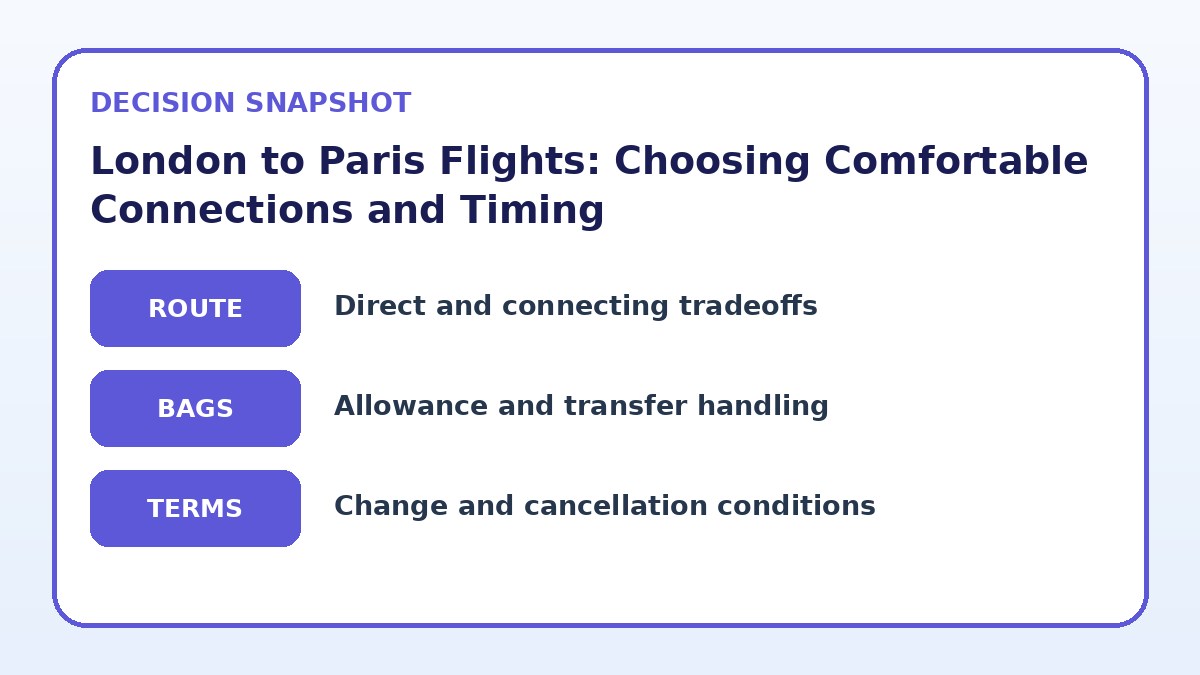
See current options before you compare the details
Availability and final conditions change. Open Trip.com now or keep reading for the practical comparison.
Direct options versus connecting flights: the comfort tradeoff
Direct options (short flights or the Eurostar train) are often the quickest and simplest for first-time visitors because they remove the risk of missed connections and reduce the mental load of navigating multiple airports or terminals. A direct train or nonstop flight keeps luggage movement simpler and typically allows you to plan transfers to and from city centers with fewer unknowns. For travelers prioritizing low-stress transfers and straightforward logistics, a direct option usually delivers the most predictable experience.
Connecting itineraries can be more comfortable if they let you travel on preferred hours, break an overnight journey into manageable segments, or use an airline and cabin class that improves sleep quality. But comfort gains from a connection require careful matching of layover length, transfer complexity, and baggage rules: a long layover that allows rest may be worth it, whereas a tight eight- to nine-hour door-to-door schedule with two airports could become exhausting. Always weigh the total journey rhythm rather than single-leg flight times.
Choosing transfer times, airports, and ground logistics
Account for realistic minimum connection times plus margin for delays. If your itinerary switches airports or requires a customs/immigration step, add at least an extra hour or two beyond published minimums, and double-check public transport options or shuttle availability between airports. For arrivals late at night or early morning, verify that onward ground transport is running; otherwise, the comfort of your connection may evaporate if you face a long, cold wait or a costly taxi.
When comparing airports, consider where you’ll start and end in each city. A flight into or out of a peripheral airport can add taxi or train time and logistical complexity that erodes the perceived comfort of a cheaper connection. Choose airports that have straightforward transit links, reliable luggage transfer, and quick immigration lanes when possible. For first-time visitors, prioritizing a simpler door-to-door itinerary often creates a calmer travel day than chasing a small savings on airport choice.
| Approach | Best for | Tradeoff to check |
|---|---|---|
| Direct train or nonstop flight | Travelers prioritizing simplicity and minimal transfers | May offer less schedule flexibility and fewer options for night rest preferences |
| Single-ticket connecting flight | Those who want through-checked baggage and airline rebooking protections | Can still include tight airport transfers and may require terminal changes |
| Separate tickets with long layover | Visitors who want to break the journey for rest or short sightseeing | Risk of luggage recheck and no automatic protection if an earlier leg is delayed |
| Red-eye or overnight connection | Travelers aiming to maximize daytime in Paris and sleep en route | Can be hard to rest well in airports or economy seats; consider lounge access or upgrade |
Ready to check the option that fits your plan?
Use your exact dates and traveler details so the provider page can show the current total and conditions.
Seats, sleep, and onboard comfort choices that matter
Seat selection and cabin class affect comfort more than small schedule differences. For long daytime transfers or flights where you need to rest, consider booking a seat with extra legroom, a bulkhead, or in a cabin class with recline that allows sleep. If you plan to sleep on a daytime flight, bring items that aid rest: a travel pillow, light blanket, eye mask, and earplugs or noise-cancelling headphones. Small comfort investments often pay off in energy and patience during connections.
If you have a lengthy layover, check whether the connecting airport has lounges, quiet rooms, or paid resting areas and decide whether paying for lounge access improves your experience. Lounges can offer showers, reliable Wi‑Fi, and quieter spaces which are invaluable after a long leg. For very short layovers choose seats and boarding groups that get you disembarked and through transfer security faster; for longer waits opt for amenities that restore energy and reduce the stress of continuing travel.
Before you book
- Confirm on the provider’s booking page whether luggage is checked through to final destination for single-ticket itineraries.
- Add at least 60–120 minutes extra to published minimum connection times when planning airport-to-airport transfers.
- Check local ground-transport schedules and book a transfer or shuttle if arriving outside public-transport hours.
- Select seats with extra legroom or a preferred boarding group if you need space to rest on board.
- Compare door-to-door travel time (including transfers and security) rather than focusing solely on flight time.
- Buy travel protection or flexible tickets if using separate tickets or making a multi-leg itinerary with tight timing.
Booking strategies and what to verify before you pay
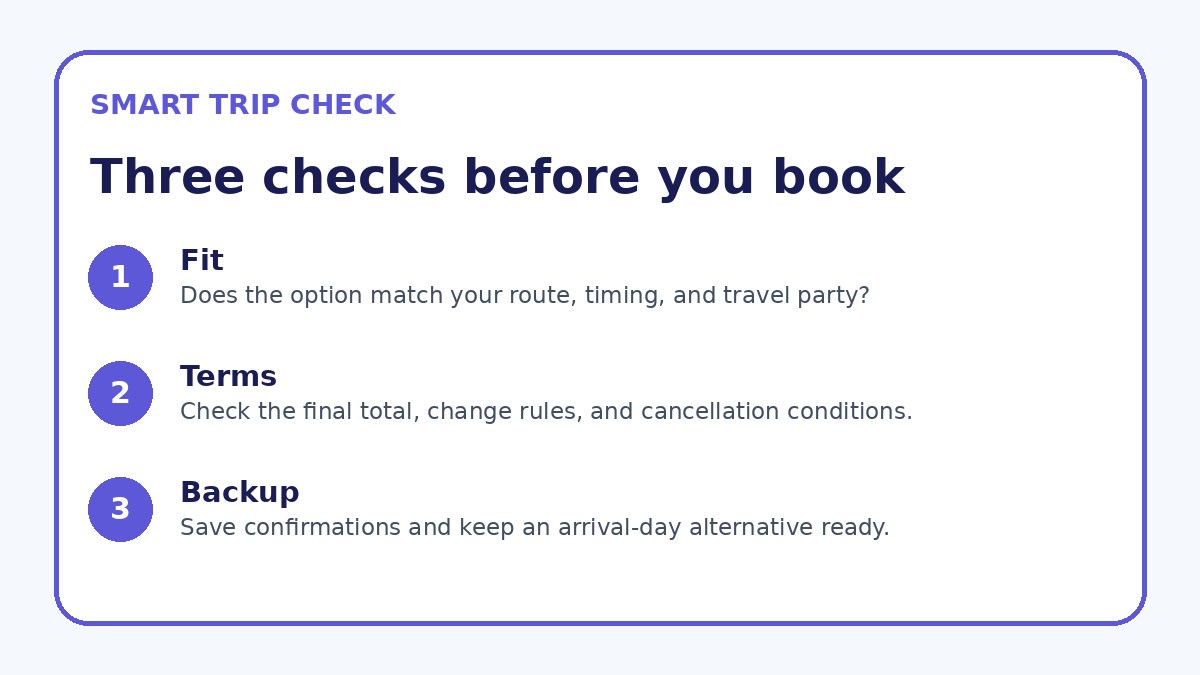
When you find an itinerary you like, verify these specifics on the airline or train operator’s official booking page: baggage allowance and whether bags are checked through, exact transfer requirements between terminals or stations, minimum connection times shown, change and cancellation rules, and boarding group or seat policies. If the trip uses separate tickets, confirm baggage recheck procedures and whether missed connections are covered; if not, build larger buffers into your schedule or buy protection that covers missed onward travel.
Consider booking a single-ticket itinerary for simplest resolution if disruptions occur — carriers typically handle rebooking within single-ticket trips. But if a single-ticket option forces an unbearable departure time, choose a connecting plan with long, comfortable layovers and buy travel protection. Finally, compare total door-to-door time and personal energy rhythms rather than just headline flight durations; comfort for first-time visitors often means less rushing and a predictable, human-paced day.
Frequently asked questions
Should first-time visitors choose the Eurostar train or a flight between London and Paris for comfort?
Comfort depends on your priorities. The Eurostar departs from central stations and avoids airport security and long transfers, which is comfortable if you prefer consistent city-center access and a railway-seat experience. Flights are quicker airborne but add time for airport transfers and security; they can be preferable if you have loyalty benefits, specific seat upgrades, or onward flights. For either choice, check current schedules, station or terminal locations, and luggage policies on the operator’s official pages before booking.
How much layover time should I allow for a comfortable connection between different airports?
For connections that involve changing airports or passing immigration, allow significantly more time than the minimum stated: typically plan an extra 60–120 minutes as a buffer. Consider transit time between airports, possible traffic or train waits, time to collect and recheck baggage, and the need to clear security or immigration. If public transport between airports is infrequent at your arrival time, add additional margin or pre-book a reliable transfer to avoid stress.
What should I verify about baggage rules when my itinerary includes a connection?
On the booking page verify whether your baggage is checked through to your final destination or requires collection and recheck at the connection point. If you hold separate tickets, assume you may need to collect and re-check bags unless the carriers explicitly state otherwise. Also check size and weight limits, fees for excess or cabin bags, and whether special items (instruments, strollers) require advance notice. Confirming these details prevents surprises and helps decide whether to choose a single-ticket itinerary for simplicity.
Final planning note
Planning a comfortable London to Paris connection for first-time visitors means shifting focus from pure flight time to the human experience of travel: fewer stressful transfers, predictable arrival times, and practical rest opportunities. Compare direct and connecting options by total door-to-door time, airport or station locations, baggage handling, and sleep potential. Verify key details on the operator’s booking page — baggage rules, minimum connection times, terminal transfer logistics, and rebooking policies — before purchase. Use the checklist to reduce surprises, and favor itineraries that match your energy rhythms and comfort needs rather than tiny schedule advantages.
Continue planning
Check current options and final conditions
Use the provider page to confirm live availability, the final total, cancellation terms, and every condition that matters to your trip.
This evergreen planning guide was created with AI-assisted drafting and a structured quality review. It does not display live prices, schedules, availability, visa guidance, or provider rankings. Verify current details before booking. Some links are affiliate links; we may earn a commission at no additional cost to you.