
For a short trip to Seoul, couples often want a base that maximises experience while minimising transit time and hassle. The practical answer: choose a centrally located neighbourhood with one or two quick subway lines to key sights, near a variety of restaurants and at least one quiet street or park for downtime. Prioritise a mid-size hotel or a serviced apartment that offers a comfortable bed, effective soundproofing, reliable Wi‑Fi, and flexible check-in options. That combination keeps travel within the city short, lets you split days between sightseeing and relaxed meals, and reduces the stress of tight itineraries. Below you’ll find clear decision criteria, tradeoffs between areas and property types, and an actionable checklist to follow before you book.
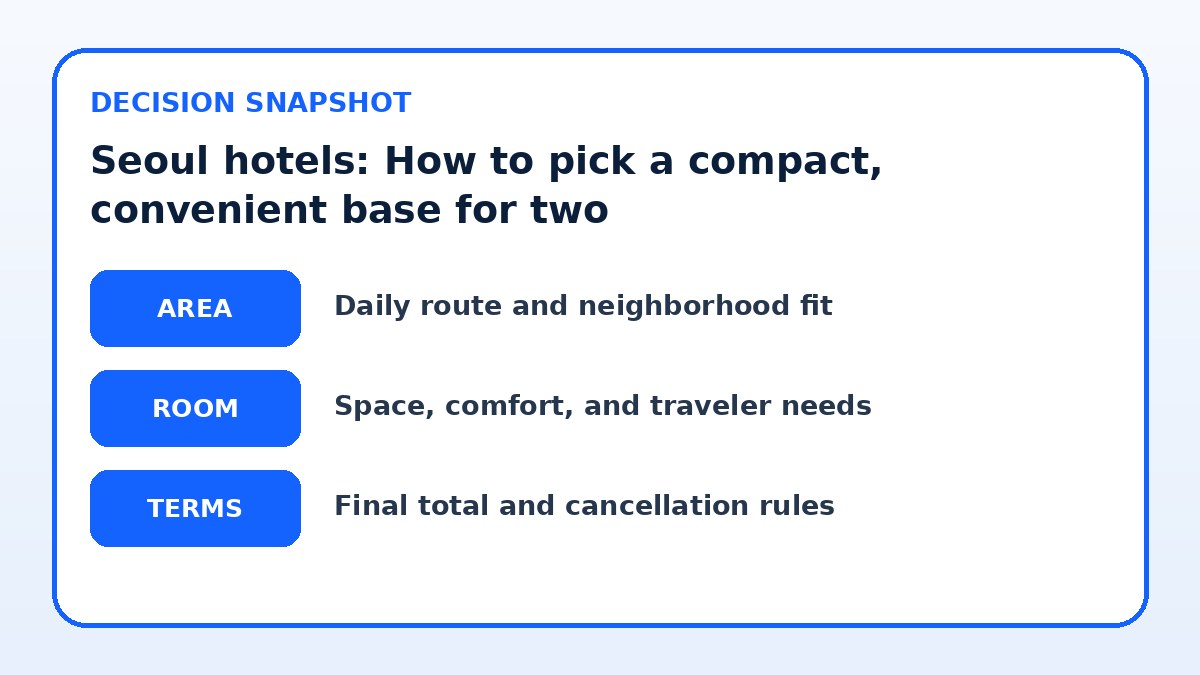
See current options before you compare the details
Availability and final conditions change. Open Trip.com now or keep reading for the practical comparison.
What to prioritise when you have only a few days
When your time in Seoul is short, every transit minute counts. Prioritise location first: a hotel near an interchange or a single-line walkable route to the areas you most want to visit will save hours. After location, focus on sleep quality and convenience—soundproofing, blackout curtains, and a reliable lift or easy stairs matter more than a bigger room you won’t use. Finally, check on small but critical services: luggage hold, late check-in, and an honest breakfast option so you can get out early without searching.
Balancing these priorities reduces day-to-day friction. A slightly smaller room in a central area often results in more time seeing the city compared with a larger room on the outskirts. For couples, factor in simple comforts that let you enjoy evenings together—nearby cafés, a rooftop view, or an accessible park. Look for a practical combination rather than trying to tick every luxury box; with a short stay, mobility and tranquility usually deliver the most satisfaction.
Neighborhoods that make sense for short romantic breaks
Myeongdong sits in the city centre and is convenient for shopping, street food, and quick links to major subway lines—useful if you want to see a lot without long commutes. Jongno (Insadong area) is quieter in parts and closer to historic attractions, making it a good base for daytime cultural walks and more relaxed evenings. Hongdae or Hapjeong are lively choices with nightlife and cafes; they work well if you want youthful energy and entertainment on short notice, though they can be noisier at night.
Gangnam offers a different vibe: slick dining, plentiful taxis, and more upmarket hotels, which can be handy if you plan business-style convenience or late-night restaurant options. Consider Yeouido if you prefer riverside walks and calmer nights, especially if your schedule includes a morning or sunset stroll. In all areas, check how far the hotel is from the nearest subway exit and whether the walk is along busy roads or quiet lanes—those small details shape how relaxed your short stay will feel.
| Approach | Best for | Tradeoff to check |
|---|---|---|
| Central compact hotel (Myeongdong/Jongno) | Maximising sightseeing time and easy dining choices | Smaller rooms and busier streets; possibly higher rates per square metre |
| Trendy neighborhood stay (Hongdae/Gangnam) | Nightlife, cafés, and a vibrant local scene | More noise at night and busier evenings; can feel less tranquil for early mornings |
| Serviced apartment or aparthotel | Couples who want a mini-kitchen or more living space | Often located a short commute from central sites; may have less hotel-like services |
| Quieter riverside or residential base (Yeouido/Ikseon-dong edges) | Relaxed evenings, scenic walks, and quieter nights | Longer transit times to certain attractions and fewer late-night dining choices nearby |
Ready to check the option that fits your plan?
Use your exact dates and traveler details so the provider page can show the current total and conditions.

Property type and amenities: tradeoffs that matter
For a brief stay, a hotel room with consistent housekeeping, a small fridge, and reliable Wi‑Fi will often be more valuable than suites with extra living space you won’t use. Serviced apartments or aparthotels can be tempting for kitchen access, but they’re worth choosing only if you plan to prepare at least one meal or need extra space for bags. Guesthouses and pensions sometimes offer a cozier, more local experience, yet they can vary greatly in soundproofing and privacy—inspect recent guest notes and photos closely on the booking page before committing.
Look beyond the marketing and confirm specifics that change frequently: bed type, window orientation (street or inner courtyard), elevator availability, and luggage storage policy. If late arrival is likely, verify 24-hour front desk service or clear late check-in instructions. For couples, consider small extras that improve comfort—bathroom layout, in-room safe, a kettle or coffee maker, and available blackout curtains—because these affect restful evenings and easy mornings on a short itinerary.
Before you book
- Map the hotel’s walking route to the nearest subway exit and test it on a map app at your expected time of day.
- Confirm bed type, exact room layout, and window orientation on the booking page before reserving.
- Check the provider’s stated check-in and check-out times and verify late-arrival procedures if you’ll arrive after typical hours.
- Read multiple recent guest comments for recurring issues (noise, elevator, cleanliness) and note patterns rather than single reports.
- Verify cancellation, modification terms, and whether the rate includes breakfast or any mandatory local fees on the final booking screen.
- Ensure the hotel offers luggage storage or early check-in options if you have an early arrival or late departure.
How to compare options and what to verify before booking
When comparing Seoul hotels, make a short checklist and score each property by location, noise risk, transit convenience, and essential amenities. Use maps to time typical walks from the hotel to the subway exits and to at least two restaurants or cafés you’d like to try. Read recent guest comments with attention to recurring issues (noisy nights, unreliable water pressure, or slow elevators) rather than isolated positive anecdotes. If you see a pattern of complaints about a specific factor important to you, discount that property unless the hotel explicitly confirms changes on its booking page.
Before hitting reserve, verify several things on the provider’s final booking page: exact bed type, cancellation and modification rules, check-in/out times, whether the room shown is guaranteed or subject to change, and if there are any mandatory local taxes or registration requirements. Trip.com can be used to compare availability and options, but always confirm those property-specific details on the hotel’s own or the booking page to avoid surprises. For peace of mind on a short trip, pick clarity over a marginally cheaper or unclear deal.
Frequently asked questions
Which Seoul neighborhood is most practical for a two-night couples' visit?
For a two-night stay, pick a central neighbourhood that shortens travel between sights and mealtimes. Areas with good subway access—Myeongdong, Jongno, or near major interchange stations—reduce transfer time and let you return for a mid-afternoon rest. If you prefer nightlife and cafés, Hongdae or Gangnam work but expect more noise. Assess what you’ll do most (sightseeing vs. dining and bars) and choose a base that aligns; always map walking times rather than relying solely on distance.
Should couples choose a larger room farther out or a smaller central room?
For short stays, a smaller central room usually yields more usable time in the city, letting you spend evenings together exploring rather than commuting. Larger rooms farther out give space but cost you transit minutes that are hard to recoup on a brief trip. If privacy or extra workspace is essential, weigh whether the extra travel will diminish your time together. Wherever you choose, confirm room dimensions, bed arrangement, and noise levels on the booking page so the space matches your needs.
What hotel amenities are most useful for couples on a short Seoul trip?
Prioritise amenities that improve comfort and convenience: clear check-in/out policies, luggage storage, soundproofing, reliable Wi‑Fi, and a comfortable bed. A small in-room fridge, kettle or coffee maker, and blackout curtains are high-impact for short stays. If you expect late arrivals, a 24-hour front desk matters. For couples planning to dine out frequently, on-site breakfast can speed mornings, but it’s less important than location and quiet for restful nights.
Final planning note
When couples have only a short time in Seoul, practical choices beat headline luxury. Aim for a central, well-connected base with clear service details, good sleep conditions, and easy access to food and evening options. Decide first on the neighbourhood that aligns with your plan—sightseeing, dining, or nightlife—then pick a property type that supports comfort and minimal transit. Before you book, verify concrete details on the provider’s final page: bed type, cancellation policy, check-in rules, and any extra fees. With those confirmations, you’ll spend less time coordinating and more time enjoying Seoul together.
Continue planning
Check current options and final conditions
Use the provider page to confirm live availability, the final total, cancellation terms, and every condition that matters to your trip.
This evergreen planning guide was created with AI-assisted drafting and a structured quality review. It does not display live prices, schedules, availability, visa guidance, or provider rankings. Verify current details before booking. Some links are affiliate links; we may earn a commission at no additional cost to you.