For a business trip from Seoul to Gangneung, start by deciding the priority for the travel day: speed, reliability, workability (onboard connectivity and workspace), or door-to-door simplicity. If minimizing risk of delays and maximizing time to work or rest are most important, compare express/train options against highway bus and private transfer choices. Gather the actual departure and arrival points, how each option interfaces with your meeting schedule in Gangneung, and the contingency plans you will accept if connections shift. Pack a small day-bag with chargers, noise-cancelling earphones, printed and digital confirmations, and a plan for last-mile transit at the Gangneung end. Below you’ll find clear tradeoffs, what to verify on provider pages before you book, and a short checklist to finalize a reliable travel day that keeps your business schedule on track.
See current options before you compare the details
Availability and final conditions change. Open Trip.com now or keep reading for the practical comparison.
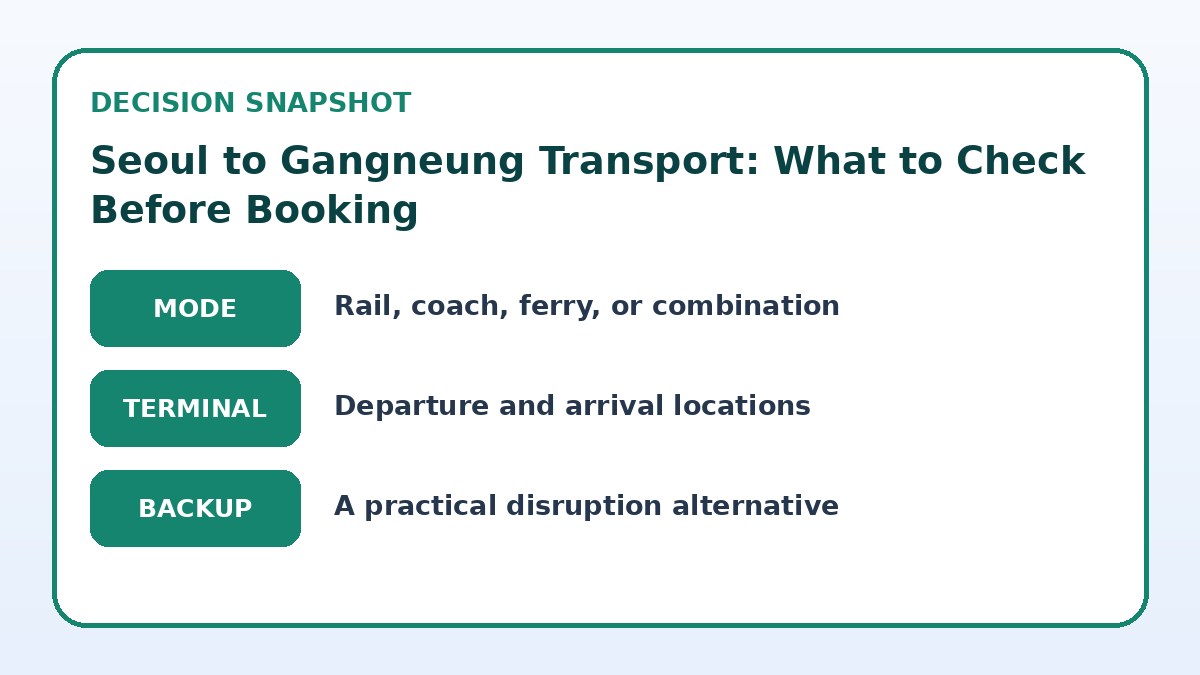
Compare transport modes and what matters for business travelers
The main choices between Seoul and Gangneung are rail (including higher-speed and conventional services), long-distance bus, and private vehicle/transfer. For business travel, evaluate each by travel-day metrics: expected variability in schedule, ability to work while moving, luggage handling, and ease of reaching your Gangneung meeting location. Trains tend to offer a calmer environment and reserved seating; buses may provide more routes directly between districts; private transfers give door-to-door convenience but require confident timing with traffic factors.
When comparing modes, ask yourself practical questions: Will you need stable internet to join calls? Do you want a single-seat reservation so you can guarantee a quiet workspace? Are you carrying important documents or equipment that require secure storage? Use those answers to rank speed, predictability, and convenience, then check operator pages or comparison platforms like Trip.com to confirm the exact timetable, seat types, and any onboard amenities before booking.
Timing and schedule verification: what to check before you book
Always verify the exact departure and arrival locations on the provider’s final booking page: stations with similar names, different terminals, and platform changes can add unexpected transit time. Look for real-time schedule notes that indicate seasonal adjustments or special operating days. For services that show both direct and connecting options, compare total door-to-door time rather than just in-vehicle time. Build in buffer time for security procedures, station navigation, and possible short delays so you arrive at your first meeting relaxed.
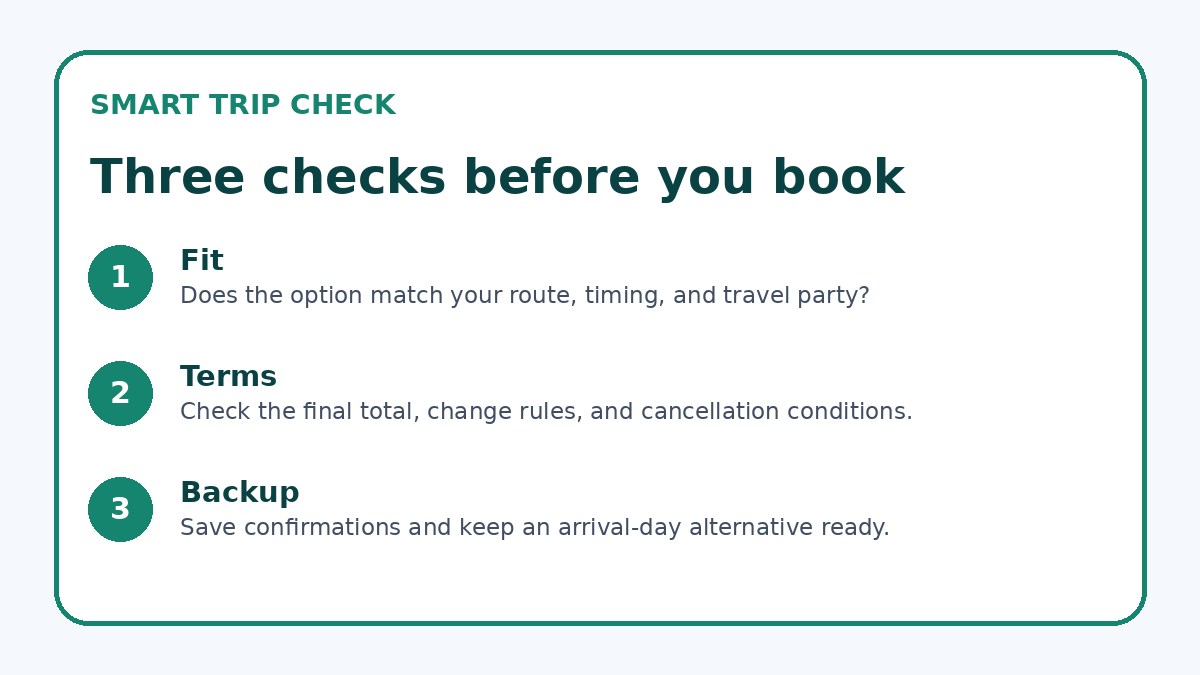
If your schedule includes morning or evening peak travel, consider earlier departures to avoid congestion and to preserve slack in the schedule. For any option that involves a transfer—walks between platforms, changes of terminal, or a last-mile taxi—map those connections and estimate realistic transfer times. On the booking page check baggage allowances, refund and change policies, and pickup/drop-off points; these details determine how flexible your travel day will be if meetings shift.
| Approach | Best for | Tradeoff to check |
|---|---|---|
| Reserved express train | Business travelers prioritizing predictable schedule and a stable onboard workspace | May require reaching a specific station; less door-to-door flexibility if your meeting location isn't near the station |
| Long-distance highway bus | Direct routes from particular districts that minimize transfers | More exposed to traffic variability and generally a less private, less quiet workspace |
| Private transfer or taxi | Door-to-door convenience with luggage handling and simplified connections | Subject to road congestion and usually less predictable travel times during peak traffic |
| Hybrid: train plus local taxi | Balancing fast intercity travel with flexible last-mile routing to a specific meeting location | Requires coordinating two providers and planning realistic transfer time between services |
Ready to check the option that fits your plan?
Use your exact dates and traveler details so the provider page can show the current total and conditions.
Onboard workability and comfort for productive travel
If you intend to work en route, test connectivity expectations: read provider notes about onboard Wi‑Fi reliability and whether power outlets are common on the service class you plan to book. Bring a small travel router or a mobile hotspot if uninterrupted internet is essential, and pack a compact battery bank for devices. Choose reserved seats in quiet cars or seats with table space if you’ll be using a laptop; consider noise-cancelling headphones for calls, and have USB cables easily accessible in your day-bag.
Also consider posture and comfort: for long rides, a seat with more legroom and recline reduces fatigue before meetings. If you must join video calls, check the lighting and background you’ll have on the move; otherwise schedule voice calls only or save intensive synchronous work for waiting time at stations. Keep printed confirmation of reservations and a screenshot of the provider’s booking terms in case a connection or boarding policy needs clarification during the travel day.
Before you book
- Confirm exact departure and arrival station names and terminal details on the provider’s booking page.
- Reserve a seat class with power outlets and sufficient table space if you will work during the trip.
- Screenshot or print booking confirmations, change/cancellation rules, and the provider’s contact number.
- Plan two time buffers: one for leaving Seoul and one for arrival before your first meeting.
- Pack a compact hotspot or local SIM, a battery bank, chargers, and noise-cancelling headphones for calls.
- Identify at least one alternative last-mile option in Gangneung and note the estimated transfer time.
Contingency planning and last-mile strategies in Gangneung
Prepare a short contingency playbook: alternate later departures, local taxi apps, or car-hire options to bridge unexpected delays. Identify one reliable local transfer method from the Gangneung arrival point to your meeting address—whether a short taxi ride, shuttle, or pre-arranged pickup—and confirm estimated transfer time with your driver if you pre-book. If your meeting cannot shift, leaving earlier from Seoul or choosing a mode with smaller delay variance can be worth an earlier departure.
Finally, collect local contact points: a nearby coworking space or hotel lobby where you can use a quiet workspace if your arrival is earlier than expected, and the phone numbers for station information and your transport provider. On the booking page, verify cancellation and change rules so you know the cost and flexibility of switching to a later service. This reduces stress on the travel day and ensures you can respond quickly to schedule changes without losing control of your meeting commitments.
Frequently asked questions
How do I choose between a train and a highway bus for a business day trip?
Think about what you lose if something runs late. Trains often offer reserved seating and a quieter environment for focused work, which helps keep your schedule predictable. Buses can be convenient for direct district-to-district routes but are more vulnerable to highway congestion. Compare total door-to-door time, not just in-vehicle time, and verify departure/arrival points and transfer needs on the carrier’s booking page before you commit. If uninterrupted connectivity is vital, prioritize the option with the most reliable onboard facilities or bring your own mobile hotspot.
What should I verify about onboard amenities before booking?
Check whether the reservation guarantees a seat (versus free seating), whether power outlets are available at your seat, and whether the provider advertises onboard Wi‑Fi or allows mobile hotspots. Review luggage rules so your briefcase or equipment is securely stowed. For services that offer multiple classes or car types, confirm the exact car or seat category on the booking page because amenity availability can vary within the same operator. If the booking page is unclear, contact the provider directly to avoid surprises on the travel day.
How much extra time should I allow for transfers and unexpected delays?
For business travel, allow at least one comfortable buffer for station navigation, security checks, and boarding—often 20–40 minutes depending on station size and time of day. Add a second buffer for potential in-transit delays before your first meeting in Gangneung, which could range from 30–60 minutes depending on your tolerance for risk. If your meeting is time-critical, choose an earlier departure or a mode with smaller variability rather than relying on minimal planned buffers. Double-check station layouts and local taxi availability so your buffers are realistic.
Final planning note
A reliable Seoul to Gangneung transport plan for business travel balances your priorities—speed, predictability, onboard workability, and door-to-door convenience. Start by deciding which of those matters most, then verify the concrete details on the provider’s booking page: exact station names, seat reservations, onboard amenities, transfer points, and the change or cancellation rules you might need. Build practical buffer times into both departure and arrival, pack for productivity and contingencies, and identify at least one solid last-mile option in Gangneung. With those steps you’ll reduce day-of stress and keep your schedule in your control, whether you work on the move or use travel time to rest before meetings.
Continue planning
Check current options and final conditions
Use the provider page to confirm live availability, the final total, cancellation terms, and every condition that matters to your trip.
This evergreen planning guide was created with AI-assisted drafting and a structured quality review. It does not display live prices, schedules, availability, visa guidance, or provider rankings. Verify current details before booking. Some links are affiliate links; we may earn a commission at no additional cost to you.