
Practical answer first: for couples aiming to stretch comfort and value, target Seoul’s shoulder-season windows—late March to early May and October to mid-November—then shop fares and hotel rates 8–12 weeks before departure. Those windows give you milder weather than winter or summer and fewer peak-tour crowds than high season, which often makes it easier to find flexible room types, quieter attractions, and dinners without long waits. When you compare options, prioritize refundable or changeable booking terms, central neighborhoods that minimize transit, and a balance between sightseeing and slow, romantic time. If a specific date or festival matters, lock it earlier; otherwise use the shoulder-season timing above and check current deals on major booking sites (Trip.com is one place to compare availability) before finalizing.
See current options before you compare the details
Availability and final conditions change. Open Trip.com now or keep reading for the practical comparison.
Why shoulder seasons work for couples
Shoulder seasons compress many tradeoffs couples weigh: milder weather for strolling hanok neighborhoods, lower crowd levels at popular temples and palaces, and generally better mood for leisurely meals. Without the extremes of summer heat and winter cold, you can plan longer daytime walks and a mix of indoor and outdoor experiences without dedicating entire days to weather recovery. That relaxed tempo suits couples who prefer conversation, photography, and unhurried dining rather than ticking off a long list of attractions.
From a deal perspective, shoulder seasons often create modest pricing softening across flights and hotels because demand is below peak. That doesn’t guarantee a lower booking cost week to week, but it usually multiplies options: refundable room types, mid-range boutique hotels, and weekday package availability. For couples, the key advantage is choice—you can prioritize room type, location, or added perks like late checkout rather than settling for the only available option during peak months.
How to compare transport and flight options
When searching for flights, compare direct and connecting itineraries for total door-to-door time, convenience, and what you value most. Direct flights save time and can be worth a premium if you only have a short trip, while well-timed connections may significantly reduce price or open better departure times. Look for flight arrival times that let you check into your hotel and still enjoy an evening walk in a neighborhood you want to explore, and verify baggage and change policies on the carrier’s final booking page.
Within Seoul, couples should balance neighborhood choice with transit convenience. Seoul’s subway is efficient and often places you within a short ride of most attractions, but staying near a single-line transfer hub can reduce walking with luggage at arrival and departure. When comparing hotels, map walking times to the nearest subway station, check late-night transit options if you plan evening strolls, and verify whether the property lists an elevator and quiet room locations—details that affect comfort more than star ratings.
| Approach | Best for | Tradeoff to check |
|---|---|---|
| Book early and lock flexible rates | Couples with fixed dates who value cancellation protection | Often pays a premium but reduces stress if plans change |
| Book closer to travel during shoulder season | Flexible couples chasing last-minute availability and variety | Risk of narrower choices for specific room types or seats |
| Choose central hotel and fewer transit moves | Couples who prioritize walking, dining, and evening leisure | May cost more per night but saves time and transit hassle |
| Split stay between two neighborhoods | Couples wanting variety—culture and nightlife or food scenes | Adds packing and transit time, reducing relaxed hours |
Ready to check the option that fits your plan?
Use your exact dates and traveler details so the provider page can show the current total and conditions.
Timing bookings and what to verify
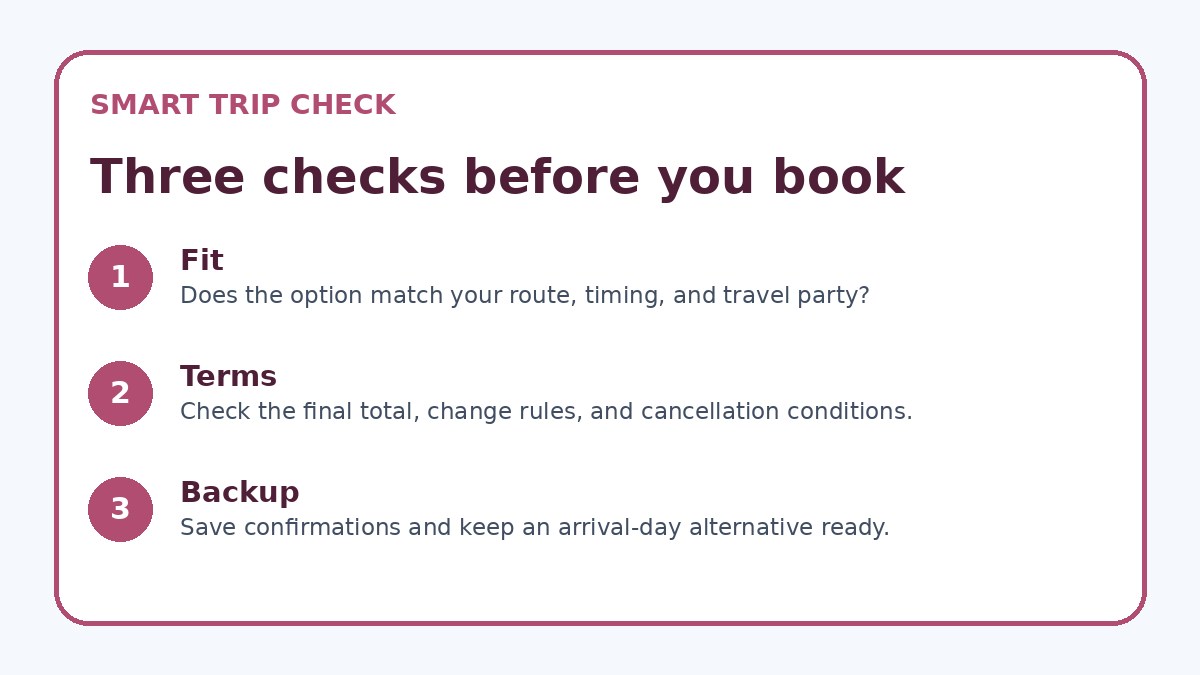
Decide how flexible your dates are before you start hunting deals. If you require a specific weekend or festival visit, book earlier and favor flexible cancellation policies. If your dates are flexible inside the shoulder-season windows, search multiple departure days and midweek stay patterns; sometimes shifting arrival by one weekday changes availability or room-type options. Always read the final booking page for any provider to confirm cancellation fees, deposit requirements, and whether breakfast, taxes, or city fees are included.
For hotels, verify the room specifics that matter to couples: bed type, view, noise level, and whether the rate includes breakfast or late checkout. For packages, check whether components—flights, transfers, or guided tours—are changeable without a full penalty. If a deal looks attractive but hides nonrefundable segments, calculate the risk: is the savings worth reduced flexibility if plans shift? Make a short checklist of must-haves so you can discard deals that don’t meet your baseline comfort and cancellation needs.
Before you book
- Confirm your preferred travel dates fall inside the shoulder-season windows you plan to target and note alternative 2–3 date ranges for flexibility.
- Search flights for both direct and one-stop itineraries, then verify baggage and change policies on the airline’s final booking page before purchase.
- Map potential hotels to subway lines and walking distances; call or check the property’s final page for elevator access and noise-related room requests.
- Compare rates that include breakfast or late checkout with basic rates to quantify whether added convenience justifies the premium.
- If booking a package, list which components are refundable and which are nonrefundable and calculate the financial risk of each nonrefundable segment.
- Reserve one special activity or dinner in advance if it matters to your trip, and leave at least one unscheduled afternoon for slow exploration or rest.
Balancing romance, budget, and logistics
Couples often divide priorities: one partner might prioritize a charming hotel and quiet evenings, while the other wants to see many sights. Use shoulder-season breathing room to mix both: reserve a centrally located base for two or three nights to maximize easy walking and book one or two neighborhood excursions for variety. Prioritize a single splurge—such as a scenic dinner or private guided tour—rather than stretching the budget thin across many small upgrades.
Logistics can quietly erode romance, so plan arrival and departure with realistic buffers for immigration, luggage, and transit. Compare transfer options from arrival airport to your hotel and verify them on the provider’s final page before committing. On short trips, avoid tightly scheduled tours on your first or last day; leave time to adjust and enjoy Seoul at a relaxed pace. These small scheduling choices can make the difference between a restful, romantic trip and a rushed checklist-focused visit.
Frequently asked questions
How far in advance should couples book Seoul travel deals for the best balance of options and price?
For shoulder-season travel, a good rule is to start searching 8–12 weeks before departure to balance choice and price. If your dates are fixed by events or holidays, book earlier and prefer refundable rates. If you have flexible dates, monitor fares and hotel availability across a range of days—sometimes moving a trip by a weekday can change inventory materially. Always confirm cancellation and change terms on the provider’s final booking page before paying, because policies and fees vary widely by carrier and property.
Which neighborhoods offer the most romantic bases for couples in Seoul during shoulder seasons?
Neighborhoods like Jongno and Bukchon suit couples focused on traditional settings and daytime strolling, while Insadong and Samcheong-dong offer art, tea houses, and quieter alleyways. Myeongdong and Hongdae bring livelier dining and shopping if you prefer evening energy; Itaewon offers diverse cuisine. Choose a base close to the subway for efficient transfers and map a few evening restaurant options within walking distance. Verify hotel room orientation and noise notes on the final booking page to avoid surprises that affect your comfort.
What should couples check about hotel deals before committing during shoulder season?
Check the cancellation and change policy, whether taxes or service fees are added at checkout, and what amenities the rate actually includes (breakfast, late checkout, or free wifi). Confirm the bed type and room layout, and whether the property has an elevator if you have luggage or mobility concerns. If you rely on airport transfers or breakfast times, verify those specifics on the property’s final booking page. These practical details determine how relaxing your stay feels and whether a deal is genuinely a fit for you both.
Final planning note
Planning a Seoul trip around shoulder seasons helps couples balance weather, crowds, and deal opportunity while preserving time for romance. Start with flexible date ranges inside the March–May and October–November windows, compare direct versus connecting flights for convenience, and choose a hotel location that minimizes transit stress. Prioritize refundable or changeable booking conditions if your dates are fixed by events; if you’re flexible, shop rates across weekdays and slightly shifted itineraries. Finally, verify all critical details—cancellation rules, included amenities, and room specifics—on the provider’s final booking page before paying. With a few deliberate checks, shoulder-season travel can deliver comfortable days, quieter evenings, and more relaxed shared memories in Seoul.
Continue planning
Check current options and final conditions
Use the provider page to confirm live availability, the final total, cancellation terms, and every condition that matters to your trip.
This evergreen planning guide was created with AI-assisted drafting and a structured quality review. It does not display live prices, schedules, availability, visa guidance, or provider rankings. Verify current details before booking. Some links are affiliate links; we may earn a commission at no additional cost to you.