If you have a meeting schedule to keep, choose the transfer that reliably matches your arrival time, luggage needs, and work-day plan. For most business travelers the airport express train and dedicated airport limousine buses offer predictable city-center access without needing to navigate congested roads or arrange a driver on arrival. Taxis and pre-booked private cars are better when you need door-to-door service, flexible routing, or travel outside regular public-transport hours. This guide explains how to compare speed, convenience, cost-effectiveness, and risk (delays, transfers, luggage handling) so you can pick the right option for your agenda. Wherever you plan to land, confirm the service details on the operator’s official booking page before finalizing arrangements; schedule changes and route updates occur and will affect which choice is best for your trip.
See current options before you compare the details
Availability and final conditions change. Open Trip.com now or keep reading for the practical comparison.
Your main choices and how they differ
There are four practical transfer types to compare: express train, airport limousine bus, taxi (metered), and private or booked car. The express train typically offers the most predictable schedule and avoids road congestion by rail; it stops at major central stations where you may connect to the subway or a short taxi ride. Limousine buses serve many hotel corridors and business districts directly, reducing the number of intermodal transfers and the hassle of carrying large suitcases up and down station stairs. Taxis are available at regulated stands and add door-to-door convenience, especially for hotels or offices not well served by rail or bus.
A private or pre-booked car can provide meet-and-greet service and a guaranteed vehicle type — useful for tight schedules, group travel, or large equipment. Tradeoffs include greater cost and exposure to road congestion. For all options, check the pickup locations at your arrival terminal, any required reservation windows, and luggage allowances before you decide. If your flight is delayed or you land during off-hours, knowing the fallback option (late-night taxis or arranged transfers) will prevent a stressful scramble.
How to choose by time, reliability, and cost tradeoffs
Start with your firm constraints: meeting time, how soon you must arrive, and how flexible that time is. If your schedule allows a fixed rail timetable and you want to minimize traffic risk, prioritize the express train or a rapid rail link that goes directly to central hubs. If you must reach a specific office or hotel without further transfers and can tolerate variable road times, choose a bus that stops near your destination or a taxi. For early-morning or late-night arrivals when public services are less frequent, plan a taxi or pre-booked car instead.
Cost is a secondary but meaningful factor for many travelers; public options generally cost less per passenger but may require additional short transfers or walking. Taxis and private cars simplify door-to-door logistics and can save time when travelling with colleagues who split the fare. Weigh predictable travel time against price: if missing a meeting has high penalty value, favor the most reliable arrival window, even at higher cost. Always compare total journey time from aircraft door to office doorstep when making decisions.
| Approach | Best for | Tradeoff to check |
|---|---|---|
| Express train | Time-sensitive travelers needing predictable, traffic-free transit to central stations | Requires a short transfer or subway ride to some offices and might be inconvenient with oversized luggage |
| Airport limousine bus | Those wanting fewer transfers and stops near major hotels or business districts | Can be slower in heavy traffic and may follow fixed routes that don't drop you at the door |
| Taxi (metered) | Door-to-door convenience, flexible routing, or late-night arrivals | Travel time and cost vary with traffic; fares and surcharges differ by time and location |
| Pre-booked private transfer | Groups, tight schedules, or travelers needing meet-and-greet service and guaranteed vehicle type | Higher cost and possible delays in traffic; check booking and cancellation policies carefully |
Ready to check the option that fits your plan?
Use your exact dates and traveler details so the provider page can show the current total and conditions.
Practical details to verify before booking
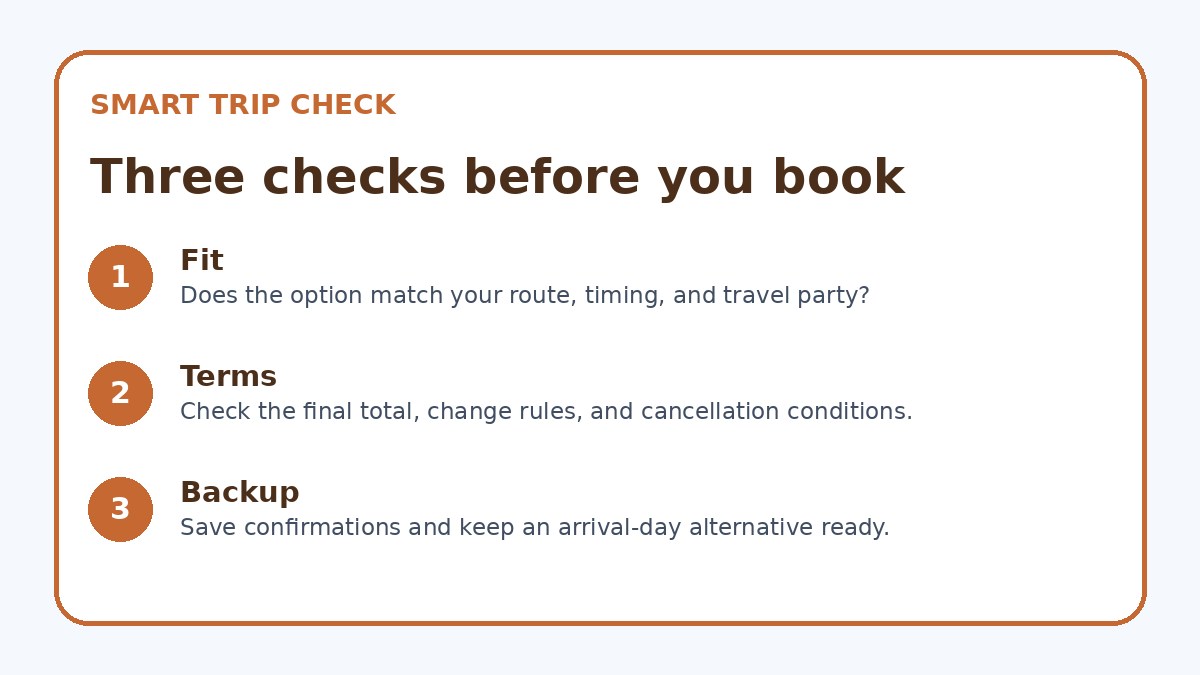
Confirm the terminal arrival and the transfer pickup point—airports have multiple terminals and service routes differ by terminal. Verify whether the train or bus stop is inside security or requires leaving the terminal building, and check luggage policies if you have oversized items. If you plan to take a limousine bus, confirm the nearest stop to your hotel or office and whether you’ll still need a short taxi or subway ride. For taxis and private cars, check how drivers are met, whether a mobile contact number is provided, and any surcharge clauses that might apply to airport pickups or late-night service.
Check booking and cancellation terms on the provider’s official page before you commit, particularly for pre-booked private transfers. Confirm vehicle type, passenger limits, baggage allowances, and any required identification at pickup. If comparing options, use a live comparison on a travel booking platform such as Trip.com to see current availability and route details, but always double-check the final provider page for last-mile pickup instructions and contact information. These small confirmations prevent missed connections and stress on arrival.
Before you book
- Confirm which terminal you arrive at and the exact pickup point for your chosen transfer option.
- Verify train and bus schedules for your arrival time on the operator’s official page before booking.
- Check luggage allowances and whether oversized items need advance notice or special vehicle types.
- If booking a private car, confirm driver contact details, meet-up instructions, and cancellation terms.
- Allow extra buffer time for customs, baggage claim, and transfers when planning a schedule-sensitive arrival.
- Compare total door-to-door journey time, not just in-vehicle time, when choosing between rail and road options.
Common arrival scenarios and recommended approaches
If you land in the morning with ample time before meetings and your office is near a major station, the express train usually provides quick, congestion-free transit to central locations—pair it with a short taxi or subway transfer for the final mile. For arrivals during heavy roadway congestion windows, a rail option reduces variability. When traveling with multiple colleagues or significant luggage, book a private car or use a taxi rank to move as a group and avoid juggling multiple transit tickets or schedules.
For late arrivals or when meetings start immediately after landing, a pre-booked transfer with meet-and-greet service gives the least friction: a driver will wait and help with luggage, and you go straight to your destination. If you prefer to maintain flexibility and pace your travel after landing, an airport limousine bus serves many hotels directly and lets you relax en route, though it may take longer than a direct taxi depending on route stops and traffic.
Frequently asked questions
Is the airport express train faster than taking a taxi into Seoul?
The express train avoids road traffic and often has a shorter and more predictable travel time to central stations during peak congestion. However, a taxi can be faster door-to-door if your destination is not near a train stop or if you are traveling outside rush hours. Compare the train’s final station location against your office address and account for last-mile travel: a short taxi from the train station may still be the quickest reliable option for many business itineraries.
Should I pre-book a private transfer for an early morning meeting?
Pre-booking a private transfer offers a clear advantage when you must arrive at a meeting on a strict timetable, because the driver can be scheduled to meet you and handle luggage. Before booking, confirm the pickup point, any waiting-time policy, and cancellation terms on the provider’s booking page. If you prefer a lower-cost alternative and your timing has some flexibility, check early train or bus schedules and the risk of traffic before deciding.
What should I do if my flight is delayed and I miss a scheduled bus or train?
If you miss a scheduled public option, look for the next available service on the operator’s timetable and be prepared to switch to a taxi or arrange a private pickup if schedules are sparse. Many services run frequently, but frequency and operating hours vary; check the provider’s live updates and contact options on their site. For pre-booked transfers, notify the operator via the contact details given at booking so they can advise on changes, wait times, or alternative pickup arrangements.
Final planning note
Choosing the right Seoul airport transfer for business travel comes down to three practical questions: how strict is your schedule, where in the city you need to go, and how much luggage or group complexity you have. For predictable, congestion-free transit to central hubs, rail typically wins; for direct door-to-door service or odd-hour arrivals, taxis and pre-booked cars make sense. Always verify terminal pickup points, luggage rules, and current schedules on the provider’s official booking page before you finalize any booking. When in doubt, allow an extra buffer between arrival and your first meeting and have a backup option ready.
Continue planning
Check current options and final conditions
Use the provider page to confirm live availability, the final total, cancellation terms, and every condition that matters to your trip.
This evergreen planning guide was created with AI-assisted drafting and a structured quality review. It does not display live prices, schedules, availability, visa guidance, or provider rankings. Verify current details before booking. Some links are affiliate links; we may earn a commission at no additional cost to you.