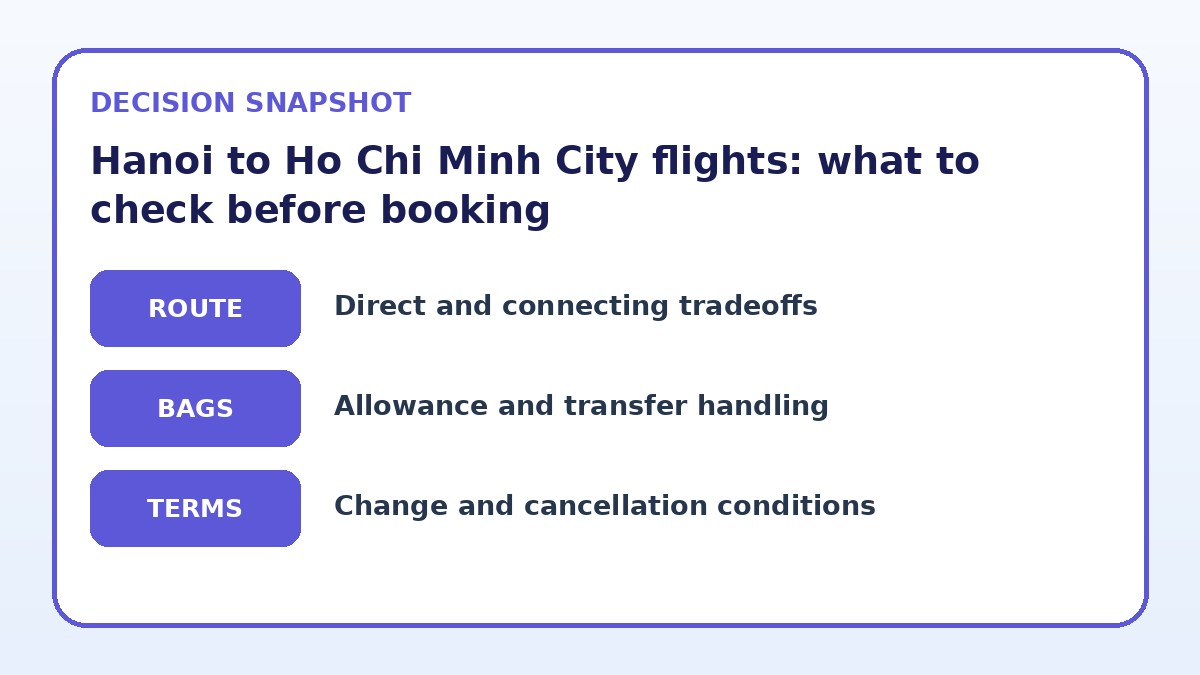
If you and your partner are booking Hanoi to Ho Chi Minh City flights, the single most useful step is to compare each fare’s change and cancellation conditions before you pick seats. Start by checking whether the ticket allows free name changes, carries a change fee, or is non‑refundable; next, confirm whether the airline permits one‑time free rebooking or provides a travel credit instead of cash refunds. For couples, decide who will hold the flexible fare (if you buy separate tickets) or whether a shared booking with combined passenger protections makes more sense. Finally, review how refunds are processed — to the original form of payment, as vouchers, or as travel credit — and write down the provider’s documented policy so you can reference it if you need to change plans.
See current options before you compare the details
Availability and final conditions change. Open Trip.com now or keep reading for the practical comparison.
How to read change and cancellation language
Airline and online booking pages use terse phrases that can hide important differences: terms like “flexible”, “refundable”, and “changes allowed” are shorthand and do not uniformly mean the same things across carriers. Look for explicit mention of change fees (a fixed dollar or VND amount), whether fare differences apply, and whether changes are allowed within a specific window before departure. Also check whether changes are permitted for schedule disruptions caused by the airline or only for voluntary alterations by the passenger.
For cancellations, determine whether the fare is refundable to the original payment method, refundable as a travel credit, or non‑refundable with only taxes returned. Note blackout periods, the time limit to request a refund, and whether third‑party booking platforms impose their own cancellation handling. When in doubt, locate the full fare rules link (often labeled “fare conditions” or “contract of carriage”) and save that page along with your itinerary confirmation.
Couples’ decision rules: one booking vs separate tickets
Booking both passengers on the same PNR (single reservation) usually simplifies changes: one request can rebook both seats and the fare conditions apply uniformly. This is advantageous when you want to keep plans aligned and avoid managing two separate refund processes. However, if one partner needs more flexibility than the other, a single shared booking forces both to accept the more flexible — and typically more expensive — ticketing terms.
Buying separate tickets can lower cost and give each person tailored flexibility, but it increases complexity if plans change. If you split reservations, agree on who will handle cancellations and how refunds will be divided. Also verify whether the airline will allow same‑flight protection (reaccommodation on the same day) for separate PNRs in case of operations disruptions, because protection is often easier if you are on one booking.
| Approach | Best for | Tradeoff to check |
|---|---|---|
| Single shared booking for both travelers | Couples who want coordinated changes and a single contact point | Higher fare if you need flexible fare for both; both passengers tied to same ticket rules. |
| Separate tickets tailored to individual flexibility | Couples with different risk tolerances or separate plans | More complex refunds and potential rebooking hassle if travel plans change for one person. |
| Buy cheapest fares and add travel insurance | Cost‑conscious couples willing to rely on insurance for cancellations | Insurance may not cover all reasons; you still face carrier fees and verification steps. |
| Purchase a more flexible fare only for one traveler | When one partner’s schedule is uncertain but the other’s is fixed | If the flexible traveler changes the shared plan, you may still need to change the cheaper ticket separately with fees. |
Ready to check the option that fits your plan?
Use your exact dates and traveler details so the provider page can show the current total and conditions.
Practical tradeoffs: fees, time, and refund type
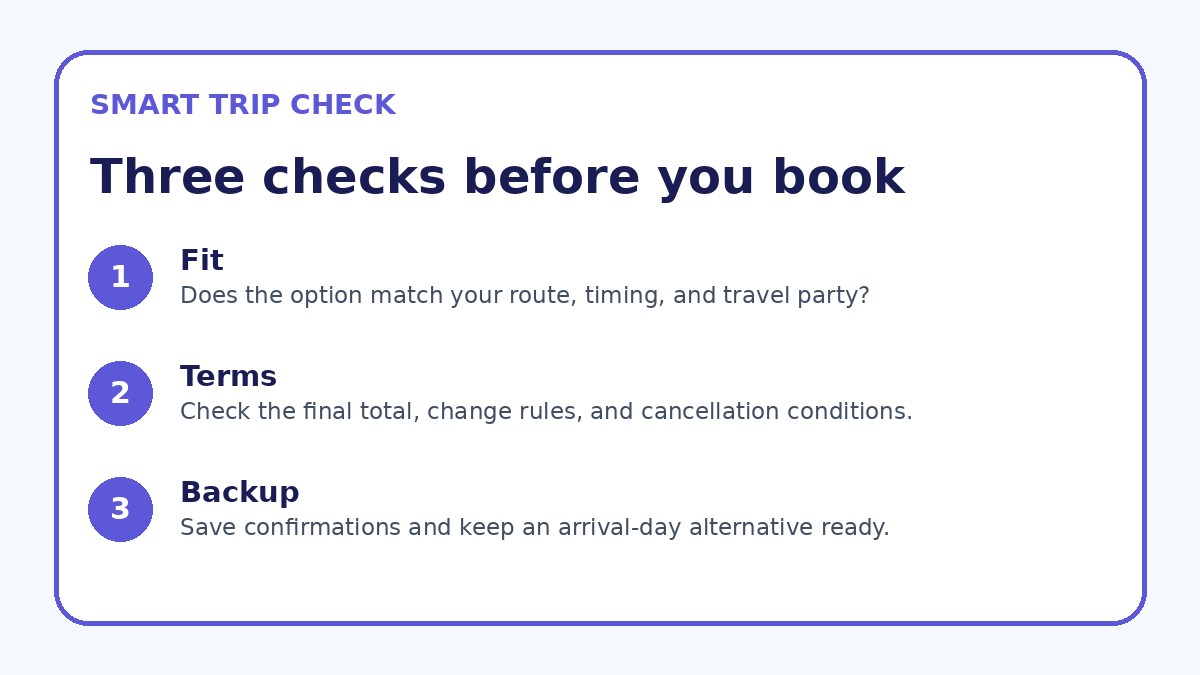
Low‑fare tickets often have low purchase prices but impose higher change fees, strict cancellation rules, and refund credits instead of cash. Flexible fare classes reduce or waive change fees and may permit free date or name changes, but that flexibility is the costlier option. Couples should weigh how likely plans are to change: for a wedding or unpredictable event, the premium for flexibility may be worth it; for a fixed holiday, a lower unrestricted ticket might be sufficient.
Also consider how the refund will be delivered. Refunds to the original card may take weeks to process and occasionally require documentation, while travel vouchers or credits are often issued faster but may carry expiration dates and usage limits. If you want the ability to rebook with any carrier, cash refunds are superior — but they are less common on discounted fares, so verify the explicit refund destination before buying.
Before you book
- Open the fare conditions link and save a screenshot of the exact change and cancellation wording shown at checkout.
- Decide whether to book one PNR or two and document who will make change requests if plans alter.
- Verify whether refunds are to the original card, as vouchers, or travel credit, and note any expiration dates.
- Check for third‑party reseller fees if you’re not booking directly with the airline and read their change policy.
- If buying travel insurance, match policy exclusions to the airline’s non‑refundable reasons before purchase.
- Save the booking reference, fare code, and the airline contact details in a shared note both partners can access.
What to verify on the provider’s final booking page
On the checkout screen, confirm the final fare code or fare family name, the explicit change fee (or statement of free changes), and any note about fare differences on rebooked dates. If the platform shows an ‘optional’ travel insurance add‑on, read its exclusions carefully — some policies may not cover voluntary cancellations or family disputes. Capture the displayed policy text with a screenshot and store your booking reference and fare rules email in a shared location so both partners can access them.
If you book through a third‑party site, check whether that reseller imposes its own administration fees for changes or cancellations. Trip.com can be used to compare current availability and displayed conditions, but always follow the airline’s published contract of carriage for final enforcement. If you need to confirm ambiguous wording, contact the airline customer service and request a reference number for the call or chat transcript.
Frequently asked questions
Can couples change only one passenger on a shared booking for Hanoi to Ho Chi Minh City flights?
Whether you can change just one passenger on a shared booking depends on the fare rules attached to the PNR. Some fare families allow individual name or date changes and will charge the published change fee per passenger plus any fare difference; other fares require that changes be applied to the whole reservation. Always check the specific fare conditions and, if unclear, ask the airline by phone or chat — request the agent to summarize the applicable rule and provide an incident or reference number for your records.
What should we check if we need a refund instead of a rebooking?
First, confirm whether the fare is refundable and whether refunds go back to the original payment method or are issued as travel credit. Then check the refund processing timeline and any documentation the airline requires, such as identification or evidence of a covered reason. If you booked through a reseller, verify whether they handle refunds directly or pass the request to the airline, since this can add delay. Capture screenshots of the refund policy at checkout and keep all confirmation emails until the refund completes.
Is travel insurance necessary for a short domestic flight between Hanoi and Ho Chi Minh City?
Travel insurance is not mandatory, but it can be useful if you want protection beyond the airline’s fare rules. A policy that covers trip cancellation for specified reasons can reimburse unrecoverable expenses when a ticket is non‑refundable; medical or emergency cover may also be valuable. Read the policy for what counts as a valid cancellation reason and how the insurer coordinates with airline refunds. If you rely on insurance, ensure claim timelines and document retention requirements are practical for your situation.
Final planning note
For couples booking Hanoi to Ho Chi Minh City flights, the most effective planning step is to treat change and cancellation terms as part of the fare price. Decide together whether you value coordinated flexibility (one shared reservation) or tailored options (separate tickets), then verify the exact change fees, refund destination, and any reseller administration charges shown on the final booking page. Capture and store screenshots of the fare rules and confirmation emails, and nominate one partner to lead changes and keep records. Doing this reduces disputes, speeds up refunds or rebookings, and leaves you both free to focus on the trip rather than post‑booking logistics.
Continue planning
Check current options and final conditions
Use the provider page to confirm live availability, the final total, cancellation terms, and every condition that matters to your trip.
This evergreen planning guide was created with AI-assisted drafting and a structured quality review. It does not display live prices, schedules, availability, visa guidance, or provider rankings. Verify current details before booking. Some links are affiliate links; we may earn a commission at no additional cost to you.