If you want the simplest, most comfortable way to travel from Seoul to Busan, book the option that minimizes transfers and airport-to-city hassle even if the airborne time difference is small. Practically, that means favoring a direct flight where available or a single-connection itinerary with a long layover only if the transfer airport is easy to navigate and offers reliable luggage transfer. For first-time visitors, comfort often comes from predictable ground transfers, less rushing between terminals, and clear baggage policies more than shaving minutes off flight time. Below I explain how to compare direct versus connecting options, what to check on an airline’s booking page, and how to plan transfers, sleeping, and contingencies so your long-haul connection feels manageable rather than stressful.
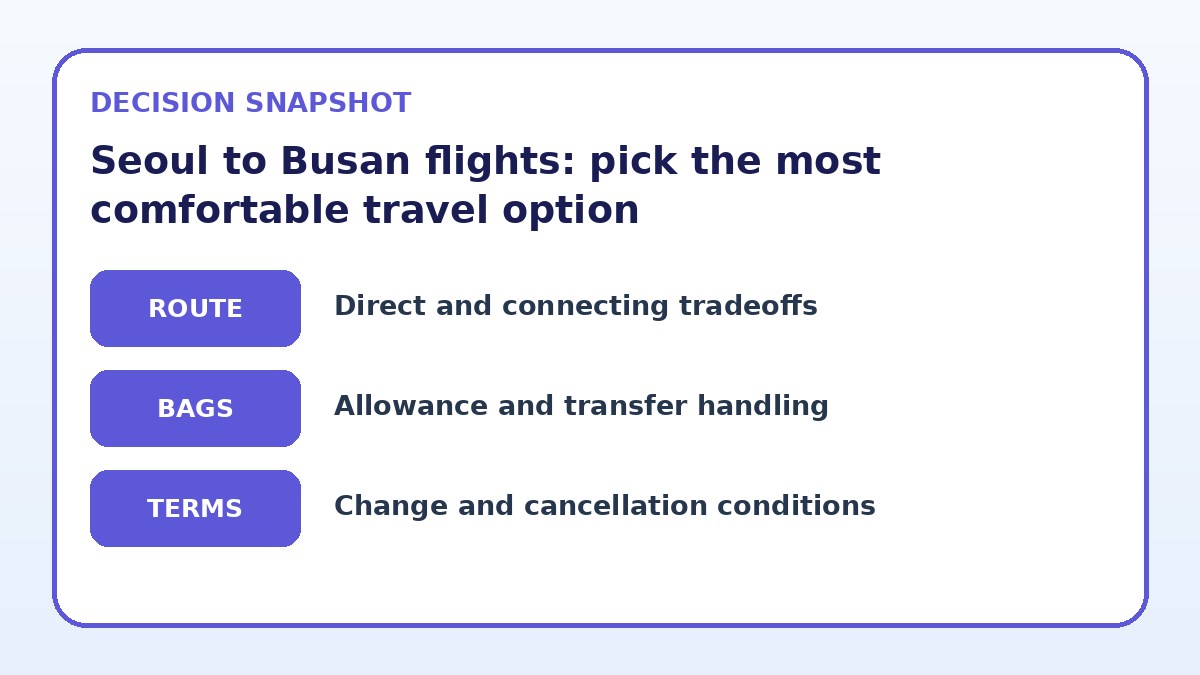
See current options before you compare the details
Availability and final conditions change. Open Trip.com now or keep reading for the practical comparison.
Deciding direct versus connecting flights
Start by comparing direct and connecting flights as whole journeys, not isolated segments. A direct flight removes an additional boarding process, potential customs/immigration steps, and the worry of missed connections; it often wins for clarity and convenience. However, direct options may only operate at certain times or from specific airports which could add ground transfer time in Seoul or Busan. For many travelers, a slightly longer overall schedule that avoids extra airport transfers feels more comfortable than a faster itinerary requiring tight connections.
When a direct flight isn’t practical, treat connecting itineraries like a mini-itinerary: where you land between flights, whether you need to change terminals, and what baggage rules apply. Verify on the airline or booking site whether luggage is checked through to the final destination or if you must collect and re-check it during the connection. Also consider the time of day of each segment—overnight connections can mean sleeping in an airport or booking a nearby hotel, while daytime layovers may be easier to handle if terminals offer resting areas and food options.
Transfer logistics and airport choices
The comfort of a long-haul connection depends heavily on the transfer airport’s layout and services. Large transfer hubs can be comfortable if they offer clear signage, easy transfer transit (such as shuttle trains between terminals), accessible lounges, and secure baggage handling; they can also become stressful if you must navigate long walks, multiple security checks, or cross-border formalities. Before booking, check terminal maps and transfer instructions on the airline’s booking page. If multiple Seoul airports or Busan area airports are options, compare ground transit time and ease of reaching your accommodation.
Think through ground transfers at both ends: how you’ll get from your arrival airport to your hotel and how long that takes at the scheduled arrival time. For late-night or early-morning arrivals pick options that minimize waits for public transport or expensive taxis. If you have mobility concerns or heavy bags, prioritize itineraries that land and depart from the same terminal or that explicitly offer through-checked luggage to avoid carrying it between terminals.
| Approach | Best for | Tradeoff to check |
|---|---|---|
| Direct flight | Travelers who value simplicity and minimal transfer stress | May have limited departure times or require longer ground transfers to certain airports |
| Single-connection with same-terminal transfer | Those balancing schedule flexibility and moderate comfort | Still introduces an extra boarding, but avoids long terminal changes |
| Single-connection with inter-terminal transfer | Passengers prioritizing schedule choice over convenience | Can be tiring and risky if terminals are far apart or require security/immigration |
| Separate tickets (self-transfer) | Flexible travelers who want pricing or routing control | Increases risk: you must re-check luggage and allow significant buffer time |
Ready to check the option that fits your plan?
Use your exact dates and traveler details so the provider page can show the current total and conditions.
In-flight and seating choices for comfort
Comfort starts with your seat choice and the aircraft type. If the carrier allows, choose seats with extra legroom, bulkhead rows, or aisle access depending on your priorities—stretching and easy restroom access can matter more than a few extra inches of seat recline. For connecting flights, try to keep your seat preference consistent across segments to reduce the chance of being placed in a less comfortable class on a shorter leg. On the booking page or during check-in, confirm seat maps and compare options so you can plan rest and movement during each flight.
Bring a small travel kit to make both flight and layover time more restful: a neck pillow, an eye mask, earplugs or noise-cancelling headphones, and a lightweight blanket or layer. Factor meal timing into your comfort plan—pack snacks and refillable water bottle (empty through security) for flexible hydration. If you plan to sleep during a long connection, scout lounge access, transit hotels, or quiet zones at the transfer airport and verify access rules on the provider’s site before relying on them.
Before you book
- Confirm whether your luggage is checked through to Busan or must be collected and rechecked during any connection.
- Check the transfer airport terminal map and minimum connection time specified on the airline’s booking page.
- Plan ground transport at arrival: local transit schedules, estimated taxi times, andNight-time availability for your arrival hour.
- Select seats early across all legs to secure preferred legroom or aisle/window arrangements.
- Pack a carry-on kit with essential sleep and hygiene items in case of long layovers or delays.
- Identify alternate same-day flights and review the carrier’s rebooking policy before finalizing your purchase.
Contingency planning and what to verify before booking
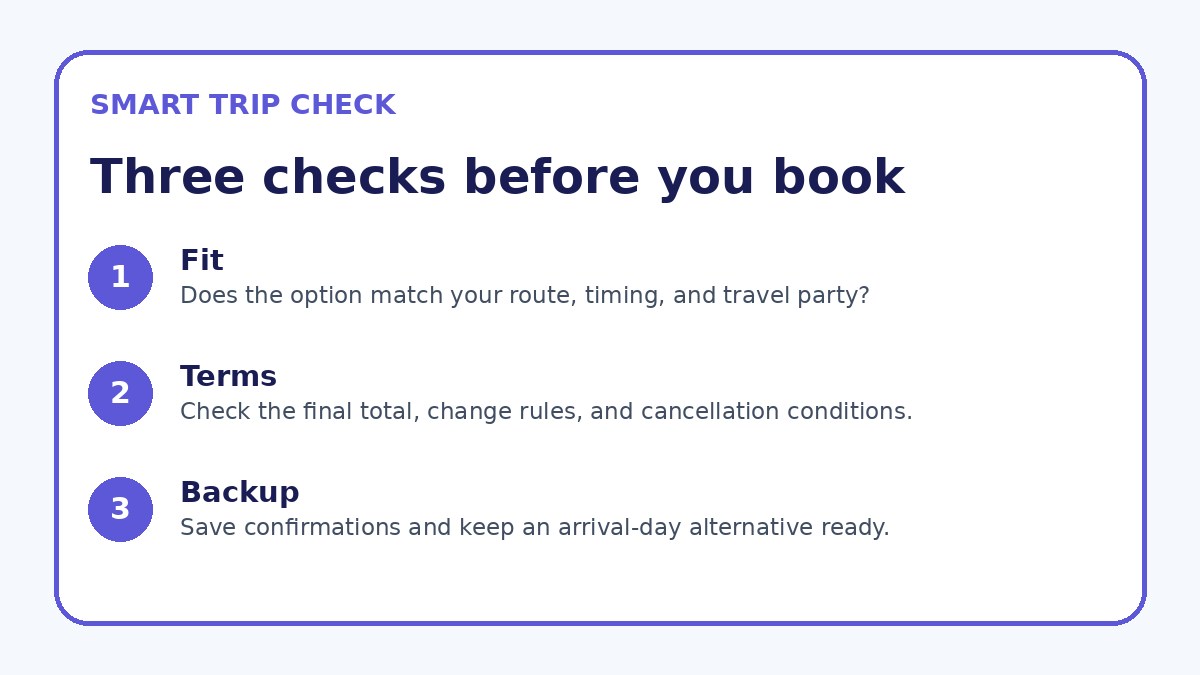
Before you finalize a booking, verify a few concrete things on the airline or ticketing site: whether luggage is checked through to your final destination, the minimum connection time used for your itinerary, and whether you need to clear immigration or customs during a transfer. If you book separate tickets, check luggage re-check rules and plan at least double the published minimum connection time. Also note the carrier’s change and rebooking policies in case your inbound flight is delayed; those details determine how smoothly you can recover from disruption.
Prepare backup plans: identify alternate flights that day, know local ground-transport options, and set aside a time buffer that covers typical delays for the route. Consider travel insurance that covers missed connections and overnight accommodation if a delay forces an unexpected stop. Finally, if you use an online travel agency or comparison site (Trip.com can be one place to check current availability), always verify final baggage allowances, seat assignments, and transfer notes on the airline’s official booking page before you pay.
Frequently asked questions
Should first-time visitors always pick a direct Seoul to Busan flight for comfort?
Not necessarily. Direct flights reduce transfer complexity and are often more relaxing, but they aren’t always the most convenient depending on departure airports and schedules. If a direct flight forces a long, costly ground transfer to or from your hotel, a well-timed connecting option from a more convenient airport might be the better overall choice. Evaluate the whole journey—door-to-door time, transfer ease, luggage handling—rather than assuming direct equals best for your situation.
How much transfer time should I leave between flights to stay comfortable?
Aim for at least the carrier’s stated minimum connection time plus an extra safety buffer—especially if you must change terminals or clear immigration. For domestic-to-domestic transfers within the same terminal, a moderate buffer may be sufficient; for international transfers, inter-terminal moves, or if you have checked luggage, allow substantially more time. If the itinerary uses separate tickets, plan even larger buffers because airlines typically won’t accept responsibility for missed connections on separate bookings.
What are the simplest ways to keep a long connection comfortable in an unfamiliar airport?
Research terminal facilities before you go: lounges, quiet areas, transit hotels, and food options. Bring comfort essentials like a travel pillow and noise-cancelling headphones, and use apps or airport maps to locate short routes between gates. Consider lounge access for a private place to rest and charge devices; check eligibility on your booking page or with your credit card benefits. Finally, keep important documents and medications in your carry-on in case you must move between terminals quickly.
Final planning note
Comfort on a Seoul to Busan flight connection is less about the fastest airborne time and more about predictable, low-stress transfers and clarity on luggage and rebooking rules. For first-time visitors, prioritize itineraries that minimize terminal changes and provide straightforward ground transit at both ends. If you must connect, choose transfer airports with good signage and services, allow generous buffers, and verify luggage and connection policies on the airline’s booking page before you pay. Use seat selection and a small comfort kit to make both flight and layover time more restful, and prepare contingency plans so delays don’t derail the trip.
Continue planning
Check current options and final conditions
Use the provider page to confirm live availability, the final total, cancellation terms, and every condition that matters to your trip.
This evergreen planning guide was created with AI-assisted drafting and a structured quality review. It does not display live prices, schedules, availability, visa guidance, or provider rankings. Verify current details before booking. Some links are affiliate links; we may earn a commission at no additional cost to you.