If you must travel from Tokyo to Osaka for work, the practical outcome matters: aim to arrive on time, rested enough for meetings, and with critical gear accessible. On the travel day you’ll balance speed, predictability, and convenience — typically choosing between Shinkansen (bullet train) options and flights, with local trains or taxis at either end. Start by confirming the exact meeting time, the nearest station or airport to your destination, and whether you need reliable internet on the move. Pack both a small carry-on with essentials and a checked bag if necessary, and prepare digital copies of meeting documents and contacts. Below are immediate actions, decision criteria, and tradeoffs to help you choose the transport style and structure a calm, productive travel day.
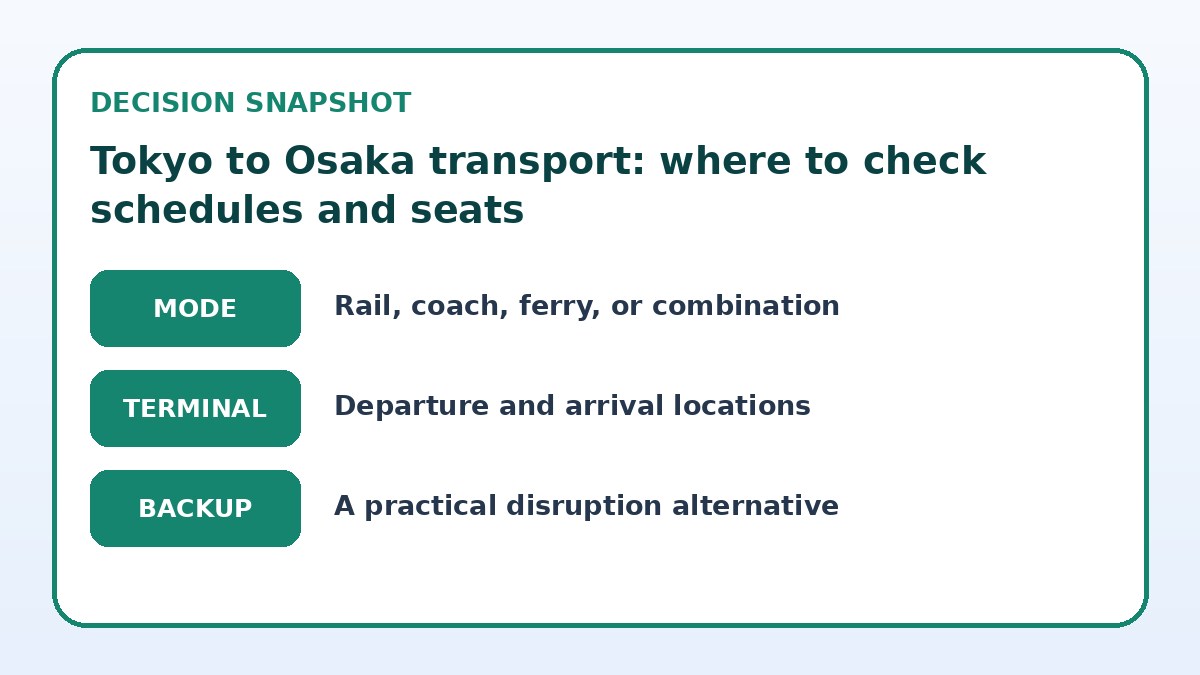
See current options before you compare the details
Availability and final conditions change. Open Trip.com now or keep reading for the practical comparison.
Choose train or plane based on total door-to-door time
When choosing between Shinkansen and flights, compare the total door-to-door time rather than only the in-air or in-rail minutes. For train travel you’ll typically use central Tokyo stations and arrive at central Osaka stations, which can cut ground commute time; for flights you must factor in travel to an airport, early arrival for security, and transit from the airport to your final address. If you have a morning meeting in Osaka, a slightly earlier departure by train may yield a calmer arrival and more predictable timing.
Also weigh airport and station transfers against your comfort and ability to work en route. Trains usually provide stable, reclining seats and fewer interruptions, making them useful for focused work or calls when a quiet space is essential. Flights may shave total travel time in certain schedules, but transfers and security checks add variability. Verify current schedules and connection options on the transport provider’s booking page before finalizing the decision.
Packing and carry strategy for productive travel
Adopt a two-bag system: one compact carry-on with immediate essentials and one larger checked bag if needed. For a business day, your carry-on should include your laptop, power adapters, a portable battery, charging cables, noise-masking earbuds, a pen and paper, spare business cards, and any hard copies of presentations. Place frequently used items in easy-to-open compartments to avoid rummaging during the journey and to speed through security or ticket checks.
Think about clothing and grooming needs on arrival. Keep a compact grooming kit and a wrinkle-resistant blazer or shirt accessible in your carry-on in case you need a quick refresh before a meeting. If you rely on laundry or pressing services at your destination, confirm availability in advance. Finally, store digital backups of critical files in secure cloud storage and offline copies on an encrypted USB drive so you can access them regardless of connectivity.
| Approach | Best for | Tradeoff to check |
|---|---|---|
| Shinkansen (bullet train) | Predictable city-center-to-city-center travel and working comfortably en route | May be slower overall if you prioritize absolute minimum travel time or if your origin/destination is closer to airports |
| Flight | When air schedules align to reduce total door-to-door time for your specific origin and destination | Adds airport transfer and security time, with more variability and potential for disruptions |
| Hybrid (train one way, flight return) | Those balancing schedule constraints with a need for onboard productive time or different meeting locations | Requires careful luggage and timing coordination; more moving parts mean more to manage |
| Flexible ticketing and seat selection | Business travelers who need last-minute changes or prefer a guaranteed seat | Often adds booking complexity and may limit vendor choices; always review change and refund rules |
Ready to check the option that fits your plan?
Use your exact dates and traveler details so the provider page can show the current total and conditions.
Timing, transfers, and choosing seats
Book specific seats when possible and check carriage layouts on the provider’s final booking page before you pay. For trains, choose seats facing forward if you prefer fewer motion effects, or vehicle types with quiet cars if you need to work. For flights, choose seats near power outlets or in quieter zones; consider extra legroom if you plan to work extensively. Always verify seat selection options on the official booking flow since rules and layouts can change.
Plan your arrival at departure points with buffer time for security, ticket gates, and local transit connections. If your schedule is tight, choose an earlier service and use the extra time at the destination for meeting prep. Also account for peak travel windows and local events that might congest stations or roads. Confirm local transit or taxi availability in advance and consider pre-booking an airport transfer or a rideshare when feasible.
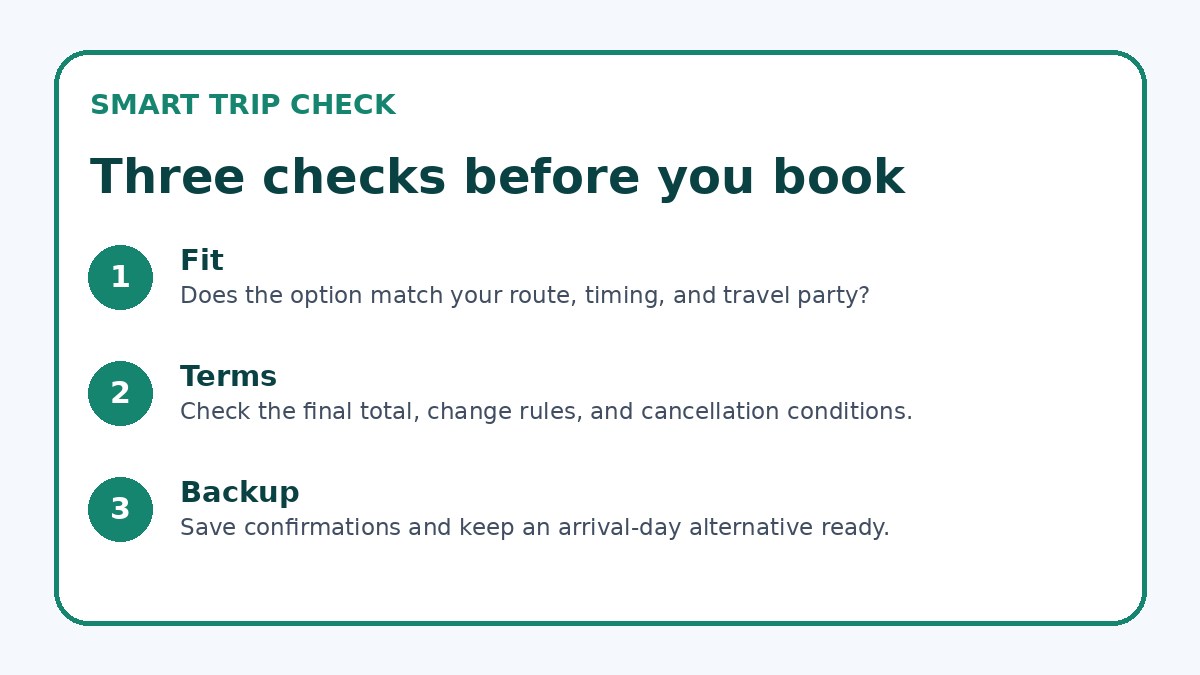
Before you book
- Confirm the exact meeting time and the nearest Osaka station or airport, noting the best route from arrival point to your meeting address.
- Compare door-to-door time for trains versus flights, including transfers, security, and last-mile transit before booking.
- Prebook a specific seat or carriage and verify seat maps on the provider’s booking page to ensure the preferred work environment.
- Pack a carry-on with laptop, charger, portable battery, earbuds, hard copies of essential documents, and a small grooming kit.
- Set calendar alerts and allow buffer time for unforeseen delays; share your estimated arrival and contingency contact with meeting hosts.
- Check mobile connectivity options and download offline copies of directions, tickets, and important documents in case of poor network coverage.
Minimizing risks and handling last-minute changes
Prepare for common disruptions with simple redundancies: save alternative train and flight times, keep contacts for local partners, and have a contingency plan for late arrivals such as rescheduling protocol, short briefing documents, or a delegate. If your itinerary crosses multiple providers, review change and refund policies on the provider’s booking pages so you know how easy it is to shift plans.
Use technology to stay flexible: calendar alerts, transport apps, and mobile boarding passes reduce stress and speed check-ins. If you expect to need meetings during travel, test connectivity options beforehand — local SIM, roaming plan, or an onboard Wi‑Fi pass — and confirm whether reliable coverage is available on your chosen service. As a final step, notify your meeting host of your transport choice and an estimated arrival time, and keep them updated if delays occur.
Frequently asked questions
Should I always take the Shinkansen for reliability between Tokyo and Osaka?
Shinkansen services are often reliable and convenient for central city-to-city travel, but they are not automatically the right choice for every business trip. If your origin or destination is near an airport, or if flight schedules align to reduce overall door-to-door time, a flight could be faster. Evaluate the full journey: transfer times to airports or stations, time needed before departure, and how productive you need to be en route. Always check current timetables and seat availability on provider booking pages before choosing.
How early should I arrive at Tokyo departure points for a stress-free trip?
Arrival time depends on whether you’re using a major station or an airport and whether you need to handle checked luggage. For trains, arriving 20–30 minutes before departure gives time to reach the platform and find your seat, while flights typically require earlier arrival for baggage check and security. If you anticipate needing to work or refresh before travel, add more buffer. Verify recommended arrival guidance for your chosen provider at booking and account for local peak-hour congestion.
What tech and documents should I prioritize for a travel day between Tokyo and Osaka?
Prioritize reliable access to meeting materials and communications: fully charged laptop and phone, a portable battery, charging cables, and noise-masking headphones. Keep digital backups of presentations in secure cloud storage and local offline copies in case connectivity fails. Carry printed key documents and business cards for handshake moments. Also keep transport tickets, hotel confirmations, and emergency contacts easily accessible on your phone and in a travel folder to handle any last-minute changes.
Final planning note
For business travelers moving between Tokyo and Osaka, preparing the travel day well beats hoping for optimal conditions. Focus on the decision that matters most for your schedule: predictable arrival time and productive onboard work versus the potential time savings of a flight. Build redundancy into your plan with flexible tickets, seat selection, and offline backups of meeting materials. Pre-book last-mile transport, pack a compact work and grooming kit, and communicate your arrival plan to meeting hosts. Check provider booking pages for current timetables, seat maps, and change policies before finalizing any reservations to avoid surprises.
Continue planning
Check current options and final conditions
Use the provider page to confirm live availability, the final total, cancellation terms, and every condition that matters to your trip.
This evergreen planning guide was created with AI-assisted drafting and a structured quality review. It does not display live prices, schedules, availability, visa guidance, or provider rankings. Verify current details before booking. Some links are affiliate links; we may earn a commission at no additional cost to you.