If you’re booking a family trip to Milan and hunting for Milan travel deals, start by targeting the shoulder seasons—late spring (April–early June) and early autumn (September–October). These windows usually balance milder weather, fewer tourists, and better hotel and flight availability without the unpredictability of winter closures or peak-summer crowds. For families, shoulder seasons can mean more flexible room types (family rooms or connecting rooms), easier museum and attraction bookings, and more pleasant city walks for toddlers and grandparents alike. Prioritize accommodation near efficient transport nodes and parks, and compare refundable versus changeable rates when kids’ health or school calendars are uncertain. Finally, verify the exact terms and availability on the provider’s final booking page—especially cancellation, breakfast inclusion, and room configuration—since specifics change frequently and affect family comfort and budget.
See current options before you compare the details
Availability and final conditions change. Open Trip.com now or keep reading for the practical comparison.
Why shoulder seasons work for families
Shoulder seasons in Milan strike a useful balance for families: fewer tourists than peak summer but more reliable weather than deep winter. For parents juggling nap schedules, stroller logistics, or carrying extra gear, quieter streets and shorter lines at attractions make daily plans easier. Museums and major churches are easier to visit without rushing, while family-friendly activities—city farms, children's workshops, and short boat tours on navigli—tend to have more available slots during these quieter months.
That said, shoulder-season advantage isn’t automatic; it depends on date selection and local events. School holidays in different countries can still spike demand, and some venues may reduce opening hours outside high season. Families should prepare by identifying must-see attractions and checking availability in advance. Booking at least refundable or changeable fares and rooms gives peace of mind if plans shift, and planning a couple of low-key days helps absorb weather or schedule hiccups without derailing the whole trip.
Where to stay: neighborhoods that suit families
When deciding on a neighborhood, weigh convenience, green space, and evening safety. Central neighborhoods like Brera and the Duomo area offer walking proximity to top sights but can be busy; look for family-sized rooms or apartments with separate sleeping areas. Areas slightly farther out—such as near Cadorna, Porta Romana, or the Navigli’s quieter stretches—often provide calmer streets, parks, and easier parking if you rent a car, while still offering quick metro or tram access to the center.
Also consider accommodation near a large park or playground to reset between sightseeing blocks. Many families appreciate locations next to Parco Sempione or smaller neighborhood parks for afternoon downtime. If you prefer apartment-style stays, check that kitchens and laundry facilities meet your needs; these conveniences reduce restaurant pressure and make dealing with picky eaters or late bedtimes much simpler. Always confirm room layout photos and sleeping arrangements on the booking page before completing a reservation.
| Approach | Best for | Tradeoff to check |
|---|---|---|
| Central hotel near Duomo | Families prioritizing walking access to main sights and short transit times | Higher noise and crowded streets; smaller rooms and possibly higher rates than outer neighborhoods |
| Apartment in a residential neighborhood | Families wanting separate bedrooms, kitchen facilities, and local rhythm | Longer daily commutes and fewer immediate tourist conveniences |
| Family-friendly hotel near a park | Families needing outdoor play space and quieter evenings | May require transit to reach major museums and evening attractions |
| Flexible-rate booking vs. non-refundable discount | Flexibility seekers who expect potential schedule changes | Flexible rates usually cost more upfront than strict discount fares |
Ready to check the option that fits your plan?
Use your exact dates and traveler details so the provider page can show the current total and conditions.
How to compare Milan travel deals for families
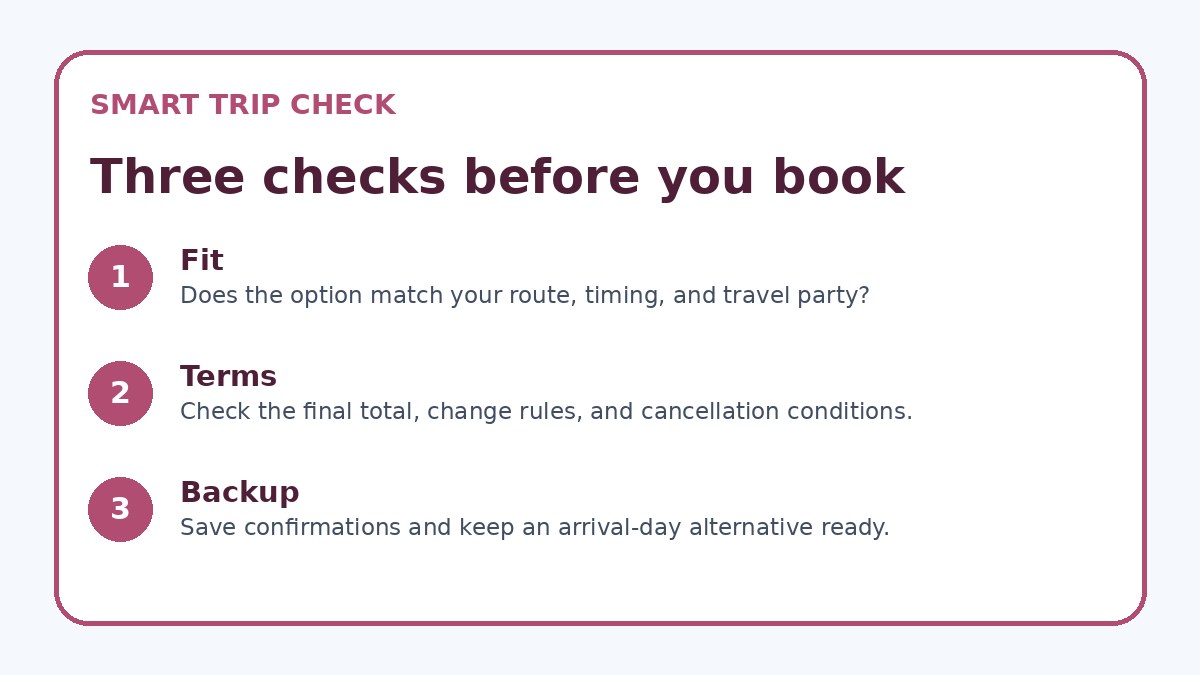
Focus on a few decision drivers when comparing deals: room configuration (can the family sleep comfortably?), included meals, cancellation/change terms, and transport links. A seemingly cheaper room that is actually two separate bookings or requires paid extra beds can cost more in hassle and time. Look at total trip convenience—does the rate include breakfast that saves on early-morning stress? Are there flexible check-in options for late arrivals with children? Use these practical criteria to compare offers rather than relying on headline fares alone.
When checking flight and train options, compare direct versus connecting itineraries for travel time and reliability. For shorter stays, a slightly longer direct option may be worth it to reduce transfers with children and luggage. If booking separately for accommodation and transport, note the final provider pages for baggage rules, seat assignment costs, or family discounts. Trip.com can be one of several places to compare live availability, but always validate specific room features, cancellation rules, and boarding conditions on the seller’s final booking confirmation page.
Before you book
- Verify the room configuration and number of beds on the provider’s final booking page to ensure the family sleeps comfortably.
- Confirm the accommodation’s child policies (extra beds, rollaways, crib availability) and any associated fees before payment.
- Check transport links from your chosen neighborhood to major sights and the nearest metro or tram stop for daily planning.
- Compare cancellation and change terms for both accommodation and transport on the final booking page to allow schedule flexibility.
- Identify at least two indoor backup activities for rainy days and pre-book timed entries for must-see attractions when available.
- Review whether breakfast is included or available nearby, and plan simple meal options for picky eaters or late dinner nights.
Tradeoffs and timing: balancing cost, comfort, and convenience
Choosing shoulder-season travel often reduces crowds but may bring tradeoffs: some seasonal services might be limited, and occasional cooler or wetter days can affect outdoor plans. Families should factor in a few backup indoor activities—museums with child-friendly exhibits, indoor play centers, or relaxed cafés with space for strollers—to avoid a day lost to weather. Weigh the benefits of quieter streets against the possibility of reduced schedules at certain attractions; if an item is a must-see, consider booking timed-entry tickets in advance even during shoulder season.
Another decision is the tradeoff between central convenience and quieter neighborhoods. Staying in the core shortens daily transit but can be noisier and more expensive; staying slightly farther out offers more space and local life at the cost of longer commutes. For families that plan split days (morning sightseeing, afternoon park/rest), staying outside the busiest blocks often feels calmer and more economical. Make a short list of priorities—sleeping arrangements, meal options, transport ease—then choose the balance that best supports your children’s routines and your daily tempo.
Frequently asked questions
Are shoulder seasons truly cheaper for Milan travel deals with kids?
Shoulder seasons often reduce crowd-related costs like time spent in queues and allow more choice in room types, but saved money is not guaranteed. Prices fluctuate based on events, school holidays, or last-minute demand. For families, cost savings are often realized through improved availability of family rooms or apartments and fewer extra logistics (shorter taxi waits, easier museum slots), rather than fixed discounts. Always compare total trip cost—including transport, meals, and possible paid extras—and confirm final prices and cancellation terms on the provider’s booking page before committing.
What should I prioritize when booking transport versus accommodation for a family?
Prioritize a balance that minimizes daily friction. If your stay is short, choose accommodation closer to major sights to reduce transit time; for longer stays, a quieter neighborhood with good metro access and green space may improve daily life. When comparing transport, factor in the number of transfers, total door-to-door time, and the burden of luggage and strollers. Check seat assignment, baggage rules, and whether children travel free or discounted on the carrier’s final page. For trains and short flights, fewer transfers usually mean less stress with kids—even if the option costs a bit more.
How far in advance should families book Milan travel deals for shoulder seasons?
Booking timeline depends on flexibility and priorities. For flexible families willing to adjust dates, good options can appear closer to departure, but for specific room types (connecting rooms, multi-bedroom apartments) or timed-entry attractions, earlier booking reduces the risk of limited availability. If you need refundable or changeable reservations, lock in those options once you have firm dates. Always read the vendor’s cancellation and modification rules on the final confirmation page so you can adapt without unexpected penalties if plans change.
Final planning note
Planning family travel to Milan around the shoulder seasons can give you a calmer, more manageable city visit while retaining pleasant weather and good access to major sights. The key decision levers are neighborhood choice, room configuration, and flexibility in booking terms—each affects daily life and stress levels more than small headline savings. Make a short list of non-negotiables (sleeping layout, daily transport ease, and a nearby park), compare deals using those criteria, and verify the exact conditions on the provider’s final booking page before paying. With a little advance checking and a flexible mindset, shoulder-season Milan can be an ideal fit for family rhythms and discovery.
Continue planning
Check current options and final conditions
Use the provider page to confirm live availability, the final total, cancellation terms, and every condition that matters to your trip.
This evergreen planning guide was created with AI-assisted drafting and a structured quality review. It does not display live prices, schedules, availability, visa guidance, or provider rankings. Verify current details before booking. Some links are affiliate links; we may earn a commission at no additional cost to you.