If you’re traveling solo from Seoul to Hong Kong, the most useful planning decisions are simple: pick a baggage strategy that matches your trip length and comfort with carry-on only where feasible, then build an airport schedule that protects against delays at check-in, security, and immigration. Focus first on how many bags you want to handle, whether you’ll check baggage in Seoul or in Hong Kong, and where airport lines and transit connections could add time. That gives you a clear baseline for when to arrive at the terminal and whether you should allow extra buffer for busy periods or a tight onward connection. Below you’ll find concrete timing windows, checklist items you can act on before leaving your accommodation, and the tradeoffs to weigh when comparing direct and connecting itineraries for this route.
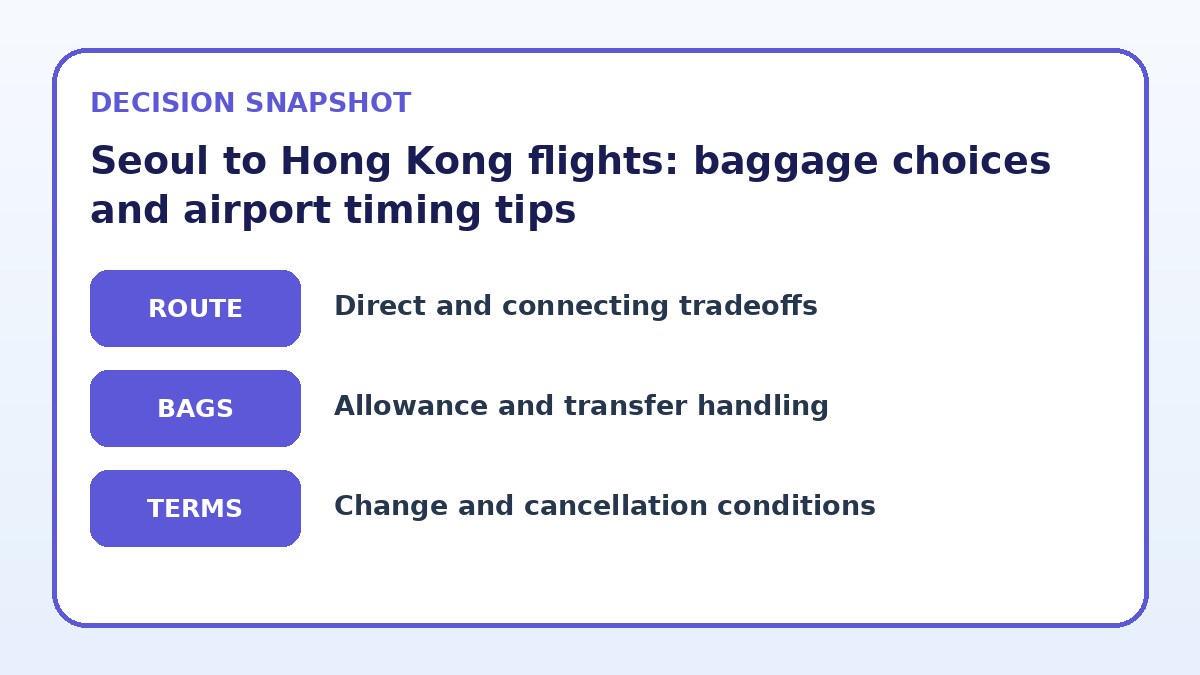
See current options before you compare the details
Availability and final conditions change. Open Trip.com now or keep reading for the practical comparison.
Decide your baggage strategy first
Start by matching luggage to your trip goals. If your visit to Hong Kong is short and you’re comfortable with minimal outfits and toiletries, a single cabin bag avoids the time spent at check-in and waiting at baggage claim. Carry-on-only means planning outfits that mix and match, consolidating liquids into a clear travel pouch, and using compression packing cubes to maximize space. For solo travelers, the freedom of moving through airports faster often outweighs the tighter packing constraints.
Checked baggage makes sense when you need bulkier items, longer wardrobes, or specialized gear. The tradeoff is time: drop-off desks at the Seoul departure airport can be busy and you’ll have to allow time at the Hong Kong arrival baggage hall. Also verify whether your fare includes checked allowance or charges per piece; those specifics can influence whether you choose to check a bag or intentionally travel light. Always confirm the latest size and weight limits on the carrier’s booking page before you finalize.
Plan airport arrival: timing and checkpoints
A reliable rule for international solo travel is to work backwards from your flight: build a buffer for check-in, security, and passport control. If you have only a cabin bag and checked-in online, arriving 90 minutes before departure can be sufficient at quieter times, but 120 minutes is a safer default. If you need to check luggage or travel during peak morning or evening windows, plan for 150 minutes or more to avoid stress. Also account for transit time to the terminal and any extra baggage checks or special screening requirements.
Keep in mind where lines form and how processing times vary by terminal and hour. Security queue speed depends on staffing and flight volume; passport control can be slower if many flights depart or arrive at once. If your itinerary includes a tight connection—whether in Seoul or Hong Kong—add more cushion or choose flights with longer transfer windows. Before you book, check the departure airport’s guidance and the airline’s recommended arrival time, and verify bag drop deadlines and boarding gate closing times on the final booking page.
| Approach | Best for | Tradeoff to check |
|---|---|---|
| Carry-on only | Short trips, fast airport transit, and solo travelers who value mobility | Limited clothing and no checked gear; stricter limits on liquids and size |
| Checked luggage | Longer stays, business travel, or when you need bulky items | Adds check-in and arrival time, and potential wait at baggage claim |
| Direct flight | Minimizing transfer uncertainty and simplifying baggage handling | Sometimes fewer schedule options or different price tradeoffs |
| Connecting flight with through-checked bags | Wider schedule choice while still avoiding intermediate baggage pickup | Requires careful connection-time planning and risk of missed connections |
Ready to check the option that fits your plan?
Use your exact dates and traveler details so the provider page can show the current total and conditions.
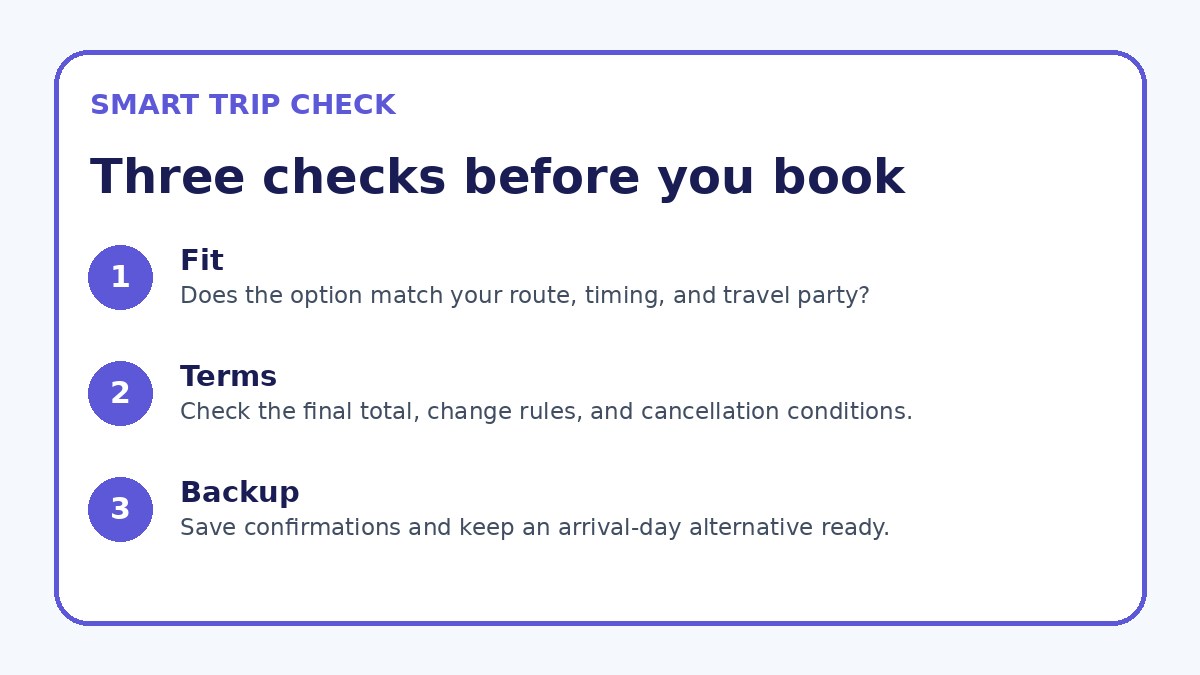
Comparing direct and connecting flight options
When evaluating Seoul to Hong Kong flights, compare direct versus connecting itineraries by total door-to-door time and how baggage is handled. Direct flights remove transfer uncertainty and simplify baggage flow: you check in once and collect only on arrival in Hong Kong. Connecting flights can sometimes reduce fare or open more schedule choices, but they introduce risks—missed connections, separate terminal transfers, or additional security and immigration checks—especially when you’re traveling solo and prefer predictable timelines.
If choosing a connection, verify whether your baggage is through-checked to Hong Kong or if you must reclaim and re-check it at the connecting airport. Through-checked bags save time and reduce the need to reroute to baggage claim between flights. Also examine minimum connection times quoted by the airline and factor in terminal transfer time. For flexible solo travelers, a modestly longer connection with a comfortable minimum layover offers fewer surprises than the shortest possible turnaround.
Before you book
- Confirm baggage allowance, dimensions, and weight limits on the airline’s booking page before finalizing your ticket.
- Check-in online as soon as the airline allows and save a digital boarding pass to reduce time at the airport.
- Measure and weigh your bags at home to avoid surprises at check-in and reduce the need to repack at the counter.
- Book airport transfer to arrive at the terminal with at least 90–150 minutes before departure, depending on baggage and peak-hour travel.
- Pack essentials (passport, visa documents if needed, meds, chargers, and a change of clothes) in your carry-on for quick access.
- Note gate and terminal details and sign up for airline flight alerts so you can adjust timing on the day if the schedule changes.
Day-of-airport workflow for solo travelers
Set up a clear sequence: arrival at the terminal, baggage drop (if needed), security screening, passport control, and then allow time to reach the gate. Keep passport, boarding pass, and any arrival documentation handy in an easily accessible compartment. If you checked in online, use most airports’ dedicated bag-drop lanes where available; they are usually faster than full-service counters. Factor restroom and refreshment stops into your plan so you board feeling comfortable and organized.
Use technology to reduce uncertainty: save your boarding pass to your phone’s wallet, enable airline app notifications, and take a photo of your passport and flight details in case of device failure. Solo travelers should also plan for contingencies—know where airline and airport customer service desks are located and, if you carry valuables or medication, pack them in your carry-on. Finally, leave extra time to handle unexpected delays and to reach the gate with time to spare, avoiding last-minute stress when boarding begins.
Frequently asked questions
How early should a solo traveler arrive at the Seoul airport for a flight to Hong Kong?
Aim to be at the terminal with enough time for your specific baggage situation and the time of day you’re flying. If you’re carry-on-only and checked in online, 90 to 120 minutes before departure is often sufficient, though many travelers prefer a 120-minute baseline. If you must check bags, travel during a peak period, or want extra cushion for possible traffic to the airport, allow 150 minutes or more. Always confirm the airline’s stated check-in and bag-drop deadlines on the final booking page, and adjust your arrival time to meet those deadlines.
Can I change from checked luggage to carry-on only after booking my Seoul to Hong Kong flight?
Yes, you can often choose not to check a bag even if your ticket includes a checked allowance, but this depends on the fare rules and carry-on size limits of your airline. Before you decide, check the airline’s cabin baggage size and weight policies on the booking page to ensure your bag complies. If you booked a fare that allows only a small personal item in the cabin, you may need to upgrade or confirm the allowed carry-on to avoid gate-checked bags. Verify any changes and potential fees directly with the airline before you travel.
What should solo travelers do if they have a tight connection on this route?
Prioritize booking flights with realistic connection windows and check whether your baggage is through-checked. If your itinerary has a short layover, choose a single-ticket itinerary where the airline is responsible for missed connections and baggage transfer—then confirm the minimum connect time on the airline’s booking page. If you must move between terminals or clear immigration, add extra buffer or rebook a longer layover. At the airport, move directly between gates, notify airline staff if your incoming flight is delayed, and consider requesting priority transfer assistance if available.
Final planning note
Organizing baggage and airport time for Seoul to Hong Kong flights comes down to a few practical choices: carry-on versus checked luggage, direct versus connecting itineraries, and how much buffer you need for the airport process. For solo travelers who value predictability, traveling light and choosing flights with comfortable boarding windows reduces stress and cuts time in queues. If you need checked bags or broader schedule options, plan additional arrival buffer and confirm whether bags are through-checked. Before you finalize booking, verify baggage rules, check-in and bag-drop deadlines, and connection policies on the airline’s final page—optionally compare availability on Trip.com—so your airport day runs as smoothly as possible.
Continue planning
Check current options and final conditions
Use the provider page to confirm live availability, the final total, cancellation terms, and every condition that matters to your trip.
This evergreen planning guide was created with AI-assisted drafting and a structured quality review. It does not display live prices, schedules, availability, visa guidance, or provider rankings. Verify current details before booking. Some links are affiliate links; we may earn a commission at no additional cost to you.