If you're booking an Istanbul car rental for a family trip, check a few specific insurance words before you commit—CDW/LDW, Liability, SCDW, theft protection, and passenger coverage. Those terms determine who pays for damage and medical costs after an incident, and differences in phrasing or limits can dramatically change your out‑of‑pocket exposure. Start by comparing the rental company’s header coverage with any bankcard benefits and a separate travel or car policy you already own. Don’t assume similar words mean identical protections: the deductible amount, exclusions for narrow streets or unpaved roads, and rules around named drivers and child seats are common surprises. Below I explain the practical tradeoffs families face and give a checklist of the things to verify on provider pages and your documents before you press “book.”
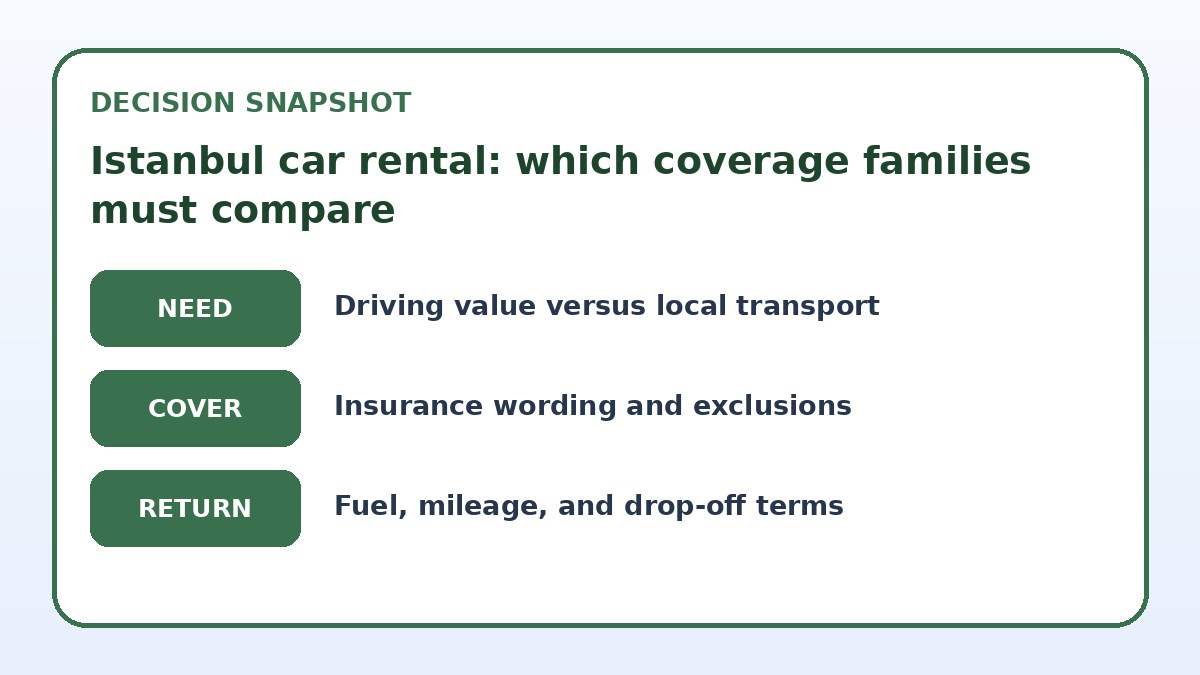
See current options before you compare the details
Availability and final conditions change. Open Trip.com now or keep reading for the practical comparison.
Key insurance words and what they actually mean
Rental contracts use shorthand that sounds similar across providers but can cover very different risks. Collision Damage Waiver (CDW) or Loss Damage Waiver (LDW) typically limits your financial liability for damage to the rental vehicle, but it rarely removes it entirely. The critical details are the excess (deductible) amount and exceptions. For families, a high excess can mean you need an emergency fund if a scratch or rear‑end bump occurs. Look also for terms like 'super' or 'zero' excess; these indicate options to reduce or remove the deductible, often for an extra daily fee or via a third‑party policy.
Liability coverage refers to damage you cause to other people or property and is often a minimum legal requirement supplied by the rental firm. Policies called Supplemental Liability Insurance (SLI) or Third‑Party Liability may raise the limit over the state minimum. This matters if you hit another vehicle or infrastructure and costs exceed basic coverage. Medical coverage for passengers, Personal Accident Insurance (PAI), and personal effects protection are additional lines you’ll want spelled out if you’re travelling with children, car seats, or high-value items because they are not always bundled with CDW.
Combining card benefits, third‑party cover, and the rental’s policy
Many families rely on credit card rental insurance or third‑party policies to reduce on‑the‑spot rental fees. A key step is to compare the card’s or insurer’s exclusions with the rental contract. For example, some card policies exclude SUVs, drivers under a certain age, rentals longer than a specified period, or damage on unpaved roads. If your card says it covers CDW but requires you to decline the rental company’s CDW at the desk, verify the exact wording and the claim process—some card insurers insist on an itemized repair bill and a police report from the local authority.
Third‑party 'super CDW' providers can offer real savings, but you must check whether they cover loss-of-use charges (the income the rental company claims while a car is being repaired), administrative fees, or towing. These charges are sometimes billed separately by the rental company and may not be reimbursed by a third‑party plan. Before booking, scan the rental provider’s final booking page for any statements that list additional potential fees, and confirm with the insurer what paperwork they require for a claim in Turkey.
| Approach | Best for | Tradeoff to check |
|---|---|---|
| Rely on the rental company’s basic CDW and local liability | Families wanting a simple, on‑desk solution without prearranged external policies | Usually higher deductibles and more exclusions; higher immediate financial exposure after damage |
| Pay rental firm for 'zero' or super‑CDW at pick‑up | Families who want minimal hassle and clear, on‑site coverage confirmation | Higher daily cost and some fees may not be refundable; verify exact protections in writing |
| Use credit card CDW benefits plus pay minimal local insurance | Families with strong card benefits who meet issuer conditions | Card policies often require you to decline rental CDW and follow strict claim procedures |
| Buy third‑party excess reimbursement before travel | Budget‑conscious families prepared to manage claims paperwork for lower overall cost | Potential delays and exclusions in reimbursement; may not cover administrative or loss‑of‑use fees |
Ready to check the option that fits your plan?
Use your exact dates and traveler details so the provider page can show the current total and conditions.
Common exclusions and family-specific pitfalls
Families often overlook exclusions that matter for typical itineraries. Driving on rural or unpaved roads, taking the car across defined administrative borders, or using vehicles for ridesharing or commercial purposes can void coverage. Child seats, for example, are a frequent area of confusion: a contract may say child seats are provided 'without extra insurance' — meaning damage to the seat might not be covered unless specified. If you plan to use ferries or park in uncovered areas while exploring, check for clauses related to theft from the vehicle and whether personal possessions are covered.
Another family-focused pitfall is the authorized driver list. Some rental agreements restrict drivers to those named on the contract, exclude drivers under a certain age, or impose steep young‑driver surcharges. If grandparents, teens with permits, or additional parents might swap drivers, add them explicitly in advance. Also examine windscreen, tyre, and undercarriage coverage; many firms exclude these or offer them as optional add‑ons, yet kids and luggage make low-speed parking bumps and roadside debris incidents more likely.
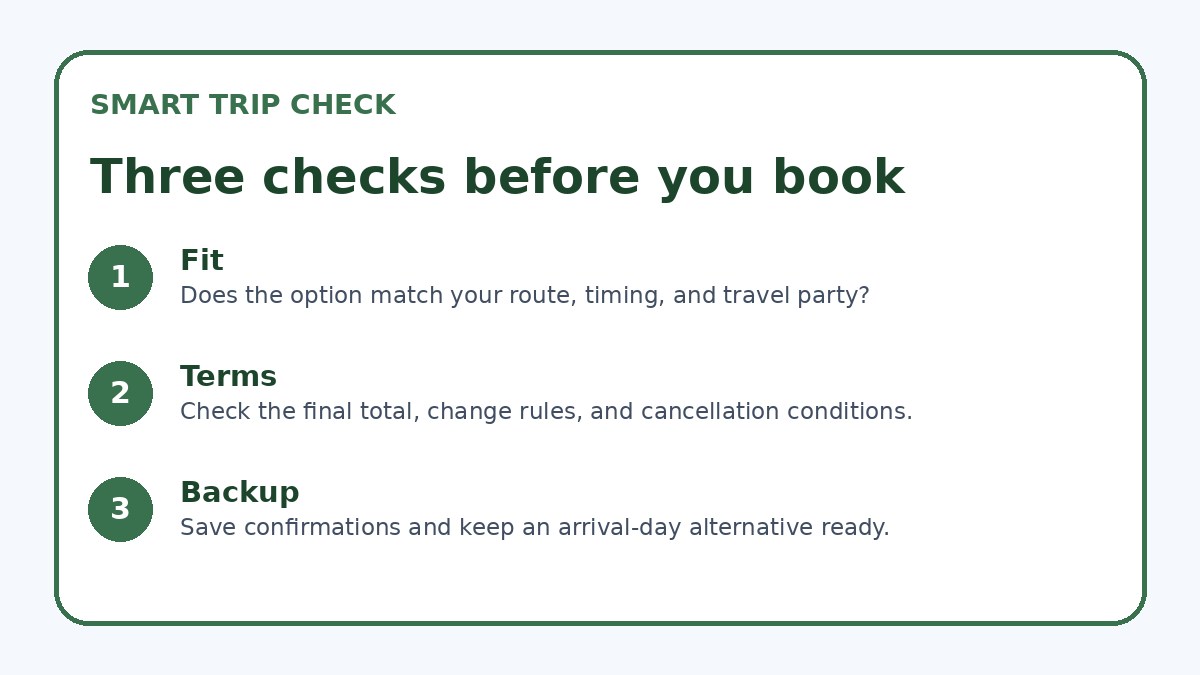
Before you book
- Save and print the rental company’s insurance summary shown at final checkout and compare it line‑by‑line with any credit card or third‑party policy.
- Confirm the deductible amount (excess) in euros or TRY and ask whether 'zero excess' options are available at the desk.
- List all intended drivers on the booking and check minimum age and licence requirements for each person who may drive.
- Ask explicitly about windscreen, tyre, undercarriage, and roof coverage and record any verbal confirmations in writing.
- If relying on a credit card benefit, call the issuer to confirm the coverage details, exclusions, and required claim documents before departure.
- Take photos of the car’s condition at pick‑up and drop‑off, keep the rental return receipt, and get a police report for any incident.
How to verify terms at booking and handle claims later
When you reach the final booking page, take screenshots or save the PDF of the vehicle terms and insurance summary presented at checkout. Verify the deductible, liability limits, named driver rules, and any stated exclusions. If the page references a separate 'rental agreement at the desk' that contains additional clauses, call or message the supplier to request that text before you travel. If Trip.com or another comparison site is showing the offer, use it to compare coverage phrasing but always confirm the insurer name, policy number, and the exact exclusions on the provider’s final booking page.
If you need to make a claim, immediate steps reduce friction: report incidents to local police and obtain a written report where required, photograph damage and the scene, notify the rental company immediately and keep all paperwork and invoices. For third‑party or card claims, follow their claim submission checklist precisely—missing an item such as the rental agreement or repair invoice is a common reason claims are denied. Keep digital and physical copies of the completed rental return form showing mileage and fuel level too, as disputes often arise over these details.
Frequently asked questions
Will my bank card’s insurance cover damage when I rent a car in Istanbul?
Many cards offer CDW/LDW coverage but the terms vary widely. You must check your issuer’s policy for exclusions such as vehicle categories (SUVs, vans), renter age limits, country exclusions, rental length caps, and whether the card requires you to decline the rental company’s CDW at the desk. Confirm what documentation the card needs for a claim—police reports, the rental agreement, itemized repair bills, and a damage statement from the rental company are commonly requested. Call your card provider before travel and get a written confirmation or policy reference number to show if needed at pickup.
Do I need extra insurance for child seats or personal items in the car?
Child seats and personal effects are often not fully covered by standard rental CDW. Some rental companies offer limited cover for child seats against damage, but theft or damage to items left in the vehicle (luggage, electronics) may fall under a separate personal effects policy. Check the rental agreement’s wording on 'personal belongings' and ask whether the supplier or your travel insurance covers lost or stolen items from a parked car. If you travel with expensive gear, consider adding specific personal effects coverage or keep items with you whenever parked.
What should I do at the rental desk to avoid surprises later?
At the desk, insist on a walkaround inspection recorded in writing, ask the agent to clarify the deductible and any optional waivers, and request a copy of the full rental terms before signing. If you decide to accept an extra cover, have the agent show precisely what it covers and ask them to annotate the rental agreement. Photograph the car from multiple angles with timestamps, confirm fuel policy and mileage, and make sure all drivers are listed on the contract. If any verbal promises are made, ask the agent to put them on the contract or provide a named email confirmation.
Final planning note
For families renting a car in Istanbul, understanding the insurance wording is as important as choosing the vehicle. Focus first on deductible amounts, named driver rules, theft and personal effects coverage, and common exclusions like unpaved roads. Compare the rental firm’s terms with any credit‑card benefits or third‑party excess policies, and confirm exactly what documentation each insurer requires. At pickup, document the car condition, get written confirmation of any verbal promises, and keep all paperwork for claims. Doing these checks in advance turns potentially stressful damage or theft incidents into manageable administrative tasks rather than sudden financial shocks.
Continue planning
Check current options and final conditions
Use the provider page to confirm live availability, the final total, cancellation terms, and every condition that matters to your trip.
This evergreen planning guide was created with AI-assisted drafting and a structured quality review. It does not display live prices, schedules, availability, visa guidance, or provider rankings. Verify current details before booking. Some links are affiliate links; we may earn a commission at no additional cost to you.