Practical answer up front: for most families traveling from Fukuoka to Hiroshima, prioritize tickets that allow easy changes or refunds and seat reservations that keep children together. Flexibility matters if your plans may shift, you need to manage naps, or you want the option to return earlier or later the same day. Decide whether you need fully refundable fares, semi-flexible reserved tickets, or a mixed approach that pairs a flexible outward ticket with a cheaper return. Look at the family’s tolerance for risk (illness, weather), how much you value guaranteed adjacent seats, and whether you’ll combine train segments with a ferry or local bus. Read the provider’s fine print before you pay: cancellation windows, change fees, and seat reservation rules are the practical details that determine whether a ticket is truly family-friendly.
See current options before you compare the details
Availability and final conditions change. Open Trip.com now or keep reading for the practical comparison.
What flexibility actually covers for families
Ticket flexibility is not a single feature; it’s a bundle of terms that affect families differently. Refundability covers whether you get money back if you cancel, while change policies dictate if you can shift date or time and how much that will cost. Seat reservations are another layer—some fares include assigned seats, others do not. For families, assigned adjacent seating is often more important than a small fare saving because it reduces stress and keeps children safe and comfortable.
Also consider ancillary flexibility: whether you can add a stroller to the booking, how child fares and infant policies are handled, and whether a ticket allows partial refunds if only some of the party travels. Some providers lock low-cost tickets into strict rules; others let you change travel time for a modest fee. Read the booking page to learn exactly which changes trigger fees, how refunds are processed, and whether you need to contact customer service to rearrange family seating—these operational details matter more than the headline fare.
Comparing flexible options: pros and cons
Fully refundable tickets give the clearest peace of mind: you can cancel for a refund and rebook as needed. That matters if a child’s illness or sudden schedule change is plausible. The tradeoff is that truly refundable fares can be pricier. For families, weigh that premium against the cost and stress of rebooking mid-trip. If you travel with a firm itinerary and short windows, the added cost of refundable tickets can be worthwhile for reducing last-minute scrambling.
Semi-flexible reserved tickets and flexible seat reservations are a middle ground. These often allow changes for a fee or permit swaps to other services of the same operator. They can be ideal when you want guaranteed seats but are comfortable paying a modest change fee. The downside is that fees and blackout days vary, so verify whether family seating is preserved when you change times, and look closely at the provider’s policy for partial group changes without losing seat assignments.
| Approach | Best for | Tradeoff to check |
|---|---|---|
| Fully refundable adult+child tickets | Families who need the highest peace of mind and expect possible cancellations or schedule shifts. | Usually costs more up front; may be unnecessary if your plans are fixed and predictable. |
| Semi-flexible reserved tickets with modest change fees | Families who want guaranteed adjacent seats but can accept a fee for timetable changes. | Change fees add up and rules vary by route; verify seat retention when altering bookings. |
| Advance non-refundable but reserved seats | Families with firm plans who prioritize saving money while avoiding split seating. | Lowest flexibility—illness or unexpected delays can force costly rebooking or alternative transport. |
| Mixed-mode approach (flexible out, cheaper return) | Families who want a safety cushion for the first leg and are willing to risk a cheaper return. | Requires managing two different policies; more paperwork and potential for confusion at changes. |
Ready to check the option that fits your plan?
Use your exact dates and traveler details so the provider page can show the current total and conditions.
Route-specific choices between trains, ferries, and mixed tickets
On the Fukuoka to Hiroshima corridor you’ll find different transport modes and ticket structures—express trains, local trains with reservations, and occasionally ferry segments if you choose a coastal route. Trains with reserved seating simplify family logistics because a reservation keeps your group together. If you consider a ferry as part of a scenic or cheaper option, check how that operator handles family changes and whether combined tickets (train + ferry) inherit the strictest policy between providers.
Connecting journeys increase complexity: each leg may have its own flexibility rules. When booking a single ticket that includes connections, confirm whether the operator protects you in the event of a missed connection. If you book legs separately, you gain flexibility to change one segment without affecting the other, but you also assume the risk and responsibility of making the connection on time. Families should balance the convenience of a through-ticket with the risk tolerance and the ability to coordinate transfers.
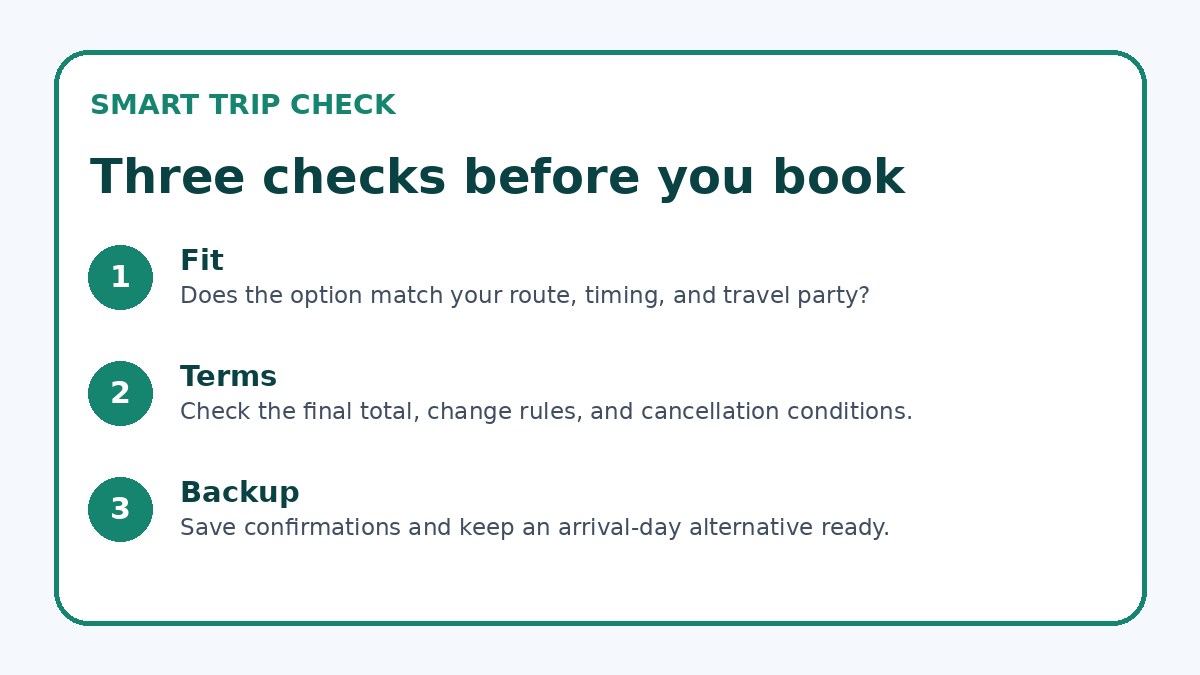
Before you book
- Confirm whether seat reservations are included and whether adjacent seats can be guaranteed for your party size.
- Check the exact change and cancellation windows and any fees listed on the provider’s final booking page.
- Ask how child fares, infants, and strollers are handled and whether those policies allow free changes.
- Decide whether to book a single through-ticket or separate legs, and evaluate how each option impacts flexibility.
- If combining train and ferry, verify which operator’s policy applies to combined bookings and connection protections.
- Save screenshots or PDFs of the booking terms and any customer service confirmation you receive before travel.
How to evaluate policies before you book
Always read the exact change and cancellation terms on the booking page before you confirm. Look for specifics: how many hours before departure you can change a ticket without penalty, what percentage or flat fee applies to refunds, and whether seat changes are free. If the site language is unclear, contact customer service and request written confirmation of family-friendly terms, especially around stroller storage and child seating. Where possible, screenshot or save the booking policy for reference.
Also test practical scenarios: ask how they handle a same-day change for a family with young children, whether you can add or remove a passenger and receive a proportional refund, and how they manage refunds if only part of a group cancels. If you use travel comparison platforms (Trip.com can be one option), use them to surface current availability but confirm the final policy on the provider’s official booking page. That final page is the contract that determines how flexible your trip really is.
Frequently asked questions
Is it better for families to reserve seats in advance between Fukuoka and Hiroshima?
Reserving seats generally reduces stress for families by keeping everyone together and avoiding last-minute scrambling. Advance reservations are particularly helpful during weekends, holidays, or school vacation periods when services can be busier. If you have infants, boosters, or need extra space for a stroller, a reservation makes it easier to secure the right seats. However, if your schedule is highly flexible and you prioritize low cost, you might accept unreserved seating—but be prepared for the possibility of separated seats.
How should I decide between a refundable ticket and a cheaper non-refundable fare?
Balance risk against cost: choose refundable fares if a sudden illness or an unexpected delay would seriously disrupt your trip or incur more expense than the fare difference. If your itinerary is firm and the family is healthy and experienced with travel timings, a non-refundable fare can save money. A hybrid option—flexible outbound, cheaper return—gives you a safety net leaving home and lowers cost on the second leg. Always compare the specific refund/change charges, not just the fare labels.
What practical steps protect a family if a connection is missed on a mixed itinerary?
First, allow realistic transfer time between legs and avoid tight schedules. If you book separate tickets, accept that you may need to buy a new ticket if you miss a connection; plan contingency funds. If you book a through-ticket that covers connections, confirm the operator’s policy on missed connections and who handles rebooking. Carry printed or digital confirmations, emergency contact numbers, and any child-related documents or medications easily accessible to speed interactions if you must rearrange travel on short notice.
Final planning note
Choosing the right ticket flexibility on the Fukuoka to Hiroshima route comes down to three family-specific questions: how likely is your plan to change, how important is guaranteed adjacent seating, and what extra cost are you willing to accept for peace of mind. Fully refundable fares minimize stress but cost more; semi-flexible reserved tickets often strike a balance by protecting seating while allowing changes for a fee. Mixed strategies—flexible outward travel paired with a cheaper return—can save money while preserving an escape hatch. Before you pay, verify cancellation windows, change fees, and seat reservation rules on the provider’s final booking page. Use those concrete terms to match the ticket to your family’s tolerance for uncertainty.
Continue planning
Check current options and final conditions
Use the provider page to confirm live availability, the final total, cancellation terms, and every condition that matters to your trip.
This evergreen planning guide was created with AI-assisted drafting and a structured quality review. It does not display live prices, schedules, availability, visa guidance, or provider rankings. Verify current details before booking. Some links are affiliate links; we may earn a commission at no additional cost to you.