Practical answer first: for most couples staying in central Auckland for a short city-focused visit, public transport plus walking and occasional rideshares will be easier and cheaper than renting a car; if you plan day trips to beaches, wineries, or scattered regional attractions, renting a car gives far more freedom and may save time. Your decision should hinge on your itinerary density, comfort with urban driving and parking, luggage and baby-seat needs, and how much you value spontaneous detours. This article compares the two approaches across convenience, cost factors to verify, flexibility, and stress levels so you can choose with confidence. I’ll also explain what to check on rental and transit provider pages before you book—because rules, fees, and vehicle availability change frequently. If you want a quick price/availability check after reading, you can compare options on Trip.com, but always cross‑verify the provider’s final booking page for exact terms.
See current options before you compare the details
Availability and final conditions change. Open Trip.com now or keep reading for the practical comparison.
How central Auckland moves without a car
Auckland’s city centre, waterfront and nearby neighbourhoods are walkable and linked by trains, buses and ferry services that cover common tourist sites. For couples who enjoy wandering between cafes, galleries and harbourside walks, public transit reduces the hassle of parking and lets you relax with a glass of wine without thinking about driving afterwards. Using a combination of rail for the main spine, buses for cross-town hops and ferries for trips to Devonport or Waiheke (subject to schedule checks) makes a car unnecessary for many short stays.
When planning around transit, think in terms of a couple’s daily rhythm: fewer long luggage transfers, more on-foot exploration, and potential dependence on schedules. That means packing light, choosing accommodation near a major stop, and building buffer time between activities. Before booking, check official operator pages for route maps and any service notices; verify whether your accommodation offers an easy walk to rail or frequent bus lines so you’re not trading the convenience of a car for long first/last-mile walks.
Where a rental car changes the game for couples
A rental becomes compelling when your itinerary includes dispersed attractions: regional beaches, wineries, volcanic cones outside the central area, or scenic drives around the harbour and west coast. A car lets you set your own pace, carry picnic gear or surfboards, and chase light for photos without matching ferry or bus timetables. For couples who value privacy in transit between sites and want to stop at viewpoints or small towns that lack frequent public service, driving is often the more efficient and enjoyable option.
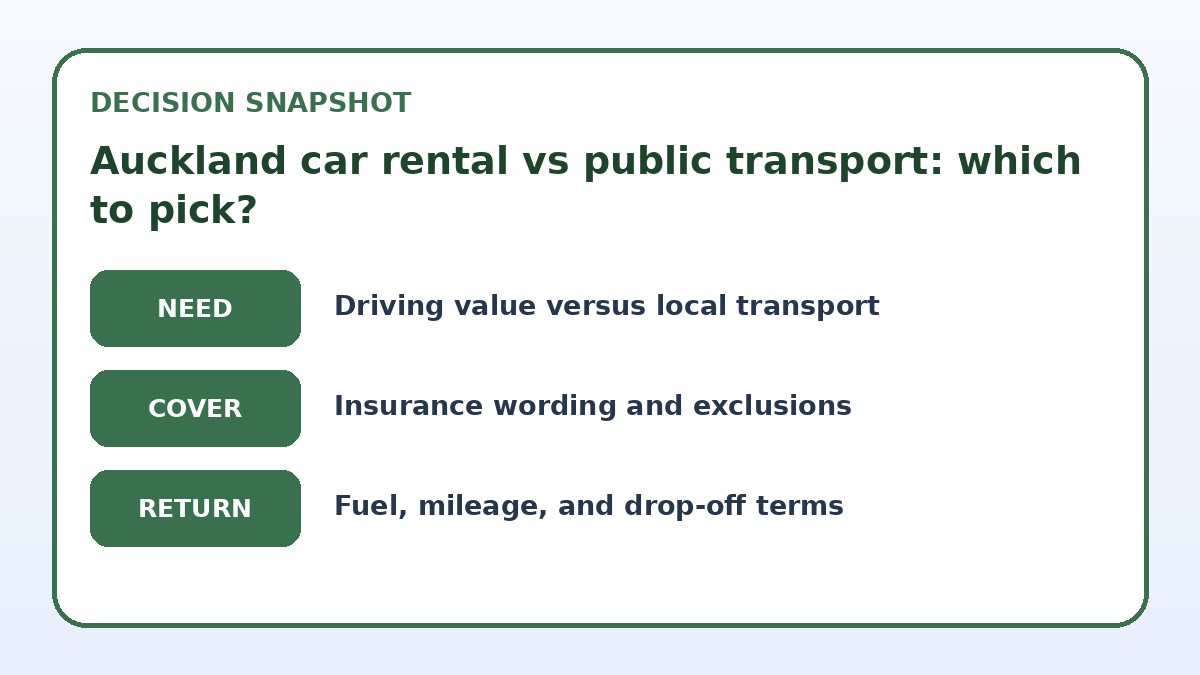
That said, a car comes with new tasks: finding and paying for parking, navigating unfamiliar streets, and making insurance decisions. Before you reserve, confirm the exact insurance inclusions and exclusions, whether additional drivers can be added, and what identification or permits you'll need. If you plan to visit islands or protected areas, verify vehicle restrictions and ferry transport options for cars on provider pages rather than relying on second‑hand reports.
| Approach | Best for | Tradeoff to check |
|---|---|---|
| Rent a car | Couples planning multiple day trips to beaches, wineries, or dispersed regional attractions. | Higher logistical overhead (parking, fuel, insurance) and stress when driving in an unfamiliar city. |
| Public transport | Short stays focused on central Auckland, waterfront walks, museums and dining without long regional drives. | Less flexibility for spontaneous detours and dependence on schedules for some destinations. |
| Mixed approach (transit + occasional hire) | Couples who want the city ease of transit but one or two private day trips to remote spots. | Requires extra planning to time rentals and may increase total per-day cost for short hires. |
| Rideshare and taxis | Couples who avoid driving but want door-to-door convenience for late evenings or short hops. | Can be convenient but may become expensive for repeated long-distance day trips. |
Ready to check the option that fits your plan?
Use your exact dates and traveler details so the provider page can show the current total and conditions.
Cost and convenience tradeoffs to weigh together
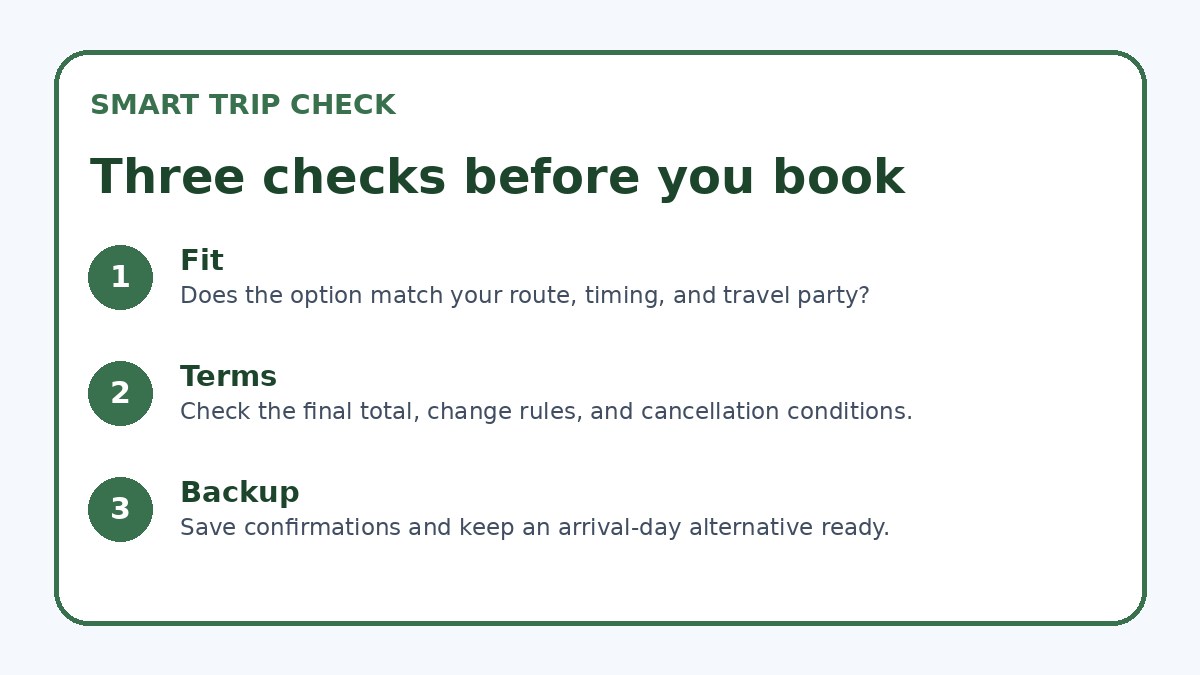
Comparing headline rental rates to transit fares alone is misleading. For rentals, add fuel, parking charges, congestion avoidance, insurance excess, and any one‑way or airport surcharges that may apply. For public transport, include multi-day passes, occasional rideshares or taxis when you’re tired at night, and the time cost of slower point-to-point travel. Couples should model a realistic day: list planned stops, estimate distances, and then allocate likely parking or transfer times to see which option preserves your vacation energy.
Also consider intangible costs: the relaxation of not driving after drinks, or the enjoyment of unplanned roadside stops. If you’re unsure about numbers, get quotes from rental providers and check transit pass options on operator sites, then run a simple spreadsheet comparing total expected spend and travel time across your typical day. Always double-check cancellation policies and fuel rules on the rental confirmation page so there are no surprises if plans change.
Before you book
- List your planned daily activities and mark which require a vehicle to reach directly—use that to test whether a car is necessary.
- Compare rental terms: insurance excess, additional driver fees, and fuel policy on the provider’s final booking page.
- Confirm parking options at each overnight stop and near major attractions, noting likely cost or time to find spaces.
- Check public transport maps and schedules for the exact dates you travel; identify the nearest stops to your accommodation.
- Estimate total travel time per day for each option and decide whether speed or relaxation is more important to your trip.
- If unsure, get a short one‑day rental quote to test driving and parking before committing to a longer hire.
Comfort, safety and accessibility for two people
Think about comfort needs unique to couples: a quiet car for a long scenic route, space for a stroller, or extra luggage room for shared gear. Public transport sometimes requires standing during peak times or dealing with crowded ferries; conversely, a car offers privacy and climate control but reduces opportunities for spontaneous local encounters. If mobility or health concerns matter, confirm accessibility features—low-floor buses, accessible train stations or vehicle options on rental pages—before you choose.
Safety perceptions matter too: navigating unfamiliar parking structures or one‑way streets can be tiring for drivers unused to local patterns, while night buses or late ferries may feel less convenient. Check operator advisories about late-night services and verify what roadside assistance and emergency support come with any rental policy. Planning routes with safety and comfort in mind will make the chosen mode fit your couple’s travel style rather than the other way around.
Frequently asked questions
Is renting a car in Auckland worth it for a weekend trip as a couple?
It depends on your weekend plan. If you’ll stay mostly in the central city—exploring waterfront areas, galleries and nearby neighbourhoods—you can save hassle with public transport and walking. If your weekend includes destinations spread around the region (more than one beach, a winery, or scenic coastal drives), a car may give significantly more time and flexibility. Weigh the extra planning for parking and insurance against the value of spontaneous stops and private travel when you decide.
How can couples minimize parking and driving stress if they rent a car?
Choose accommodation with secure or recommended parking and look for parking apps or maps before arrival. Plan routes to avoid peak congestion periods and familiarise yourselves with local signage and any toll or congestion zones via official transport pages. Share driving duties between partners if possible and confirm roadside assistance and contact numbers on your rental reservation. Packing light makes parking and manoeuvring in tighter spaces easier, and pre-booking longer-stay parking can reduce daily hassle.
Can you combine public transport with a short-term car hire when needed?
Yes—many couples use the city’s transit network for everyday exploration and hire a car for specific day trips. To make this smooth, book a flexible one-day or short-term rental that allows pickup in the city and drop-off in the same area; verify one-way restrictions on the rental confirmation page. Coordinate pick-up times with transit travel and allow buffer time for vehicle collection and return. This hybrid approach often balances cost, convenience and flexibility for couples.
Final planning note
Choosing between Auckland car rental and public transport as a couple boils down to your detailed itinerary and travel temperament. If you plan concentrated city experiences, saving energy and avoiding parking often makes transit the smarter pick; if you crave flexibility to explore wide-ranging coastlines, vineyards or scattered natural sites, a rental will unlock those options. Use the checklist to model expected travel time, confirm fees and insurance on provider pages, and consider a hybrid plan if you can’t decide. With a little forethought, you’ll match the transport mode to the experience you want to enjoy together.
Continue planning
Check current options and final conditions
Use the provider page to confirm live availability, the final total, cancellation terms, and every condition that matters to your trip.
This evergreen planning guide was created with AI-assisted drafting and a structured quality review. It does not display live prices, schedules, availability, visa guidance, or provider rankings. Verify current details before booking. Some links are affiliate links; we may earn a commission at no additional cost to you.