If you and your partner are planning Dubai to Doha flights, the practical question is simple: pick the ticket type and fare conditions that let both of you change or cancel without excessive fees, and verify the final rules at booking. Start by deciding whether flexibility or upfront cost matters most — refundable or flexible tickets reduce stress but usually cost more; restricted fares save money but can lock you in. For couples this also means considering how changes affect one passenger versus the whole booking, whether name changes are allowed, and how airlines handle missed connections or schedule changes. Before you finish payment, check the airline’s change fee, the window for free changes, refund processing time, and any spouse- or companion-specific policies. If you compare options on a third-party site such as Trip.com, remember to confirm the exact fare rules on the carrier’s booking page — that page is the final authority for penalties and refunds.
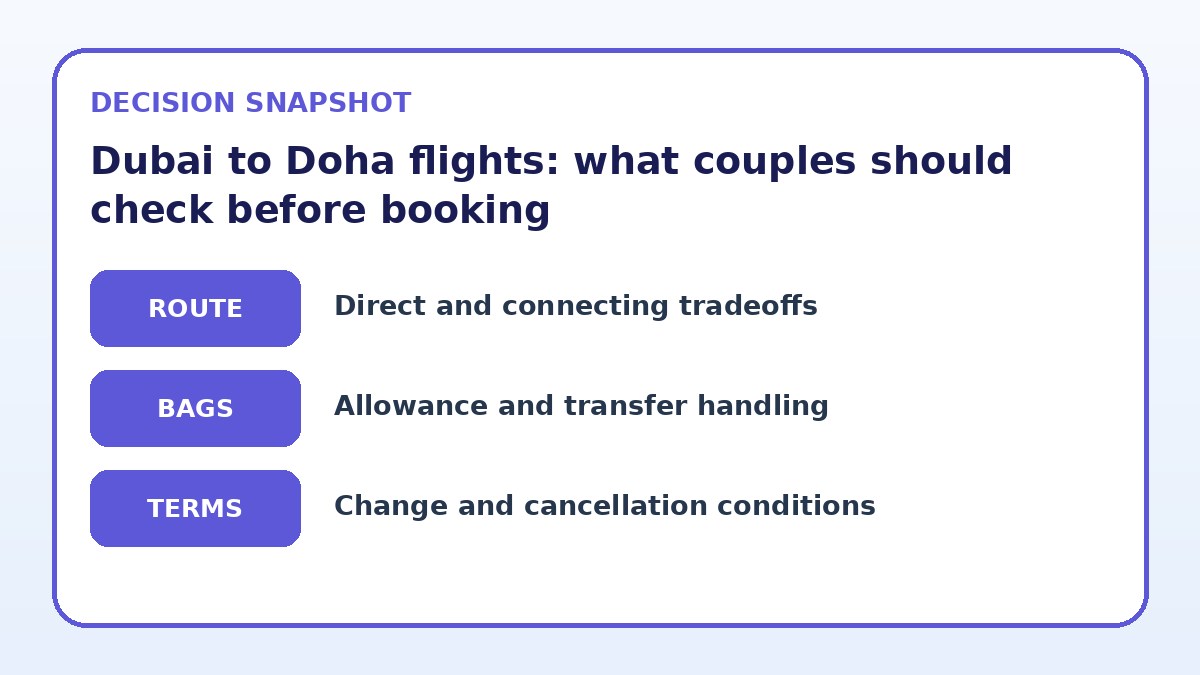
See current options before you compare the details
Availability and final conditions change. Open Trip.com now or keep reading for the practical comparison.
Understand the main fare families and what flexibility means
Airlines typically offer tiers such as basic, standard, and flex or refundable. For couples, the essential distinction is whether a fare allows free or low-cost date changes and whether cancellations yield a refund or a travel credit. Basic or deeply restricted fares often ban refunds and require a fee for date or name changes; flexible fares deliberately reduce or remove change fees. When you compare fares, read the fare rules for both passengers. If only one ticket is flexible, changing plans may still require altering the whole booking depending on how the airline treats the reservation.
Also pay attention to the conditions around voluntary changes versus involuntary disruptions. If the carrier changes the schedule significantly, many airlines offer rebooking or refunds without penalty; however the definition of “significant” varies. Couples should note whether rebooking options preserve connecting itineraries and whether refunds are returned to the original form of payment or issued as travel credit. Always confirm the timeline for refunds or credits, and whether any administrative charges apply to process refunds for both passengers.
How to compare direct and connecting options when rules differ
A direct flight may be priced differently from a route with a connection, and change/cancellation rules can differ between carriers and across each segment. If a single ticket includes a connecting airline, the most restrictive carrier’s rules can dominate the trio of conditions and affect rebooking. Couples should weigh the convenience of a non-stop against the potential complexity of rebooking multi-carrier itineraries — changing one segment on a codeshare could trigger different fees or require contact with a partner airline.
When comparing options, list the total change and refund exposure for both passengers under each itinerary. For example, a cheaper multi-carrier itinerary might save money up front but create more points of failure if one airline cancels. Conversely, a single-carrier direct ticket may make rebooking easier and faster for couples traveling together. Confirm on the final booking pages how changes are handled for each segment and who you contact to manage changes or refunds.
| Approach | Best for | Tradeoff to check |
|---|---|---|
| Buy fully refundable or flexible fares | Couples who want minimal rebooking hassle and predictable refunds | Higher upfront cost compared with restricted tickets |
| Choose restricted non-refundable fares | Couples with fixed plans who prioritize lower ticket prices | Change fees or no refunds increase financial risk if plans shift |
| Purchase basic fares plus change-waiver add-ons | Couples seeking a middle ground between cost and flexibility | Add-ons may not cover every scenario and can complicate claims |
| Use separate bookings for each partner | Couples with different travel certainty or separate onward plans | Higher risk of being separated on the flight and more management overhead |
Ready to check the option that fits your plan?
Use your exact dates and traveler details so the provider page can show the current total and conditions.
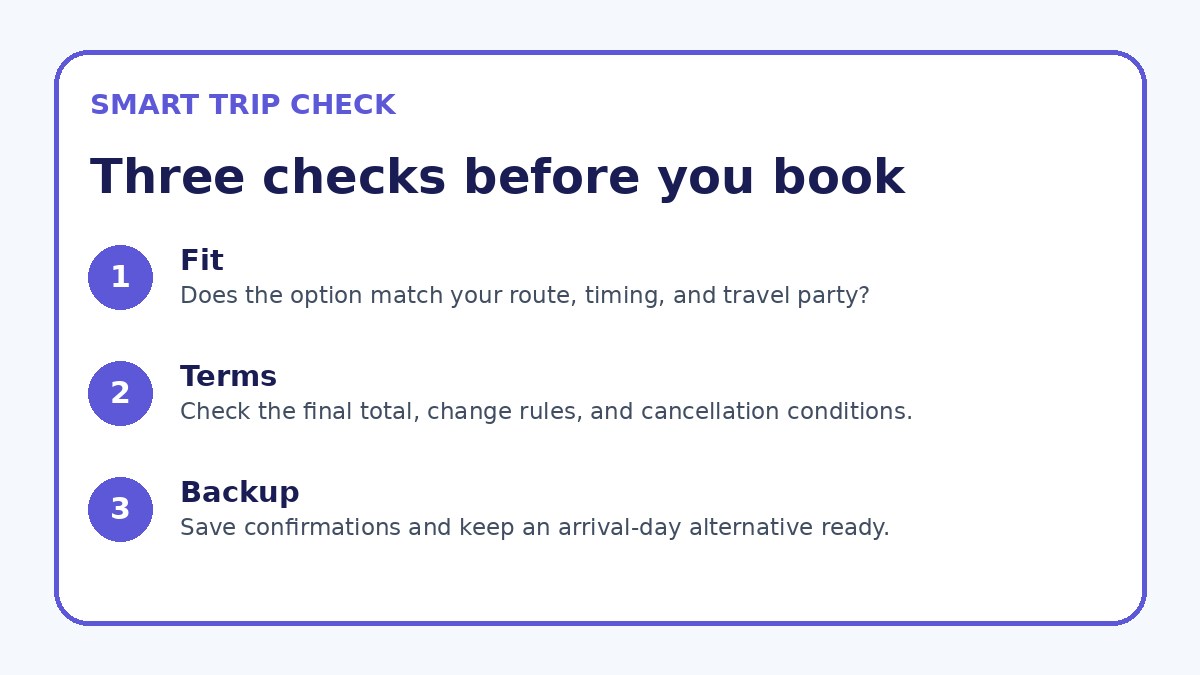
Couples’ booking strategies to reduce stress and extra costs
If you want to guarantee you remain together, book both passengers in a single PNR and choose seats at the time of purchase when possible. That keeps changes and reassignments coordinated and often simplifies communications with the airline. However, booking jointly can mean both passengers are affected equally by changes; in some situations you may prefer separate reservations if one traveler’s plans are less certain. Consider the trade-off: a single booking simplifies rebooking but ties your fates to the same rules.
Another useful tactic is to add flexible add-ons selectively: some carriers sell change-fee waivers, travel-credit protections, or refundable add-ons that are cheaper than full refundable fares. Check how those add-ons apply — do they cover both passengers or must each person be covered separately? Also compare travel insurance that covers trip cancellation for unforeseen events; read the policy terms carefully to see whether it covers refunds for illness, work reasons, or other common disruptions for couples.
Before you book
- Confirm whether change fees are charged per passenger or per reservation on the airline’s final booking page.
- Verify refund type and processing time: refundable to card, travel credit, or voucher and any administrative charges.
- Check the exact window when free changes apply (if any) and the definition of a significant schedule change.
- Decide whether to book one PNR for both travellers or separate reservations and document the reasons.
- Compare whether add-on protections (waivers, flexible bundles) apply to both passengers or must be bought twice.
- Save screenshots of fare rules and the final confirmation and note the customer service numbers to contact for changes.
What to verify on the final booking page and at check-in
Before you click pay, confirm the exact wording of change fees, refund eligibility, the window for free changes (if any), and the timeline for issuing refunds or credits. The airline’s booking confirmation will also show whether changes can be made online, require a call center, or must be processed at the airport. For couples, verify whether the fare rules are applied per passenger and whether the airline allows name corrections or transfers — most carriers don’t permit transferring tickets, but small corrections to spelling are commonly allowed within a limited time.
At check-in, reconfirm seat assignments and baggage allowances because last-minute upgrades or seat swaps can affect your ability to sit together. If you used a third-party site like Trip.com to compare options, use that site to locate fares but always click through to the carrier’s final booking page to complete the purchase. If anything in the confirmation contradicts the booking page terms, contact the airline immediately and save screenshots of the advertised rules and the final confirmation for any dispute.
Frequently asked questions
Can one partner change their ticket without disrupting the other person’s reservation?
Sometimes. If you booked two separate reservations, one partner can usually change their ticket independently, subject to that fare’s rules. If you booked both passengers on the same PNR, most airlines treat the booking as a single unit: changes that affect travel dates, flights, or cancellations will typically apply to the whole reservation unless the carrier offers the option to split or reissue the tickets. Before booking, check whether the airline allows splitting bookings or making individual changes and what fees or reissue charges may apply for doing so.
What counts as a significant schedule change that allows free rebooking or refunds?
There is no universal standard: each airline defines what it considers ‘significant’ — it may be a change in departure or arrival time beyond a stated number of hours, a reroute, or a cancellation. Some carriers specify the threshold in their policies, while others handle changes case by case. For couples, look for the exact definitions on the airline’s booking page and capture them in screenshots. When an airline invokes a significant change, you should be offered options such as rebooking without penalty, accepting a credit, or requesting a refund.
Is travel insurance a better option than buying a flexible fare for a couple?
It depends on your priorities. Flexible fares provide built-in airline-level protections — usually straightforward to use for date changes or cancellations processed by the carrier. Travel insurance can cover reasons outside the airline’s policy, such as illness, certain work issues, or other insured events, but policies vary widely and have exclusions, waiting periods, and claim requirements. For couples, compare the incremental cost of flexible fares against the premium and coverage terms of a policy to decide which combination meets your risk tolerance and budget.
Final planning note
For couples traveling Dubai to Doha, the primary decision is whether to pay more up front for flexibility or accept the savings and tolerate potential change fees. Book both passengers on one PNR when you want coordinated treatment and easier rebooking, but consider separate tickets if one partner’s plans are uncertain. Always confirm change fees, refund types, and the carrier’s definition of a significant schedule change on the airline’s final booking page — third-party sites are useful for comparison but not definitive. Use add-ons or insurance selectively, and save documentation at purchase so you can act quickly if plans change.
Continue planning
Check current options and final conditions
Use the provider page to confirm live availability, the final total, cancellation terms, and every condition that matters to your trip.
This evergreen planning guide was created with AI-assisted drafting and a structured quality review. It does not display live prices, schedules, availability, visa guidance, or provider rankings. Verify current details before booking. Some links are affiliate links; we may earn a commission at no additional cost to you.