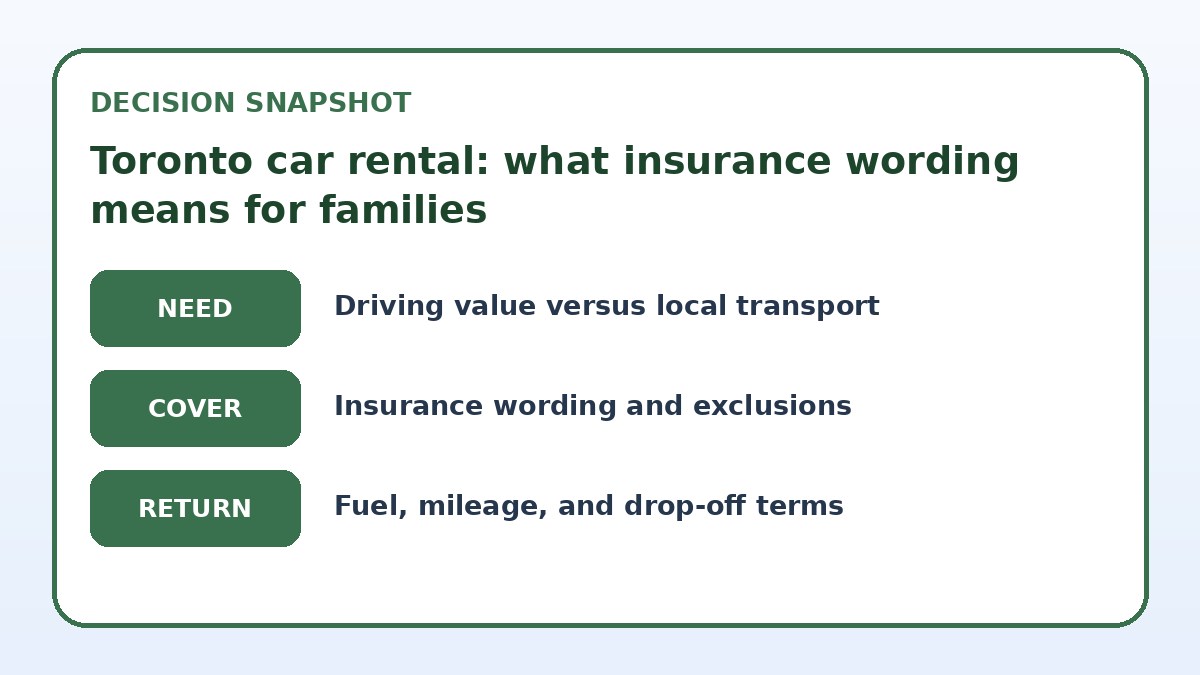
Practical answer up front: when renting a car in Toronto for a family, focus on liability limits, collision damage waiver (CDW)/loss damage waiver (LDW) wording, supplemental liability insurance, and the exclusions section. Ask the rental counter to show the full insurance document before signing and verify whether your personal auto insurance or credit card provides primary or secondary coverage. If traveling with children, confirm child seat requirements and whether vehicle damage affecting safety items (airbags, child-seat anchors) could trigger exclusions. Keep a clear photo of the rental agreement and insurance page on your phone. These steps reduce surprises, speed up claims if something happens, and help you decide if buying extra coverage at pickup is worth it for peace of mind.
Understand the core insurance phrases you’ll see
Rental contracts use a handful of terms repeatedly: Collision Damage Waiver (CDW) or Loss Damage Waiver (LDW) limits your financial responsibility for damage to the rental vehicle; Supplemental Liability Insurance (SLI) increases liability protection for third-party claims; and Personal Accident Insurance (PAI) covers driver and passenger medical costs. These labels describe what the rental company offers but do not always mean full coverage. Wording will spell out deductibles, exclusions, and whether damage caused by certain acts—like driving on unpaved roads or leaving a child-seat unsecured—is excluded. Families should pay attention to exclusions that could affect safety equipment.
Also locate definitions for ‘loss of use’ and administrative fees. Loss of use is the rental company’s claim for income lost while the vehicle is being repaired, and some policies exclude it or limit recovery. Administrative fees are charged to process damage claims; even with CDW/LDW you may still face these charges unless the waiver explicitly covers them. Read the phrasing about who is an authorized driver and whether adding a spouse or teen driver is automatic or requires an extra fee and documentation. These small phrases change the financial outcome if something happens during your trip.
How to compare your personal auto and credit card coverage
Before you book, contact your personal auto insurer and your credit card issuer to confirm rental-car coverage in Canada. Ask whether coverage is primary—meaning it pays before your personal policy—or secondary, meaning it only steps in after you make a claim on your personal policy. For family rentals, verify limits for third-party liability, whether coverage extends to additional drivers (spouse or partner), and whether it applies to larger vehicles or specific vehicle classes you might rent in Toronto. Get the insurer’s exact clause names and, if possible, a policy number or benefit guide reference to compare with the rental contract language.
Credit cards often offer secondary CDW/LDW and may exclude commercial rentals, certain vehicle types, or rentals beyond a set number of days. They can be useful to reduce out-of-pocket replacement costs, but a secondary card benefit could still leave you exposed to deductibles, loss of use, or administrative fees. If your card does provide primary rental coverage, ask what paperwork they require after an incident—police reports, the rental agreement, and official repair invoices—and note the claim deadlines. Keeping this checklist at pickup speeds up any later claims process.
| Approach | Best for | Tradeoff to check |
|---|---|---|
| Rely on your personal auto insurance | Families with comprehensive primary coverage at home | May become primary claimant with possible premium impact and might not cover loss-of-use or child-seat specifics |
| Use credit card rental coverage | Travellers with premium cards offering rental benefits | Often secondary; check exclusions, paperwork requirements, and vehicle class limits |
| Buy the rental company’s CDW/LDW | Families seeking simplicity and immediate peace of mind | Higher upfront cost and variable wording—verify whether it covers loss-of-use and administrative fees |
| Add supplemental liability or PAI | Families worried about third-party injury and medical expenses | Overlap with personal policies possible; confirm exact coverage to avoid duplicating benefits |
Family-specific risks and child-safety wording to inspect
Families should examine any clause that mentions child safety restraints, airbag system damage, and tether/anchor safeguards. Some contracts exclude coverage for damage caused while a child seat is installed incorrectly or if the seat’s anchoring hardware is damaged during use. That means a minor incident that affects anchor points could become costly if the waiver doesn’t cover it. Confirm who is authorized to install or inspect child seats and whether using a third-party child seat changes the rental company’s liability stance. If the agency supplies seats, ask for a printed document listing their condition and any warranties.
Also check the authorized driver and age-related sections. Some discounts or waivers exclude drivers under a certain age or require an additional young-driver fee. For larger families renting SUVs or vans, verify whether the vehicle class is accepted by your insurer or credit card benefit. Wording that restricts coverage to specific vehicle categories can leave you unexpectedly uninsured if you upgrade at the counter. If traveling with multiple drivers, add them to the contract and request their names on the insurance page to avoid disputes later.
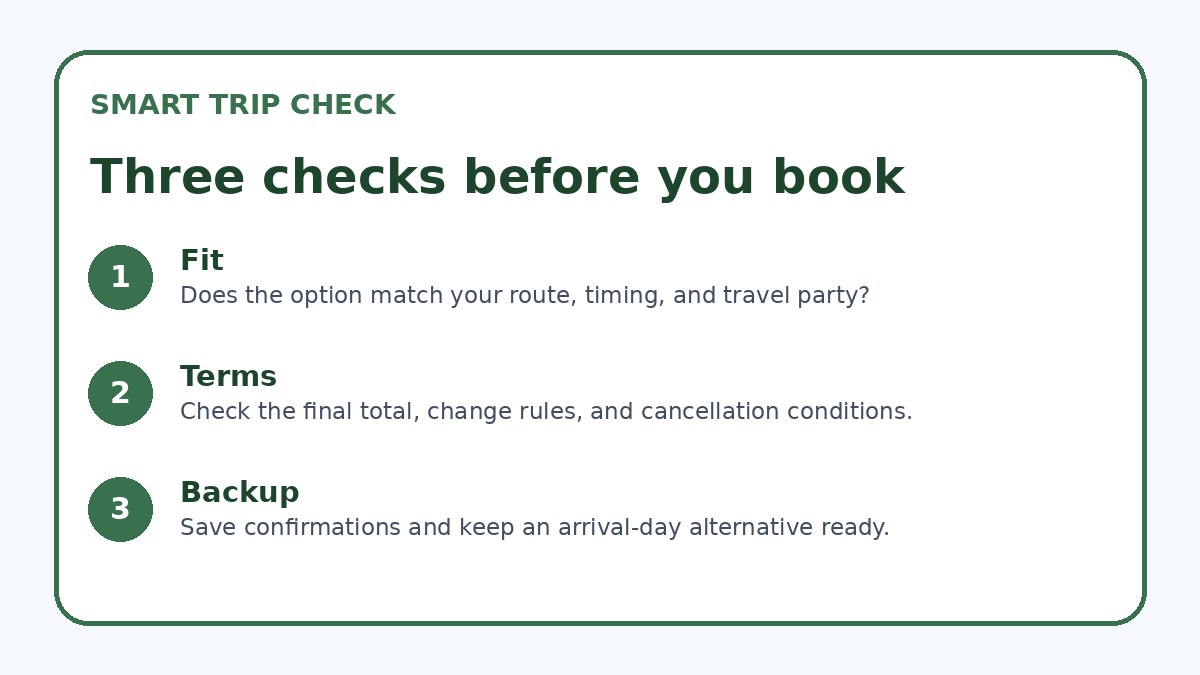
Before you book
- Call your personal auto insurer and ask whether rental coverage in Canada is primary or secondary, what limits apply, and whether it covers larger vehicle classes.
- Contact your credit card issuer to request the rental coverage guide, confirm primary/secondary status, covered vehicle types, and claim documentation requirements.
- At pickup, insist the agent point out the insurance section and initial it; take time-stamped photos of the entire agreement and insurance pages.
- Photograph the rental vehicle thoroughly—every angle, pre-existing damage, odometer, and child-seat anchor points—and email the images to yourself.
- If you accept extra coverage, get a printed product summary showing specific inclusions and exclusions, then compare it to your insurer/card benefits.
- Keep a written record of all telephone calls (time, date, person spoken to) with insurers and card companies related to the rental coverage verification.
What to verify at pickup and in your photos
At pickup, ask the agent to point out and initial the insurance page in your copy of the rental agreement. Read aloud any dollar amounts listed for deductibles, liability limits, and named exclusions and keep the agent’s name and badge number. Photograph every page showing insurance and your signatures, and take time-stamped photos of the vehicle from multiple angles, focusing on pre-existing damage, child-seat anchor points, and odometer readings. Put these images in a dedicated folder and email a copy to yourself so they’re accessible if you need to file a claim days later.
If the agent offers additional coverage, request the exact legal name of the product and a printed summary of what it covers and excludes before you accept. Ask whether the coverage replaces or supplements your existing insurance and whether it covers loss of use and administrative costs. If you’re unsure, tell the agent you need a few minutes to phone your insurer or credit card company and do so in view of the agent—this documents that you verified coverage at the time of pickup. Keep a record of the call, including names and times, to support any later dispute.
Frequently asked questions
Does a Canadian rental company’s CDW/LDW replace the need for my own insurance or credit card coverage?
CDW/LDW can reduce or eliminate your financial responsibility for damage to the rental vehicle, but policies differ. Some waivers cover physical damage only and exclude loss-of-use and administrative fees; others may not cover damage to tires, windshields, or child-seat anchor points. If your personal insurance or credit card provides primary coverage, declining CDW might be reasonable, but you must confirm how claims are handled and whether your policy’s deductible or premium changes. Always compare the exact wording and confirm what paperwork is required if you need to file a claim.
If my child’s car seat is damaged during the rental, will insurance cover replacement or related claims?
Coverage for child-seat damage varies and is often detailed under exclusions or accessory sections. Some rental waivers explicitly exclude damage caused by incorrectly installed third-party child seats or limit liability for child-safety devices. If the agency supplies a seat, ask for a condition report and make sure damage to anchor points or airbag systems is covered by the purchased waiver or your insurer. Photograph the seat and anchor points at pickup and return; those images and the signed agreement will be crucial if you need reimbursement.
How do I handle a dispute over damage charges when returning the car in Toronto?
If the rental company alleges new damage, request an itemized damage report and the exact wording they rely on in the contract. Present your pickup photos and the photographed agreement pages; ask to speak with a manager if the initial agent cannot resolve it. If your insurer or credit card is involved, notify them immediately and follow their claims procedure—this usually needs the rental agreement, photos, and an incident report. Keep copies of all emails and names of staff you speak with; these records are often decisive in resolving loss-of-use or administrative fee disputes.
Final planning note
Families renting in Toronto can reduce stress by reading policy wording carefully, verifying what home and card benefits actually cover, and documenting everything at pickup. Prioritize clear answers on liability limits, deductibles, loss-of-use, and how child-safety equipment is treated. When in doubt, get a printed summary of any product offered at the counter and take time-stamped photos of the agreement and vehicle condition. These practical steps help you choose whether to accept additional coverage, ensure quick claims handling if needed, and protect your family from unexpected costs so you can focus on your trip.
Continue planning
Check current options and final conditions
Use the provider page to confirm live availability, the final total, cancellation terms, and every condition that matters to your trip.
This evergreen planning guide was created with AI-assisted drafting and a structured quality review. It does not display live prices, schedules, availability, visa guidance, or provider rankings. Verify current details before booking. Some links are affiliate links; we may earn a commission at no additional cost to you.