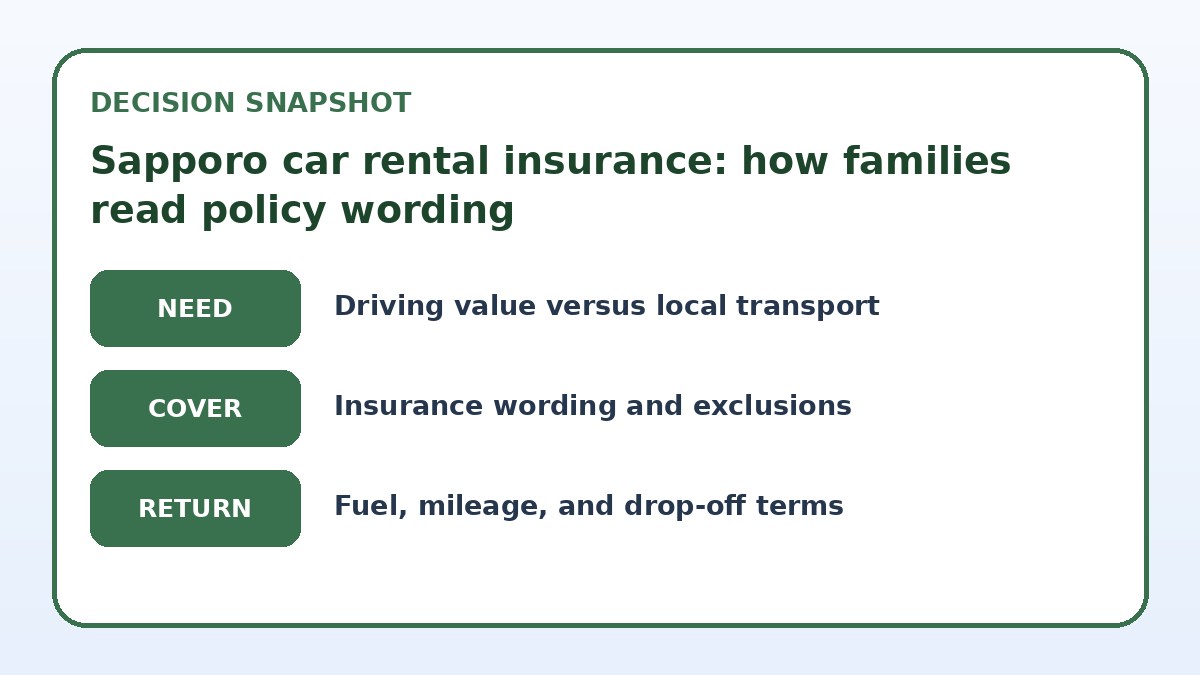
If you’re planning a family road trip from Sapporo, read the insurance wording before you add optional cover. The practical first step is simple: verify liability limits, collision damage waiver (CDW) terms, who’s an authorised driver, child-seat coverage, and how winter-related incidents are treated. Those five checks tell you whether a quoted policy will actually protect your family, or leave you with surprise costs and stress. After that, decide whether to accept the rental company’s supplements, buy third‑party cover, or rely on a card/household policy — each choice has tradeoffs involving excess levels, emergency support, and paperwork when something goes wrong.
Who counts as a covered driver — read the definitions
Insurance wording often hinges on how it defines an authorised or covered driver. For families this matters: grandparents, young adult children, or temporary local drivers sometimes help with driving duties. Look for explicit phrases such as “named drivers,” “additional authorised drivers,” or “any competent driver.” If the policy uses “named drivers,” only those listed on the rental agreement will be covered. If it allows “additional authorised drivers,” check whether adding them requires a fee and whether their ages or licence histories are restricted.
Also check licence requirements and how foreign licences are treated. Wording will say whether an international driving permit is needed alongside a home-country licence and whether licences must be held for a minimum time (for example, one year). Some policies exclude drivers under a certain age or with less than a specified licence history. Finally, confirm how the insurer handles driving by someone not listed on the contract in an emergency—does the wording allow coverage or provide only limited protection?
Collision, excess, and the fine print on damage types
Collision Damage Waiver (CDW) and excess (sometimes called deductible) language determines who pays upfront when the car is damaged. The policy will usually state an excess amount and list damage types covered by CDW. Families should scan for specific exclusions: windscreens, mirrors, undercarriage, tyres, and roof damage are commonly either excluded or limited. If the wording excludes these, you’ll face repair bills even with CDW. Also check whether CDW eliminates any contractual liability or just reduces it—some CDWs cap liability but leave you responsible for negligence or prohibited uses.
Understand how and when excess is reimbursed. Wording should outline claim procedure: police reports, drop-off inspections, and timeframes for submitting evidence and invoices. Some policies reimburse excess only after the rental company processes the claim and issues an invoice, which can take weeks. Families should note whether temporary holds on cards are mentioned and how long parks or holds may remain against the payment card—this affects holiday budgets and cash flow.
| Approach | Best for | Tradeoff to check |
|---|---|---|
| Buy the rental company’s full cover | Those wanting single-point support and fast on-the-spot handling | Higher daily cost and possible gaps for specific items like tyres or windscreen damage |
| Third-party excess-waiver from an independent insurer | Families aiming to lower excess and avoid rental desk pricey add-ons | You’ll manage claims separately and need to meet the independent insurer’s claim requirements |
| Use credit-card or home insurance cover | Cardholders with existing travel insurance who want to avoid extra rental charges | Coverage wording often excludes family-specific items or requires primary claim via card issuer |
| Minimal cover plus pay-as-you-go | Those comfortable assuming small repair costs and saving on upfront premiums | Exposure to larger unexpected bills and administrative hassle after an incident |
Third-party and liability coverage that protects people, not just the car
Liability coverage (often called third-party liability) is crucial because it covers damage and injury you cause to others. Insurance wording will state limit amounts and whether the limit is per incident or per person. Families should verify that passenger injury — including children traveling in the vehicle — is explicitly covered by the liability provision. Some policies also outline legal costs and towing or roadside assistance as part of liability cover; others do not. If wording uses vague phrases like “subject to statutory limits,” confirm what those limits mean in practice for Hokkaido and Sapporo.
Also watch for wording about cross-border or out-of-region travel. If your trip plans include driving outside Hokkaido, the policy may exclude incidents that occur beyond Sapporo city limits or outside Japan. Confirm whether third-party liability covers hired drivers, chauffeured services, or taxi-like uses — family needs sometimes push a rental into nonstandard uses, and coverage wording will say whether that voids liability protections.
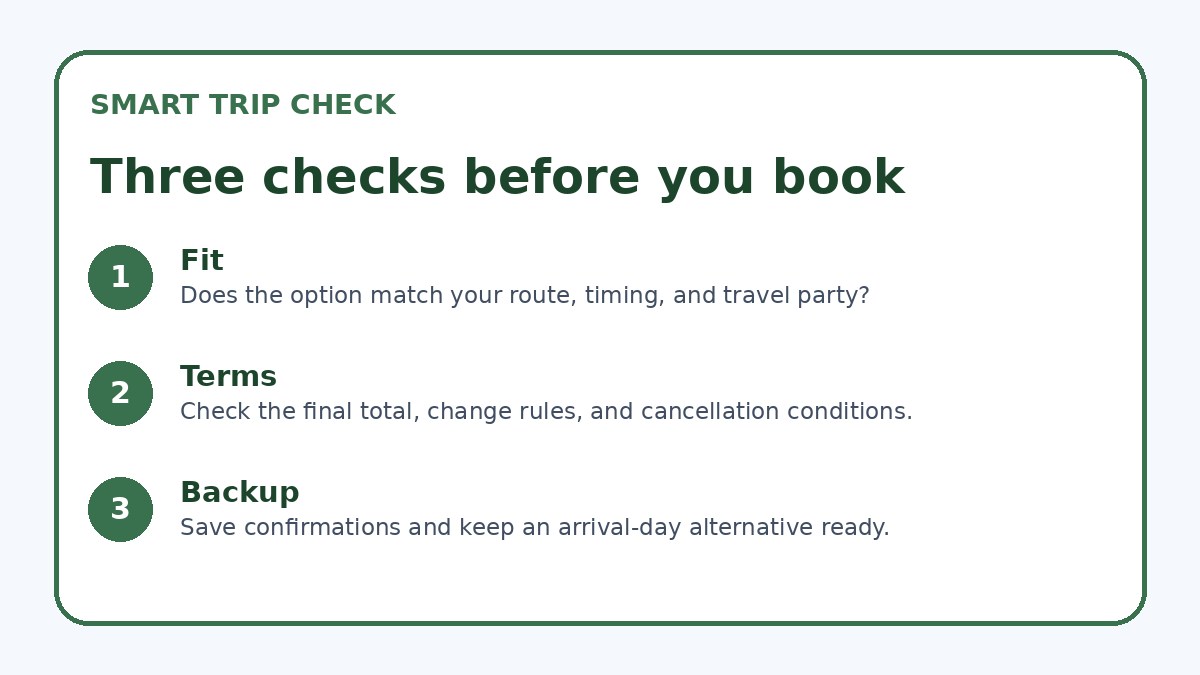
Before you book
- Confirm every intended driver’s name and licence details are listed on the rental agreement and match the policy’s definition of ‘authorised driver’.
- Get a written explanation of what the CDW/excess covers, including whether windscreens, tyres, undercarriage, and roof damage are included or excluded.
- Ask the rental agent to note any winter-equipment requirements in writing and check that the policy wording mentions snow-related incident treatment.
- Verify child-seat coverage terms: who is liable for damage to rented seats and whether injury to a child is covered by personal accident clauses.
- Photograph the vehicle’s condition at pick-up and drop-off with time-stamped images and keep inspection reports and police statements if an incident occurs.
- If using third-party or card-based cover, print the insurer’s claim steps and required documents, and confirm any excess reimbursement timeframe on the provider’s booking page.
Winter driving, exclusions, and child-seat specifics
Sapporo’s winter conditions bring specific insurance wording to the fore. Policies often specify cover limits for snow-related incidents, such as sliding into barriers, getting stuck in snow, or damage from fitted snow chains. Check whether the insurer explicitly requires snow tyres or chains to be fitted to preserve cover, and whether failure to follow winter driving advice voids a claim. Wording that references “reasonable precautions” or “manufacturer‑recommended winter equipment” usually means the insurer expects you to use snow tyres or chains when conditions demand them.
Child-seat language is another family priority. Some rental contracts include clauses about liability for damage to child restraints, loss, or misuse. The wording may also state whether injury to a child secured in a hired seat is covered under personal accident insurance or treated separately. Verify any conditions for making a child-seat claim—such as installation standards, whether the seat was approved for the vehicle, or if professional fitting was required. Where wording is unclear, ask the rental provider to put clarifying notes on the hire agreement.
Frequently asked questions
Can I rely on my credit card’s insurance for a family rental in Sapporo?
Credit-card insurance can be useful but read the card’s wording carefully. Many card policies cover CDW or collision losses only if you pay for the rental with that card, and they often exclude specific items such as child-seat damage or windscreen repairs. Some cards treat family claims differently, require primary claim submission to the card issuer, or set driver-age limits. Before you decline rental-supplier cover, request the card insurer’s exact wording on authorised drivers, excess reimbursement procedure, and any exclusions that would affect a family trip.
If our rented car slides on icy roads, will typical CDW cover that damage?
It depends on the phrasing. Some CDWs cover collision damage generally, but others exclude damage caused by driver negligence or by using the vehicle in conditions where winter equipment was required but not used. Wording may reference “reasonable precautions” or “compliance with manufacturer guidelines” — interpret these clauses as obligations to use snow tyres or chains when needed. If the policy mentions snow-related exclusions, ask the rental company to clarify in writing when coverage would be void after an ice-related incident.
How do I handle a claim if a child-seat is damaged or an injury occurs?
Start by following procedures the rental contract and insurer specify: secure medical attention if needed, file a police report for significant incidents, and keep all receipts. The policy wording will indicate whether child-seat damage is part of the CDW, an extra rental liability, or excluded. For injury claims, check whether personal accident or passenger liability clauses apply. When using third-party cover, you’ll usually submit documentation to that provider as well as the rental company. Always note exact wording on the rental agreement and preserve photos and inspection records.
Final planning note
For families renting in Sapporo, insurance wording is not background detail — it determines who pays and who gets help when things go wrong. Focus on the definitions of authorised drivers, exact CDW coverage and excess conditions, liability wording for passengers, and explicit statements about winter driving and child-seat treatment. Once you understand those clauses, weigh convenience versus cost: the rental company’s cover can simplify claims, while third-party or card options can reduce excess but require more paperwork. Before booking, verify any provider-specific terms on the final booking page — and consider checking current offerings on comparison sites such as Trip.com if you want an easy way to view coverage summaries side by side.
Continue planning
Check current options and final conditions
Use the provider page to confirm live availability, the final total, cancellation terms, and every condition that matters to your trip.
This evergreen planning guide was created with AI-assisted drafting and a structured quality review. It does not display live prices, schedules, availability, visa guidance, or provider rankings. Verify current details before booking. Some links are affiliate links; we may earn a commission at no additional cost to you.