
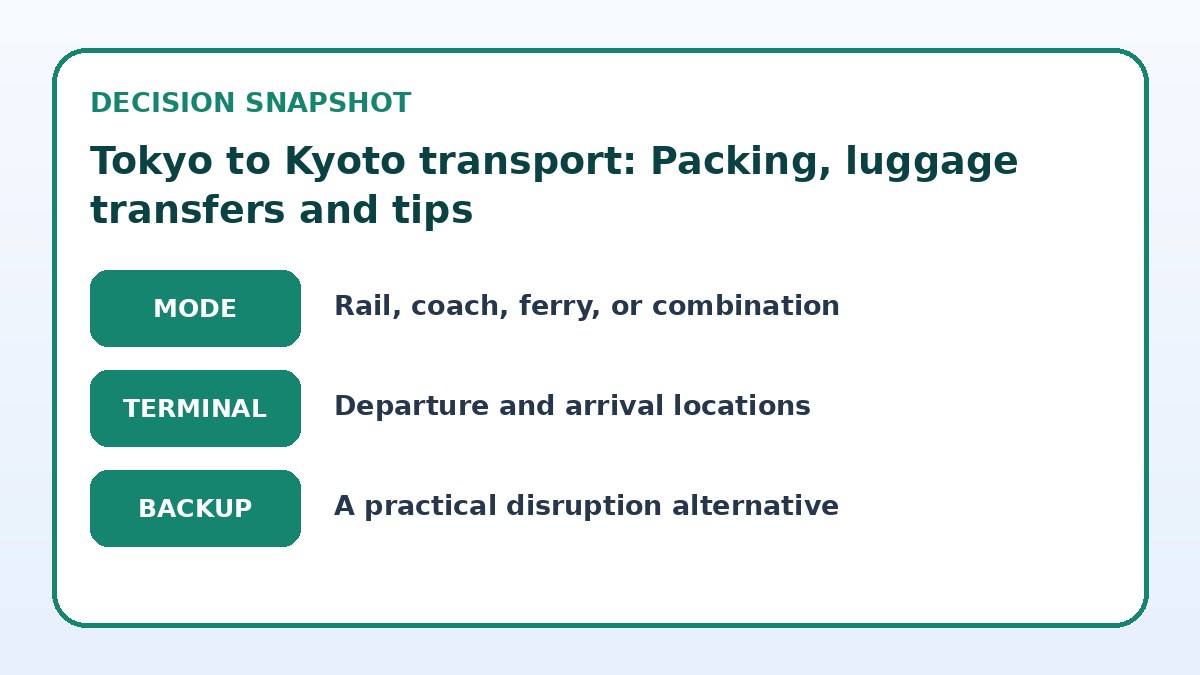
If you’re a solo traveler deciding how to move from Tokyo to Kyoto with luggage, the practical choice depends on how much you want to carry, how mobile you like to be, and whether you prefer speed or convenience. The fastest public option typically requires managing your bags on board; the easiest door-to-door approach is using a luggage forwarding service so you can ride light. This article lays out the everyday tradeoffs—what to expect at major stations, when a shinkansen versus local trains or buses makes sense, how luggage forwarding works, and how to compare options when booking. Read this to pick the right balance of cost, time, and hassle so you arrive in Kyoto ready to enjoy the city rather than deal with heavy bags.
Comparing transport choices while managing luggage
When planning Tokyo to Kyoto transport with luggage, start by listing what matters: speed, comfort, and where your bags end up. High-speed trains are fast and frequent but require you to handle and stow personal luggage on board; oversized bags may need special arrangements. Slower services and long-distance coaches can offer different luggage allowances and may carry larger suitcases in dedicated bays, but they can take longer and be less flexible with departure times. Think in terms of door-to-door travel time—how long it will take from your accommodation in Tokyo to check in at your Kyoto lodging with your luggage—and not just the timetable.
Luggage-forwarding services change the decision calculus: they allow you to travel without heavy bags and arrive in Kyoto unencumbered, usually delivering to hotels, ryokan, or a specified address. This option suits multi-day plans where you want to wander between cities overnight or use public transport and station stairs without dragging a suitcase. However, forwarding takes planning: you’ll need to confirm delivery windows, package size limits, and where your Kyoto accommodation can accept delivered luggage. Use forwarding when convenience and freedom during the trip outweigh the extra coordination.
Shinkansen and onboard luggage considerations
Taking the shinkansen is a common choice for Tokyo to Kyoto transport because of frequency and speed; still, consider how to stow your bags. Standard carriage space includes overhead shelves and small luggage areas near some carriage ends. Larger suitcases may need to sit in vestibules or in allocated spaces on certain trains, and some services ask travelers to reserve seats with large baggage or follow specific size rules. Before booking, check the operator’s official luggage guidance and verify whether seat reservations are suggested for your travel time—that will reduce the stress of finding room for your bags.
If you prefer control over your luggage during the ride, choose a seat near carriage ends where you can keep sight of your suitcase, or travel with a manageable rolling bag that fits overhead. Consider packing a daypack with essentials so you can move quickly at each station while your main suitcase stays stowed. If you travel during peak periods or want guaranteed space for large luggage, look for trains that publish specific baggage allowances or reserve designated luggage areas when booking; verify these details on the operator’s booking page to avoid surprises.
| Approach | Best for | Tradeoff to check |
|---|---|---|
| Bring luggage on the shinkansen | Travelers who value speed and control over their bags | You must handle and stow your own bags and confirm carriage luggage policies |
| Use luggage forwarding (takkyubin) | Solo travellers who want hands-free sightseeing and easy station transfers | Requires planning for pickup/delivery windows and coordination with hotels |
| Leave bags in station lockers or storage counters | Split-journey plans or short sightseeing stops without hauling suitcases | Locker size and availability vary; may not suit large or multiple bags |
| Use long-distance coach with baggage hold | Those prioritizing lower cost and larger checked luggage space | Longer travel time and less flexible schedules compared with trains |
Using station lockers and short-term storage smartly
Station coin lockers and manned luggage-storage counters are useful if you want to split the journey or leave bags while you explore. Major Tokyo stations have a range of locker sizes, but availability varies by day and time; large suitcases may not fit standard lockers, and you may need to search adjacent stations. For longer storage or very large bags, look for staffed services that accept check-in and have secure claims procedures. If you plan to pick up a forwarded bag, coordinate the storage window with the delivery schedule to avoid multiple handling fees.
When you arrive in Kyoto, expect similar options—central stations have lockers and luggage counters, but space is limited in tourist-heavy areas. If you intend to sightsee before checking into your accommodation, either reserve a later delivery of your forwarded luggage or use lockers near the station. Note that different operators and facilities have varying size limits, hold times, and operating hours, so check the specific station’s locker details or the staffed storage counter’s policies on the provider’s site before relying on them.
Before you book
- Measure and weigh your main suitcase to confirm it meets the transport operator’s size and weight rules before booking.
- If using a luggage-forwarding service, schedule pickup from your Tokyo accommodation at least one day before your desired arrival in Kyoto and note delivery windows.
- Check seat-reservation policies for trains you’re considering and reserve a seat if operator guidance suggests it for large bags.
- Search for available coin lockers near your departure and arrival stations and note sizes and operating hours in case you need short-term storage.
- Contact your Kyoto hotel or ryokan to confirm they accept third-party luggage deliveries and specify a delivery date and acceptable time window.
- Pack a small daypack with essentials, valuables, and anything you’ll need during transit in case your main bag is delayed or stored separately.
Practical booking checks and what to verify
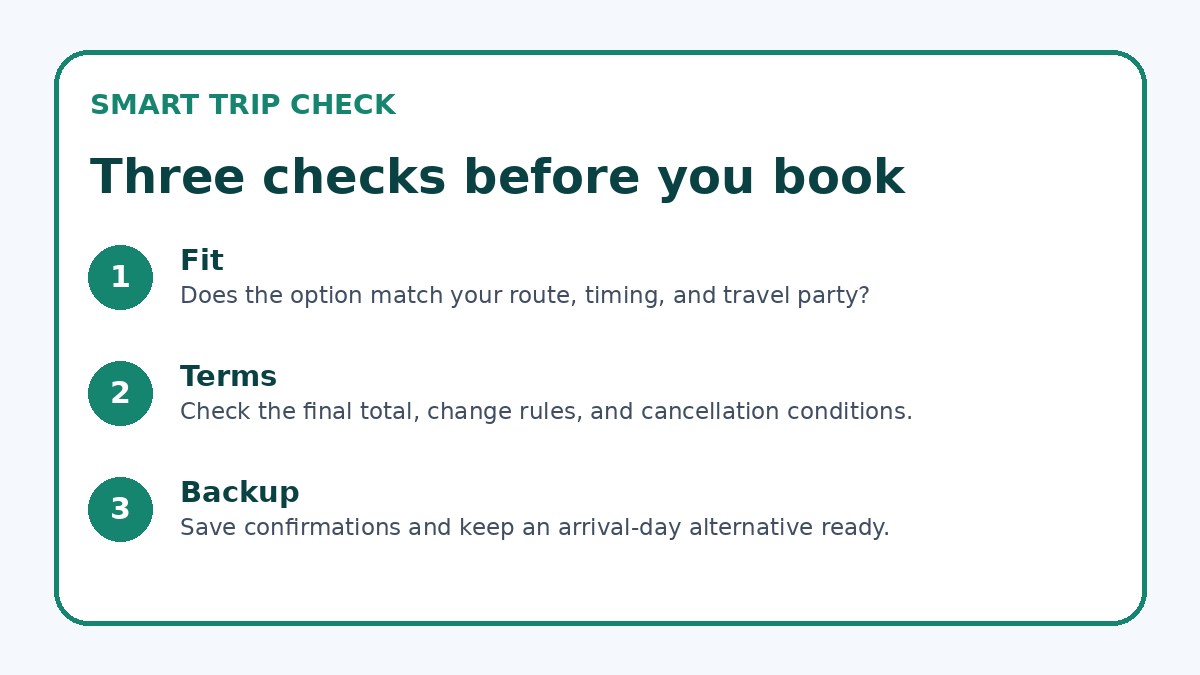
Before you finalize plans, verify a short list of provider-specific facts: luggage size and weight limits for trains or coaches, whether seat reservations are recommended or required for large bags, locker dimensions and locations, and the luggage-forwarding company’s pickup and delivery windows. Also confirm that your Kyoto accommodation will accept a forwarded bag on the day you request delivery—some small ryokan and guesthouses have limited acceptance hours. When you book transport or forward luggage, use the provider’s final booking page to confirm any surcharges or restrictions that could affect your choice.
Compare total door-to-door time rather than just advertised travel times: include the time to transfer between your Tokyo lodging and the departure station, possible waits or seat reservations, expected luggage retrieval in Kyoto, and any forwarding delivery window. If you need a hotel that accepts early luggage delivery, call or message them to confirm. For an up-to-date availability check and service options, you can compare providers on platforms such as Trip.com, but always rely on the transport operator’s or luggage company’s booking confirmation for the final terms.
Frequently asked questions
Is sending luggage ahead from Tokyo to Kyoto reliable for solo travelers?
Yes—luggage-forwarding services are commonly used and typically reliable for door-to-door deliveries, but reliability depends on booking accuracy and timing. Arrange pickup from your Tokyo accommodation with clear address and contact details, and provide the correct delivery address for your Kyoto lodging. Confirm the carrier’s typical delivery window and whether they offer next-day service for your route. Small guesthouses sometimes have limited acceptance times; confirm with the lodging that they can receive a delivery when scheduled. Always keep tracking information and your hotel’s contact visible in case the forwarder needs directions or timing clarification.
Can I bring a large suitcase on the shinkansen between Tokyo and Kyoto?
You can usually bring a large suitcase on shinkansen services, but space is intended for passenger luggage and specific size guidance may apply. Check the operator’s luggage policy before traveling—some trains have rules about where large bags should be placed or recommend reserving seats for passengers with oversized luggage. If your suitcase is bulky, consider booking a seat near the carriage vestibule where space is more flexible, or choose luggage forwarding if you prefer not to manage it on board. Verify the most current baggage rules on the train operator’s booking page before finalizing your ticket.
What should I do if station lockers are full when I need them?
If lockers are full, you have a few practical options: look for lockers at nearby stations (a short walk or one train stop can often yield availability), use a staffed luggage storage counter that accepts check-in items, or arrange for luggage forwarding to your Kyoto address so you can travel unencumbered. Another approach is to carry a smaller, collapsible bag with essentials and distribute items between it and your main suitcase to fit available locker sizes. Before relying on lockers, check the station’s online locker maps or local information pages and have backup plans in case demand is high.
Final planning note
Choosing how to manage luggage on the Tokyo to Kyoto route is about matching convenience with logistics. If speed and a single-seat trip matter most, bring your bag onto the train but verify size rules and consider seat reservations. If you want to roam Kyoto immediately without pulling a suitcase, luggage forwarding is an efficient alternative—plan delivery windows and confirm hotel acceptance. Station lockers and storage counters work well for short stops, while coaches can serve larger items at the cost of time. Before you book, measure bags, confirm operator policies, and compare total door-to-door times so your travel choice matches how you want to arrive in Kyoto.
Continue planning
Check current options and final conditions
Use the provider page to confirm live availability, the final total, cancellation terms, and every condition that matters to your trip.
This evergreen planning guide was created with AI-assisted drafting and a structured quality review. It does not display live prices, schedules, availability, visa guidance, or provider rankings. Verify current details before booking. Some links are affiliate links; we may earn a commission at no additional cost to you.