If you're planning to rent a car in Kyoto with children, the practical priority is this: make sure the rental contract and purchased policies clearly cover third-party liability, collision coverage for the rental vehicle, and any driver- or passenger-specific exclusions that could affect family members. Japanese rental providers and insurers use terminology that may differ from what you know at home; words like “excess,” “waiver,” “CDW,” or “liability limit” have concrete financial implications if you have an incident. Read the final booking page carefully to confirm who is insured (named drivers vs. any permitted driver), whether child seats are covered or optional, and what the deductible or excess will be. Below I’ll explain the common terms families see, the tradeoffs between basic and upgraded coverages, and a clear checklist of what to verify before you sign or drive away.
Key insurance words families must decode
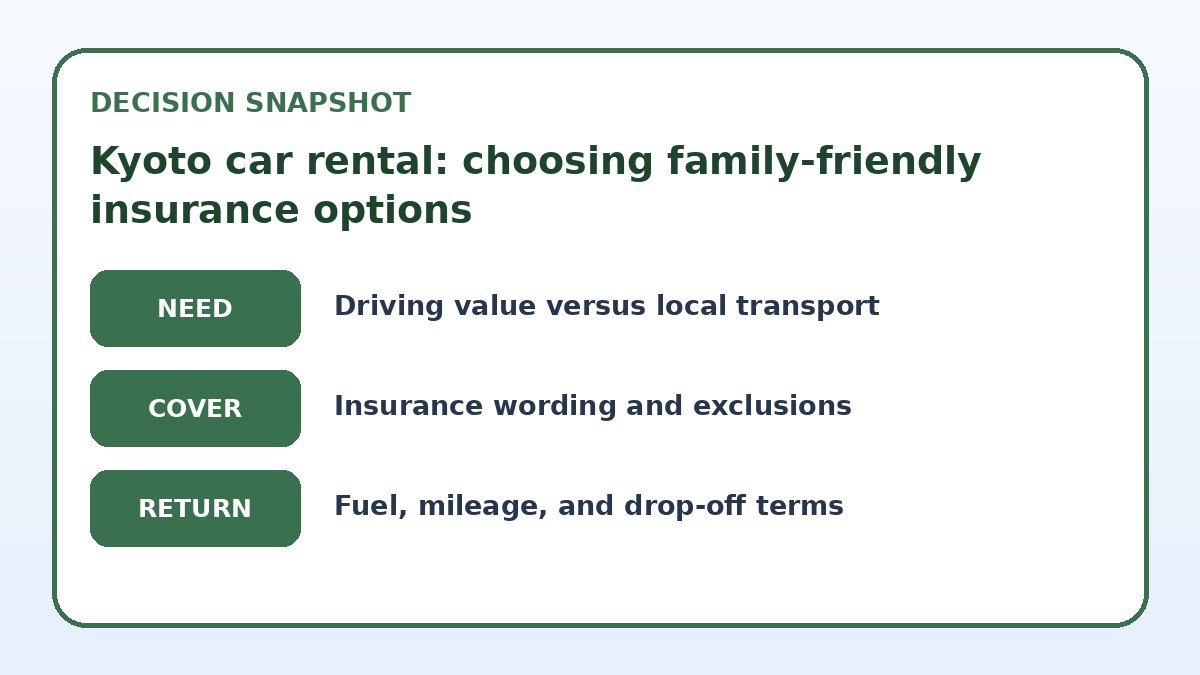
Rental contracts and optional insurance pages use a handful of terms repeatedly. Collision Damage Waiver (CDW) or Loss Damage Waiver (LDW) generally reduces or removes your financial responsibility for damage to the rented car, but it rarely means you have zero risk. Excess or deductible refers to the amount you must pay out of pocket after a claim. Third-party liability covers damage you cause to other people or property and is distinct from cover for your own vehicle or injuries.
Other phrases to watch for include ‘uninsured motorist protection’, which can cover you if a third party has no insurance, and ‘personal accident insurance’ that pays medical costs for you and passengers. ‘Additional driver’ or ‘named driver’ rules determine whether family members who take turns driving are covered. Finally, note any exclusions for specific situations—off-road driving, driving under the influence, or unauthorized drivers—because these will void coverage and leave families fully exposed financially.
What to prioritize when traveling with children
With kids onboard, prioritize coverages that protect people first: check that personal accident insurance or medical cover in the rental policy will apply to all passengers. If your family plan already includes travel medical insurance, confirm how it coordinates with rental coverages and whether the rental company requires separate declarations or documentation. Also verify emergency assistance terms: roadside help for flat tires, child lockouts, or vehicle towing is much more valuable when you have children with you than a small incremental reduction in the deductible.
Child-specific items matter practically: ensure the rental includes or allows certified child seats that match your children’s ages and sizes, and read whether damage to the seat itself is the renter’s responsibility. If you must supply your own seat, inspect it for correct installation and take photos at pickup; providers sometimes charge for pre-existing damage unless you document it. Finally, confirm whether policies impose age-based driver restrictions—many companies restrict very young or very inexperienced drivers and that could affect who in your family can legally drive the car.
| Approach | Best for | Tradeoff to check |
|---|---|---|
| Minimal included cover with high excess | Families with robust external travel insurance and confident drivers | Lower daily rate but large potential out-of-pocket cost after an incident |
| Rental company CDW/LDW and zero-excess add-on | Families wanting straightforward, immediate protection at pickup | Higher daily cost but simplifies claims and reduces immediate financial risk |
| Third-party insurance bought separately | Families comparing price-conscious alternatives and reimbursement options | May require paying then claiming later; timing and documentation matter for families |
| Credit card or travel policy primary coverage | Families who already have comprehensive credit card or policy benefits | Coverage details and driver eligibility vary—verify terms versus the rental contract |
Tradeoffs: cheaper base rates vs. comprehensive cover
Lower base rental rates often come with higher deductibles and minimal included liability, leaving you to buy add-ons at the counter. That can be tempting if you’re budget-conscious, but compare the out-of-pocket exposure against the cost of an upgraded insurance package. An expensive add-on may still be cheaper than potential liabilities after an accident involving another vehicle or injuries to multiple people—especially when children are involved. Think in scenarios: minor scratch, major collision, or injury claim—and estimate the financial exposure for your family.
Another tradeoff is buying insurance from a third-party provider versus through the rental company. Third-party policies can be cheaper but sometimes require you to pay up front and claim reimbursement later, which can be stressful on holiday. Rental-company waivers typically handle incidents directly, simplifying the process at the expense of higher daily rates. Always verify cancellation terms and refund procedures before choosing external insurance, and check whether your credit card or travel insurer already provides primary or secondary coverage that overlaps.
Before you book
- Confirm named drivers include every family member who may drive and note any age or license restrictions on the booking page.
- Verify the excess (deductible) amount and whether a zero-excess waiver is offered; record exact wording and cost before pickup.
- Check child-seat availability, certification, and whether damage or replacement costs would be charged to your card.
- Ask whether roadside assistance and towing are included, and get the emergency contact number and expected response terms in writing.
- Photograph the vehicle inside and out at pickup and ensure all pre-existing damage is recorded on the rental agreement.
- If using credit-card or third-party coverage, download and bring the insurer’s confirmation, policy number, and claims contact details.
What to verify on the booking and pickup pages
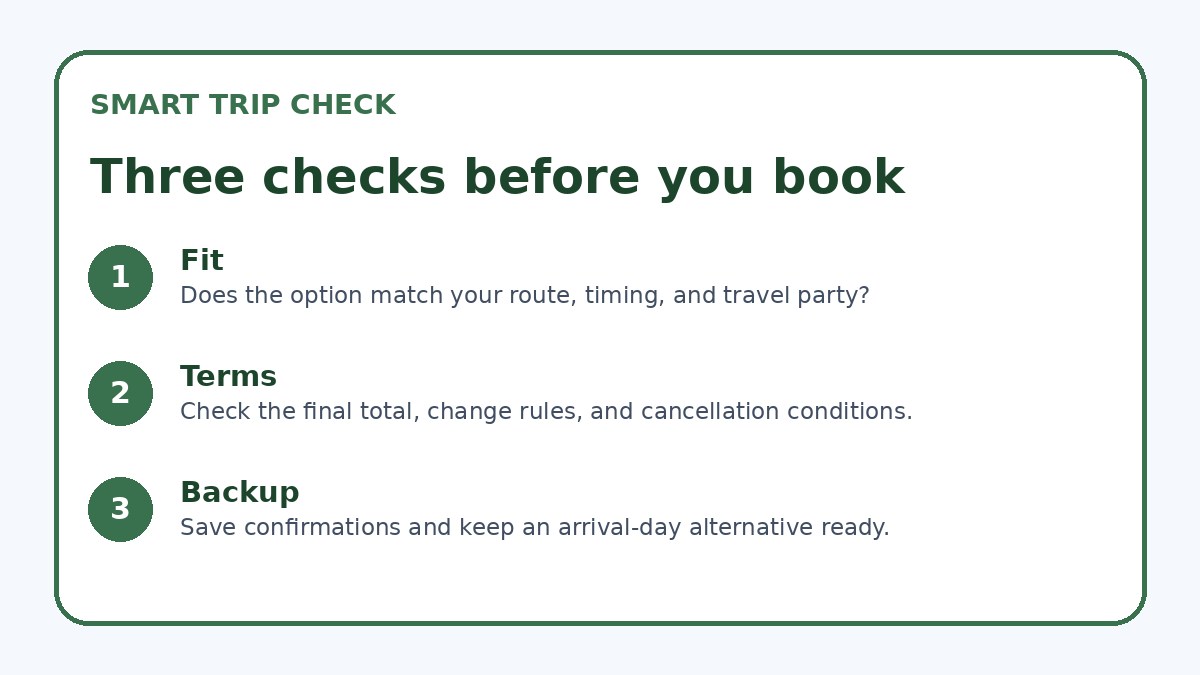
Before you book, confirm these explicit items on the rental provider’s final page: the excess amount, named drivers covered, child-seat policies, roadside assistance details, and the exact liability limits. If the page lists optional coverages, click through to see their full wording and any exclusions. Where the wording is unclear, use the booking platform’s message or call the provider and save the response. Trip.com can be used to compare availability and options but always verify policy wording on the provider’s own contract page to be sure.
At pickup, inspect the vehicle with your phone and request that any pre-existing damage be recorded on the rental agreement. Have drivers present who will actually be driving sign the contract. Ask the agent to show where the excess waiver applies on the paper or digital agreement and request a written confirmation of included child-seat details if you reserved one. Keep all documentation—photos, emails, and the signed rental form—until after your trip and final billing reconciliation.
Frequently asked questions
Can my domestic travel insurance or credit card cover a Kyoto car rental?
Possibly—but you must confirm specifics. Check whether the card or policy provides primary or secondary coverage, what losses it covers (vehicle damage, third-party liability, personal injury), and whether it requires you to decline the rental company’s CDW. Some providers exclude certain countries or require the rental to be under a minimum duration. Before relying on this, print or download the policy terms, confirm driver eligibility, and verify claim procedures so you aren’t surprised at pickup.
What happens if an unlisted family member drives and causes an accident?
If the rental contract names only specific drivers, an unlisted driver is often not covered; that can void insurance and place full liability on the primary renter. This risk includes increased financial exposure for damage and possible criminal or administrative penalties depending on the situation. To avoid this, add all potential drivers to the rental agreement ahead of time, even if you only expect them to drive in an emergency. If the booking page makes adding drivers confusing, get confirmation in writing from the provider.
Are child seats typically covered by rental insurance or the company?
Child seats are usually offered by rental companies as an optional accessory, but coverage varies. Some companies will replace a damaged seat but may charge for wear or pre-existing damage unless it was documented at pickup. Insurance policies often exclude damage caused by incorrectly installed accessories, so families should verify whether the rental’s insurance covers seat damage and whether the firm provides certified seats appropriate to your child’s age and size. When in doubt, bring your own certified seat and document its condition.
Final planning note
Renting a car in Kyoto can be a practical way for families to explore neighborhoods and day-trip sites, but the real decision is about managing risk, not just comparing headline rates. Decode key terms—excess, CDW/LDW, named drivers, and liability limits—then align choices with how you will travel: who will drive, how many children need seats, and how comfortable you are paying a higher daily rate to avoid large out-of-pocket exposure. Always verify the exact policy wording on the provider’s final booking page, photograph the car at pickup, and carry documentation for any third-party or credit-card coverage. Those steps keep surprises off the road and let your family focus on enjoying Kyoto.
Continue planning
Check current options and final conditions
Use the provider page to confirm live availability, the final total, cancellation terms, and every condition that matters to your trip.
This evergreen planning guide was created with AI-assisted drafting and a structured quality review. It does not display live prices, schedules, availability, visa guidance, or provider rankings. Verify current details before booking. Some links are affiliate links; we may earn a commission at no additional cost to you.