
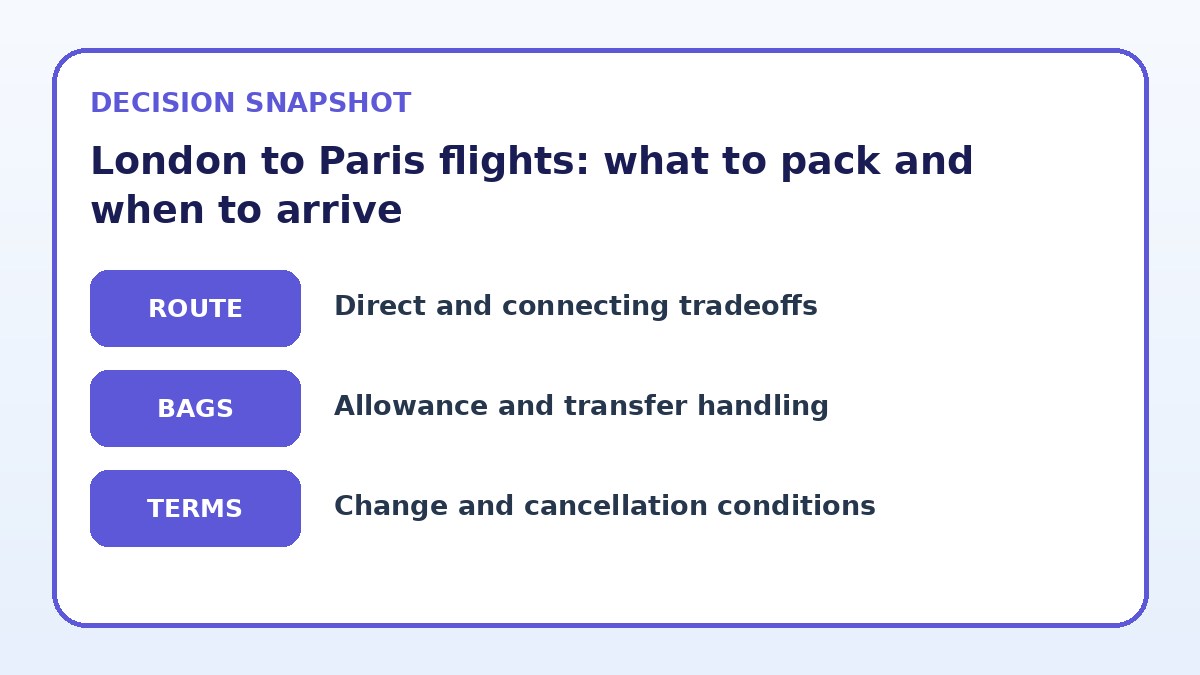
If you’re traveling solo between London and Paris, the two most constant decisions are what to pack and when to arrive at the airport. Make those choices deliberately and you’ll reduce stress, avoid last-minute fees, and have flexible recovery options when plans shift. This guide gives a compact practical plan up front—carry-on unless you need checked baggage; arrive at the airport with time for your chosen transfer method; keep travel documents easily accessible; and plan a transit buffer for unexpected delays. After the quick plan I’ll walk through how to weigh carry-on versus checked options, compare London and Paris airport access, explain the tradeoffs for budget and full-service fares, and list a clear checklist and FAQs to run through before you book.
Decide baggage strategy before you book
Start by matching your packing needs to realistic baggage rules. For most solo travelers a single carry-on and a personal item is the quickest option: you avoid bag-drop queues at departure, you don’t wait at arrivals for luggage, and you can be more nimble with transfers. However, low-cost carriers and legacy airlines list different size and weight limits, and some require you to pre-pay to take a cabin bag into the hold. Before you hit purchase, open the airline’s baggage policy on their official booking page and compare cabin dimensions and fees. If you’re traveling with fragile items, sports equipment, or heavy shopping, the convenience of a checked bag can outweigh the time penalty.
If you decide to check a bag, build realistic buffer time into both legs. Bag drop counters typically close before departure, and when you arrive in Paris, you’ll need to wait at baggage reclaim—sometimes longer at busy terminals. Weigh the tradeoff: checked bags reduce what you carry through transfers but add time and a small chance of delay or misrouting. If you pack for carry-on but want more flexibility, consider a hybrid: carry-on for essentials and a small checked bag only if your itinerary includes shopping or extended stays. Always verify the airline’s final baggage allowances on the booking confirmation page; policies can vary by fare class and route.
Plan your airport arrival time by transfer type
How you get to the airport from London sets the clock. If you’re taking a scheduled coach or train to Heathrow, Gatwick, or other London airports, allow additional margin for service disruptions and last-mile connections. For solo travelers who value simplicity, a direct rail service or a booked transfer is less stressful than figure-it-out-on-arrival public transit. Budget carriers often operate from secondary airports with longer transfer times; plan accordingly. For departures, a safe baseline is to arrive earlier than the minimum suggested by the airline if you prefer a relaxed pre-flight routine—less rushing means fewer errors with documents and security.
When you land in Paris, consider how you’ll clear immigration and reach your final stop. Charles de Gaulle and Orly have different layouts and onward links; a decision at booking affects train times, taxi fares, and onward transit. If you need to catch a scheduled train or connection, add a generous buffer: factor in passport control, potential baggage wait, and transport to the city center. For fast onward travel, verify the arrival terminal and the onward service schedules before you travel. If you book through aggregators like Trip.com, use their details to cross-check but always confirm timings on the operator’s official pages.
| Approach | Best for | Tradeoff to check |
|---|---|---|
| Carry-on only | Solo travelers prioritizing speed and flexibility | Strict packing limits and potential extra fees if bags exceed size or weight limits |
| Checked bag | Travelers with heavy luggage, shopping plans, or fragile items | Longer airport time, bag-drop queues, and waiting at arrival reclaim |
| Direct flight to central airport | Minimizing overall door-to-door time and simpler connections | May be more expensive or less schedule-flexible than alternative routings |
| Indirect routing with better arrival point | Those prioritizing convenient arrival location or cheaper fares | Increased complexity, higher risk of missed connections, possible separate-ticket hassles |
Compare direct flights and indirect options
Direct flights are the simplest: less risk of missing a connection and clearer baggage routing, especially if you check luggage. However, some itineraries show indirect options that may offer better departure or arrival airports for your onward plan. When comparing, check total door-to-door time, not just airborne time. If a connection saves time overall because it lands at a more convenient Paris airport or aligns with train departures, it may be worth the extra complexity. Always verify connection minimums recommended by the operating carrier and whether separate tickets require you to re-check baggage and re-clear security.
If you choose an itinerary with a connection, maintain extra buffers and understand the protection you get if a delayed first leg causes a missed connection. Single-ticket connections usually pass baggage through and are protected by the operating alliance; separate bookings typically are not. For solo travelers who prefer control, an intentionally longer layover reduces stress and gives contingency time for delayed departures or airport procedures. Double-check what the booking confirmation says about transfer times, baggage transfer, and minimum connection durations on the carrier’s website before finalizing.
Before you book
- Check the cabin and checked baggage size and weight limits on the airline’s official booking page before purchasing.
- Decide carry-on or checked baggage and pre-pay any checked bag allowance to avoid higher airport fees.
- Confirm your departure and arrival terminals and write down the fastest onward transport options from each terminal.
- Set arrival buffers: add 30–60 minutes to the airline’s minimum check-in recommendation for checked bags or unfamiliar airports.
- Download or print boarding passes, save transport tickets offline, and screenshot key confirmations for easy access.
- Pack travel essentials (passport, card, phone charger, meds) in your personal item and keep it with you at all times.
Streamline day-of-travel routines
On travel day, structure a simple checklist and spacing to avoid last-minute scrambles. Pre-print or download boarding passes, keep passport and payment accessible, and wear easy-to-remove shoes for security. Put liquids and electronics near the top of your carry-on so security trays are quick. If you have tight timing, online check-in and mobile boarding passes cut in-person steps. For solo travelers, a small shoulder pouch or belt wallet for documents keeps you nimble while you manage transfers, cafes, or short walks between terminals.
Consider how you’ll recover time on arrival: know where the arrivals gate points to taxis, rideshares, or trains; mark a meeting point if you’ve arranged pickup; and have a small amount of local currency for immediate needs. If your itinerary includes a later train or tour, set alarms and build a travel buffer between landing and your next booking. Keep contact details for your accommodation and a screenshot of your transport tickets in offline mode. These small routines reduce friction and let you focus more on the trip than the logistics.
Frequently asked questions
How early should I get to a London airport for a London to Paris flight?
Aim to arrive earlier than the airline’s stated minimum if you prefer a relaxed pace. For carry-on-only travelers at familiar airports, arriving 60–90 minutes before departure is often sufficient. If you need to drop a checked bag, expect to add 30–45 minutes for bag-drop lines and potential document checks. If you’re traveling from further afield into the airport, using public transport with unpredictable reliability, or traveling during peak periods, build a larger buffer. Always verify the carrier’s recommended arrival time on their official booking page before you travel.
Can I save time by using only a personal item on budget carriers?
Using only a personal item can save significant time because you skip bag-drop counters and avoid reclaim waits on arrival, but the allowed dimensions and whether that item fits under the seat vary by carrier and fare type. Budget airlines sometimes restrict larger cabin bags to specific fare classes, and boarding group rules may affect whether your bag fits in overhead bins. Before traveling, measure your bag, compare it with the airline rules on the booking page, and consider checking a small bag at purchase if you anticipate pushing size limits to avoid last-minute fees at the airport.
What should solo travelers do if they have a tight onward connection in Paris?
If you face a tight onward connection, build contingency time into your schedule and consider slightly longer layovers when booking. If you checked luggage, the added wait at reclaim can be risky for short connections. Verify whether your flights are on one ticket—single-ticket itineraries usually transfer baggage and offer some protection for missed connections. If your flights are separate bookings, prepare to collect and re-check luggage and understand there may be no automatic protection. Check terminal layouts and onward transport schedules, and keep contact details for accommodations or local transport providers accessible.
Final planning note
Solo travel between London and Paris is straightforward when you make baggage and timing choices intentionally. Decide whether speed or packing capacity matters more, then select flights and airports that match that priority. Carry-on-only travelers win time and flexibility, while checked-luggage travelers should accept added airport time and plan buffers. Consider whether a direct flight or an indirect routing better serves your door-to-door schedule, and always verify baggage rules, terminal information, and connection policies on the carrier’s official booking page before you pay. With a short checklist, clear arrival buffers, and documents easily accessible, you’ll reduce stress and keep control of the day.
Continue planning
Check current options and final conditions
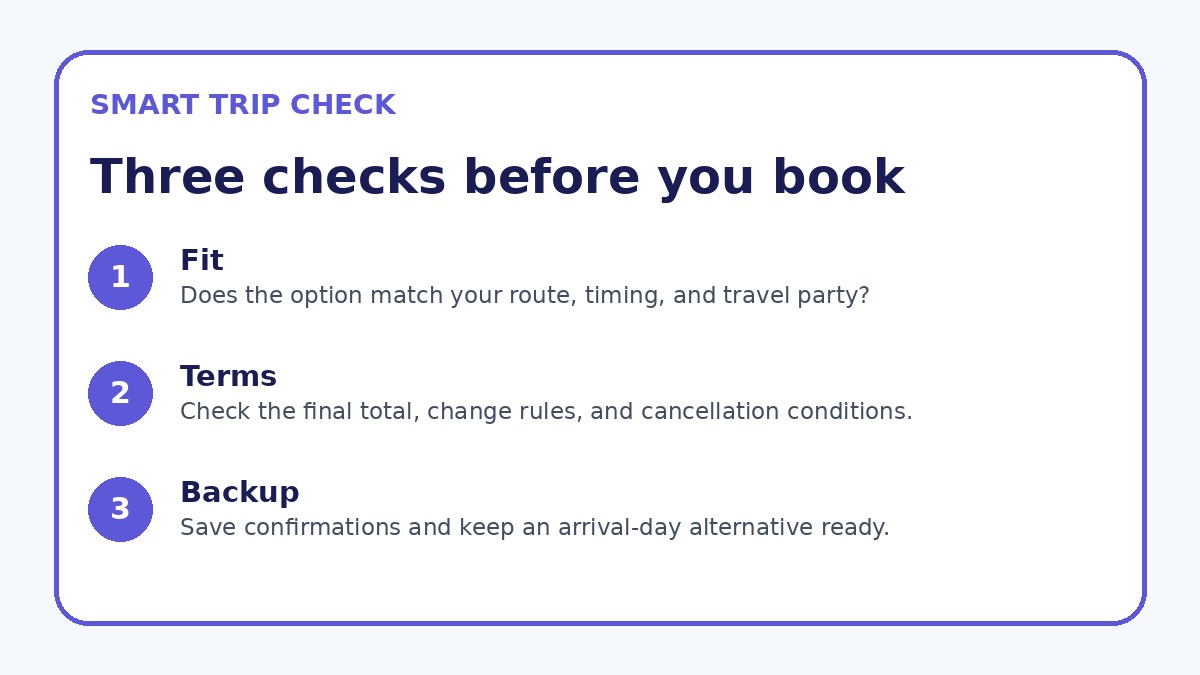
Use the provider page to confirm live availability, the final total, cancellation terms, and every condition that matters to your trip.
This evergreen planning guide was created with AI-assisted drafting and a structured quality review. It does not display live prices, schedules, availability, visa guidance, or provider rankings. Verify current details before booking. Some links are affiliate links; we may earn a commission at no additional cost to you.