
If your family can be flexible, focus your Kyoto travel deals search on the shoulder seasons—late spring after cherry peak and early winter before heavy holiday weeks. Those windows typically balance milder weather, thinner crowds at temples and gardens, and more family-friendly hotel availability than peak sakura or autumn color times. Start by choosing a base neighborhood that reduces daily transit stress: central Kyoto, Higashiyama near major temples, or a quieter residential area with good bus and subway links. When you compare options, weigh accommodation layout, proximity to grocery or convenience stores, and straightforward transportation to sights. Use the opening booking stage to shortlist 3–4 hotels or apartments and compare refundable rates, family-room setups, and morning transportation options before committing.
Why shoulder seasons suit family travel
Shoulder seasons let families trade the peaks of crowds for more breathing room during museum visits, shrine approaches, and shrine gardens. Families often need frequent rests, meal stops, and occasional indoor alternatives if weather shifts; shoulder periods usually allow easier spontaneous changes in plans without long lines or sold-out timed-entry activities. This can be especially helpful for toddlers, early teens, or multi-generation groups who benefit from predictability and shorter waits between highlights.
Beyond crowd levels, shoulder-period weather is typically less extreme—cool enough for layered clothing and warmer than midwinter, or milder than humid midsummer. That affects choices like whether to schedule long temple walks, rent bicycles, or plan a day-trip outside the city. Treat shoulder-season advantages as relational: they improve comfort and scheduling flexibility, but you still need to pick specific dates carefully around local school holidays and weekend festivals.
Choosing where to stay with kids in mind
Location choices should prioritize minimizing transit friction. Central Kyoto (around Karasuma or Kyoto Station) gives straightforward rail and bus access; Higashiyama places you within walking distance of famous temples but can involve more uphill walking. Residential neighborhoods near subway lines often provide calmer evenings and nearby convenience stores and supermarkets where you can pick up snacks, simple meals, or small necessities—particularly helpful with unpredictable children’s needs.
Room configuration matters more for families than flashy extras. Look for suites or connecting rooms so everyone has space to nap or unwind. If you plan to cook simple meals, verify kitchen or kitchenette availability on the booking page. Confirm bed arrangements and whether rollaway or crib options are provided; when in doubt, contact the property to confirm exact room layout and any extra-fee policies before you complete a reservation.
| Approach | Best for | Tradeoff to check |
|---|---|---|
| Stay central near Kyoto Station | Families needing simple transfers and luggage convenience | Less traditional neighborhood atmosphere and longer local walk times to some temples |
| Base in Higashiyama or Gion | Quick walking access to major temples and evening strolls | Hills and narrow streets can be difficult with strollers or heavy bags |
| Choose a residential subway neighborhood | Quieter evenings and easy supermarket access for self-catering | May require more transit time to reach central tourist clusters |
| Book a family suite or connecting rooms | Space for naps and private routines | Higher per-night cost and fewer room options during popular dates |
How to compare Kyoto travel deals for families
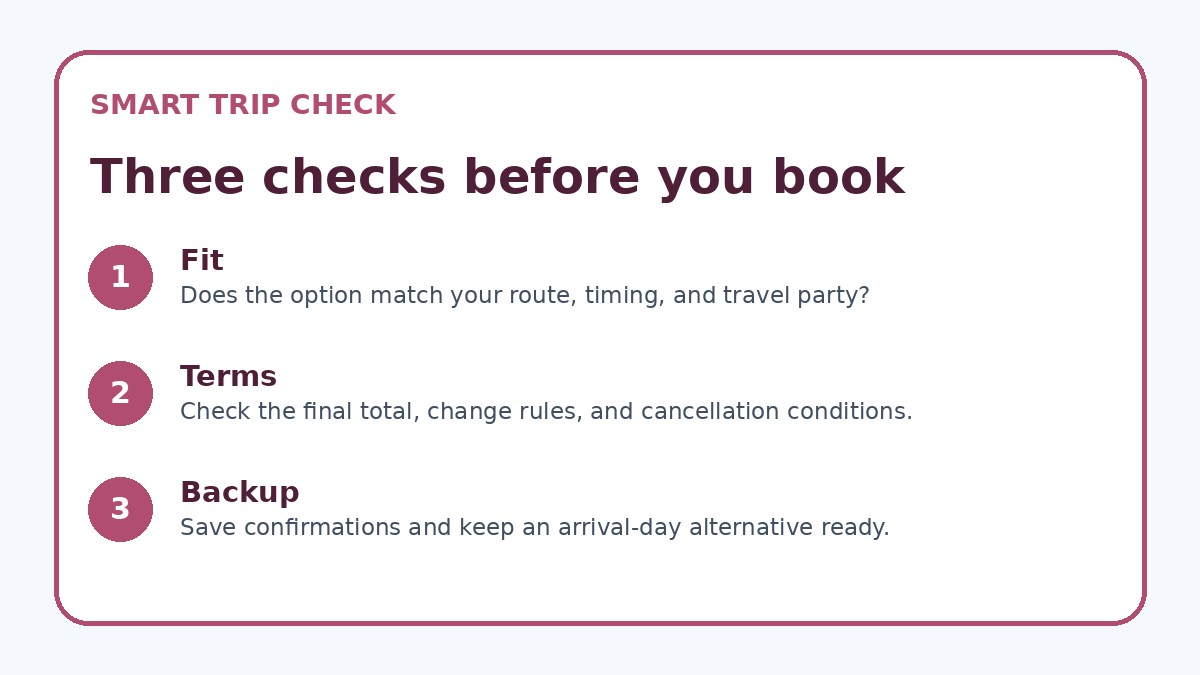
When evaluating offers, prioritize refundable or flexible cancellation terms, and compare check-in/check-out windows to match your travel rhythm. Use a consistent checklist across properties: transportation time to major sights, room layout, meal options for children, luggage storage, and whether the property supplies baby gear. Avoid overfocusing on headline discounts; instead, compute the total convenience value—fewer transfers, earlier breakfasts, or included laundry can be worth more than a marginal nightly rate advantage.
For transport, compare routes rather than assuming direct trains. Assess how many transfers and walking stages are required from the nearest station—count stairs and whether elevators are available if you have a stroller. If you’re booking flights or regional trains separately, look at both direct and connecting options: a longer daytime connection may be easier with kids than a short overnight hop that disrupts sleep. Always verify the provider’s cancellation policy, bed setup, and any family-specific amenities on the booking page before finalizing.
Before you book
- Compare refundable rates and cancellation rules on each property’s final booking page before selecting dates.
- Verify exact room layout and bed options with the property if you need cribs, rollaway beds, or connecting rooms.
- Map walking steps and transit transfers from your lodging to two priority attractions to estimate daily effort.
- Identify at least two nearby grocery or convenience stores for quick meals, snacks, and travel essentials.
- Reserve one morning activity and one indoor backup each day to balance weather and children’s energy.
- Pack a compact stroller suitable for uneven temple paths plus a small foldable shopping bag for souvenirs.
Packing, pacing, and daily planning tips
Pack layers and a lightweight, compact umbrella—Kyoto’s spring and autumn can shift from sun to rain within a day. Bring a simple first-aid kit, favorite snacks, a compact stroller suitable for some uneven temple pathways, and a portable charger for phones. For older kids, include small activity kits or downloaded games for short waits. When packing, leave room for small purchases like local sweets or craft souvenirs; carrying an extra foldable bag helps.
Pace your days with realistic expectations: plan one or two main stops and an easier secondary activity so children don’t get overtired. Schedule mornings for outdoors and cooler sights, reserving late afternoons for indoor museums, markets, or a relaxing train ride. Build in downtime at the hotel for naps or free play. If you anticipate special dietary needs, map a few family-friendly restaurants near your base and keep a list of convenience stores on hand for quick meals.
Frequently asked questions
When are Kyoto’s shoulder seasons best for avoiding crowds with kids?
Shoulder-season windows—typically between major cherry blossom and autumn-leaf peaks—offer a useful compromise between pleasant weather and lower crowd pressure. For families, those windows reduce long lines and give more flexibility for spontaneous plan changes without the pressure of sold-out timed entries. Still, verify local school holidays and weekend festivals before booking because those can create local peaks even during shoulder months.
How do I decide whether to prioritize neighborhood or room layout?
If short daily transfers and luggage logistics are your primary concerns, prioritize neighborhood location near a main station or subway line. If children need separate sleep spaces, a suite or connecting rooms should take precedence. Balance both by shortlisting properties in a preferred neighborhood that offer family-room configurations; then compare total transit effort and on-site conveniences to make a final choice.
What should I verify on a booking page for family-friendly accommodations?
Confirm the property’s cancellation and refund terms, exact room layout and bed types, and any extra fees for additional guests or cribs. Check whether the listing shows kitchen access, laundry, early check-in or luggage storage options, and accessibility details like elevators or stair counts. If the listing summary is unclear, contact the property directly before finalizing to avoid surprises on arrival.
Final planning note
Planning Kyoto travel deals around shoulder seasons gives families a practical edge: milder conditions, fewer crowds, and more flexibility when schedules shift. Start by selecting a base that minimizes daily transit effort and then evaluate room layout, nearby conveniences, and flexible booking terms. Keep daily plans modest—one major activity plus a backup—and verify all family-specific details on provider pages before committing. If you use comparison sites, include one broad aggregator such as Trip.com to review current availability, but always confirm critical facts on the property or carrier’s reservation page to ensure the chosen option truly fits your family’s needs.
Continue planning
Check current options and final conditions
Use the provider page to confirm live availability, the final total, cancellation terms, and every condition that matters to your trip.
This evergreen planning guide was created with AI-assisted drafting and a structured quality review. It does not display live prices, schedules, availability, visa guidance, or provider rankings. Verify current details before booking. Some links are affiliate links; we may earn a commission at no additional cost to you.