For families traveling between Tokyo and Fukuoka, the central decision is often a tradeoff: choose the most convenient schedule that minimizes transit hassles, or opt for more flexible tickets that adapt to delays and changing plans. The practical answer is to prioritize convenience for short trips and tight itineraries—book a flight around your family’s sleep and activity rhythm—while reserving flexible fares when your schedule is uncertain or you expect delays. Consider airport access from where you’re staying in Tokyo, how early children need to arrive, luggage needs, and whether you want the peace of mind to change plans. Below I explain the tradeoffs, what to verify on booking pages, and a simple checklist so you can make a confident, family-friendly choice.
Why convenience matters for families on Tokyo–Fukuoka trips
Convenience dramatically reduces stress when traveling with children. A timetable that lines up with nap times or avoids late-night transfers keeps moods stable and logistics simple. For many families, minimizing connections, long waits, or odd-hour departures is worth a slightly higher fare because it lowers the risk of meltdowns, missed connections, or last-minute childcare headaches. Convenient flights often mean fewer unknowns: shorter lines, simpler transfers, and an itinerary that’s easier to explain to kids and caregivers.
However, convenience is more than flight times. Factor in the airport you’ll use in Tokyo—some neighborhoods are much closer to Haneda than Narita—and the ground transport options to Fukuoka’s airport or central train stations. Also consider luggage: if your family carries bulky gear, a flight with a forgiving baggage policy or direct routing that avoids extra handling will feel more convenient. Always balance the scheduled convenience against what you’re willing to risk if plans change.
When flexibility should win for family travel
Choose flexible fares when your itinerary could change. Expecting possible adjustments—extended stays, family members joining late, or medical appointments—means changeable tickets offer real value. Flexibility reduces the stress of last-minute cancellations and can be the difference between a minor inconvenience and a trip reshuffle. Look for fare rules that allow free or low-cost changes, clear refund timelines, and easy online management so you can modify plans without phone calls or long waits.
That said, flexible tickets are not always straightforward. Verify exactly what the carrier permits on its booking page: which changes are allowed, whether seat assignments carry over, how fare differences are handled, and whether third-party reseller rules affect refunds. If you use a travel marketplace to compare options, confirm policies on the airline’s final checkout screen before purchasing. A flexible fare can be lifesaving—if you confirm the fine print first.
| Approach | Best for | Tradeoff to check |
|---|---|---|
| Buy the most convenient schedule available | Short trips, strict itineraries, or families who value minimizing transit hassle | Usually higher risk if plans change and may cost more in fare or ground transport |
| Choose a flexible/changeable fare | Uncertain dates, multi-family coordination, or when illness/ disruption is possible | Usually higher upfront cost and you must confirm exact change/refund rules on booking pages |
| Prioritize direct routing with earlier door-to-door arrival | Young children, heavy luggage, or groups who want fewer handoffs | May depart from less convenient airports or at less desirable times for family sleep schedules |
| Opt for cheaper, less flexible tickets and add travel insurance | Budget-conscious families prepared to manage changes themselves | Insurance may not cover every scenario and administrative hassle can be higher when changing plans |
Comparing direct vs. connecting options and total door-to-door time
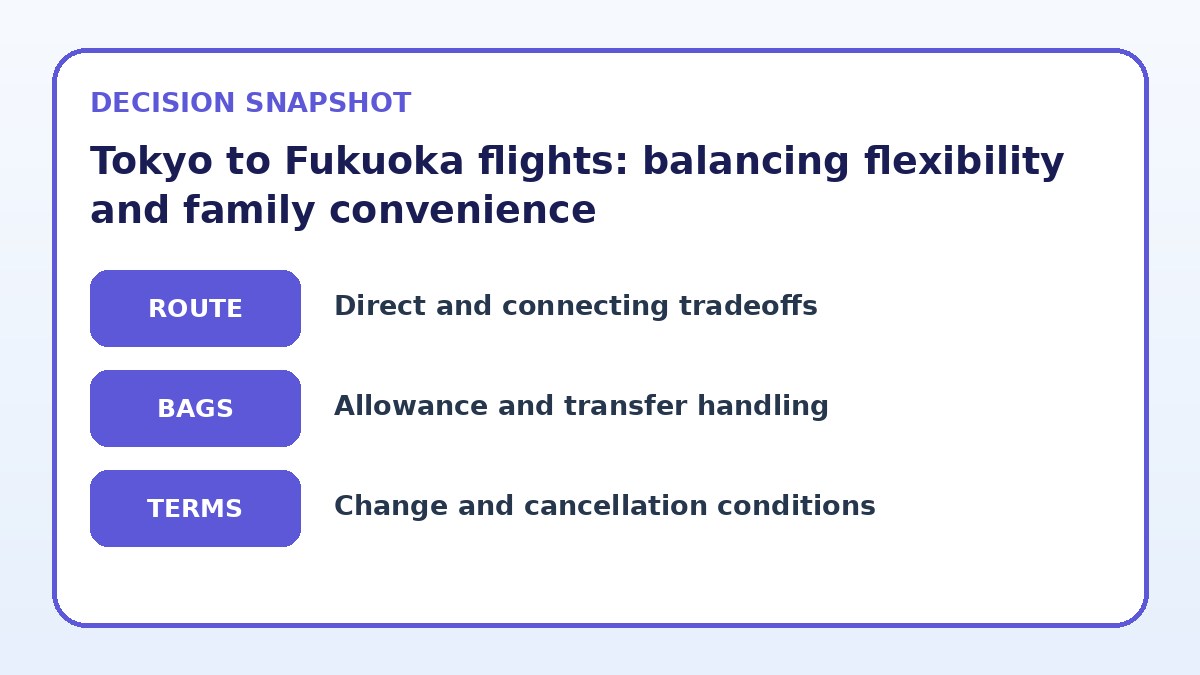
For families, direct flights are intuitively appealing because they cut transfer hassles. But a so-called direct flight may depart from an airport that’s far from your Tokyo neighborhood, or it might have a schedule that causes long waits at the other end. Always calculate door-to-door time: include transit to the airport, recommended arrival buffer for family check-in, possible security queue lengths with children, and ground travel at your destination. A slightly longer airtime with easier ground connections can still be the faster, calmer option overall.
If connecting flights are on the table, compare minimum connection times and the practicality of making those connections with strollers or checked gear. Short connection windows increase the risk of missing onward flights; long layovers tire kids. Check whether the connection requires switching terminals or re-clearing security. On booking pages, verify luggage transfer rules and whether you’ll need to claim and re-check bags—these details determine how much energy and time you’ll spend during the connection, which is crucial for family comfort.
Before you book
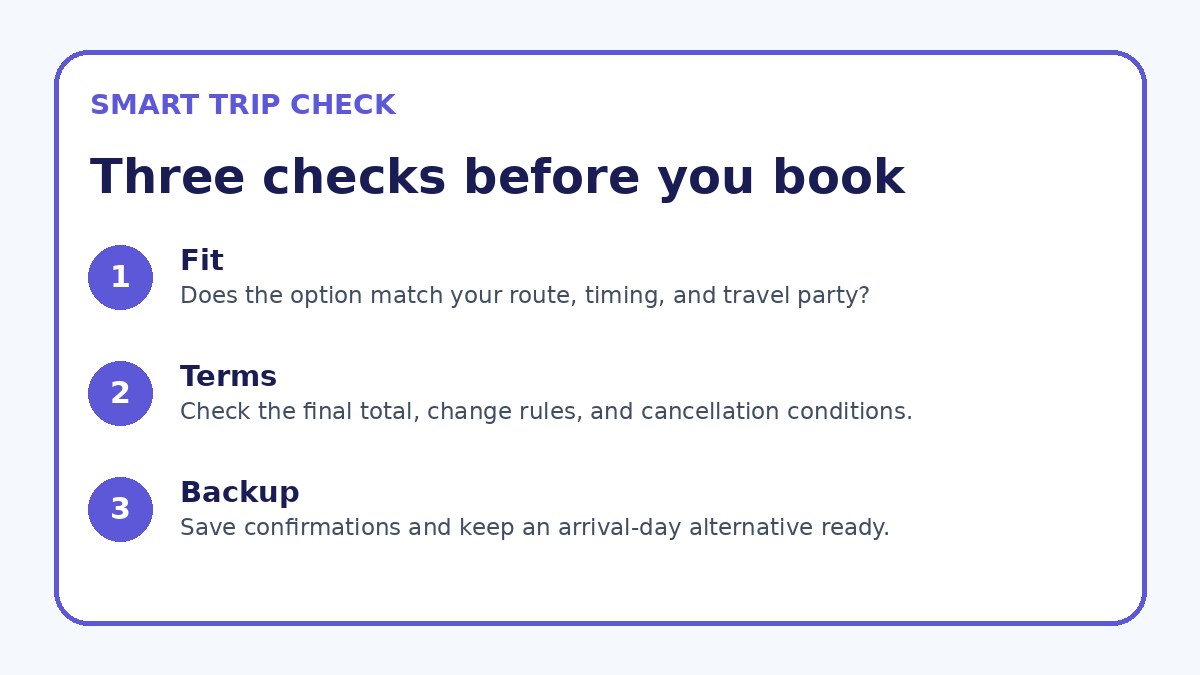
- Calculate door-to-door time: include transit from your Tokyo neighborhood, recommended airport arrival buffer for families, and ground travel at Fukuoka.
- Confirm exact change, cancellation, and refund rules on the airline’s final booking page before paying.
- Check seating options and reserve seats together or request bulkhead/bassinet space if needed for infants.
- Verify baggage rules for car seats, strollers, and extra gear and how those items are handled at check-in.
- Pack a family travel go-bag with snacks, medicines, spare clothes, and quiet activities for delays.
- Download the airline’s app and save booking references so you can manage changes or check gate updates quickly.
Practical booking checks and on-the-day tips for families
Before booking, confirm the carrier’s family-friendly features: assigned seating policies, bulkhead or bassinets if needed, stroller gate-check rules, and baggage allowances that cover car seats or double strollers. Verify change and refund policies for your exact fare class on the airline’s final booking page rather than relying on summary text in search results. If you need special assistance, request it early through the carrier’s official channels, and save any confirmation emails or reference numbers.
On travel day, arrive with a simple plan: pack a go-bag with snacks, entertainment, and basic medicines; keep passports and tickets accessible; and build extra time into your ground transfers for restroom and diaper breaks. If you expect delays, identify a nearby lounge or family waiting area at both airports as a backup rest spot. Finally, download the carrier’s app for real-time gate, delay, and change information—apps often let you rebook or select seats faster than call centers on busy days.
Frequently asked questions
Should families prefer Haneda or Narita when flying from Tokyo to Fukuoka?
Which Tokyo airport is better depends on where you are staying and how much ground time you can accept. Haneda is generally closer to central Tokyo neighborhoods and can cut door-to-door time, which matters with kids; Narita may offer different carrier schedules or fares. Before booking, compare total travel time from your lodging to each airport, available flight times that match your family’s routine, and transit convenience—also verify terminals and recommended arrival windows on the airline’s official pages so you can plan realistically for check-in and security.
Is it worth paying more for a flexible ticket when traveling with children?
Flexible tickets are worthwhile when your trip dates are uncertain or if missing travel days would cause significant disruption. They reduce stress because you can change plans without punitive fees, especially useful for illness or family emergencies. However, flexible fares aren’t always necessary for fixed events or short, well-planned trips; in those cases, choosing a convenient schedule matters more. Always compare the exact change and refund conditions on the booking page and weigh the extra fare cost against the probable need to change plans.
How should I compare flight options if some are direct and others have connections?
Don’t judge by airtime alone. Add transit time to and from airports, recommended arrival buffers for families, likely security queue time, and the nature of any connections—terminal changes, minimum connection times, and whether checked luggage transfers automatically. For connections, check if you must re-check baggage or pass immigration; these extra steps add complexity with strollers or car seats. Choose the option with the lowest expected total hassle for your family, and confirm baggage transfer and connection rules on the airline’s or booking platform’s final confirmation screen.
Final planning note
Balancing schedule flexibility and convenience for Tokyo to Fukuoka flights comes down to your family’s tolerance for uncertainty versus the value of time saved. For tight itineraries or short trips, prioritize flight times and airport proximity to keep door-to-door time low. If your plans might change, invest in flexible fares and verify the carrier’s change and refund terms before purchase. Use the checklist to cover practical details—seating, baggage, and on-the-day preparations—and confirm critical rules on the airline’s final booking page. If you want to compare current options and policies side-by-side, consider checking a marketplace like Trip.com as a starting point, but always verify policies with the carrier before you pay.
Continue planning
Check current options and final conditions
Use the provider page to confirm live availability, the final total, cancellation terms, and every condition that matters to your trip.
This evergreen planning guide was created with AI-assisted drafting and a structured quality review. It does not display live prices, schedules, availability, visa guidance, or provider rankings. Verify current details before booking. Some links are affiliate links; we may earn a commission at no additional cost to you.