Couples planning travel between Paris and Amsterdam often balance convenience against cost. The practical answer: choose a more flexible ticket when your dates, train/flight connections, or morning routines are uncertain, and pick a less flexible, lower-cost option when your schedule is fixed and you’re confident about departure times. Flexibility matters differently for trains and flights: trains often allow day-of exchanges or seat-specific policies, while flights commonly limit free changes and attach stricter fees. For two people, multiply the risk: a single missed connection or change affects both travelers and can make flexibility worth the extra upfront expense. Below you’ll find clear criteria to compare ticket flexibility, tradeoffs for couples, and a checklist of what to verify on each provider’s final booking page before you commit.
Understand what “flexible” means for trains and flights
Flexibility varies by transport mode and fare class. For trains, flexible tickets typically allow exchanges or refunds closer to departure with modest fees, sometimes including seat changes. Some rail operators sell fully refundable or open tickets, while others limit refunds to a percentage or require notice a certain number of hours before travel. For flights, flexible fares are often tied to higher fare families or dedicated “flex” products; they may include free changes or allow complimentary rebooking, but specific rules — like whether you can change times only or also dates and routes — differ widely.
For couples, the real question is whether both passengers must follow the same change rules and whether rebooking one ticket affects the other. Many providers treat each passenger separately, meaning two small change fees can add up. Others offer bundled or family-friendly options that allow coordinated modifications. When the booking interface splits tickets or the provider requires matching passenger names on the same amendment, you need to verify the process and any additional charges on the booking page before you pay.
How to compare change and refund terms practically
When you’re comparing options, gather the same details for each provider and fare: change fee amount, whether changes are free within a timeframe, refund policy and percentage, deadline for free/no-fee changes, and whether seat reservations are included or optional. Put these details side-by-side for each fare you’re considering. For couples, double every per-passenger fee to estimate the true cost of a likely change. Also check whether changes can be made online or require calling customer service, which can add time and stress around schedule shifts.
Pay attention to the smallest print: some tickets allow unlimited free date changes but lock you into specific time windows or require payment of any fare difference. That fare difference can be significant during peak days. For trains, check whether a reserved seat is transferable when you change the date; for flights, check if a change creates a new itinerary with different connection times. Verify whether the provider allows changes to only one passenger on a joint booking and if doing so affects the other passenger’s seat assignment.
| Approach | Best for | Tradeoff to check |
|---|---|---|
| Buy fully flexible fares | Couples with uncertain dates or tight connection risks | Higher upfront cost but minimal penalties for changes and simpler rebooking |
| Buy semi-flexible fares (low change fees) | Couples likely to change plans but willing to pay small fees | Lower cost than fully flexible tickets but fees and fare differences still apply |
| Buy non-flexible cheap fares | Couples with fixed plans prioritizing lower upfront cost | Low ticket price but potentially high combined costs if you must change both tickets |
| Mix-and-match approach | Couples who want to hedge risk (e.g., flexible return, cheap outbound) | Requires more planning and separate management of two fare types |
Tradeoffs for couples: when flexibility pays off
Flexibility is most valuable when plans are inherently uncertain: staggered work schedules, a flexible return date, or the possibility of adding day trips. For couples traveling with different preferences—one wants to linger in Amsterdam while the other needs to return earlier—flexible tickets let you adjust one traveler without forcing changes for both. Also consider travel day risks: if you’re connecting from a morning train in Paris to a flight from Schiphol or vice versa, allow buffer time or choose changeable fares to avoid steep rebooking costs if delays force you to miss a connection.
However, flexible fares usually cost more upfront. For stable plans—fixed wedding dates, booked events, or non-changeable commitments—the added cost may not be worth it. Some couples split risk by buying a flexible return and a cheaper outbound, or by buying flexible seats only for the passenger who’s more likely to need changes. The sensible approach depends on your tolerance for last-minute adjustments and how much you value the peace of mind that flexibility buys for both travelers.
Before you book
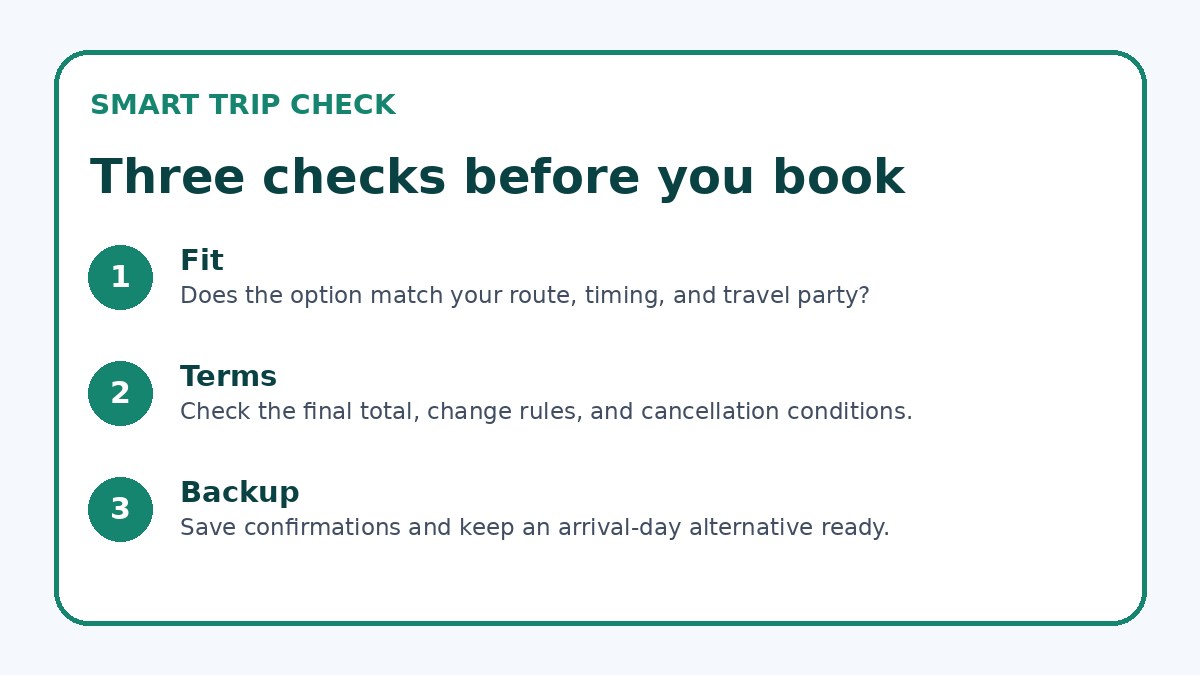
- Compare change fees and refund rules per passenger for the exact fare class before selecting seats.
- Verify whether seat reservations are included, transferable after a change, and how to reserve two seats together.
- Check if changes can be made online or require phone support and note expected processing times.
- Confirm whether fare differences are charged on change and how those are calculated at checkout.
- Screenshot or save the final fare rules shown on the provider’s booking page for future reference.
- If booking through an agent, confirm who handles changes and refunds—the agent or the operator—and keep their contact details.
What to verify on the provider’s booking page
Before you click purchase, check the exact change and refund steps shown on the provider’s final booking page. Look for: whether online self-service changes are allowed, how fees are displayed and applied per passenger, what happens to reserved seats after a change, and whether changes are subject to fare differences. If the provider shows a summary of fare rules during checkout, save or screenshot that page. If the booking process splits fees or requires payment of fare differences at a later stage, note the timeline and any deadlines that could affect refunds.
Also confirm the refund method and timing: credits, vouchers, or original-method refunds have different implications if you need cash back. For cross-border journeys like Paris to Amsterdam, check whether bookings made on third-party platforms require contacting that platform to change or if you can deal directly with the operator. Trip.com can be used as one place to compare current availability and conditions, but always verify the final rules on the transport operator’s or airline’s own booking confirmation.
Frequently asked questions
Should couples always book flexible return tickets from Amsterdam to Paris?
Not always. Book flexible returns when there’s a real chance your plans will change—such as uncertain work commitments, the desire to extend your stay, or tight connections with other transport. If your itinerary is fixed (events with set dates, strict deadlines), a cheaper, non-flexible return may make sense. Consider a split strategy: buy the leg more likely to change as flexible, and keep the other leg cheaper. Always calculate the combined potential change fees for two passengers versus the premium for flexibility to decide which option reduces your overall risk and cost.
How do seat reservations affect flexibility for couples traveling together?
Seat reservations can be separate from fare flexibility and vary by operator. Some tickets include reserved seats that transfer with an exchanged ticket; others require you to rebook or pay again for seats after a change. For couples, the important checks are whether you can reserve seats together at booking, whether the reservation remains linked when changing dates, and whether both passengers must be changed together to keep adjacent seats. Confirm these rules on the booking page and consider reserving seats only after you’re confident about the date to avoid extra rebooking costs.
Can I mix a train one-way and flight the other to balance flexibility and cost?
Yes, mixing modes is a valid strategy to balance flexibility and cost, but it adds complexity. Compare the change and refund rules separately for the train and the flight leg, and consider how missed connections between modes are handled. For example, changing a train arrival time might require a different flight connection and trigger change fees on the flight. Ensure you allow buffer time between onward services and verify each provider’s change process. On the booking page, confirm whether any reservations or protections exist for cross-booking missed connections—these are not automatic unless explicitly sold as part of a combined itinerary.
Final planning note
For couples traveling between Paris and Amsterdam, the smart choice depends on your tolerance for uncertainty and how much you value flexibility as a shared risk. If dates, connections, or personal obligations could change for either traveler, a flexible fare can prevent expensive surprises and reduce stress. If your plans are fixed, cheaper non-flexible fares may be preferable—just do the arithmetic for two passengers before you book. Always verify exact change and refund steps, seat-reservation rules, and whether changes can be handled online on the provider’s final booking page. Use those facts to weigh the incremental cost of flexibility against the potential cost and inconvenience of rebooking later.
Continue planning
Check current options and final conditions
Use the provider page to confirm live availability, the final total, cancellation terms, and every condition that matters to your trip.
This evergreen planning guide was created with AI-assisted drafting and a structured quality review. It does not display live prices, schedules, availability, visa guidance, or provider rankings. Verify current details before booking. Some links are affiliate links; we may earn a commission at no additional cost to you.