
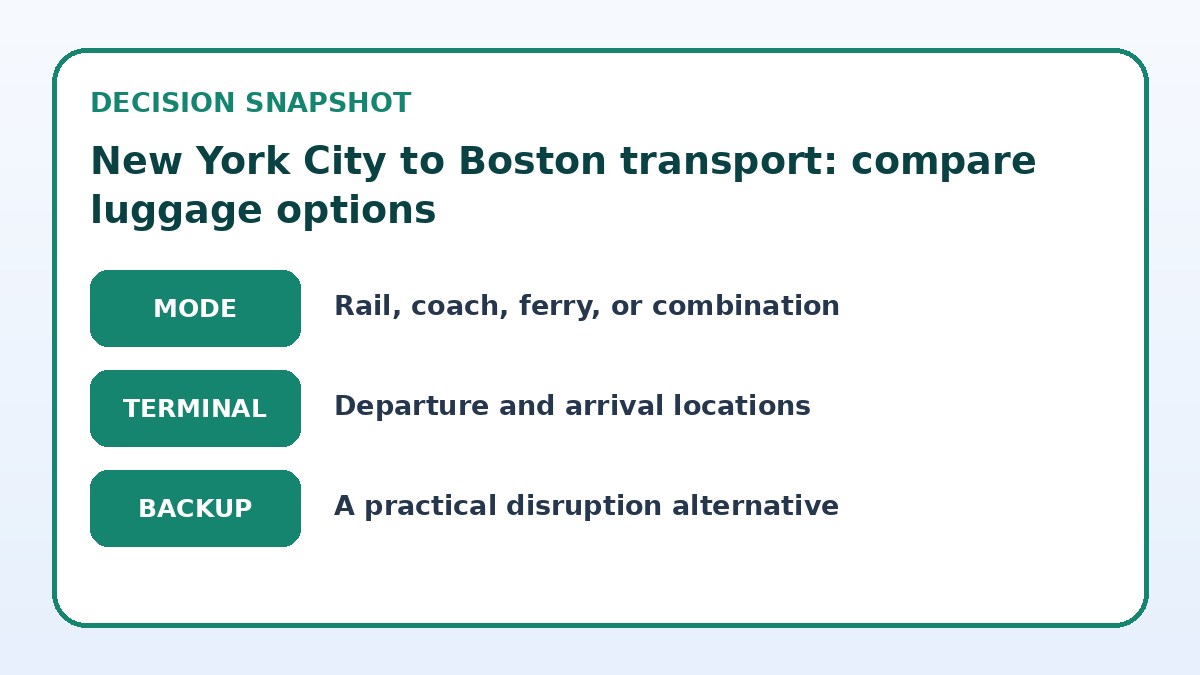
If you’re traveling from New York City to Boston with luggage, the practical choice depends on how much you’re carrying, how mobile you want to be, and where in each city you need to arrive. Trains and buses typically handle standard suitcases easily and drop you close to city centers; flights shorten transit time but add airport transfers and extra handling for bags. Decide first whether you prioritize door-to-door convenience, time on the road, or lowest hassle moving luggage through stations or terminals. This article walks through the main transport options, how luggage impacts each one, and the concrete checks to make on provider booking pages so your first trip between NYC and Boston goes smoothly.
How luggage changes your choice of transport
Luggage size, number, and fragility are the top factors that should shape whether you pick train, bus, flight, or car for New York City to Boston transport. Standard trains often have racks and luggage areas where suitcases can be stowed near your seat, which reduces the strain of lifting bags onto high platforms. Buses usually load larger items into undercarriage bays; that works fine for typical checked-size suitcases but can be awkward if you need frequent access during the trip. Flights add airport transfers and security handling, which can multiply the number of times your bags are moved.
If you travel with fragile gear, musical instruments, or unusually large items, those needs push you toward options with controlled handling: private car or paid shuttle services that handle bags directly, or train services that allow attendants to help at boarding. Also consider how you’ll get from stations or airports to your final address: city-center rail stations shorten last-mile distance, while airports and some bus terminals may require additional local transit with steps and crowds. Think ahead about lift availability, escalators, and how much you can comfortably carry between modes.
Train vs bus: convenience, handling, and transfers
Trains between New York and Boston are commonly chosen by travelers who value central arrival points and easier luggage stowage inside passenger cars. Trains generally offer more room for rolling suitcases and frequent flat surfaces or designated luggage racks, making them comfortable if you have two standard suitcases or a mix of bags. When comparing specific train options, check the provider’s luggage size guidelines, whether there is a limit on number of large items per passenger, and if assistance is available for boarding with heavy suitcases.
Buses often advertise lower base fares and can be competitive if you travel light, but baggage handling varies by operator. Large luggage is usually stored under the bus, which means you won’t have access during the trip and you should label bags clearly. Verify the operator’s policy on oversized or extra pieces on the final booking page; some companies charge for additional items or enforce strict dimensions. Also plan for station layouts: some bus terminals require walking with carry-on items through concourses or up steps to reach local transit or ride pickups.
| Approach | Best for | Tradeoff to check |
|---|---|---|
| Train (station-to-station) | Travelers with standard checked-size suitcases wanting central arrival | Less flexible door-to-door pickup; confirm luggage limits and assistance options |
| Bus (economy and express) | Light-packers prioritizing cost and simple booking | Baggage stowed under vehicle; limited access during trip and variable policies |
| Flight (airport to airport) | Those who prioritize fastest in-air travel and can handle transfers | More handoffs and transfer time; check checked and carry-on rules on booking pages |
| Private car / shuttle | Heavy, fragile, or oversized baggage needing direct door-to-door service | Higher cost; must confirm vehicle luggage capacity and pickup details |
Flights and airport logistics with luggage
Flying reduces time in transit but adds multiple luggage handoffs: curbside transfer, check-in desk or kiosk, security screening, aircraft handling, and baggage claim. If you choose air travel for New York City to Boston transport, budget time for check-in and reclaiming checked bags and for travel between city airports and downtown destinations. Confirm baggage allowance and gate-check rules on the airline’s booking page because carry-on size and number of free checked pieces differ by fare type and can change quickly.
Also factor in the ride from the airport to your accommodation. Airports are typically further from downtown than train stations, so you may need a taxi, rideshare, or public transit that accommodates suitcases. For fragile or high-value items, ask the carrier about liability and consider traveling with those items as carry-on if permitted. If you’re trying to avoid handling multiple transfers, select flights with minimal transfer requirements and verify transfer times and luggage transfer policies on the airline’s site before booking.
Before you book
- Weigh luggage volume and fragility against door-to-door convenience to decide train, bus, plane, or private transfer.
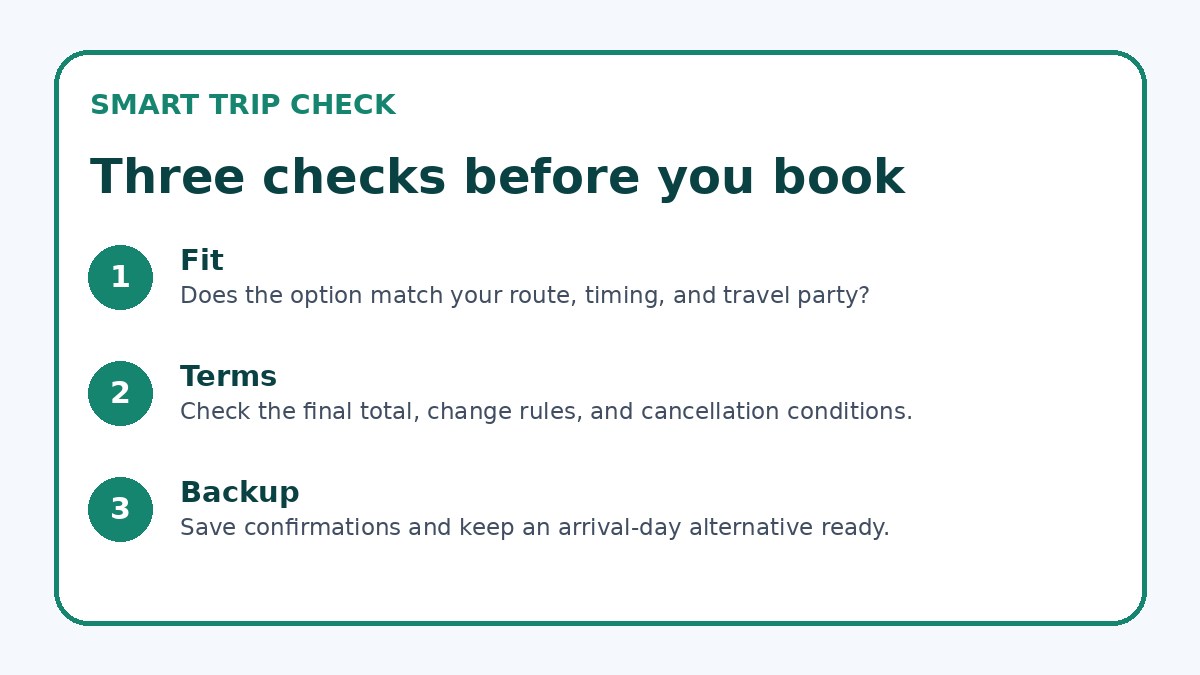
- Check the provider’s final booking page for exact luggage size limits, number of free pieces, and any extra fees before you pay.
- Plan your last-mile transfer: map walking routes from station or airport to your final address and note stairs, elevators, and escalators.
- Label every bag with contact details and keep essential items and valuables in a carry-on you can access during the trip.
- If traveling with oversized or special items, contact the carrier in advance to reserve space and confirm handling procedures.
- Consider shipping nonessential items ahead or using luggage storage at arrival if you want to travel lighter between cities.
Door-to-door options and special luggage situations
If you have oversized or unusual baggage—bicycles, surfboards, large musical instruments—or a lot of suitcases, a private car, professional shuttle, or courier service can be the simplest approach. These choices reduce the number of times your luggage is lifted and the amount you must navigate stairs, station platforms, or busy concourses. For first-time visitors, an escorted transfer lets you concentrate on arrival logistics rather than coordinating multiple modes, but you should confirm vehicle size, luggage capacity, and pickup/dropoff points when booking.
Another option is to ship some items ahead or use luggage storage services at your arrival city to travel lighter between NYC and Boston. If you plan to store bags temporarily, verify the storage provider’s hours, insurance terms, and whether they accept your bag type—some items may not be eligible. Always read the provider’s baggage restrictions and claims policy on their final booking or service pages, and consider travel insurance for high-value items.
Frequently asked questions
Can I easily bring two large suitcases on trains between New York City and Boston?
Many intercity trains accommodate two large suitcases per passenger by providing luggage racks and space near seats, but policies differ by operator and train type. Before booking, review the train company’s baggage guidelines on their official page to see if there are size or piece limits, and whether assistance is available for transferring bags at stations. If you expect difficulty lifting heavy suitcases onto racks or need guaranteed space, contact the carrier directly or consider upgrading to a service class that includes checked-baggage handling.
What should I verify about bus baggage rules before I buy a ticket?
Bus operators vary on what counts as a free checked bag, what fits in the undercarriage, and what incurs an extra fee. On the booking page, confirm the maximum dimensions for hold luggage, the number of allowed pieces, rules for carry-ons, and any charges for oversized items. Also check whether the bus terminal requires a separate boarding area or has limited elevator access, which could affect moving bulky suitcases. If you need to access items during the trip, choose an operator that permits generous carry-on allowances or consider a different mode.
Is flying more convenient with heavy or fragile baggage when traveling between NYC and Boston?
Flying can be convenient if you prioritize reduced travel time, but it introduces extra handoffs: check-in, security screening, and baggage claim. For heavy or fragile items, check the airline’s checked-baggage rules, whether special handling or fragile-item declarations are available, and the airline’s liability limits—these details appear on the airline’s booking and baggage policy pages. If you want fewer transfers and gentler handling, a private transfer or booking extra assistance at a train station may be a better fit than air travel.
Final planning note
When planning New York City to Boston transport with luggage, start by matching your baggage profile to the mode that minimizes handling and last-mile friction. Trains are often the middle ground for city-center convenience and roomy stowage; buses work for light, budget-conscious travelers; flights cut travel time but increase handoffs; private transfers solve complicated luggage needs at higher cost. Always verify luggage allowances, extra fees, and boarding or pickup details on the provider’s official booking page before finalizing. To compare current schedules and options, you can check Trip.com alongside providers’ sites, but rely on the carrier’s page for binding policies and operational details.
Continue planning
Check current options and final conditions
Use the provider page to confirm live availability, the final total, cancellation terms, and every condition that matters to your trip.
This evergreen planning guide was created with AI-assisted drafting and a structured quality review. It does not display live prices, schedules, availability, visa guidance, or provider rankings. Verify current details before booking. Some links are affiliate links; we may earn a commission at no additional cost to you.