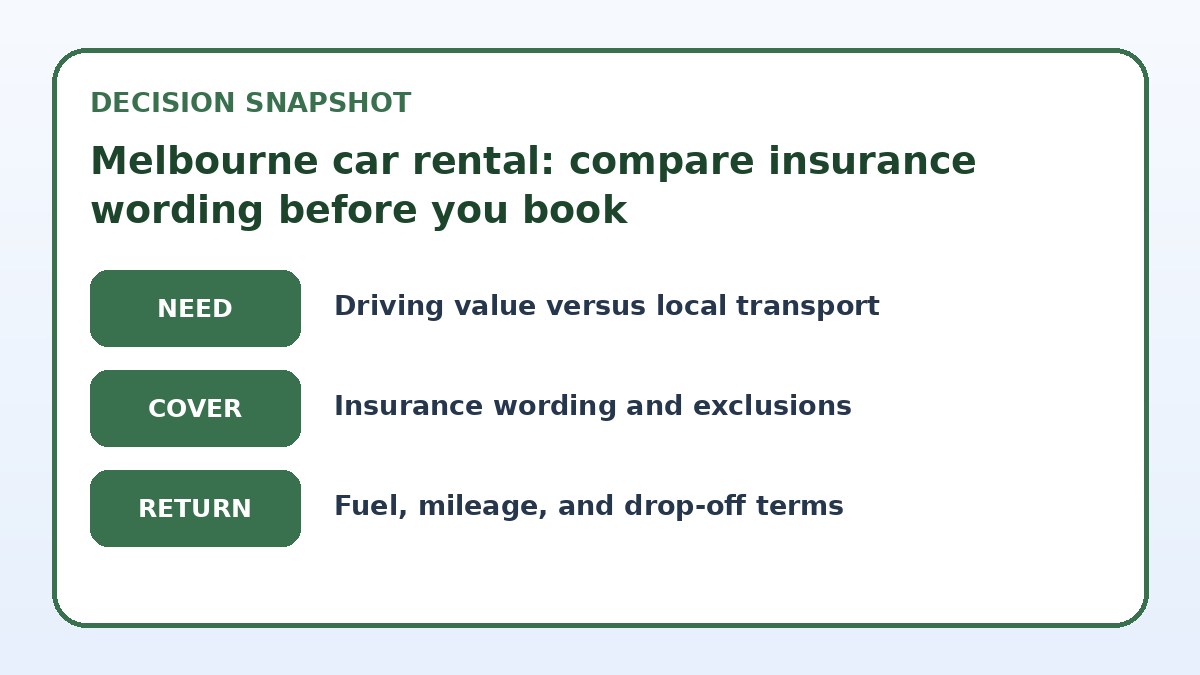
If you’re booking a hire car in Melbourne for a family trip, start by reading the insurance wording on the rental confirmation — not just the headline product name. Practical points matter: what the policy calls “Collision Damage Waiver,” “Loss Damage Waiver,” or “excess reduction” changes who pays after a claim and how much you can be charged. Also watch for driver eligibility rules, restrictions for child seats or roof racks, and whether third-party liability and roadside assistance are included or optional extras. Families should prioritize clarity over lowest upfront cost: unexpected exclusions, age or license limits, and blocked claims for everyday mistakes can turn a short drive into a stressful incident. This article explains the common insurance terms you’ll see in Melbourne car rental contracts, how to weigh tradeoffs, and the specific checks to do on the provider’s final booking page before you click confirm.
Key insurance terms and what they mean for families
Rental contracts use a handful of recurring phrases that determine who pays after a collision, theft, or damage. Collision Damage Waiver (CDW) or Loss Damage Waiver (LDW) typically limits the rental company’s right to charge you for damage, but it often leaves a deductible or excess. Third-party liability covers damage you cause to other people or their property; in Australia, adequate liability cover is essential because medical and property claims can be costly. Personal Accident Insurance (PAI) covers medical costs for occupants in some policies, but family travellers should not rely on it as a substitute for travel health insurance.
Understanding the practical effect of those terms matters more than memorizing definitions. If a CDW still leaves a high excess, you may face an up-front charge while the company investigates a claim. Some waivers exclude certain damage types, such as tyres, windscreens, or undercarriage damage — items commonly affected by urban kerbs or gravel roads families might encounter on day trips. Make a habit of scanning the exclusions list and the examples of excluded activities so you can plan routes and behaviour to stay covered.
Driver eligibility, additional drivers and age limits
Policies often restrict who can drive the hire car and may impose extra fees for additional drivers. Typical conditions include a minimum and maximum driver age, a requirement for a full valid licence held for a minimum period, and sometimes country-specific licence rules. Families should check whether partners or grandparents who plan to share driving meet the age and licence requirements and whether adding them to the contract is free or charged per day. If someone who will drive is not declared, insurer and rental company positions can lead to denied claims.
Also look closely at licence documentation rules — some providers require an international driving permit (IDP) in addition to a foreign licence, while others accept domestic licences only. When the wording is not explicit, ask the provider to confirm on the booking page or by email which licence combination is acceptable. Keep digital and physical copies of any correspondence confirming acceptance of additional drivers and permitted licences, since those messages can be valuable evidence if a dispute arises after a claim.
| Approach | Best for | Tradeoff to check |
|---|---|---|
| Buy excess reduction from the rental company | Families who want one-stop booking and immediate cover at pickup | Higher daily cost and sometimes limited refundability if you cancel |
| Purchase third-party excess insurance | Budget-conscious families seeking lower total cost over a long rental | You may need to settle with the rental firm first and claim reimbursed later |
| Rely on credit-card cover | Families whose card already offers decent rental protection and want no extra fees | Card policies often have strict conditions; verify driver and vehicle eligibility carefully |
| Accept standard cover and minimize risk by changing driving plans | Short urban rentals where you can avoid risky roads and tight parking | Lower upfront cost but potentially large out-of-pocket expense if damage occurs |
Excess, deposits and options to reduce your financial risk
The excess (also called deductible) is the amount you are initially responsible for if the car is damaged or stolen. In many cases the rental rate shows a low headline price but a high excess that can exceed a family’s comfort level. Providers commonly offer excess-reduction products that lower or eliminate the excess for an extra daily fee; there are also independent insurers that sell excess-cover policies separately. Before buying anything, compare the total cost and read the small print: some excess waivers still exclude certain damage types, and third-party excess insurers may have claim reporting rules you must follow.
Remember the deposit or hold placed on your payment card — this is not the same as the excess but it affects your family’s available funds while travelling. The deposit amount and whether it’s released immediately or after an inspection differs by company. Check the booking page to confirm the card types accepted, the typical hold amount, and how long it will remain on your card. If you rely on a prepaid travel card or a debit card for deposits, verify acceptance before arrival to avoid payment hurdles at pickup.
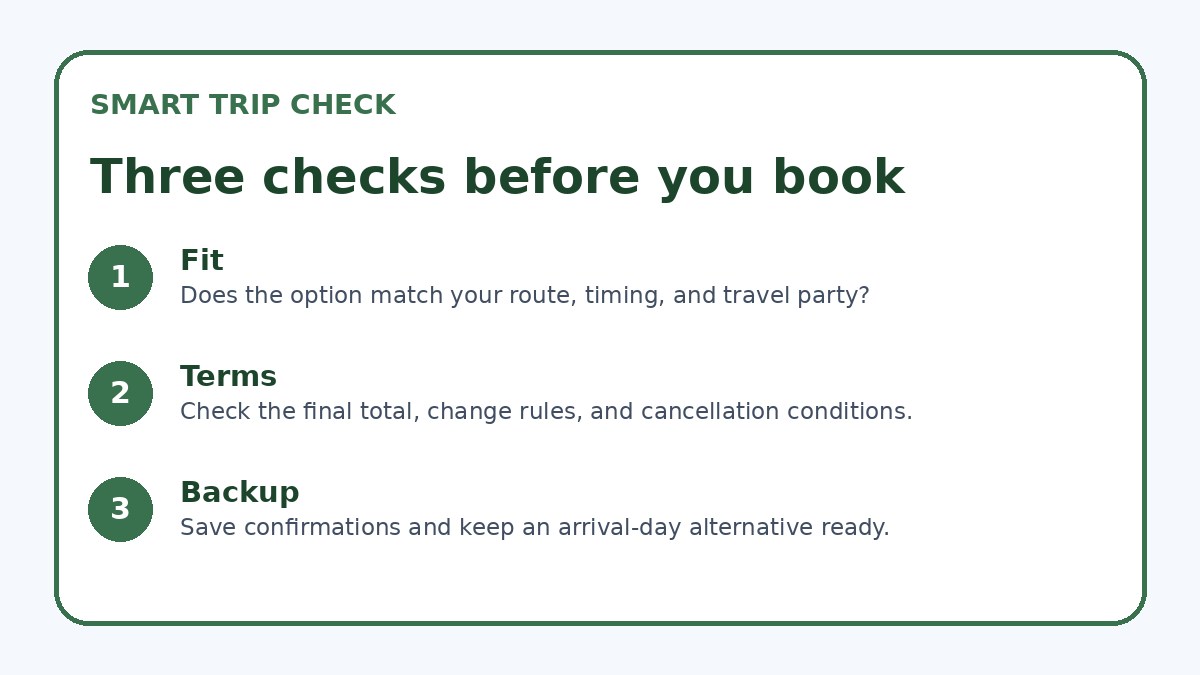
Before you book
- Read the rental booking page’s insurance section word-for-word and save a PDF or screenshot of the full policy wording.
- Confirm the excess amount, whether an excess reduction option exists, and the exact process to buy it or claim reimbursement.
- Verify which drivers are covered, required licence documents (including an IDP if needed), and any per-driver fees.
- Check the exclusions list for underbody, tyre, windscreen, and off-road damage and decide if your planned routes breach those exclusions.
- Note the deposit/hold amount and accepted card types on the provider’s final booking page; arrange sufficient funds or alternative payment.
- Ask in writing (email or booking message) about roadside assistance geographic limits and the tow/repair claim process; keep the reply with your booking.
Common exclusions families should never overlook
Exclusions vary between providers, but some have outsized impact on family plans. Typical exclusions include damage from driving off sealed roads, carrying passengers or luggage for hire, using a non-approved child seat, and negligence such as leaving keys inside the vehicle. Families planning wildlife drives, beach trips, or countryside routes should check whether these activities are allowed. If the policy excludes underbody, roof, or tyre damage, that’s important for trips that use ferry ramps, unpaved tracks, or narrow lanes where kerb strikes are possible.
Another area people miss is the fine print on roadside assistance and towing. Some policies include full 24/7 assistance; others limit towing distance or exclude costs for recovery from off-road situations. If you plan to travel outside Melbourne into regional Victoria, confirm whether the included roadside assistance covers that area and what to do before paying a tow operator. When in doubt, get written confirmation on the final booking page about the geographic limits of assistance and the claim process you must follow.
Frequently asked questions
Does Melbourne law require rental cars to include a certain level of insurance?
Australian rental vehicles must be registered and have compulsory third-party personal injury cover as part of vehicle registration, but that does not replace other cover types. Third-party liability for damage to other people or property is essential, yet rental companies often provide a basic level and offer upgrades for broader protection. Families should not assume the mandatory cover equals full protection for property damage or theft of the vehicle itself. Always read the rental policy to see what is included and what options exist to increase cover before you complete the booking.
Can I use my home car insurance or credit card to cover a Melbourne rental?
Sometimes. Some personal car policies offer limited cover when driving a hire vehicle and many credit cards advertise rental insurance benefits, but each has strict conditions. Typical card requirements include charging the full rental to the card, the renter being the primary driver, and refusal of the rental company’s excess waiver at the counter. Check your insurer’s and card issuer’s specific terms — including driver age, vehicle types, excluded damage, and required documentation — and get written confirmation if you plan to rely on those covers.
What steps should I take at pickup to protect a family’s claim rights?
Do a thorough walkaround with the rental agent and photograph every side of the car, concentrating on existing scratches, tyres, windshield, roof, and undercarriage where visible. Ensure any pre-existing damage is recorded on the rental agreement and that the agent initials or signs beside it. Confirm in writing which insurance you bought or declined, the excess amount, additional drivers covered, and the roadside assistance procedure. Keeping copies of these confirmations with the vehicle photos makes claims smoother and reduces the chance of being charged for pre-existing damage.
Final planning note
Families renting a car in Melbourne can avoid most unpleasant surprises by focusing first on the insurance wording: what’s covered, what’s excluded, who can drive, and how big the excess and deposit are. Balance price against financial risk rather than choosing purely on the lowest headline rate. If the wording is unclear, ask the rental company to update the booking page or send written confirmation before pickup. Compare excess-reduction options, third-party insurers, and any credit-card benefits you may have, and always document the vehicle’s condition at collection. For current availability and to compare providers’ current booking terms, you can check Trip.com or the rental firms’ own sites — but rely on the provider’s final booking page for the exact wording you will be bound by.
Continue planning
Check current options and final conditions
Use the provider page to confirm live availability, the final total, cancellation terms, and every condition that matters to your trip.
This evergreen planning guide was created with AI-assisted drafting and a structured quality review. It does not display live prices, schedules, availability, visa guidance, or provider rankings. Verify current details before booking. Some links are affiliate links; we may earn a commission at no additional cost to you.