If you need to get from Seoul to Gangneung, choose the mode that best fits your time, luggage, and tolerance for transfers. Trains tend to be the easiest when station access and luggage handling matter; coaches offer simple, often frequent point-to-point boarding; ferries are occasional and work best if you want a scenic break or are connecting from a coastal route; and mixing modes can solve timing gaps or reduce walking with baggage. This guide compares terminal fit, luggage and transfer friction, timing flexibility, and disruption backups so a solo traveler can pick the most practical door-to-door approach. Read the comparison rows for fast decision-making, then use the sections to plan transfers, verify final operator details, and build a reliable backup plan before booking.
Terminal fit and door-to-door practicality
Terminal location matters more than the advertised ride time. In Seoul, major rail and long-distance coach hubs are located in different neighborhoods; each has different taxi rank layouts, subway lines, and baggage handling. Before you commit, map the start and end points—hotel, guesthouse, or station—and estimate the door-to-door time including a comfortable margin for checking luggage, buying a ticket, and walking between platforms or bus stands. For solo travelers, a single short taxi at either end can remove heavy lifting and simplify transfers, even if the core of your trip is by public transport.
At the Gangneung end, check where the chosen service actually stops. Some coaches and regional buses use suburban terminals or roadside stops that are not convenient for all neighborhoods. A train station may be closer to tourist spots and local buses but could still require a short taxi ride after you arrive. Factor in how dark or quiet the area will be when you arrive as a safety and comfort consideration: a slightly longer daytime transfer might be preferable to arriving late at night to a remote stop with limited onward options.
Choose the end-to-end journey plan
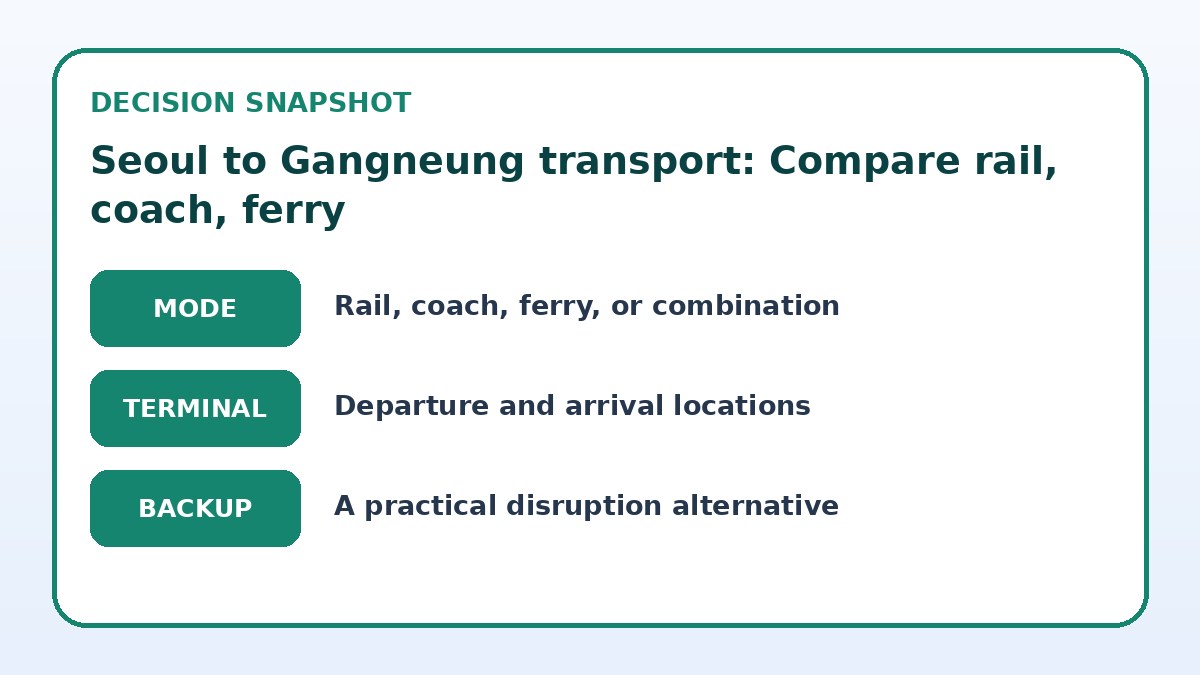
| Journey approach | Best for | Friction to check |
|---|---|---|
| Direct intercity train (single-mode rail) | Solo travelers who prioritize low-transfer friction and a central station arrival. | May have fewer departure times and requires checking platform access and final station proximity to your accommodation. |
| Long-distance coach (single-mode road) | Those needing flexible departure windows and straightforward point-to-point boarding near neighborhood stops. | Coach terminals or roadside stops may require additional local transfers or longer walks with luggage. |
| Ferry plus land connections (mixed coastal route) | Travelers wanting a scenic route or converting a coastal segment into active travel between ports. | Ferries are occasional and need extra transfers to reach city centers; check terminal locations and sailings closely. |
| Mixed modes (train+taxi, coach+local bus) | Solo travelers balancing time savings with lower walking and luggage handling at either end. | More connections increase the chance of a missed link—build buffers and a clear backup for each connection. |
Check live intercity options
Look beyond the ride itself and compare terminals, transfers, luggage, and arrival fit.
Luggage, transfer friction, and solo-traveler needs
Think beyond carry-on vs checked bags: how many times will you lift the bag? Will you navigate stairs, long footbridges, or crowded aisles alone? Trains frequently allow you to keep luggage with you or store it in overhead racks and dedicated bays, but transfers between train and local transport can introduce friction. Coaches usually have underfloor luggage holds that remove the need to manage bags while onboard, but lifting heavy suitcases into a bus bay is solo-work. Decide whether minimizing handling (one drop at departure and one pick-up at arrival) or minimizing walking (short transfers) is your priority.
Also consider luggage security while you make connections. Solo travelers should plan for quick, visible storage: keep essential documents and valuables in a small daypack and use secure zips and locks as appropriate. If you expect to arrive late or in bad weather, prioritize an option that reduces time spent outside and limits juggling between transport modes. Small, actionable choices—booking a seat near the door on a train for faster exit or choosing a coach that disembarks close to the terminal entrance—reduce stress during single-person travel.
Timing flexibility and routine vs. contingency planning
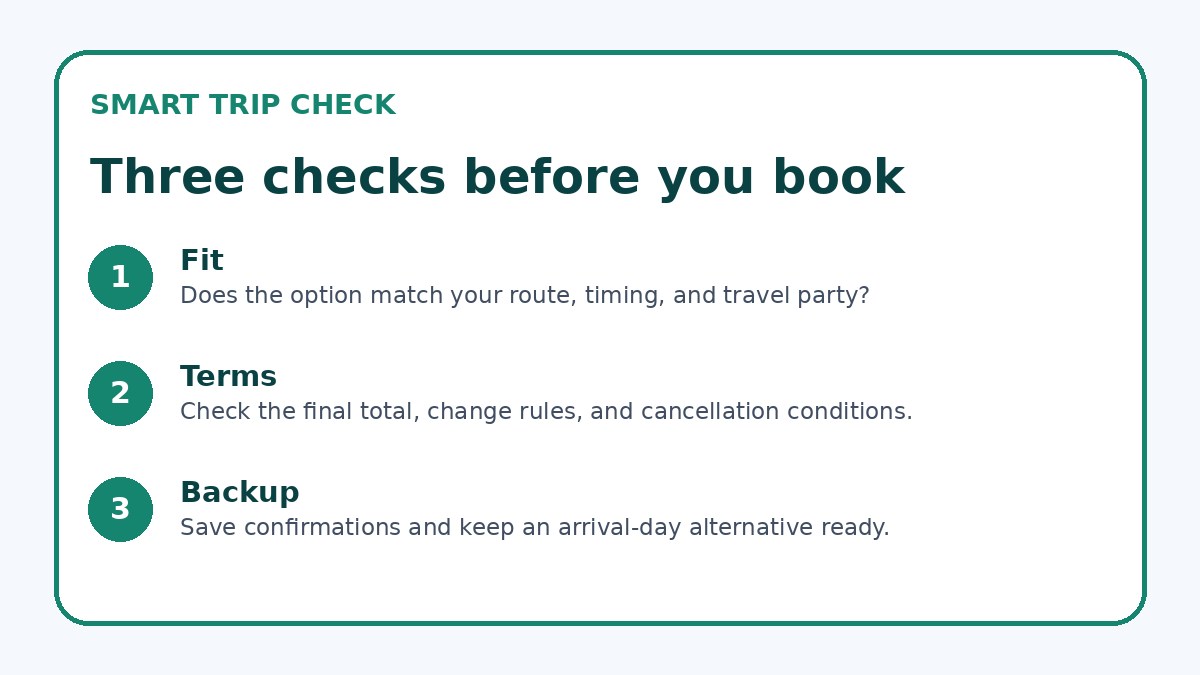
Consider whether you value a fixed schedule or flexible departure times. Trains may run on a fixed timetable with fewer departures but clearer disruption procedures; coaches can be more frequent, letting you shift departure times without rebooking. If your schedule is tight—catching a tour, meeting, or evening check-in—pick the option with spare time built into the itinerary. When comparing total travel time, always add realistic transfer windows and a buffer for ticket queues or unexpected delays, particularly at busy terminals or peak travel days.
Prepare a simple contingency plan before you leave: note the next few departures on alternative routes, identify nearby taxi apps or local cab numbers, and store the addresses of your origin and accommodation in Korean text for drivers. If you choose a mixed-mode routing, ensure connection windows allow for a missed link without long overnight waits. Trip.com can be useful to cross-check current availability and conditions, but always verify final timetable and boarding details on the operator’s official booking page before you commit.
Compare the practical alternatives
Use the final page to confirm what is actually offered on your dates and save a workable fallback.
Intercity travel checklist
- Map exact station and terminal addresses for both origin and destination and estimate door-to-door travel time before comparing options.
- Confirm how luggage is handled on your chosen service and plan for any heavy lifting or storage needs during transfers.
- Check the number of daily departures for each mode and identify two alternate departures in case you miss your planned service.
- Save the station or terminal contact details, local taxi app or company information, and your accommodation address in Hangul.
- Pack a small daypack with essentials and a portable charger so you can wait for alternatives without returning to your main luggage.
- Verify the operator’s final booking page for boarding procedures, terminal platforms, baggage rules, and any mandatory steps before departure.
Disruption backups and safety for solo travelers
Disruptions happen: roadworks, weather, and occasional service suspensions can change the best-laid plan. For solo travelers, a practical backup is a list of alternate departures plus the likely travel-cost and time impact of switching. Keep a local payment method handy for taxis or rideshares if you need a fast rescue from a missed connection, and save the local station or terminal’s information desk number. If you are reliant on a single late-night departure, prefer an option with visible staff presence at both ends or book an arrival during daylight where onward options remain open.
Also think about personal safety and communication. Share your itinerary with a friend or family member and include expected arrival times and terminal names. Carry a portable charger and offline maps for the final leg. If you speak limited Korean, download simple address cards written in Hangul for hotel or station names to show taxi drivers. These small steps make rescheduling and navigating disruptions far easier, and they reduce the stress of making last-minute choices solo.
Rail & Intercity Transport questions travelers ask
Is the train the fastest way from Seoul to Gangneung for a solo traveler?
Speed depends on service type and connection points. A direct rail option can be quick for the on-rail portion and reduces transfers, which is practical for solo travelers. However, you must compare the station-to-door time at both ends—if a coach or mixed route drops you closer to your accommodation, its shorter door-to-door time could feel faster. Always compare total journey time including transfers, waiting, and walking rather than relying on advertised ride time alone.
How should I handle luggage when using mixed transport modes between Seoul and Gangneung?
Minimize handling by consolidating items into one manageable main bag and a small daypack with valuables. If transferring between services, choose carriers with easy luggage storage or reserve seat options that keep your bag nearby. For heavy luggage, consider planning a single taxi transfer at either origin or destination to reduce multiple lifts. Also confirm any luggage size limits on the operator’s booking page and allow extra time during connections to stow and retrieve bags safely.
What’s the best disruption backup if my planned coach or train is cancelled?
Have two practical alternatives noted before travel: a later departure on the same mode, a different mode with reasonable door-to-door time, and the local taxi app or number for urgent transfers. If you’re on a mixed itinerary, identify how to re-route with minimal extra walking—sometimes taking a short taxi to the next major station opens more rail or coach options. Keep tickets or booking confirmations accessible and check the operator’s official page for rebooking rules and staff contact details before attempting changes.
Final decision note
Choosing between train, coach, ferry, or a mixed approach for travel from Seoul to Gangneung comes down to the same practical questions: where do services stop, how many times will you handle your luggage, how flexible are departures, and what backup will you use if things change? For most solo travelers, the right choice minimizes transfers and walking with luggage while leaving a simple, realistic contingency plan. Use the comparison rows to decide quickly, then verify terminal locations and boarding procedures on the operator’s official booking page. Keep local contacts and a charged phone ready—those small preparations make a smooth door-to-door trip far more likely.
Continue planning
Check current options and final conditions
Use the provider page to confirm live availability, the final total, cancellation terms, and every condition that matters to your trip.
This evergreen planning guide was created with AI-assisted drafting and a structured quality review. It does not display live prices, schedules, availability, visa guidance, or provider rankings. Verify current details before booking. Some links are affiliate links; we may earn a commission at no additional cost to you.