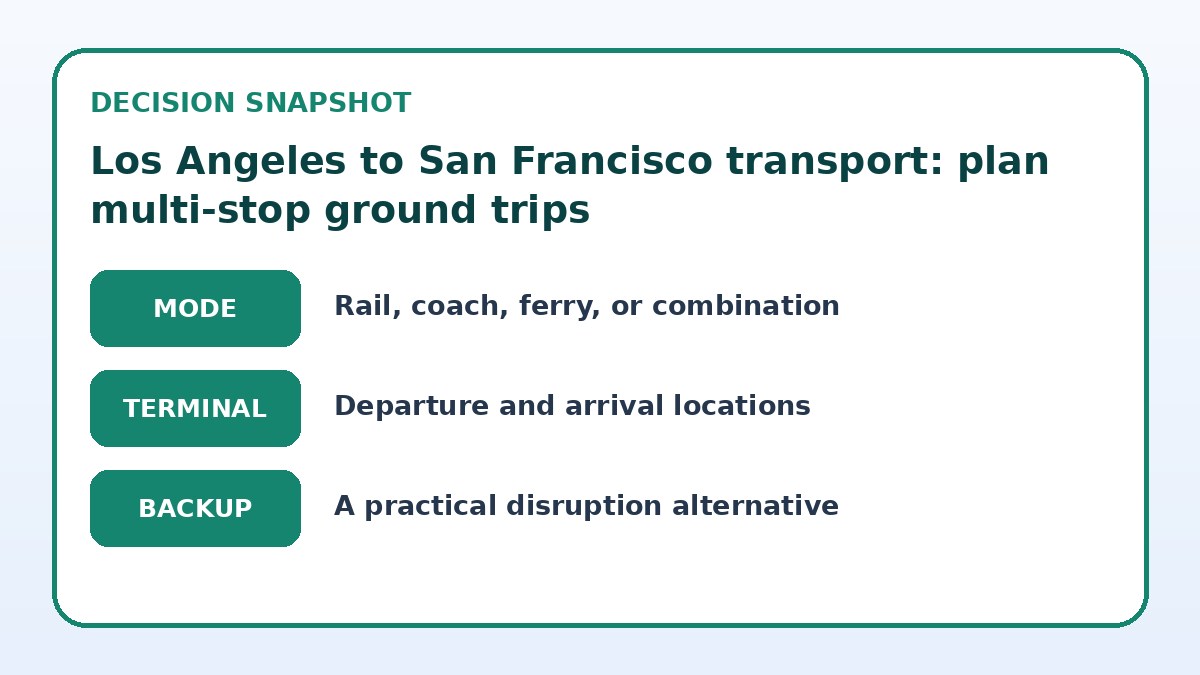
Practical answer first: pick the main mode that matches your family’s priorities—comfort (rail), cost and frequency (coach), coastal experience (ferry plus coach segments), or a blended approach combining rail and short coach legs—and then stitch the legs together around where you’ll sleep and what you’ll carry. For many families the best multi-city ground plan is a mixed strategy: a rail or coach long-haul between major hubs, short local buses or rideshares for transfers, and one carefully timed overnight stop to break driving fatigue and sightseeing. This article walks through how to compare terminal fit, luggage and transfer friction, timing flexibility, and a disruption backup so you can build an end-to-end door-to-door plan that works for strollers, school-age kids, and adults traveling together.
How to choose between rail, coach, ferry, or a mix
Start by listing what matters most for your family: fewer changes, room to spread out, predictable departure times, or scenic stops. Rail typically gives more space to stand and walk, which helps with restless kids and luggage that won’t fit overhead on smaller coaches. Coaches often offer the most schedules and point-to-point flexibility, so they can be easier when your timing is tight; however, coaches can mean narrower seats and more difficulty stowing bulky items. Ferry segments may add scenic value if you’re routing through coastal towns, but ferries almost always require connection planning on both shores, which adds transfer complexity for families.
A mixed plan can capture the strengths of each mode: for example, ride a long-distance train between big stations where transfers are straightforward, then take a short coach or ferry leg to reach a smaller coastal town. When comparing options, treat each change as a separate mini-transfer: think about where you move luggage, how long you can manage children waiting, and whether your chosen terminals have sheltered waiting areas and basic amenities. Make your decision around the leg that will be most stressful—usually the longest or the one with the most transfers—and optimize that piece first.
Choose the end-to-end journey plan
| Journey approach | Best for | Friction to check |
|---|---|---|
| Single-mode rail-centric plan | Families who value onboard space and one-seat comfort between major stations. | May require longer first/last-mile transfers to neighborhoods away from stations. |
| Single-mode coach-centric plan | Families needing many schedule options and flexible pick-up/drop-off points. | Smaller seats and more difficulty with bulky luggage or long-haul comfort. |
| Mixed-mode plan (rail + short coach/ferry legs) | Families balancing scenic stops with comfort and practical last-mile access. | Adds transfer complexity and requires careful timing buffers at connections. |
| Door-to-door private transfer plus public legs | Families who prefer minimizing transfers at endpoints and protecting children’s comfort. | Higher outlay for private legs and dependence on road conditions for timing. |
Check live intercity options
Look beyond the ride itself and compare terminals, transfers, luggage, and arrival fit.
Terminal fit and luggage/transfer friction for families
Terminal fit matters more than you might expect. Large stations usually have family restrooms, elevators, and places to sit while loading strollers and suitcases; small coach stops and ferry terminals sometimes lack covered waiting areas or nearby parking. Before booking, check photos and maps of arrival and departure points to ensure elevators, ramps, and drop-off zones exist. Plan where you’ll park or be dropped off, how far you’ll roll a stroller or suitcase, and whether you’ll need porter help; these realities determine whether a theoretically faster connection is actually doable with small kids.
Luggage plans should reflect transfers. If you can avoid having to lift heavy bags up and down stairs, your trip will be smoother. Consider packing one day bag per adult and consolidating other items into two manageable suitcases rather than many small pieces. If you’re combining services, verify on the provider’s final booking page what counts as carry-on or checked luggage and whether assistance is offered at each terminal. Where provider info may change, you'll want to confirm baggage allowances and transfer assistance before finalizing bookings.
Timing flexibility and building buffer time
Families need realistic buffers. Aim for at least 45–90 minutes between scheduled arrivals and departures when transfers involve different operators, unfamiliar terminals, or ferry check-ins. If you’re transferring within the same station and operators are well-coordinated, shorter buffers can work, but always factor in restroom breaks, snack time, and a restroom or diaper change. Consider planning one longer layover or an overnight stop in a mid-route city to reset—this converts a chain of stressful transfers into two relaxed travel days with time to explore.
Use schedule mapping to build flexibility: pick later departures on high-disruption days like holiday weekends, and check how often your chosen operator runs multiple daily trips so you know your options if you miss one. For mixed-mode journeys, try to align longer legs on more comfortable modes (train) and reserve shorter, more frequent modes (coach, local bus) for last-mile access. Always verify final schedules on the provider’s booking page before committing, because timing and frequency change seasonally and with operational events.
Compare the practical alternatives
Use the final page to confirm what is actually offered on your dates and save a workable fallback.
Intercity travel checklist
- List the neighborhoods you want to stay in both cities and map the nearest train, coach, or ferry terminals to each.
- Check terminal accessibility photos and maps for elevators, ramps, covered waiting areas, and stroller-friendly routes.
- Compare baggage rules and transfer assistance on each provider’s final booking page before you purchase tickets.
- Build at least 45–90 minutes buffer between different operators and longer buffers if transfers require taxi or long walks.
- Identify an alternate same-day connection on a different mode and save its booking page or contact number in case of disruption.
- Reserve one overnight stop option near a terminal as a contingency to avoid late-night transfers with tired children.
Disruption backups and door-to-door practicality
Plan for common disruptions: traffic delays on highways, service changes for rail or coach, and weather impacts on ferries. A robust backup includes at least one same-day alternate service on a different mode, a nearby terminal where you could switch modes, and a hotel option within a short taxi or rideshare if an overnight becomes necessary. For door-to-door practicality, map the first and last mile carefully: identify safe drop-off points, covered walkways, and whether your accommodation can store luggage for late arrivals.
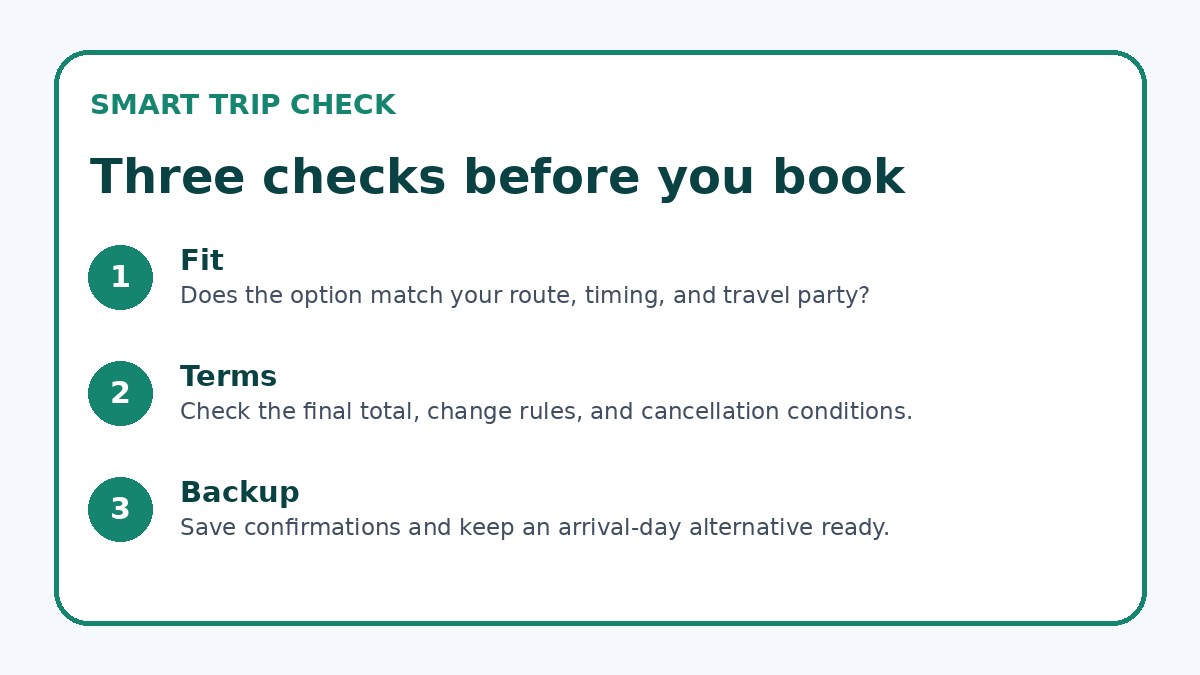
When booking, note cancellation and rebooking rules on each provider’s final page and whether transfers are protected under a single ticket or require separate rebooking. If tickets are separate, give yourself more buffer time and consider refundable or flexible fare options where available. Finally, leave contact info for your family and a simple itinerary for any caregiver or grandparent joining the trip—clear communication reduces stress if plans change mid-route.
Rail & Intercity Transport questions travelers ask
Can I expect easy stroller and luggage handling when traveling between Los Angeles and San Francisco by ground?
Stroller and luggage handling varies by station and operator. Large rail stations usually have elevators, ramps, and staff who can assist, but smaller coach or ferry terminals may have steps or limited shelter. Before booking, check photos and terminal maps and confirm accessibility details on the provider’s booking page. Pack a lightweight, compact stroller if you’ll be navigating transfers, and consolidate luggage into fewer manageable pieces to reduce lifting during short transfers.
How should I plan food, rest, and bathroom breaks for kids on multi-leg ground journeys?
Build scheduled breaks into your itinerary and allow extra time at transfers for snacks and restroom visits. Choose longer connections at terminals with dining options or nearby parks, and pack a day bag with preferred snacks, wipes, and a change of clothes. If a leg is long, plan to get on a service with room to walk and use onboard restrooms where available. Verify amenities at terminals and vehicles on each provider’s booking page so you’re not surprised en route.
What’s the safest way to handle missed connections or cancellations with kids in tow?
Have a simple contingency plan: know the next two available services on alternate modes, save their booking pages, and identify a nearby hotel within a short taxi or rideshare. Keep emergency contact numbers and a printed itinerary for caregivers. If services are on separate tickets, aim for longer buffers; if they’re on a single through-ticket, check rebooking options on the provider’s final page. Staying calm, feeding kids, and finding a sheltered area to regroup reduces stress while you arrange the next leg.
Final decision note
Building a family-friendly multi-city ground plan between Los Angeles and San Francisco starts with one practical choice: select the mode that reduces your biggest stress—space, schedule frequency, or scenic stops—and then design transfers and buffers around that choice. Prioritize terminal fit and luggage handling, allow realistic connection times, and prepare at least one alternate same-day option and a nearby overnight contingency. Confirm luggage rules, terminal facilities, and rebooking policies on each provider’s final booking page before paying. With a blended approach that favors end-to-end door-to-door practicality, families can enjoy a more relaxed, flexible trip that balances comfort with the chance to explore stops along the way.
Continue planning
Check current options and final conditions
Use the provider page to confirm live availability, the final total, cancellation terms, and every condition that matters to your trip.
This evergreen planning guide was created with AI-assisted drafting and a structured quality review. It does not display live prices, schedules, availability, visa guidance, or provider rankings. Verify current details before booking. Some links are affiliate links; we may earn a commission at no additional cost to you.