Decide your Phuket neighborhood first, then scan hotels for flexible booking terms. For a solo traveler that means weighing walkability, evening safety, transport cost for day trips, and whether a place lets you cancel or change dates without penalty. If you want beaches and nightlife, staying near Patong or Kata prioritizes convenience at the cost of more noise and busier streets; for calmer days and easier island departures, Kamala or Cape Panwa shift you away from crowds but add transport legs. This article gives a quick shortlist process—neighborhood fit, expected daily-route friction, room and solo-guest needs, and the explicit booking terms to verify—so you can stop shopping and start checking the exact cancellation, prepayment, and modification policies on each hotel’s booking page.
Check live stays in the areas that fit
Use your dates and party size to compare current rooms after you narrow the neighborhood fit.
Neighborhood fit: where a solo traveler will sleep and start the day
Start by matching your priorities—beach access, nightlife, quiet mornings, or easy transfer to islands—to one or two Phuket neighborhoods. Patong is the classic choice if you want nightlife and lots of restaurants within walking distance; Kata and Karon balance beach time with a calmer evening scene. Kamala and Bang Tao suit travelers seeking calmer mornings and a more residential feel. Cape Panwa and the southeastern coast are better if your plan centers on boat departures or low-density solitude.
For solo travelers safety and practical access matter: choose places with easy arrival logistics from Phuket International Airport and clear options for evening transport. Consider how often you'll want to take day trips to Phi Phi or Phang Nga and whether transfers start near your hotel. Shortlist one neighborhood for active days and a second if you prefer switching location mid-trip—this makes it easier to compare hotels within similar daily-route expectations and booking terms.
Choose an area-selection strategy
| Area approach | Best for | Tradeoff to check |
|---|---|---|
| Central beach neighborhoods (Patong, Kata) | Solo travelers wanting nightlife, many dining options, and walkable convenience. | Higher noise and denser crowds; may require stricter cancellation terms due to busier booking patterns. |
| Quieter coastal areas (Kamala, Bang Tao) | Travelers seeking calmer evenings and a relaxed base for day trips. | Longer transfers to some attractions and tour departure points; flexible booking reduces risk if plans change. |
| Southeast coast and Cape Panwa | Solo travelers prioritizing easy boat access and low-density beaches. | Fewer late-night amenities and longer trips to nightlife; check transfer and cancellation policies for boat tours. |
| Split-stay approach | Travelers who want both nightlife and quiet days by changing neighborhoods mid-trip. | Adds packing and transport logistics; book flexible arrival/departure terms to avoid penalties when switching hotels. |
Daily-route friction: how neighborhood choice affects solo mobility
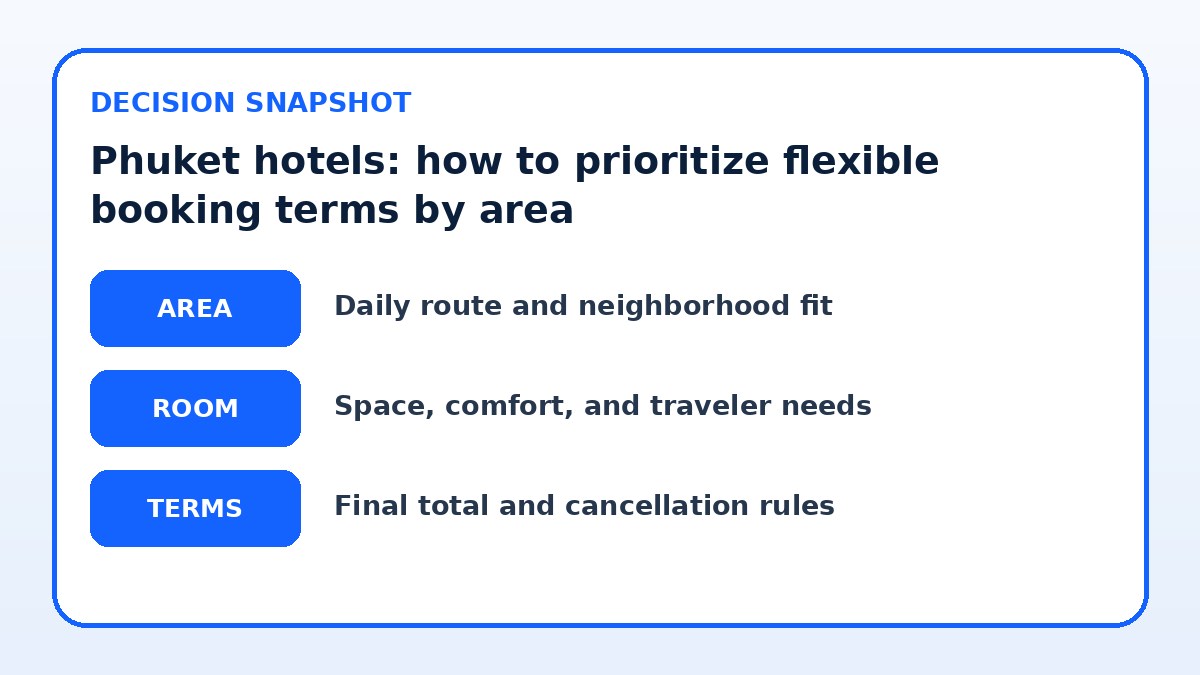
Think in terms of friction: the time, cost, and effort of getting to the things you want to do each day. A hotel in Patong or Kata minimizes short taxi or tuk-tuk rides to restaurants and bars but may create longer waits when leaving late at night because of traffic or demand. Choosing quieter areas like Kamala or Bang Tao reduces noise and gives calmer evenings but will usually add taxi time to key attractions or to tour pickup points. If you plan many boat trips, choose a neighborhood with straightforward transfer options to the harbor.
Also factor in the convenience of essential services—24-hour pharmacies, clinics, laundries, and a supermarket. For solo travelers, being able to solve small problems without a long ride reduces stress. When comparing hotels, map the actual walking routes to nearby conveniences and measure whether the last-mile will be on foot, by shared minivan, or requiring a private taxi; that last piece influences whether you prefer a more flexible cancellation window in case you need to shift dates or location at short notice.
Now compare like with like
Keep the same dates, guests, room needs, and cancellation preferences while you compare the final choices.
Room and party needs: what solo travelers actually need from a booking
Solo travelers usually need a safe private room, strong Wi‑Fi, and a dependable way to store valuables and charge devices. Decide if you want social options like hostels or co‑living spaces versus private hotels where interactions are optional. If you expect to work remotely, prioritize quiet rooms, a desk, and a clear refund or date-change policy should your plans shift. If you plan to join last-minute day tours or boat trips, select hotels with flexible arrival and departure terms so you can adapt without losing significant money.
Check bed configurations and whether the hotel allows single occupancy without an extra-person fee. Look for hotel descriptions that mention late check-in, luggage hold, and shuttle connections; if these policies are unclear, list them as verification items before you book. When comparing rooms, remember that flexible booking terms may differ by rate type—non‑refundable rates are commonly cheaper but carry higher risk if your solo itinerary is fluid.
Hotel booking check before payment
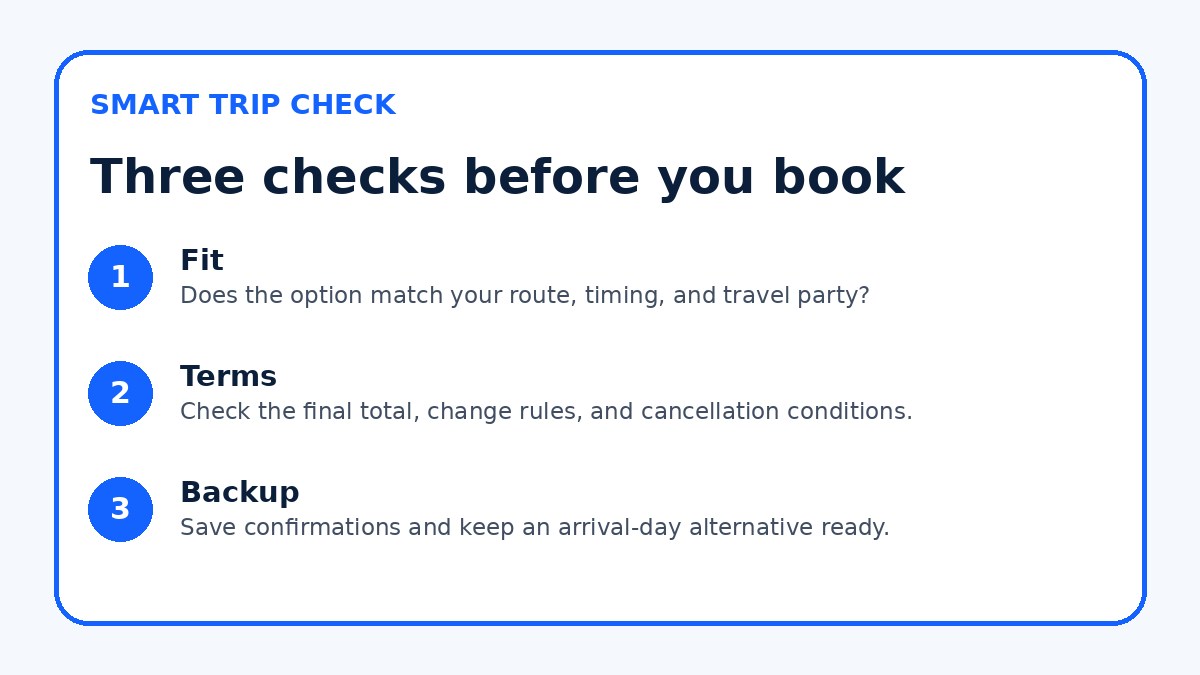
- Pick one primary neighborhood and a backup based on whether you prefer nightlife, calm mornings, or easy boat access.
- Map walking routes from shortlisted hotels to restaurants, pharmacies, tour pickup points, and public transport before comparing prices.
- On each hotel’s booking page, verify cancellation window, prepayment requirement, and whether name/date changes carry fees.
- Confirm whether the rate is for single occupancy and whether any extra-person fees apply for solo travelers.
- If policies are unclear, email or call the hotel and save the response screen or message before you complete payment.
- Compare the hotel’s direct policy to any OTA policy (for example, Trip.com) and choose the option with the clearest, acceptable terms.
Final booking terms: what to verify before you pay
Carefully read the hotel’s stated cancellation, prepayment, and modification policies on the final booking page where you’ll pay. Verify whether the rate requires immediate prepayment or a card guarantee, the exact cut‑off for free cancellation, and whether name or date changes are allowed without a fee. If you book through a third-party site, confirm whether the policy printed there matches the hotel’s own terms—policies sometimes differ between direct and OTA bookings.
Also confirm the currency and whether taxes or service fees are included at checkout. If the wording on the booking page is ambiguous, contact the hotel directly (email or phone) and save the exchange. For added peace of mind, consider selecting a flexible-rate plan that explicitly mentions free cancellation within a stated period; balance that against any price difference and your own tolerance for change.
Hotel Guide questions travelers ask
How much flexibility should a solo traveler expect when booking a Phuket hotel?
Expect a range: many hotels offer both refundable and non‑refundable rates. Refundable rates normally have a specific cut‑off for free cancellation; non‑refundable options usually require prepayment and do not permit refunds. For solo travelers with fluid itineraries, aim for a rate that allows free cancellation up to a few days before arrival or explicitly permits date changes without heavy fees. Always read the fine print on the final booking page and, if needed, contact the property to confirm the exact deadlines and any administrative fees.
Is it safer to book directly with the hotel or through an online travel agency for flexibility?
Both direct bookings and OTAs can offer flexible options, but policies sometimes differ between channels. Direct bookings may let you negotiate small exceptions or get confirmations directly from the property. OTAs can provide convenient comparison screens and sometimes clearer policy snapshots, but the rate’s terms on an OTA should be matched against the hotel’s own policy. Before paying, verify the currency, any extra fees, and whether the OTA or the hotel handles refunds and modifications—this affects who you contact if things change.
If I want to switch neighborhoods mid‑trip, how should I protect my budget and schedule?
Book both stays with flexible or refundable rates if possible, or at least make sure one reservation is changeable without heavy fees. Build a realistic buffer day for moving luggage and transfers so tours aren’t jeopardized. Check transfer options between neighborhoods—private taxi, shuttle, or local minivan—and include that time cost in your plan. If you must book a non‑refundable night, stagger it so the non‑refundable portion falls on a low‑risk date, and keep contact details handy to negotiate if your arrival changes.
Final decision note
For solo travelers in Phuket the neighborhood decision drives almost everything: daily convenience, safety, noise level, and how much flexibility you should buy into when booking. Start by shortlisting one or two neighborhoods that match your priorities—beach access, nightlife, quiet mornings, or easy boat departures—and then compare hotels inside those areas. Focus on the booking page details: cancellation deadlines, prepayment rules, currency and included taxes, and whether name or date changes are allowed. If the policy language is unclear, contact the hotel and save the confirmation. Use flexible rates when your plan is uncertain, and remember that Trip.com or other OTAs can help compare options, but always confirm the final terms on the provider’s own booking page before you pay.
Continue planning
Check current options and final conditions
Use the provider page to confirm live availability, the final total, cancellation terms, and every condition that matters to your trip.
This evergreen planning guide was created with AI-assisted drafting and a structured quality review. It does not display live prices, schedules, availability, visa guidance, or provider rankings. Verify current details before booking. Some links are affiliate links; we may earn a commission at no additional cost to you.