If your schedule for a Seoul business trip has even a few days of wiggle room, flexible dates can lower friction and improve options. The practical answer: always compare the same passenger count, cabin or room type, baggage, and cancellation conditions across courier packages and separate bookings, and use ±2–3 day searches for flights and hotels. That single habit reveals whether a bundled package actually packages value or simply bundles inflexible terms. For frequent business travelers, flexibility isn’t only about price; it’s about flight times, seat options, meeting-friendly hotels, and the ability to change plans without prohibitive fees. This guide shows exactly what to compare before judging a bundle useful, how to read inclusions and change rules, and how to decide between packaged trips and booking components separately for Seoul business travel.

Test package value fairly
| Booking approach | Best for | Tradeoff to check |
|---|---|---|
| All-in-one package (flight + hotel + transfer) | Travelers wanting one-stop booking and a single support contact. | May restrict component-level changes and combine penalties across all parts of the trip. |
| Flight and hotel bundled, transfers separate | Those who want bundled pricing but prefer flexibility on local ground plans. | Bundle terms can still limit flight or hotel changes even if transfers remain independent. |
| Book flight and hotel separately | Business travelers who need maximum flexibility and specific fare or room choices. | Requires more management across suppliers and potentially more time to coordinate changes. |
| Book refundable/fully flexible components only | Travelers whose schedules may change and who need low-risk rebooking options. | Higher upfront fares and rates that may reduce apparent savings, though minimize change costs. |
Check current package and separate options
Use identical dates, travelers, room needs, baggage, and flexibility so the comparison stays meaningful.
What to compare first before judging a package
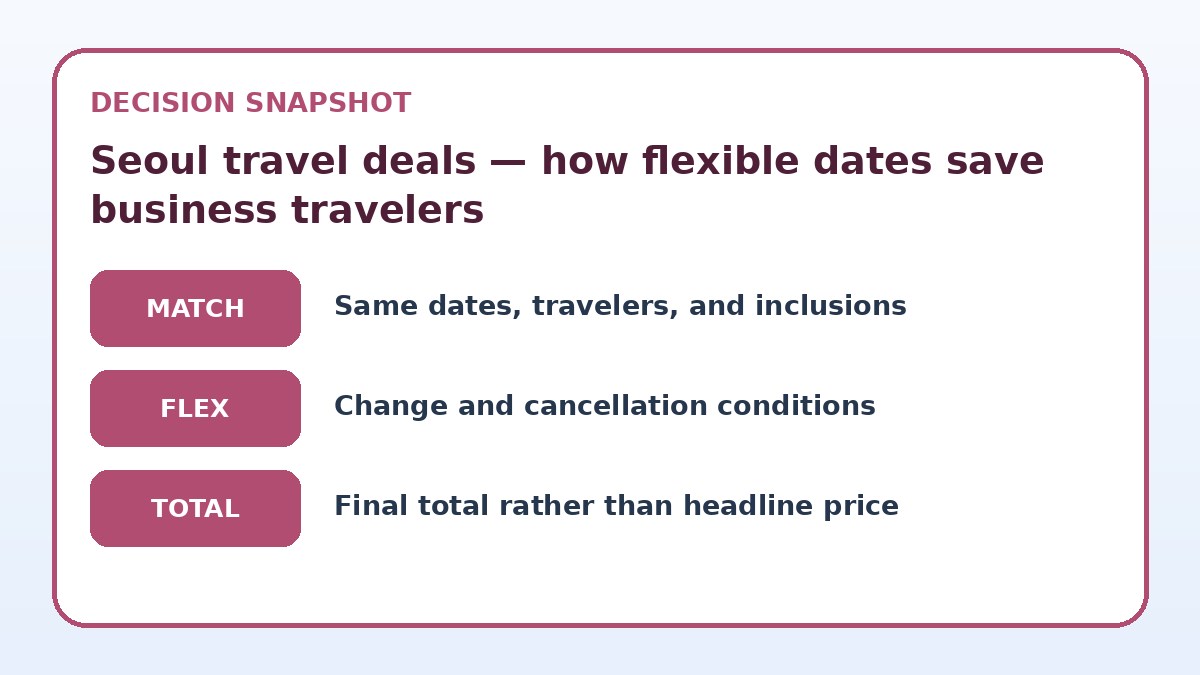
Before you decide whether a bundled package is useful for a Seoul business trip, line up the apples-to-apples comparisons. Match the same travel dates, passenger types (adult, child, senior), seat or cabin class, hotel room category, and baggage allowances. Use the same arrival and departure airports when comparing because different airports or terminals can add ground transfer time that undermines any fare savings. Also compare cancellation and change fee structures directly: a low headline price can lock you into penalties that erase any benefits when meetings shift.
Be sure to consider arrival and departure times, not just calendar days. A cheaper flight that lands late at night or departs very early can cost you time, productive hours, or additional hotel nights. Likewise, check whether a package’s hotel is centrally located for your meetings or convenient to Seoul’s business districts such as Gangnam, Jongno, or Yeouido. Finally, always open the full terms on the seller’s booking page—verify taxes, airport surcharges, baggage inclusions, and whether the bundle ties refunds or changes to the whole package instead of allowing component-level amendments.
Inclusions and how they affect business value
Packages often bundle flights, hotels, and transfers, but the list of inclusions governs whether that bundle matches your business needs. For business travelers, pay attention to specific inclusions: seat selection or upgrade options, checked baggage allowances, lounge access, early check-in or guaranteed late check-out, and ground transfers timed for meeting schedules. A hotel that advertises business-center access or free meeting-room credits may be more valuable than a lower room rate farther from client sites. Compare these benefits against what you would get when booking components separately because separate bookings can allow targeted upgrades where they matter most.
Also inspect what’s excluded or conditional: some bundles include only basic economy fares or nonrefundable rates, and some hotel bookings tied to packages may appear cheaper but have limited or no refundability. For Seoul business travel, the practical measure of value is how easily you can shift flights and hotel nights without significant penalties. If your company travel policy requires refundable fares or specific accommodation classes, verify those items are listed clearly in the bundle terms and that the agent lets you purchase permitted fare classes and invoices that meet corporate expense rules.
Look past the headline total
Compare inclusions and change conditions before deciding whether a package is genuinely useful for this trip.
Deal comparison checklist
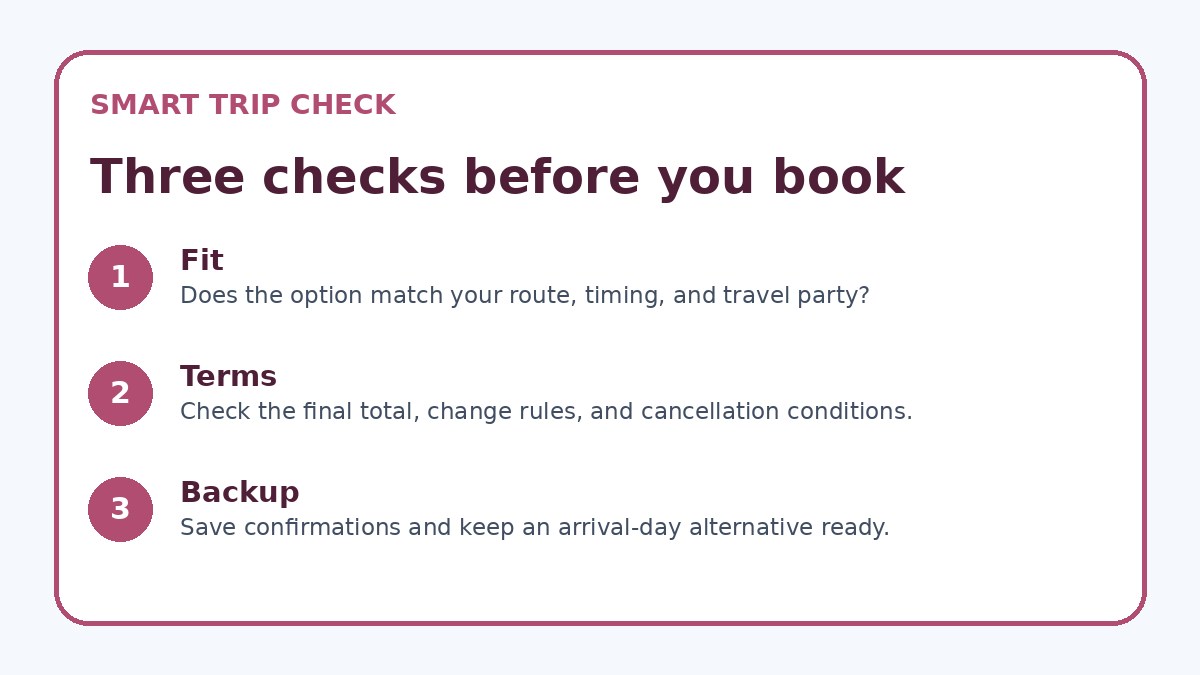
- Search flight and hotel rates with a ±2–3 day window and record the best options for identical passenger counts and room types.
- Open the full terms on the booking page and copy the exact change and cancellation fee language for both flights and hotels.
- Compare total landed cost (fare/rate plus taxes, baggage, and transfer fees) for package versus separate bookings using the same travel dates.
- Confirm on the provider page whether component-level changes are allowed or whether the entire package must be canceled.
- If corporate policy applies, verify invoicing names, refund and receipt formats, and whether bookings qualify for company-negotiated rates.
- Test the change process by contacting the seller’s support channel and note expected timelines and any service fees before completing payment.
Flexibility: rules to verify on the provider page
Flexible dates help only if the booking terms allow manageable changes. On the final provider booking page, verify change and cancellation fees, the process for reissuing itineraries, whether name corrections are permitted, and how refunds are handled. Look for whether changes incur supplier fees plus an agency service charge, and if the policy allows component-level changes without canceling the entire package. If the package requires paying full price again for a date change, the perceived savings are likely illusory for business travelers who may need to rearrange flights at short notice.
Also verify who is responsible for rebooking during disruptions: the airline, hotel, or booking agent. Confirm whether tickets are issued immediately or held for a period, as issuance can affect refund and change deadlines. If you prefer to keep components separate to preserve flexibility, check whether the agent allows combined itinerary management under one booking reference. When in doubt, test a hypothetical change—call or chat the provider and ask for the step-by-step change process so you don’t run into surprises when timelines are tight.
Traveler-specific value: what business travelers should prioritize
For business travelers to Seoul, prioritize time, predictability, and rebate-friendly documentation over marginal price savings. That means focusing on convenient flight times linked to meeting schedules, hotels near client offices or conference venues, and fare classes that include seat selection and baggage. If your employer reimburses travel, ensure the receipts and invoice names match corporate requirements. Consider prepaid options only if they permit free or low-cost changes; otherwise, pay slightly more for a fare class that allows modifications without heavy penalties.
Also factor in continge ncy needs: can you shift an inbound flight a day earlier without paying full fare? Is the hotel flexible about adding a night if a meeting runs late? These operational details often decide whether a deal is useful. If you frequently travel to Seoul, a separate booking approach with loyalty accumulation or corporate-negotiated rates might yield better long-term value. When comparing, quantify the cost of potential schedule changes and lost work hours against any advertised package savings to determine the real business value.
Travel Deals & Booking Strategy questions travelers ask
How can I use flexible dates to find better Seoul flight options without losing seat or baggage choices?
Start by running searches with a ±2–3 day window around your preferred travel dates and filter results for fare families that include checked baggage and seat selection. When comparing options, match the cabin class and baggage allowance so you do not inadvertently compare a lower-fare basic economy result that disallows seat assignments. If you find a cheaper itinerary that fits your time constraints, verify change and refund rules on the booking page; sometimes paying slightly more for a flexible fare preserves seat and baggage choices while saving time and stress if plans change.
Is it safer to book a package for a short business trip to Seoul or to book separately?
Safety depends on what you value most. A package centralizes support and can simplify check-in and invoicing, but it may tie changes to the entire booking and impose penalties. Booking separately gives you targeted flexibility—for example, choosing a refundable flight and a flexible hotel rate—at the cost of managing multiple suppliers. For short trips where meeting times are fixed and unlikely to shift, a well-constructed package can be efficient. If your schedule is uncertain, separate refundable components often reduce overall disruption costs.
What exactly should I verify on the provider’s final booking page before purchasing a Seoul deal?
On the final booking page, confirm the passenger names, travel dates, exact flight times and airports, hotel room type and location, baggage allowance, and whether seat selection is included. Read the change and cancellation policy verbatim, note who handles rebooking, and check whether taxes or surcharges are itemized. If you are relying on company reimbursement, ensure the supplier’s invoice format and booking reference meet corporate requirements. If anything is unclear, use the seller’s chat or phone support to get written confirmation before you pay.
Final decision note
For business travelers to Seoul, flexible dates are a practical tool—not a magic bullet. Use a short flexible window to reveal alternatives, but always compare like-for-like: same traveler counts, cabin and room types, baggage, and the exact change or cancellation rules. Decide whether the convenience of a single-package booking outweighs the potential loss of component flexibility, or whether separate bookings better protect you from last-minute schedule shifts. Before finalizing any purchase, verify terms on the provider’s booking page and, if needed, test the change process with the seller. If you want a quick place to check current availability and conditions, you can use Trip.com as one option—but always treat the provider’s final page as the authoritative source for terms.
Continue planning
Check current options and final conditions
Use the provider page to confirm live availability, the final total, cancellation terms, and every condition that matters to your trip.
This evergreen planning guide was created with AI-assisted drafting and a structured quality review. It does not display live prices, schedules, availability, visa guidance, or provider rankings. Verify current details before booking. Some links are affiliate links; we may earn a commission at no additional cost to you.