For many couples, driving around Prague and the Czech countryside sounds romantic and convenient — but the key choice isn’t only whether to drive. It’s whether the insurance wording in the rental contract protects you in the situations you care about. The practical answer up front: if your Prague stay is mostly inside the historic city and you plan short day trips, skip the car. If you plan multi-day drives to Bohemian towns or the countryside where public transport is slow or limited, driving can be worth it — provided you understand liability limits, CDW/LDW exceptions, authorized drivers, and cross-border rules in writing. Read the policy language before you pay for optional coverage. This guide helps couples make that drive-or-not decision, explains the common insurance phrases you’ll see, flags pickup/return friction, and offers a non-driving fallback that keeps your trip smooth and flexible.
Decide whether driving genuinely improves your Prague itinerary
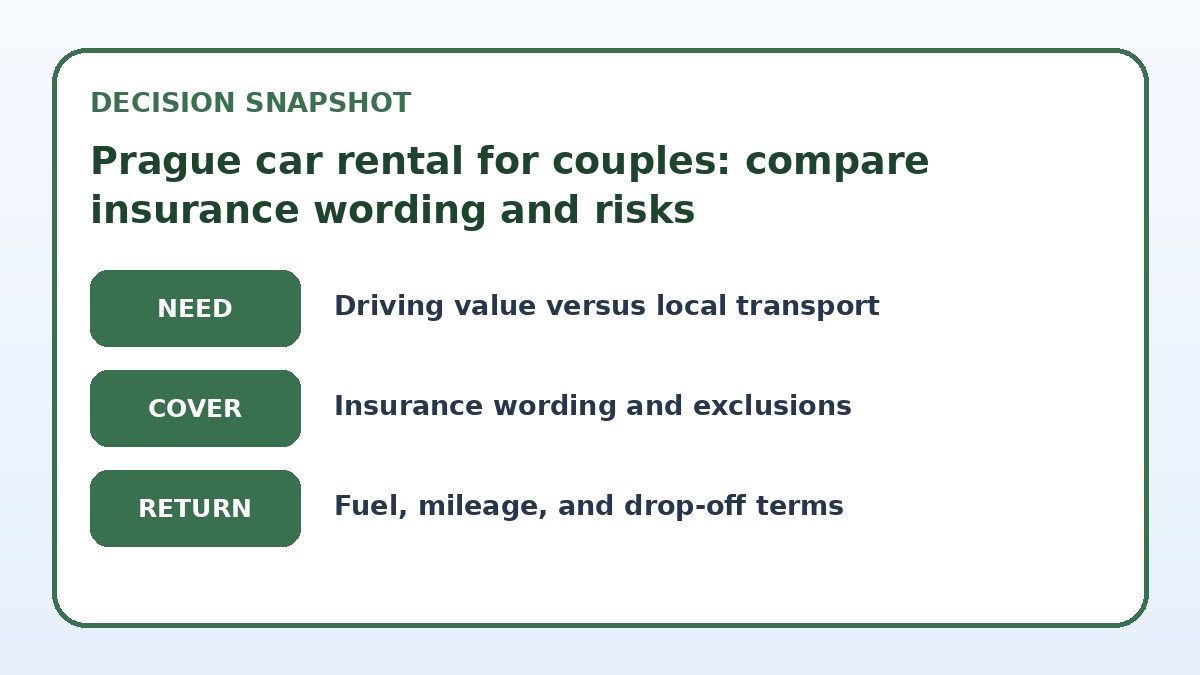
Start by mapping what you want to do as a couple: romantic walks in the Old Town, museum afternoons, or multi-day scenic loops to Český Krumlov and Karlovy Vary. Driving usually adds value when your plan includes multiple stops outside Prague, early or late departures, or hard-to-reach rural attractions where public transport is infrequent. If most of your time is inside central Prague, driving will likely add parking stress, congestion charges in some zones, and limited gains because much of the Old Town is pedestrianized.
Estimate door-to-door time and convenience for each destination: trains and buses often connect Prague to major towns reliably, but smaller villages may require a car or a private transfer. Consider whether you value the spontaneity of stopping at uncrowded viewpoints or hidden villages — that’s where a car shines. Also compare the emotional cost: if one partner dislikes city driving or narrow streets, that affects the decision as much as money and schedules.
Decide whether driving earns its place
| Mobility strategy | Best for | Cost or friction to check |
|---|---|---|
| Rent a car and accept standard CDW with excess | Couples doing multi-stop countryside itineraries who want maximum flexibility | Higher out-of-pocket risk unless you reduce the excess; more responsibility for inspection and paperwork |
| Rent with Super CDW / excess reduction | Couples who want to minimize financial exposure and feel secure driving unknown roads | Higher daily cost and you must verify exactly which damages and exclusions the upgrade covers |
| No rental: trains, buses, and scheduled day tours | Couples focusing on Prague and major nearby towns who prefer less logistical hassle | Less spontaneity and limited access to remote spots; schedules constrain morning or late-night plans |
| Hire a car with driver or private transfer for selective days | Couples who want countryside flexibility without handling insurance or driving duties | Higher per-day cost but lower administrative friction and no rental insurance wording to untangle |
Check live rental choices only after the route test
Use the exact driver, dates, pickup point, and return plan to compare current conditions.
Understand the insurance wording couples will actually sign
Insurance language can look dense, but a few phrases determine your financial exposure. Collision Damage Waiver (CDW) or Loss Damage Waiver (LDW) limits how much you pay for damage; they often do not remove the deductible or excess. The contract should state the excess amount clearly and whether you can reduce it by buying a Super CDW; it should also list specific exclusions such as damage to the undercarriage, tyres, mirrors, or windscreen. Third-party liability shows the minimum coverage the rental provides; check if local mandatory limits match or exceed that amount.
Look for named exceptions: off-road use, driving on unpaved roads, or crossing borders into neighboring countries may void coverage or require additional fees. Confirm who is an authorized driver and whether adding a spouse is free or costs extra. Finally, read the loss/theft section: does the policy require the renter to produce a police report after theft? Are keys and belongings treated as owner responsibility? Ask the rental company to show the exact clause on their final booking page and save a screenshot of the full insurance section before payment.
Compare the full rental conditions
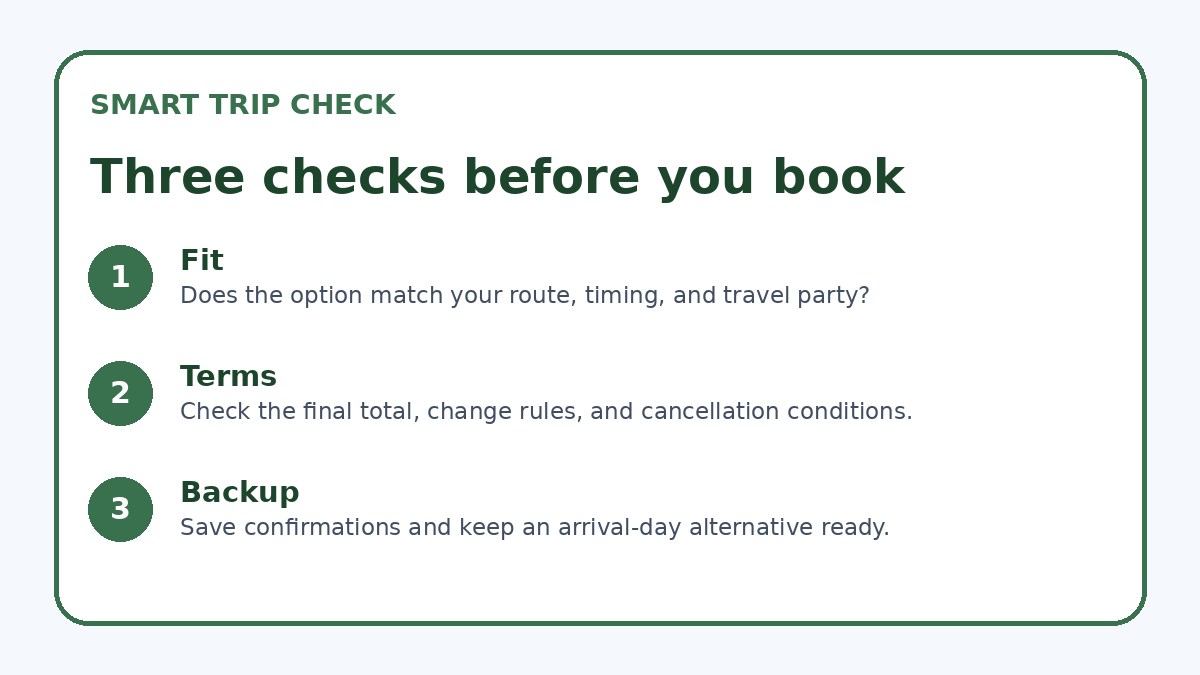
Confirm insurance wording, exclusions, deposit, fuel, mileage, and return terms on the final page.
Pickup and return friction: what creates disputes and how couples avoid them
Common sources of friction include fuel policy mismatches, undetailed damage reports, and differing expectations about the vehicle’s condition. Many couples rush the pickup when eager to start their trip; instead, allocate 20–30 minutes for an inspection with an agent, use your phone to photograph every panel and the interior with timestamps, and ask the agent to annotate pre-existing damage in the contract. Clarify the fuel policy: full-to-full is the cleanest, but some agencies use prepaid fuel that can cost more and complicate refunds.
On return, rinse and vacuum only if required by the rental terms; otherwise, focus on timing and the documented handover. If you’re returning outside office hours, understand who inspects the car and how claims for late-reported damage are handled. For couples splitting driving duties, confirm where each driver’s license and credit card information should remain on file, and ensure both of you are listed as authorized drivers to avoid insurance invalidation.
Car rental terms to verify
- Read and screenshot the rental page’s full insurance section, including excess amounts, exclusions, and third-party liability limits before finalizing payment.
- Confirm both partners are listed as authorized drivers on the contract and note any extra-driver fees or document requirements.
- Inspect and photograph the car at pickup (all panels, tyres, interior) with timestamps and ask the agent to initial any pre-existing damage on the inspection form.
- Clarify fuel policy (full-to-full preferred), return window, and after-hours procedures; get confirmation in writing if possible.
- Ask explicitly about cross-border travel rules and obtain written permission if you plan to drive into neighboring countries.
- Save contact details for roadside assistance and your rental’s claims process, and keep a phone-ready copy of the damage/theft reporting steps.
A practical non-driving fallback for couples who choose not to rent
Declining a rental doesn’t mean you lose mobility. Prague has an efficient mix of trams, metro, regional trains, and comfortable private transfers. For day trips to Český Krumlov or Karlovy Vary, book regional trains or scheduled coaches that serve main tourist towns; those reduce the administrative burden and eliminate worries over insurance wording. Use app-based taxis or prebooked transfers for airport runs or late-night returns to avoid the risk of confusing parking rules in the city centre.
If you still want one or two countryside experiences without the full rental commitment, consider booking a day tour or hiring a car with driver for a single day. This gives couples the freedom to visit scenic routes and vineyards without signing insurance contracts, handling roadside incidents, or managing unfamiliar parking. Keep digital copies of any bookings and confirm cancellation terms so a sudden change in weather or plans doesn’t disrupt your schedule.
Car Rental & Road Trip questions travelers ask
What does 'excess' mean on a Prague rental contract and how does it affect our liability?
Excess (sometimes called deductible) is the maximum amount you would pay out-of-pocket for damage before the rental company’s insurance covers the rest. If an accident occurs, you may be charged the excess immediately and then the company handles the insurance claim. Many agencies offer excess-reduction options that lower or eliminate this amount, but those upgrades often exclude specific parts (tyres, windscreen, underside). Before you accept an excess-reduction product, ask which items remain excluded and whether the reduced excess is reflected on the final booking page.
Are both partners usually covered to drive, or do we need to pay extra to add a spouse?
Agencies differ: some include one additional driver for free, others charge per extra driver. The contract must name authorized drivers; if your partner drives without being listed, you risk voiding insurance and facing full liability. At pickup, present each driver’s valid licence and the credit card required by the rental company. If the partner’s licence is from outside the EU, confirm whether an international driving permit is required for the booking and have the rental company confirm any additional documentation on their final page.
If the rental company’s insurance wording is unclear, what exactly should we ask before booking?
Ask the provider to confirm in writing: the exact excess amount and whether a Super CDW removes all or only some of it; specific exclusions (tyres, windscreen, undercarriage, theft while keys are in the car), whether cross-border driving is allowed, and the procedure for reporting damage or theft, including whether a police report is mandatory. Also request clarification on fuel policy, roadside assistance coverage and contact details, and how claims are handled for incidental damage found after return. If they can’t provide clear answers on the final booking page, consider a different provider or a different mobility option.
Final decision note
For couples planning time in Prague, the core question is whether a car meaningfully improves your itinerary enough to take on insurance and roadside responsibilities. If your trip centers on the city and nearby well-served towns, public transport, day tours, or selective private transfers are usually simpler and reduce the hassles tied to insurance wording. If you need flexibility for multi-stop countryside routes, renting can be worth it — but only after you read and understand the precise insurance clauses, list both drivers, document vehicle condition at pickup, and verify cross-border and tyre/windscreen exclusions on the final booking page. A calm 20–30 minute inspection and a few screenshots at pickup will save more time and stress than skipping the car entirely, but choose the approach that best matches how you want to travel together.
Continue planning
Check current options and final conditions
Use the provider page to confirm live availability, the final total, cancellation terms, and every condition that matters to your trip.
This evergreen planning guide was created with AI-assisted drafting and a structured quality review. It does not display live prices, schedules, availability, visa guidance, or provider rankings. Verify current details before booking. Some links are affiliate links; we may earn a commission at no additional cost to you.