Short practical answer: for most couples who value punctual convenience and easy transfers between city centers, flexible rail tickets or refundable/transferable rail passes will usually be the simplest door-to-door option. If you want the lowest planning friction and easiest luggage management, aim for a rail-based itinerary but check the ticket change and cancellation rules before you book. Coaches and ferries can work well if you prefer lower-cost or scenic travel, but those modes tend to offer narrower change windows and more transfer friction. If you want a balance—comfort, reliability and moderate flexibility—book flexible rail seats or a flexible combination (rail + coach/ferry) where each leg's rules let you change at least a day before departure. The rest of this guide explains how to compare ticket flexibility, what to watch for with transfers and luggage, and how couples can build a simple disruption backup.
Compare modes: rail, coach, ferry or a mixed plan
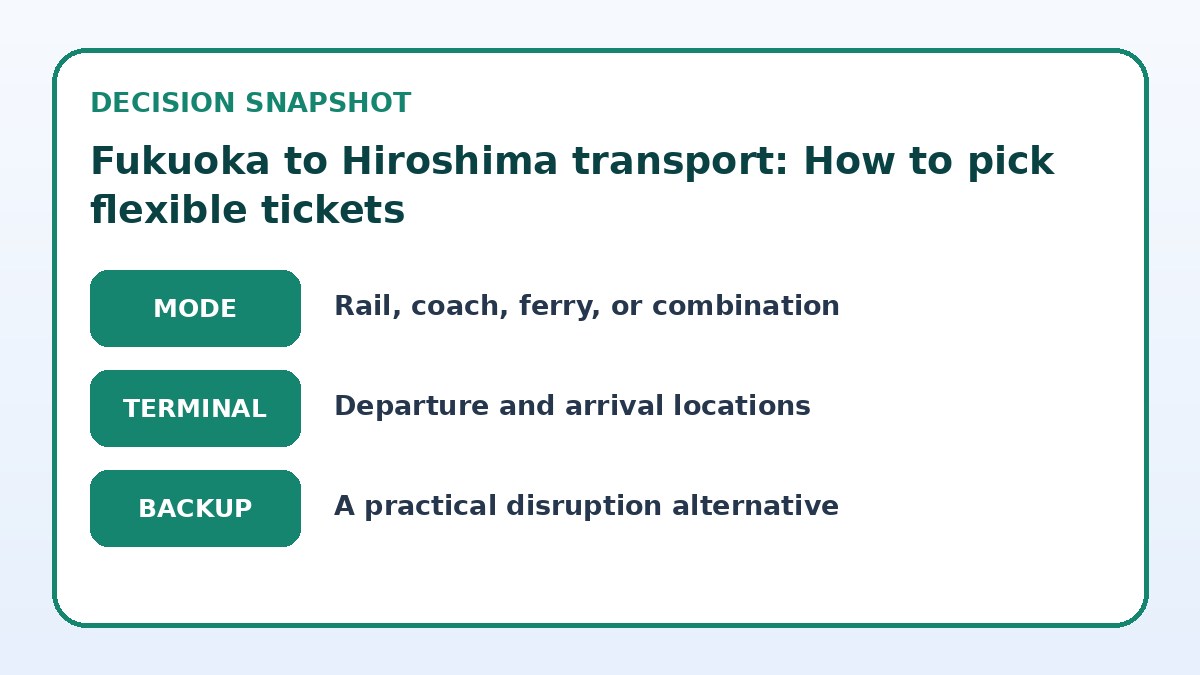
Start by matching your priorities: speed, comfort, flexibility, and where you need to start and finish in each city. Trains often depart and arrive in central stations, which cuts last-mile time for couples who want to walk to hotels or meet friends. Coaches and ferries might require a transfer between their terminal and the central train station or hotel area, increasing door-to-door time even if the in‑vehicle time looks short. For each mode, review the type of ticket sold—reserved seat, unreserved seat, time-limited discount, or flexible fare—because that determines how easily you can change plans together on short notice.
A mixed plan (for example, rail for one leg and ferry or coach for another) can be the best compromise when one traveler prioritizes comfort and the other wants a scenic route. Before booking, check whether operators offer through-booking (one ticket covering multiple legs) or whether you'll have to hold separate tickets that enforce separate change rules. Separate tickets often mean more risk: if one leg is delayed and you miss the next, refunds or rebooking depend on each operator’s policy, so couples should choose combinations where both providers allow reasonable exchanges or offer app-based self-service changes.
Choose the end-to-end journey plan
| Journey approach | Best for | Friction to check |
|---|---|---|
| Flexible rail tickets (reserved seats, changeable) | Couples prioritizing center-to-center convenience and easy seat coordination | Higher base cost and you must verify online change windows and seat-holding rules before booking |
| Budget coach or ferry (cheaper, less flexible) | Couples willing to trade flexibility for a lower fare or a scenic route | Stricter change/refund rules and potentially longer transfers to city centers |
| Mixed itinerary (rail + coach/ferry) | Couples wanting a best-of-both compromise—comfort on one leg, economy or scenery on another | Separate tickets often mean separate rules; missed connections may not be covered |
| Fully refundable or protected multi-leg booking | Couples who need maximum ability to change plans or who travel during uncertain schedules | Usually the most expensive option and you must confirm refund and claim procedures on booking pages |
Check live intercity options
Look beyond the ride itself and compare terminals, transfers, luggage, and arrival fit.
Terminal fit and door-to-door practicality for couples
Terminal fit is about how the origin and destination terminals connect to where you actually need to be. For couples staying near Hakata in Fukuoka and near Hiroshima Station, rail typically offers the most direct door-to-door routing. If your arrival or departure points are outside those hubs—such as a ferry pier or out-of-center coach terminal—factor in local transit time, taxi costs, or walking with luggage. Count the total journey from your accommodation to the final address, not just the in‑vehicle segment. That total will often decide which ticket flexibility matters most: a cheaper ticket that saves little time but adds transfer hassle isn’t always a win.
Also consider practicalities when one traveler has limited mobility or heavy luggage. Look for tickets or services that explicitly accommodate luggage storage or offer easy step-free access to platforms and terminals. When comparing options, check whether the operator’s ticket type allows seat selection or guarantees adjacent seats for couples—this can be important for comfort and coordination. If using different operators, check how far apart their terminals are and whether there are reliable taxis, shuttles, or frequent local transit to connect them without stress.
Luggage, transfer friction and timing flexibility
Luggage rules and transfer friction interact closely with timing flexibility. A flexible fare that lets you change departure by a few hours is valuable if you expect sightseeing delays or want to linger at a café before leaving. But flexible fares often cost more and may impose seat-change fees or require changes in person or via a call center. For couples, decide whether you prefer paying for greater flexibility or packing to strict time windows. If you have bulky bags, prioritize fewer transfers—even a slightly more expensive direct rail ticket could save time and physical effort compared with a coach plus local bus connection.
If timing is fluid, prioritize booking options that permit same-day changes online or through an app. Read the fine print on how long before departure you can change a booking, whether changes are free or partially refunded, and whether reissued tickets preserve seat adjacency. For mixed itineraries, check each leg’s change policy separately: one leg with rigid conditions can undermine the flexibility of the entire journey. Finally, for travel dates during regional holidays or busy weekends, choose ticket types allowing changes rather than non‑refundable deals to avoid losing money if plans shift.
Compare the practical alternatives
Use the final page to confirm what is actually offered on your dates and save a workable fallback.
Intercity travel checklist
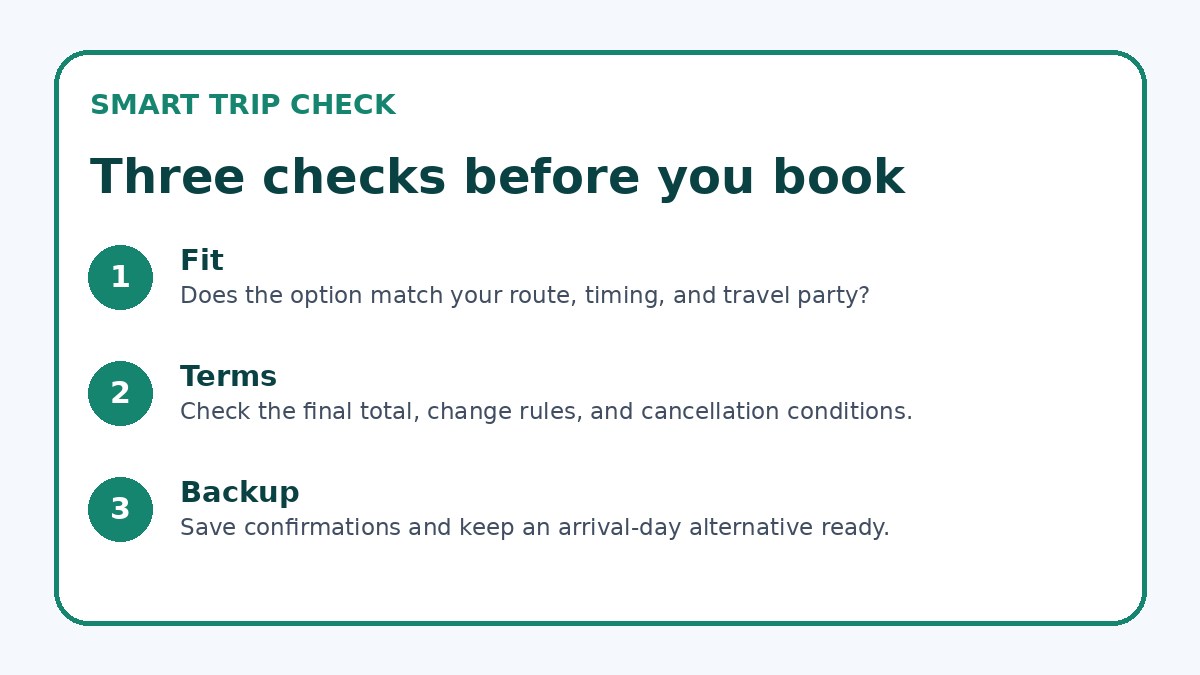
- Confirm the exact change and cancellation rules on the operator’s final booking page before you buy any ticket.
- Compare total door-to-door time including transfers, not just the vehicle travel time between Fukuoka and Hiroshima.
- Choose seats together or reserve adjacent seats if available, and verify seat-change policies for both travelers.
- Pack to minimize transfer friction: use wheeled luggage or a compact daypack for station-to-station walks.
- Save screenshots and printed copies of bookings, contact numbers, and instructions for making changes.
- Agree on a shared disruption plan: alternate connections, local hotels, and who handles rebooking if needed.
Disruption backup: what couples should prepare
Disruptions happen: delays, cancellations, and unexpectedly busy services. Create a simple backup plan together before you travel. Agree on a communication method—phone, messaging app, or agreed meeting point—so you can coordinate if one partner’s device runs out of battery. Identify alternate connections (later trains, a coach departure, or a ferry option) and confirm whether you can buy or change to those options on the operator’s website or app. If you buy separate tickets for each leg, factor in the potential additional cost and the process to get refunds or rebook.
Also plan for overnight contingencies if delays exceed a reasonable window: know a couple of hotel options near arrival points, and estimate how reachable they are late at night. Bring printed or screenshot copies of reservations and ticket change policies so you can show staff if needed. Consider purchasing travel protection or choosing fare types that explicitly cover cancellations or missed connections due to operator disruptions—check the provider’s final booking page for the exact refund and rebooking steps before you commit.
Rail & Intercity Transport questions travelers ask
Should couples always choose train over coach or ferry for Fukuoka to Hiroshima transport?
Not always. Trains typically win for central arrival points and straightforward transfers, which is useful for couples staying near major stations. But coaches and ferries can suit couples prioritizing cost savings, a relaxed pace, or a scenic crossing. The deciding factors are total door-to-door time, how many transfers each option requires, and the ticket flexibility each operator allows. Check each operator’s change and refund policies on their booking pages and compare the effort of extra transfers against the fare savings.
How can we minimize hassle when we buy separate tickets for different legs?
If you must book separate tickets, keep transfer windows generous to allow for minor delays and avoid tight single-connection schedules. Choose services with frequent departures so you can switch to the next available option without large penalties. Ensure both travelers have access to the booking confirmations and the operator’s change/refund contact method. Where possible, pick operators with app-based self-service changes and save screenshots of the policies governing missed connections or cancellations for quick reference.
What should we verify on the provider’s final booking page before confirming flexible tickets?
Before confirming, verify the specific change and cancellation deadlines, fees for same-day changes, whether refunds are full or partial, and how seat assignments are handled after a change. Also check whether the ticket is transferable between names, whether online rebooking is available, and what documentation is required for refunds. For mixed itineraries, review each provider’s rules separately because a flexible policy on one leg does not guarantee protection across the whole journey.
Final decision note
For couples planning Fukuoka to Hiroshima travel, the practical choice depends on how you balance door-to-door convenience against cost and flexibility. If minimizing transfers and seat coordination matter most, favor flexible rail tickets where you can change reservations and stay in central locations. If you’re willing to accept a bit more transfer friction for savings or scenery, compare coach and ferry legs carefully and make sure their change windows align with your plans. Always check the operator’s final booking page for precise change, cancellation, and refund conditions, and build a simple disruption backup you both understand. That preparation turns flexibility into practical peace of mind for two.
Continue planning
Check current options and final conditions
Use the provider page to confirm live availability, the final total, cancellation terms, and every condition that matters to your trip.
This evergreen planning guide was created with AI-assisted drafting and a structured quality review. It does not display live prices, schedules, availability, visa guidance, or provider rankings. Verify current details before booking. Some links are affiliate links; we may earn a commission at no additional cost to you.