
Practical answer first: if you value the freedom to change plans, pick a refundable or fully flexible ticket; if your schedule is fixed and you want a lower up-front cost, choose a restricted or non-refundable fare but accept change limits. For most solo travelers making the Los Angeles to San Francisco journey, flexibility choices mostly affect whether you can reschedule, get partial refunds, or pay change fees. The main tradeoffs are price versus peace-of-mind and the hassle of rebooking if plans shift. This article walks you through the behaviours and booking checks that matter when comparing ticket flexibility across trains, buses, and flights, and explains how to make the decision that fits your trip style rather than a generic rule.
What ‘flexible’ actually covers on Los Angeles–San Francisco routes
‘Flexible’ can mean different things depending on the carrier and mode. For trains it often allows same-day changes without a fee or a low-cost exchange window; for buses the policy might be a credit toward a future trip; for flights flexibility ranges from free changes within a policy window to full refunds. As a solo traveler, read whether flexibility covers only date or also time changes, whether seat assignments move with a change, and how cancellations versus voluntary changes are handled. Those distinctions determine whether a flexible ticket actually solves your particular travel risk, such as a late-night arrival in Los Angeles or a sudden meeting in San Francisco.
Also check how third-party resellers treat flexibility. Some online platforms sell refundable-looking fares but enforce the carrier’s original rules at rebooking, or add their own change fees. If your priority is a clean, simple exchange or refund, prefer buying directly from the operator or a reseller that clearly lists the full terms on the booking page. Before you commit, verify who will handle customer service if something goes wrong: the carrier, the reseller, or a separate agency—this affects how smoothly a change or refund happens.
How to compare flexible options across trains, buses, and flights
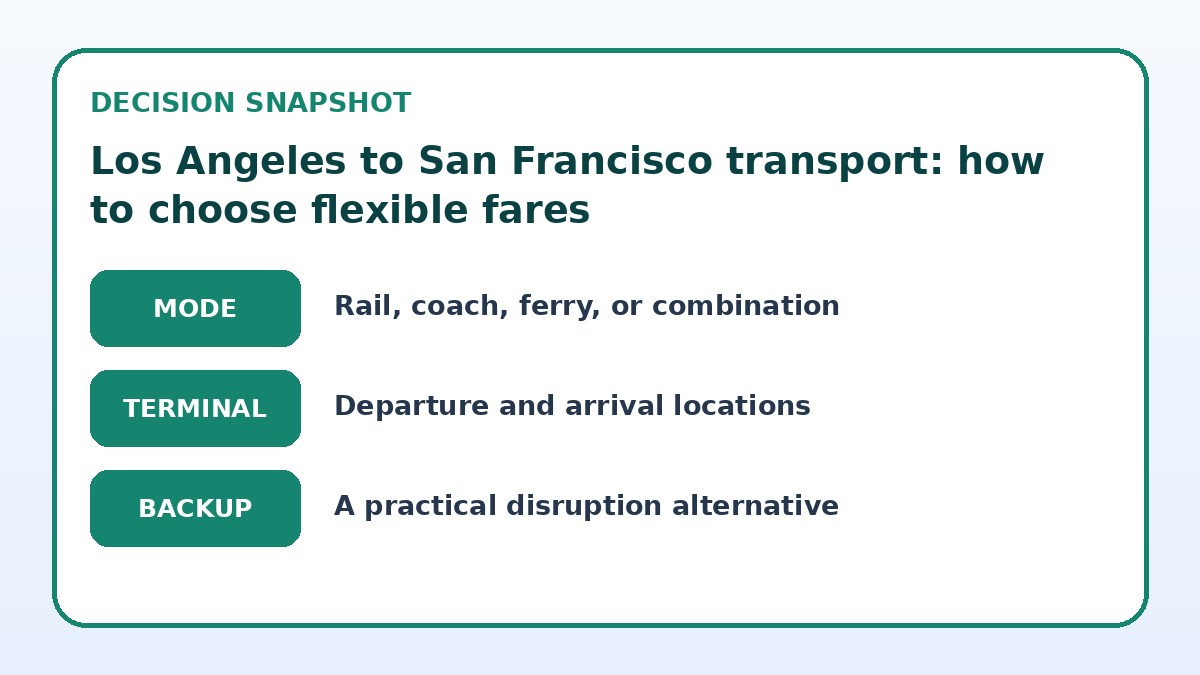
Start by listing the non-price differences that matter to you: departure locations in LA and San Francisco, travel time windows, luggage allowances, and likelihood of delays. Then compare ticket rules side-by-side: allowed changes, fees, refundability, and whether seats are guaranteed on an exchanged ticket. For trip continuity—especially solo travelers who won’t have companions to share backup plans—prioritize options that allow same-day transfers or low-cost exchanges rather than deep refunds that take weeks to process.
When comparing a flight to a train or bus, remember to include door-to-door considerations: how you’ll get to or from terminals and stations, and whether a missed connection leaves you with many hours of waiting. Flexible train tickets often let you hop on a later train the same day without penalty, which can be less stressful than rebooking a flight. But if speed is essential and you accept some risk, a lower-cost flight with a modest change fee might be the right choice—just confirm the exact rebooking steps on the provider’s final booking page.
| Approach | Best for | Tradeoff to check |
|---|---|---|
| Buy refundable/flexible fare at booking | Travelers who need the ability to rebook or cancel at short notice without long delays. | Higher up-front cost compared with restricted fares; may not be worth it for fixed schedules. |
| Buy restricted/non-refundable fare | Solo travelers with firm plans who prioritize lower upfront price and can absorb change risk. | Change fees or no refunds mean potential extra expense and rebooking hassle if plans shift. |
| Buy basic fare + optional flex add-on | Those who want a middle ground: lower base price with the option to upgrade flexibility later. | Add-ons can be complicated and sometimes cost nearly as much as a fully flexible fare if purchased late. |
| Book via reseller or comparison site | Shoppers who want to compare many options quickly and may find different change policies listed side-by-side. | Resellers can add fees or different rules; always confirm the carrier’s final terms on the booking page. |
Decision criteria tailored for solo travelers
Solo travelers should weigh personal risk tolerance and backup options. If you travel light and can comfortably wait at a station or transfer to a later bus or train, a restricted ticket may be fine. If missing a connection would disrupt work or important appointments, invest in higher flexibility. Also consider your ability to handle rebooking: if you prefer straightforward customer service and fewer phone calls, choose carriers known for clear online exchanges and refunds. Confirm whether you can make changes online or need to call an agent—this often determines how quickly you can recover from a schedule hiccup.
Another criterion is accommodation and activity flexibility. If your hotel or event bookings are rigid, align your transport flexibility to match: choose fares that allow same-day swaps or refunds so you can avoid paying twice. For international solo travelers or those on tight itineraries, factor in how a missed connection would affect visas, onward tickets, or reservations. Lastly, budget for a contingency: sometimes the cheaper fare plus a small ‘upgrade to flexible’ option at checkout offers the best mix of cost and security—check that option on the final booking screen before completing your purchase.
Before you book
- Read the carrier’s full change and refund policy on the final booking page before paying.
- Compare whether changes are allowed online or require agent assistance and how long rebooking takes.
- Note whether refunds are issued as cash, back to the card, or travel credit and the expected timeline.
- Check if a flexible fare guarantees a seat on exchanged services or is subject to availability.
- Confirm luggage allowances and whether a fare class change affects baggage or boarding rules.
- Decide your personal financial cutoff for acceptable risk and use it to choose between fare types.
Practical booking checklist and what to verify before paying
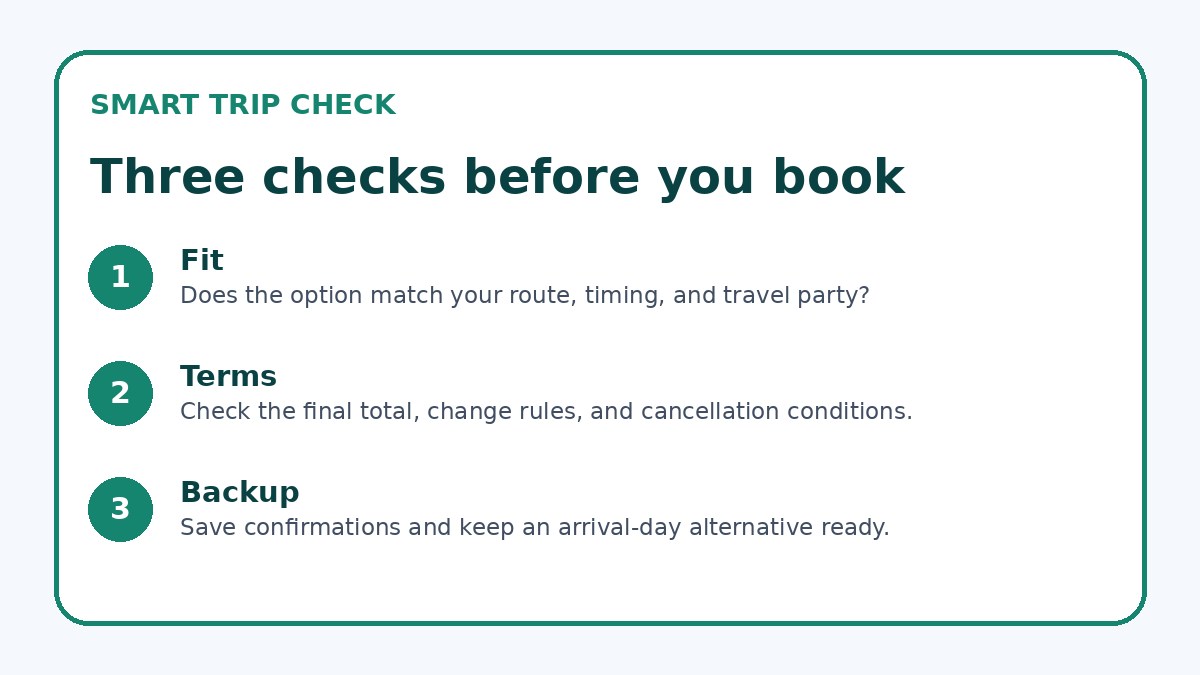
Before you click buy, verify the concrete items that actually matter in a real problem: exact change fees by dollar amount or percentage, the window for free changes, whether refunds are immediate or issued as travel credit, and who processes refunds. Check whether the ticket specifies seat guarantees on exchanged tickets or only subject-to-availability. If you’re booking through a third-party site, confirm whether that site adds its own change or cancellation fees and whether customer service is handled locally or through the carrier. These specifics show up on the provider’s final booking page—don’t rely on summary language earlier in the shopping flow.
Also review ID requirements, luggage rules, and boarding or check-in cutoffs; these can affect whether you need flexibility at all. Note the refund timeline and method—if refunds are slow or issued as vouchers, a refundable fare may not return cash quickly enough to solve a short-notice change. Finally, set a personal cutoff for acceptable risk: how many hours or how much money you’d lose before you’d rather switch to a flexible ticket. Keep that number visible when weighing options during checkout so you make a decision aligned with your comfort level.
Frequently asked questions
Can I switch between train, bus, and flight tickets if my plans change on a single Los Angeles–San Francisco trip?
You generally cannot switch freely between modes unless you buy a multimode ticket or separate flexible bookings that permit refunds or credits. Each provider—rail operator, coach company, and airline—maintains its own rules about changes and refunds. If the carrier issues a refund on a canceled ticket, you may be able to apply that money to a different mode, but processing times, fees, and whether refunds are cash or credit vary. To preserve options, consider buying refundable tickets or purchasing travel credit that you can redeem across bookings; verify the exact acceptance and refund mechanism on each provider’s booking page.
Are flexible fares worth it if I’m confident about my travel date between Los Angeles and San Francisco?
If your schedule is firm, restricted fares can save money up front and may be perfectly suitable for a solo traveler who can commit to the date. However, factor in non-ticket costs that arise from a disrupted plan—extra hotel nights, missed tours, or lost appointments—which can exceed any fare savings. Also consider the inconvenience of rebooking alone; some solo travelers prefer paying more for peace of mind. If you’re certain, confirm the ticket’s strictness and refund policy on the final booking page and consider travel insurance for non-ticket disruptions that a flexible fare wouldn’t cover.
How do I evaluate third-party sellers or comparison sites when choosing ticket flexibility?
Treat third-party listings as a starting point. Use them to compare options quickly, but always click through to the carrier’s official page to verify final terms. Look for explicit statements about who handles refunds and change requests, whether the reseller adds a service fee, and how the reseller communicates with customers in case of delays. If the reseller offers a buyer protection plan, read its conditions carefully—these plans can have their own exclusions. Trip.com can be used as one place to check availability and policies, but confirm the carrier’s policy in the final booking step before purchasing.
Final planning note
Choosing the right level of ticket flexibility for Los Angeles to San Francisco transport comes down to balancing budget, risk tolerance, and how disruptive a missed or changed trip would be for you. Solo travelers who value certainty and quick recovery from schedule changes should favour refundable or clearly flexible fares that allow same-day swaps or straightforward refunds. Those confident in their plans can save money with restricted tickets but must accept potential rebooking headaches and fees. Always verify exact change fees, refund methods, and whether exchanges are guaranteed or subject to availability on the provider’s final booking page before you complete payment.
Continue planning
Check current options and final conditions
Use the provider page to confirm live availability, the final total, cancellation terms, and every condition that matters to your trip.
This evergreen planning guide was created with AI-assisted drafting and a structured quality review. It does not display live prices, schedules, availability, visa guidance, or provider rankings. Verify current details before booking. Some links are affiliate links; we may earn a commission at no additional cost to you.