Pick the neighborhood first, then pick a hotel. For a short solo trip to Las Vegas you want a base that minimizes time wasted traveling, maximizes safety and predictability, and matches how much daytime and nighttime activity you plan. Decide whether you want to be in the middle of Strip action, close to practical transit and mid-Strip services, in a quieter off-Strip hotel with easier parking and faster exits, or downtown/Fremont for a smaller-scale nightlife scene. Each choice changes how you spend your hours and what you should prioritize when comparing rooms and booking terms. Below you’ll get a quick shortlist approach, practical rules to compare rooms and rates, and a short checklist you can use right before you book.

Check live stays in the areas that fit
Use your dates and party size to compare current rooms after you narrow the neighborhood fit.
Neighborhood fit: pick your nightly vibe and daytime needs
When choosing a Las Vegas hotel for a short solo stay, start with the vibe you need each night. If you want to be in the middle of the action—neon, people-watching, and 24-hour dining—aim for a central Strip hotel. If you prefer quieter evenings and easier arrivals or departures, consider off-Strip options or lower-rise resorts near the airport or convention areas. Downtown / Fremont offers a different, more compact energy with smaller casinos and local bars. Think about whether late-night walking, solo bar seating, and casino floors are part of your plan; the neighborhood largely determines how comfortable those activities feel.
Daytime needs matter equally. Are you visiting primarily for shows and casinos, or do you have day trips planned to Hoover Dam, Red Rock, or nearby trails? If your agenda is show-heavy, a hotel close to major theaters reduces cab and walking time. For day trips, off-Strip or airport-adjacent hotels often let you get on the road faster. Also consider simple logistics—where you’ll charge devices, how much packing/unpacking you want in a short stay, and whether access to a small gym or 24-hour market is important.
Choose an area-selection strategy
| Area approach | Best for | Tradeoff to check |
|---|---|---|
| Central Strip | Solo travelers focused on 24/7 entertainment and walkable theater access. | Higher noise and heavier foot traffic; longer waits for elevators and more crowded public spaces. |
| Mid-Strip / resort cluster | Short-stay guests wanting quick access to major shows with lower daily friction. | Still busy during peak hours and can be pricier than off-Strip or downtown choices. |
| Off-Strip / airport-adjacent | Travelers who value quiet, easy arrivals/departures, and faster car access for day trips. | Less pedestrian nightlife and greater reliance on rideshares or rental cars for short hops. |
| Downtown / Fremont Street | Solo visitors who prefer compact nightlife, smaller venues, and a different downtown energy. | Fewer large-scale shows and longer transit time to Strip theaters and marquee attractions. |
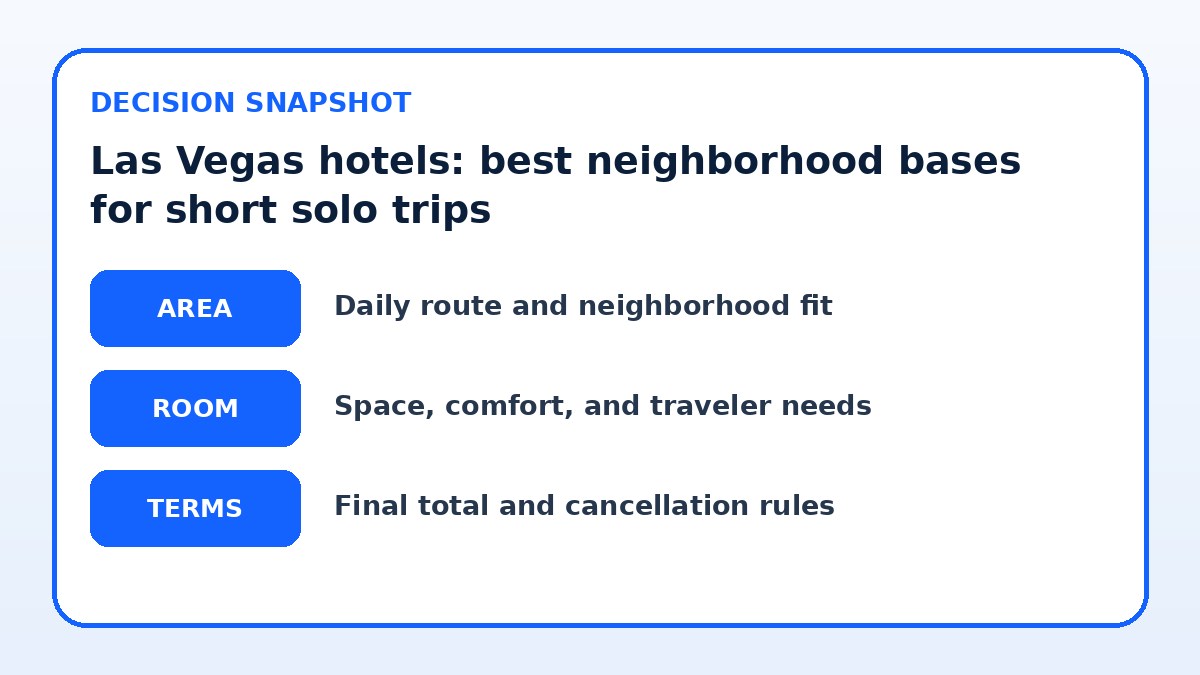
Daily-route friction: how location affects short-stay time economy
On short trips every minute counts. Central Strip hotels minimize distances between shows, restaurants, and attractions, but crowds and long elevator or casino-floor walks can eat minutes. Mid-Strip placements often hit the sweet spot: close enough for walkable theater access but with slightly less congestion than the most famous hotel lobbies. Off-Strip properties typically require rideshares or shuttles, so build that extra pickup time into your day. If you plan multiple short stops—morning coffee, lunch, an afternoon pool break—choose a base that keeps those stops within a ten- to twenty-minute transit window.
Consider overnight and early-morning movement too. If you need to catch an early flight, staying near the airport or in lower-traffic parts of the city saves time and stress. Late-night returns are easier when your hotel is on the Strip because taxis and rideshare pickups are plentiful, but noise may be higher. If avoiding queues for elevators or buffet lines matters to you, check hotel layout photos and reviews for room proximity to elevators and main amenities before you book.
Now compare like with like
Keep the same dates, guests, room needs, and cancellation preferences while you compare the final choices.
Room and party needs: what to book for solo comfort and safety
Decide what you need in the room for a short solo stay: a comfortable bed, blackout shades, reliable Wi-Fi, and a compact workspace if you’ll handle bookings or check-in details. For many solo travelers a standard king or queen with a quiet courtyard or upper-floor placement is enough. If you plan to invite people back or attend small private gatherings, verify the hotel’s policy on extra guests and noise. For safety, choose a room with a peephole and deadbolt if that detail matters to you, and prefer floors with a single elevator bank to avoid getting lost in large casino complexes.
Think about bathroom and storage needs too. Short trips benefit from simple bathroom layouts that are easy to freshen up in between plans; if you value a separate tub or larger shower, confirm images and room types before booking. If you’re bringing luggage and daypack gear, check whether the room has adequate closet or luggage stand space. For staying connected, confirm the advertised Wi-Fi type on the booking page and have a backup mobile plan; also check whether charging outlets are easily accessible from the bed and desk.
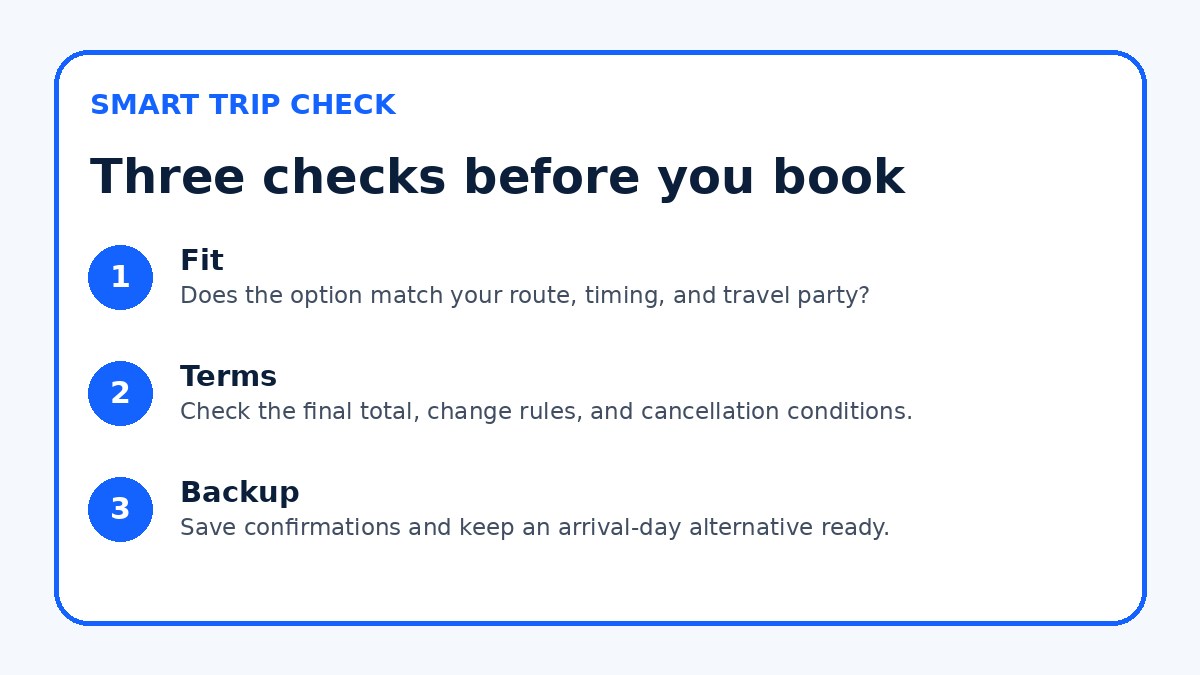
Hotel booking check before payment
- Choose the neighborhood that matches your nightly vibe and daytime agenda before filtering hotels by amenities.
- Confirm the hotel’s cancellation policy and any resort fees on the final booking page before you enter payment details.
- Check elevator layout and floor placement in photos or maps to avoid long walks or noisy corridors.
- Verify Wi-Fi type and outlet access if you need to work briefly or rely on streaming for downtime.
- Plan arrival and departure logistics: check shuttle availability, parking options, or typical rideshare pickup spots.
- Read recent guest notes for comments about noise, safety of public areas, and the reliability of advertised services.
Final booking terms: what to verify before you confirm
Before you press reserve, verify the cancellation policy, whether taxes and resort fees are added during checkout, and what the hotel’s check-in and check-out times are. If price flexibility matters, choose a rate with free cancellation up to a late date; if you need the lowest nonrefundable rate, factor in the risk of changes. For solo travelers, also check whether the property requires a deposit at check-in and whether it holds incidental authorizations on cards. Confirm any shuttle, parking, or airport transfer details on the provider’s final booking page.
Also review room-specific details that matter for short stays: whether breakfast is included or available nearby, whether late check-in is straightforward, and whether there are quiet-room options or guaranteed floor levels. When provider-specific facts could change—like shuttle schedules, onsite dining hours, or amenity access—verify those on the hotel’s official booking page or the confirmation email before you travel. Trip.com is a useful tool to compare current availability and booking conditions, but always read the final terms from the hotel or booking channel you choose.
Hotel Guide questions travelers ask
Should I stay on the Strip or downtown for a two-night solo trip?
Choose the Strip if your priority is show access and 24-hour dining; it reduces commuting between big venues. Pick downtown (Fremont) if you prefer a more compact, lower-scale nightlife and easier bar-hopping in a smaller area. For a two-night schedule, weigh how many evening activities are on the Strip versus downtown and avoid splitting nights between both areas to minimize wasted time.
What room type is best for safety and comfort when traveling alone to Las Vegas?
For solo travelers a standard king or queen on an upper floor is usually ideal: it offers quiet, a clear sightline at the door, and easier luggage storage. Ask for rooms with single elevator access or nearer quiet corridors if possible. Confirm door-lock types and any deposit/authorization policies when booking. If you’ll be working or booking tickets, prioritize room Wi-Fi stability over extras you won’t use in a short stay.
How can I minimize time lost to transfers between hotel, shows, and airport?
Map your main stops before booking and choose a hotel that keeps most of them within a 10–20 minute ride or walk. Mid-Strip hotels typically reduce walking times to theaters and restaurants. If you have early departures, choose an airport-adjacent or lower-traffic off-Strip property. Always account for elevator waits and casino-floor distances in large resorts; factor those into your timing estimates and leave earlier than usual for scheduled events.
Final decision note
For a short solo stay in Las Vegas the smartest move is to decide your nightly vibe and daytime priorities first, then use that decision to narrow neighborhoods. Central Strip gives you nonstop energy and walkable access to marquee shows; mid-Strip balances access with slightly lower friction; off-Strip saves time on arrival and departure, while downtown concentrates smaller-scale nightlife. Once you’ve shortlisted an area, compare room layouts, elevator access, Wi-Fi, and final booking terms—especially cancellation, resort fees, and incidental deposit policies—on the hotel’s booking page before you confirm. With those checks done, you can book confidently and spend your limited time enjoying the city instead of navigating it.
Continue planning
Check current options and final conditions
Use the provider page to confirm live availability, the final total, cancellation terms, and every condition that matters to your trip.
This evergreen planning guide was created with AI-assisted drafting and a structured quality review. It does not display live prices, schedules, availability, visa guidance, or provider rankings. Verify current details before booking. Some links are affiliate links; we may earn a commission at no additional cost to you.