Practical answer first: driving in Tokyo can help if your itinerary includes multiple suburbs, long-distance day trips, or frequent airport-to-hotel transfers with several large bags; otherwise, trains, taxis, and luggage-forward services often beat the hassle of pickup and return. The decisive factors are where you land, how many bulky items you carry, and how comfortable you are managing pickup desk logistics, bridge or parking fees, and fuel policies in a dense city. This article focuses on the pickup and return experience for travelers with extra luggage: what paperwork and vehicle space to expect, typical friction points, insurance wording to watch, and how to confirm shuttle or parking options before booking. Use these checkpoints to compare providers on their final booking pages and decide whether driving genuinely improves your Tokyo trip.
Does driving add value for travelers with bulky bags?
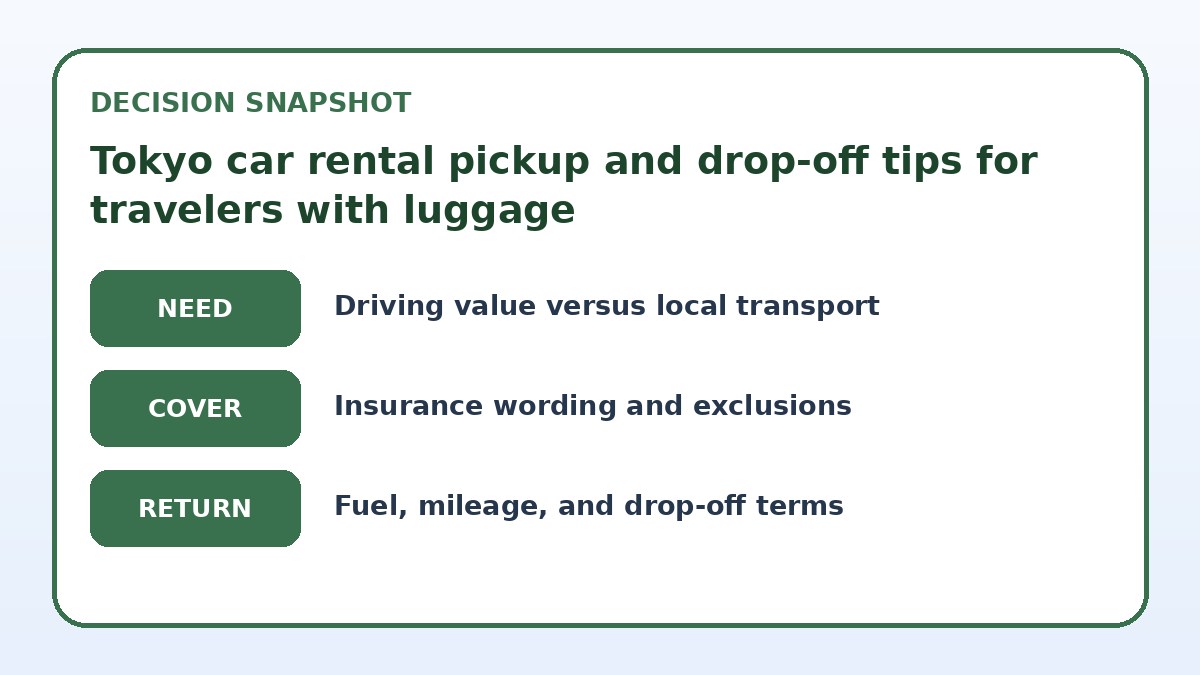
Start by mapping the value of door-to-door movement versus public transit efficiency. Tokyo’s rail network reaches most tourist areas efficiently; for central stays and museum or food-focused itineraries, trains avoid parking costs and congestion. However, driving becomes more attractive when your route includes early-morning or late-night transfers, outer suburbs like Nikko or the Izu peninsula, or multiple stops with heavy gear — for example, music equipment, ski bags, or extra suitcases for a long multi-city trip. Calculate time and convenience saved versus the effort of pickup and return to see if the car’s flexibility pays off.
When assessing value, quantify luggage-driven needs: how many bags won’t fit in a standard compact trunk? Will you need roof storage or a cargo box? Think about transfers between airports and accommodations — a single large taxi that loads everything might be easier than fighting multiple train transfers with bulky items. Also consider parking availability at each stop: some small hotels and ryokans have limited or no parking, which reduces the car’s usefulness. List your stops and note whether convenience of a trunk outweighs parking and toll costs.
Decide whether driving earns its place
| Mobility strategy | Best for | Cost or friction to check |
|---|---|---|
| Rent a car for the whole trip | Multi-stop itineraries and long-distance day trips with many large items | Higher pickup/return friction, parking and tolls, and more inspection steps at counters |
| Train network plus luggage-forward (takuhaibin) | City-centric travel with bulky bags that can be shipped between hotels | Extra cost and one-day delivery windows; needs careful scheduling with hotel check-in times |
| Taxis or meet-and-greet airport transfers | Door-to-door convenience for airport-heavy trips with heavy luggage | Potentially expensive for long or multi-stop itineraries compared with driving yourself |
| Mixed-mode: short rental for day trips, public transit in city | Combines car convenience for outer areas with stress-free city movement | More planning, possible need to collect and store luggage between modes |
Check live rental choices only after the route test
Use the exact driver, dates, pickup point, and return plan to compare current conditions.
Insurance and coverage language to check on the booking page
Insurance phrasing can hide important limits that affect luggage risk. On the booking page verify whether liability, collision damage waiver (CDW), and theft protection apply to personal belongings and whether the provider excludes certain item types or sets a per-item claim cap. Confirm who is covered to drive, whether your domestic driver’s license is accepted or an International Driving Permit is required, and any age-based restrictions. Look for explicit clauses on roadside assistance, which is more important if you carry valuable or heavy gear that would be difficult to manage alone in a breakdown.
Also check statements about deductibles, how claims are handled, and whether extra insurance offered by third parties duplicates or complements the base cover. If the provider mentions airport-specific insurance or additional airport-based surcharges, verify their applicability to pickup or drop-off locations. Keep copies of the insurance terms, vehicle condition report, and your booking confirmation saved during the rental. If you rely on a credit-card rental insurance benefit, confirm what it actually covers by reading the card issuer’s terms and noting excluded items or procedural steps required for claims.
Compare the full rental conditions
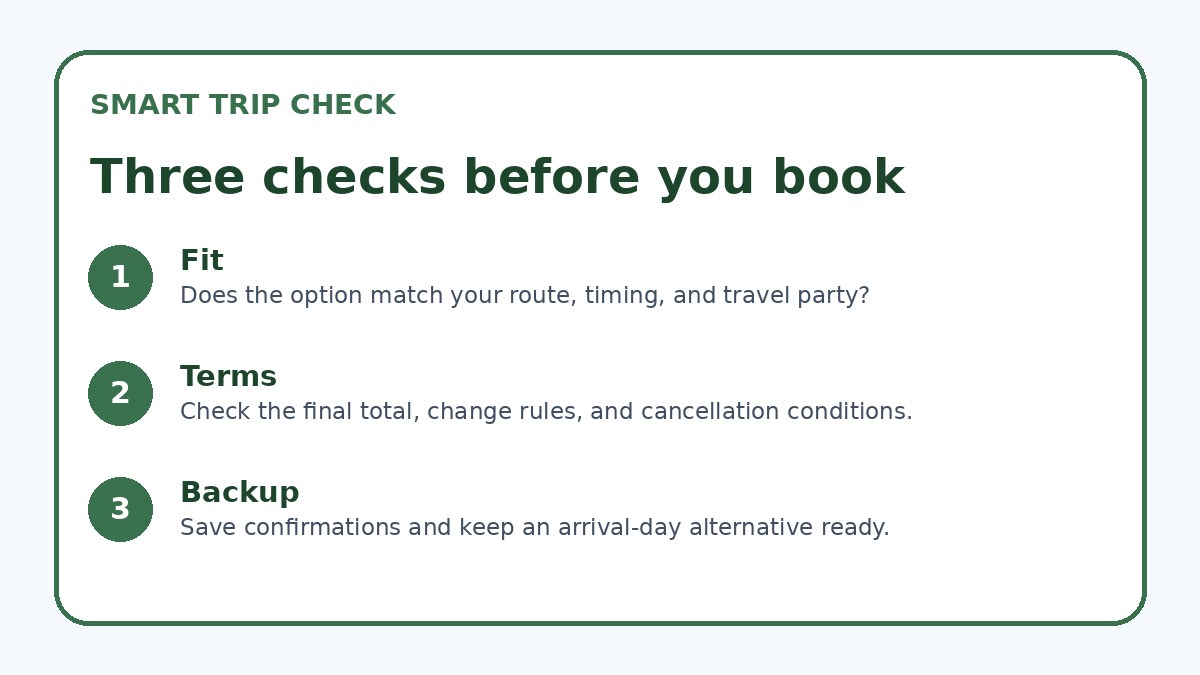
Confirm insurance wording, exclusions, deposit, fuel, mileage, and return terms on the final page.
Pickup and return friction: what usually causes delays
Pickup friction commonly arises from mismatched expectations around counter location, shuttle timing, vehicle readiness, and luggage storage fit. At major Tokyo airports, rental desks can be off-site; factor in shuttle wait times and the physical effort of moving heavy bags between terminals and the lot. During pickup the staff will inspect the car — use your phone to photograph all sides, interior, and trunk space, and note any existing damage on the report. Ask about allowed pickup windows and grace periods if your flight arrives late, and get explicit instructions for returning keys and vehicles after hours.
Return friction mostly stems from airport layout, drop-off instructions, and cleaning fees related to dirt, smells, or excessive trash. Confirm whether you must refuel to a full tank, whether providers accept partial returns, and the exact fuel policy language. If returning to a city location, verify where to park for inspection and whether staffing is guaranteed at that hour. For oversized luggage, ask the agent how they handle inspection when the trunk is full; some companies request bags be unloaded for a quick look, which may increase your transfer time and require a helper.
Car rental terms to verify
- Before booking, photograph the number and dimensions of your bags and compare them with the rental vehicle’s stated trunk volume or roof-rack options.
- Ask the provider to confirm the exact pickup location, shuttle instructions (if any), counter hours, and after-hours key drop procedure in writing on the booking page.
- Request a written damage inspection report at pickup and photograph the vehicle inside and out, including the trunk and cargo area, before loading luggage.
- Confirm insurance wording on the rental page: deductibles, theft coverage for personal items, roadside assistance, and any exclusions for specific types of gear.
- Clarify fuel policy and late-return grace periods; note the provider’s rules for refueling, charges for missing fuel, and the penalty calculation method.
- If avoiding driving, reserve luggage-forward or meet-and-greet services early and confirm pickup and delivery windows with both the courier and your accommodations.
Non-driving fallback: luggage-forward services and mixed-mode plans
If the costs and logistics of pickup/return outweigh benefits, consider combining trains, taxis, and luggage-forward services. Japan has reputable luggage forwarding (takuhaibin) that moves bags between airports, hotels, and stations; this can let you ride trains hands-free while large bags travel ahead on the schedule you choose. For short city trips, a meet-and-greet taxi from the airport or a ride-hailing service that handles large suitcases may be a simpler option than renting a car and managing parking and return windows.
A mixed-mode plan can also keep parts of your itinerary by car: rent only for the outer day trips where a vehicle is clearly advantageous, and use trains or local transport for inner-city days. If you do split rentals, place luggage at your base hotel or use forwarding for the hotel-to-airport leg so you don’t have to shuttle multiple large bags between vehicles. Whatever fallback you pick, confirm pickup, delivery windows, and dimensions with the forwarding or taxi provider on their booking pages — small items may be fine, but oversized sports equipment sometimes needs special handling.
Car Rental & Road Trip questions travelers ask
Will a compact or mid-size rental generally fit two large suitcases and a carry-on?
Vehicle trunks vary widely; no universal rule applies. A compact sometimes fits two large suitcases and a small carry-on if carefully packed, but many travelers need a mid-size or larger to avoid trunk overflow. Always check the provider’s vehicle specifications for trunk volume (liters) or ask for a specific model suggestion and then compare that to your bag dimensions. At pickup, verify trunk capacity by measuring or dry-loading your bags before leaving the lot; if space is tight, request an upgrade or a rooftop carrier if the company allows one.
What exactly should I check in the insurance wording related to personal luggage?
Read the insurance section on the booking page for explicit statements about personal effects: some policies exclude or limit coverage for belongings left in the vehicle. Look for per-item caps, total claim limits, and whether theft coverage applies only if the vehicle was secured. Note procedures for claims and required documents, such as police reports. Also check whether roadside assistance covers retrieval or temporary storage of luggage in case of breakdowns. If unclear, contact the provider and request a written clarification or add an optional luggage-protection product if available.
How do airport pickup and drop-off logistics differ between Tokyo’s main airports and city locations?
Major airports often locate rental counters off-site with shuttle buses, which adds transfer time and extra luggage handling; counters can also have fixed closing times that affect late flights. City locations are more likely to provide curbside pickups or one-way returns but may have limited after-hours inspection staff and narrow drop-off windows. Always verify counter and shuttle hours, the required return process (key box, staffed desk), and any fees for airport terminal pickup or drop-off on the provider’s booking page. This helps you plan buffer time and avoid rushed unloading with heavy bags.
Final decision note
For travelers with extra luggage, the practical decision about a Tokyo car rental hinges on the trip shape: if you need flexible, multi-stop travel outside central Tokyo or early morning airport runs, renting can save time and hassle despite pickup and return friction. If most activity sits inside the urban rail network or you prefer to avoid parking and inspection logistics, use trains with luggage-forward services or meet-and-greet taxis for a lower-stress option. Before booking, verify trunk space, insurance language around personal items, precise pickup and drop-off addresses and hours, fuel policy, and any airport shuttle requirements on the provider’s final page. These checks turn a vague “should I rent?” question into a confident choice that matches your luggage and schedule.
Continue planning
Check current options and final conditions
Use the provider page to confirm live availability, the final total, cancellation terms, and every condition that matters to your trip.
This evergreen planning guide was created with AI-assisted drafting and a structured quality review. It does not display live prices, schedules, availability, visa guidance, or provider rankings. Verify current details before booking. Some links are affiliate links; we may earn a commission at no additional cost to you.