If you and your partner are deciding how to travel from Dubai to Abu Dhabi, focus first on door-to-door practicality: which pickup and drop-off points fit your hotels, how much luggage you have, and whether you prefer flexibility or a fixed timetable. For most couples the core choices are intercity coach, a private car transfer or ride-hail, or a mixed option that combines coach/rail trunk travel with local taxis for station-to-hotel links. This article helps you compare those approaches by considering terminal fit, luggage friction, timing flexibility, and what to do if something goes wrong. Read on to learn how to pick the approach that minimizes transfers, keeps costs sensible, and preserves energy for sightseeing, plus a simple checklist and three backup plans you can use if the scheduled plan is disrupted.

How to choose between coach, rail, private car or mixed options
Start by mapping door-to-door time rather than travel time alone. A coach or rail journey may look efficient on paper, but you must add time for getting to the departure terminal and onward transfers at the destination. Couples should note whether each option drops you at a central terminal, an out-of-town coach station, or an airport-style hub; a centrally located terminal can eliminate an extra taxi or metro trip and reduce friction after arrival.
Next, match the choice to your priorities. If you prefer fewer decisions and guaranteed pickup at the hotel, a private transfer or ride-hail is simplest, although you’ll trade potential cost savings. If you want a predictable schedule and low per-person cost, intercity coaches or any available rail services can work well — just verify how many transfers the route adds and whether those transfers are comfortable for two people with luggage.
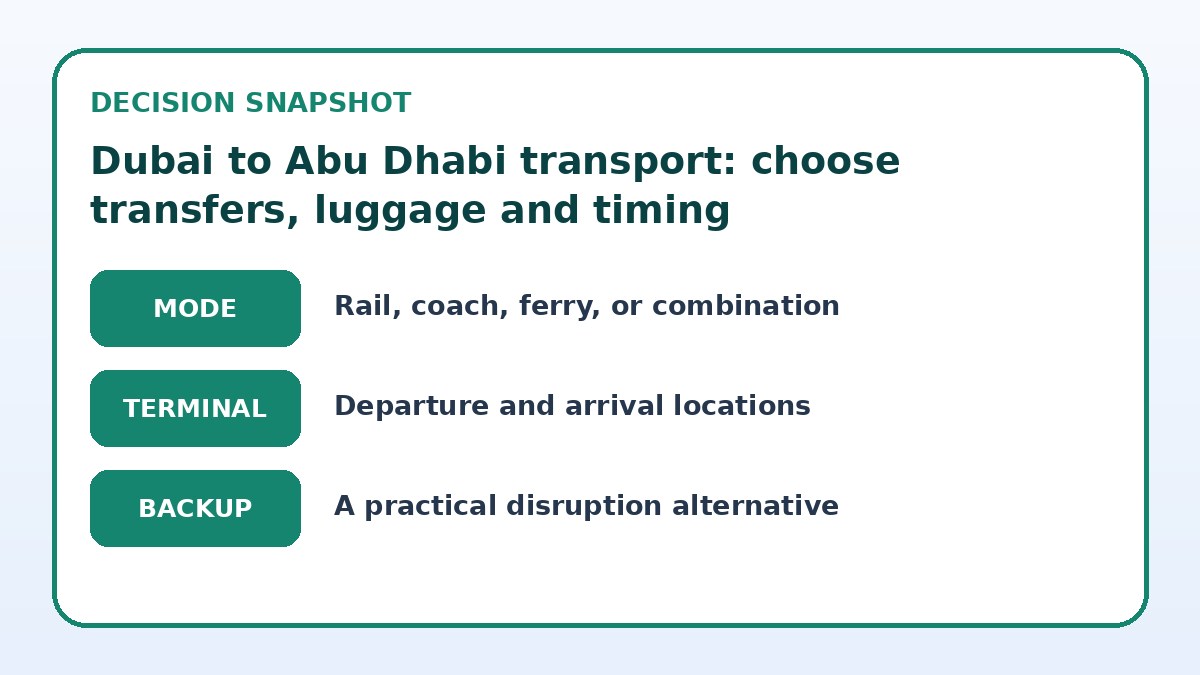
Choose the end-to-end journey plan
| Journey approach | Best for | Friction to check |
|---|---|---|
| Intercity coach | Couples who want straightforward timetables and low per-person cost | May require extra local transfers to reach city-center hotels and limited luggage assistance |
| Private car or prebooked transfer | Couples prioritizing door-to-door convenience and minimal handling of luggage | Less schedule discipline and usually higher cost, especially during peak times |
| Ride-hail (on-demand) | Flexible couples who prefer leaving on their own schedule for short notices | Variable prices, potential surge pricing, and pickup location limits at busy terminals |
| Mixed approach (coach/rail + local taxi) | Cost-conscious couples who still want a relatively predictable trunk journey | Additional transfers increase luggage handling and require careful timing coordination |
Check live intercity options
Look beyond the ride itself and compare terminals, transfers, luggage, and arrival fit.
Terminal fit and luggage friction: practical checkpoints for couples
When you book, verify exactly which terminal, station platform, or curbside area the service uses. Some intercity services operate from bus stations that are pedestrian distance from central hotels; others use highway terminals that need a taxi. For couples, avoiding multiple rides matters: two small suitcases and a backpack are easy to carry, but four or large checked cases increase the effort of each transfer and might push you toward a private car or hotel transfer.
Consider luggage handling at each stop. Ask whether the operator assists with loading if you have heavy bags, and whether there are luggage trolleys, escalators, or elevator access between platform and street level. If transferring between different transport modes, plan for the worst-case: how you will move bags between coach and taxi or from a train platform to a rideshare pickup point without blocking pedestrian routes or wasting time.
Timing flexibility and aligning travel with couple plans
Couples often want to align travel with check-in and activities. Pick transport times that leave a buffer before evening plans or hotel check-in deadlines. If you are traveling on a fixed coach schedule, aim for a departure that gives you at least 60–90 minutes of slack for local transfers and possible traffic. If you prefer flexibility, choose a private car that can leave when you’re ready, or a later coach/train with frequent departures so delays do not force you into a costly last-minute taxi.
Balance early starts and late arrivals with energy levels. A morning departure can maximize sightseeing time on arrival but may require an early hotel checkout and luggage drop. An evening arrival might be less stressful but can limit first-night options. Decide together whether you prioritize daytime exploration or a relaxed travel rhythm, then book the transport approach that matches that rhythm while keeping terminal distance and luggage handling manageable.
Compare the practical alternatives
Use the final page to confirm what is actually offered on your dates and save a workable fallback.
Intercity travel checklist
- Confirm exact terminal/station names and pickup/drop-off addresses for both departure and arrival on the operator’s final booking page.
- Count and photograph your luggage so you both agree on what you can comfortably carry between transfers.
- Save and test a local ride-hail app and the taxi company number you plan to use as a backup.
- Schedule at least 60–90 minutes of transfer buffer between arrival at a terminal and any hotel check-in or evening plan.
- Share one primary contact who will handle bookings and one secondary who manages day-of changes and navigation.
- Pack a small day bag with essentials to keep with you if larger suitcases go into hold or separate storage.
Simple disruption backups and what to verify before booking
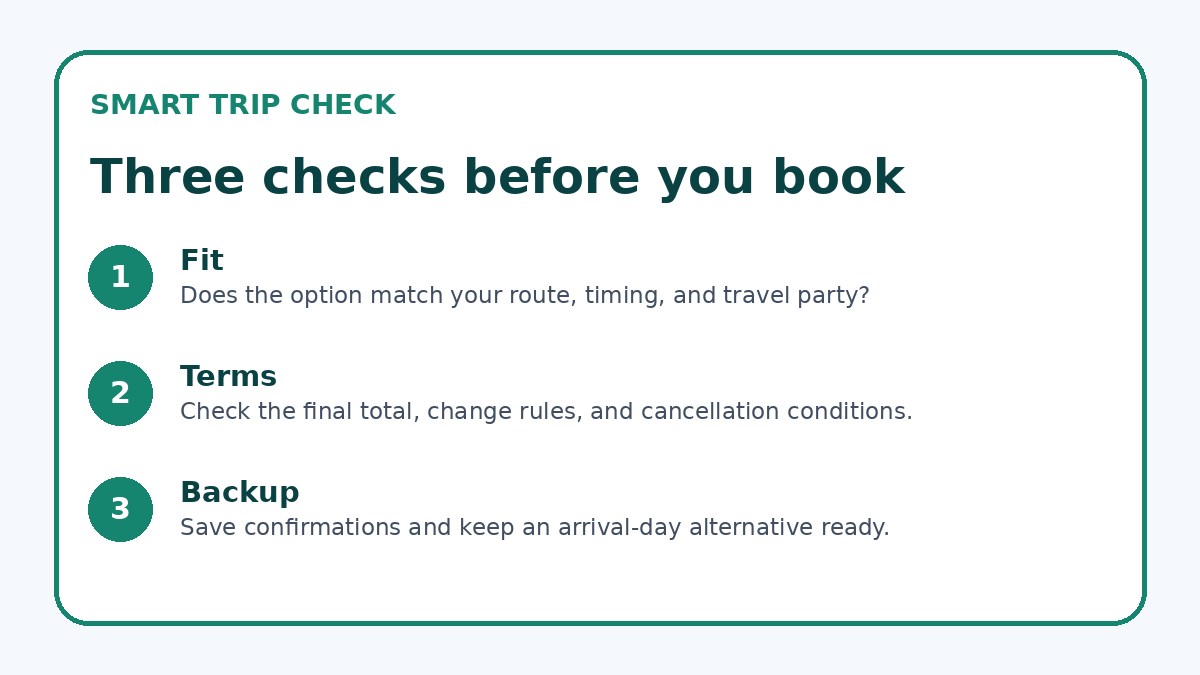
Always pick at least one backup you can execute quickly. Useful backups include: a rideshare app preinstalled and payment method ready; a reputable taxi company number saved; and an alternative coach or later train that you could take. For couples, split responsibilities: one person monitors the scheduled service and messages the hotel about any change, the other handles rebooking or arranging local pickup to preserve calm and speed.
Before you finalize any booking, verify these provider-specific facts on the operator’s booking page: exact pickup and drop-off addresses/terminal names, luggage allowances and assistance, cancellation and change policies, earliest/latest pickup options, and contact methods for day-of travel changes. Trip.com can be used to compare current availability, but always confirm the final details and any last-minute instructions with the chosen operator before travel.
Rail & Intercity Transport questions travelers ask
Which terminal should couples use to minimize extra transfers when arriving in Abu Dhabi?
The best terminal depends on your accommodation location; central city terminals reduce the need for extra taxis. Before booking, check the operator’s listed drop-off point and map it relative to your hotel. If the listed terminal is not within easy walking distance, factor in the time and cost of a taxi or public transport from that terminal to your hotel. For peace of mind, choose the option whose terminal or meeting point keeps your local transfer to under 20–30 minutes by road.
How much luggage is too much for using public coach or rail between Dubai and Abu Dhabi?
There isn’t a universal limit, so plan around what you and your partner can carry together between curb, platform and vehicle. Light luggage—two carry-ons and one daypack—is easy for most intercity transfers. If you have several checked suitcases, bulky items, or baby/toddler gear, a private car or hotel-arranged transfer will reduce effort and stress. Always check the operator’s luggage rules on their booking page and ask about handling assistance at terminals if needed.
What’s a simple disruption plan if my scheduled coach or train is delayed?
Keep three practical options ready: rebook onto the next scheduled public departure, arrange a ride-hail or taxi for a door-to-door transfer, or contact your hotel to request a later check-in or luggage hold. Have the ride-hail app ready and a local taxi number pre-saved; for longer delays, consider splitting responsibilities so one person rebooks while the other maintains communication with the hotel. Verify cancellation and change policies before booking so you understand your ability to switch options without surprises.
Final decision note
For couples traveling Dubai to Abu Dhabi, the right choice balances door-to-door convenience, luggage effort, and timing flexibility. Private transfers minimize handling and provide simple door-to-door service, while coaches and mixed options can save money if terminal locations and luggage demands are acceptable. Prioritize terminal fit: a centrally located drop-off can save time and the need for extra taxis. Always verify pickup/drop addresses, luggage rules, and change policies on the operator’s final booking page. Prepare one clear backup plan, share responsibilities, and keep essential apps and contact numbers ready to preserve a smooth, stress-free journey together.
Continue planning
Check current options and final conditions
Use the provider page to confirm live availability, the final total, cancellation terms, and every condition that matters to your trip.
This evergreen planning guide was created with AI-assisted drafting and a structured quality review. It does not display live prices, schedules, availability, visa guidance, or provider rankings. Verify current details before booking. Some links are affiliate links; we may earn a commission at no additional cost to you.