If you’re arriving in Dubai with oversized suitcases, sports gear, or multiple bags, the decision to drive yourself or rely on public transport shapes the whole trip: where you stay, how you plan transfers, and how much time you’ll lose wrangling baggage. For many travelers with heavy or bulky luggage, renting a car will simplify door-to-door movement, airport pickups and multi-stop days. But driving brings its own costs and friction — insurance fine print, pickup and drop-off logistics, parking, and local traffic to consider. This article gives the practical answer up front, then breaks down route value, insurance wording you should verify, pickup/return friction, and a robust non-driving fallback so you can book confidently even with extra bags.
Route value: when driving actually improves your luggage-heavy itinerary
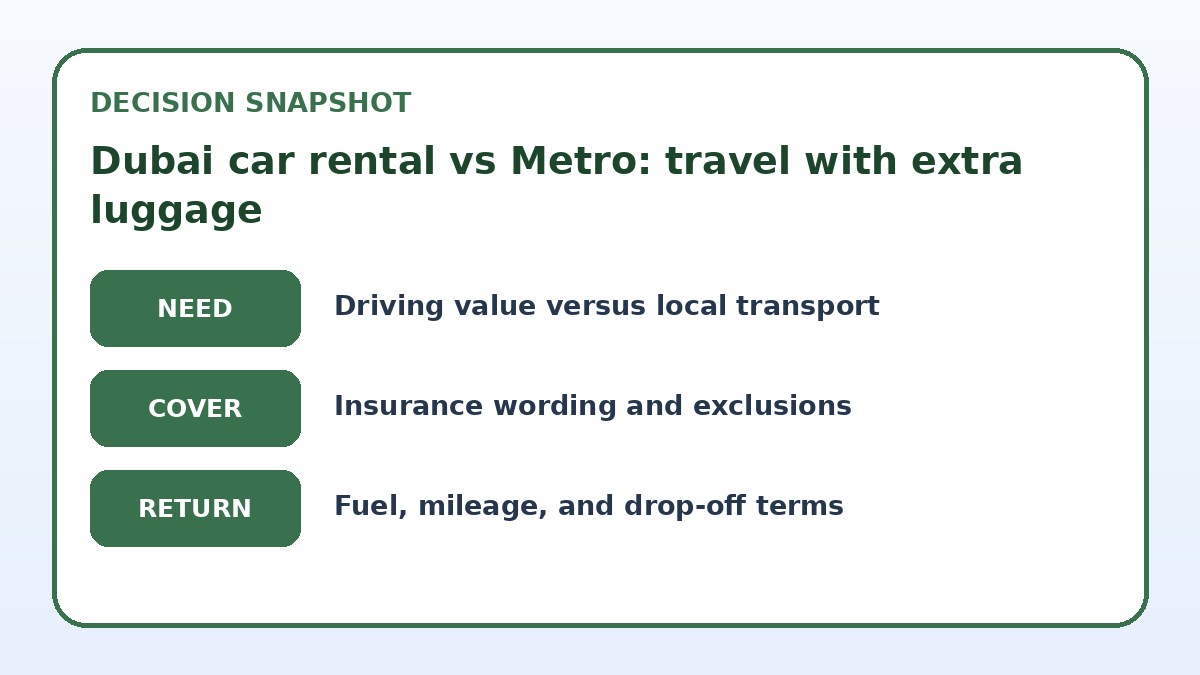
Ask whether your itinerary involves multiple stops far apart or early/late hours when public transport is limited. Driving usually improves value when you have fixed, spread-out destinations — for example, multiple suburbs, beaches, or desert excursions — because it replaces repeated lifts, waits and transfers with a single door-to-door solution. If your plan centers on a compact area with good metro access and a single hotel base, the time you save by driving may not justify parking hassles and navigation stress.
Also quantify how often you’ll move luggage between places. A single airport-to-hotel transfer with two weeks of stationary sightseeing is low-value for a rental; repeated intercity drops or gear-heavy day trips increase rental value. Consider where you’ll store bags at midpoints: some hotels accept early luggage drop; some attractions have no secure storage. Mapping distances and the number of bag moves gives a simple metric to decide whether driving genuinely simplifies your days.
Decide whether driving earns its place
| Mobility strategy | Best for | Cost or friction to check |
|---|---|---|
| Self-drive rental | Travelers needing repeated, door-to-door transfers and control over timing with multiple bulky items. | You handle parking, insurance terms, local driving and pickup/return logistics; verify coverage specifics before booking. |
| Pre-booked airport transfer (private shuttle or sedan) | Straightforward point-to-point transfers with heavy luggage and minimal handling between stops. | Higher per-trip cost than public transit; check vehicle size and baggage allowance on the booking page. |
| Public transport + occasional taxi | Staying in metro-connected areas with limited luggage moves and desire to avoid driving stress. | Multiple lifts and transfers; check interchange accessibility and whether stations have elevators and step-free routes. |
| Hybrid: rent for day trips only | Base in one area using transit, but rent a car for specific luggage-heavy excursions or multi-stop days. | Requires two bookings and careful coordination; factor in pickup/return friction and short-term rental insurance limits. |
Check live rental choices only after the route test
Use the exact driver, dates, pickup point, and return plan to compare current conditions.
Insurance wording and coverage: what to verify before you drive
Insurance on rental contracts varies in coverage and phrasing. Look for explicit statements about collision damage waiver (CDW), theft protection, third-party liability limits, and the deductible/excess amount. Crucially, check whether additional drivers are included, and whether coverage excludes certain activities (off-roading, carrying commercial cargo or sports equipment). If the contract references 'local laws' or 'airport surcharges,' click through to the rental provider’s final booking page to confirm what triggers extra fees or uninsured scenarios.
If you plan to carry valuable or delicate gear with your rental, verify if theft protection covers items left in the car and whether you need a police report to make a claim. Many cards and third-party insurers offer supplementary coverage — but each policy uses specific wording. Before you book, take screenshots of the insurance summary and save the provider’s policy link so you can confirm exclusions at pickup; this avoids unexpected bills if damage or loss occurs while transporting heavy luggage.
Compare the full rental conditions
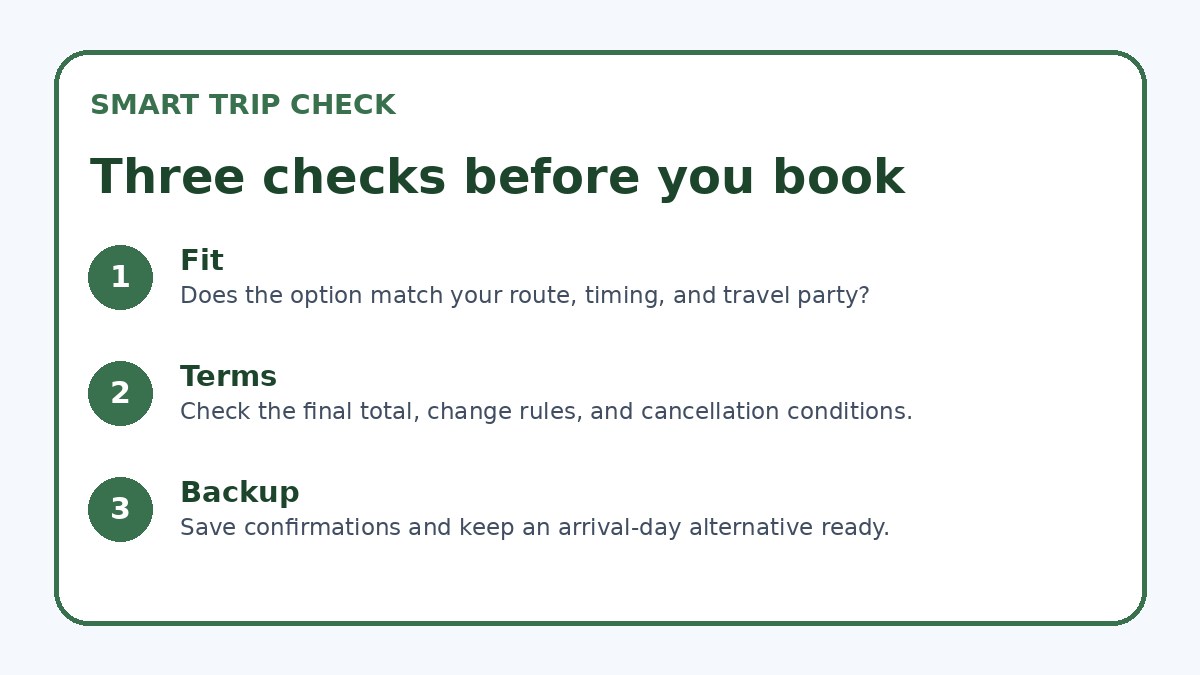
Confirm insurance wording, exclusions, deposit, fuel, mileage, and return terms on the final page.
Pickup and return friction: practical pitfalls with heavy bags
Airport pickups look convenient but often add friction: shuttle rides, baggage handling from terminals to rental desks, and queued paperwork. If you have extra luggage, arrange an express desk or curbside handover where possible; otherwise expect multiple trips between terminal and car park. Returning a car after a late flight can be more painful — many operators have out-of-hours drop boxes or require staff inspection, which can be hard when you’re managing oversized suitcases and public transport options to the airport.
If your hotel offers a free shuttle or concierge-assisted rental handover, that reduces physical handling. Alternatively, choose a rental location near your hotel or a major interchange to avoid moving bags twice. For return logistics, check whether the rental firm requires a full fuel tank, whether there is an out-of-hours return fee, and how final vehicle inspections are handled. Always allocate extra time at both ends of the trip to avoid last-minute stress with heavy gear.
Car rental terms to verify
- Map every stop and count how many times you will lift or transfer heavy luggage during the trip.
- Read and save the rental company’s insurance summary, noting excess, exclusions, and additional driver rules from the booking page.
- Confirm pickup and return procedures, hours, and whether the airport location offers curbside handover or requires a shuttle.
- If choosing public transport, pre-check station accessibility, platform elevator availability and the nearest taxi rank to your hotel.
- Reserve a pre-booked airport transfer as a fallback for arrival or departure that accommodates oversized bags and confirm vehicle type.
- Photograph the car on pickup and note existing damage, then keep drop-off receipts or inspection records to avoid disputes.
Non-driving fallback: reliable alternatives if you decide not to rent
Public transport in Dubai — metros, buses and organized trams — can be combined with taxis and app-based rides to move heavy luggage with fewer surprises than a self-drive. Use the metro where practical for predictable travel corridors, and reserve door-to-door taxis or pre-booked airport transfers for airport legs and luggage-heavy hops. Relying on a mix of transit and paid transfers reduces your responsibility for parking, insurance, and local driving rules while still handling bulky bags with minimal lifts between modes.
If you ultimately cancel a rental, keep important contacts and confirmations handy: a booked airport transfer provider, a taxi app, the nearest metro interchange to your accommodation, and a luggage storage or concierge contact. Trip.com or similar booking platforms can help compare current availability and transfer options, but always verify cancellation and baggage policies on the provider’s final booking page before you rely on a specific service for moving oversized items.
Car Rental & Road Trip questions travelers ask
Can I rely on taxis in Dubai to handle oversized luggage?
Taxis are commonly used for airport-to-hotel legs and short hops and often have trunks large enough for standard suitcases. However, vehicle size and trunk space vary by taxi type; if you have oversized items or many bags, book a larger private transfer or request a bigger vehicle on the provider’s booking page. Verify pickup points and whether extra charges apply for bulky luggage or multiple stops. Keep transit alternatives ready in case a small taxi cannot accommodate your load.
Does my credit card insurance generally cover rental cars in Dubai?
Some credit cards provide secondary or primary rental car insurance, but coverage terms vary widely and often exclude certain countries, vehicle classes, or commercial use. Before you rely on card benefits, read the card issuer’s rental insurance policy and compare it to the rental company’s requirements listed on the final booking page. Confirm whether the card covers the full excess/deductible, theft protection, and additional drivers; take printed or digital confirmation of coverage to the rental desk when you pick up the vehicle.
How do I choose between a one-way rental and returning to the same location?
One-way rentals can be convenient for linear itineraries but often carry extra fees and require specific provider approval. Compare the time and hassle of returning to the same pick-up location versus paying for a one-way drop-off: include the cost of repositioning, potential mileage limits, and the logistics of returning luggage to the airport. Always verify one-way availability and any geographic restrictions on the rental company’s final booking page before committing, and build extra time into your schedule for drop-off inspections.
Final decision note
For travelers with extra luggage, the practical choice hinges on how often you need door-to-door movement and how much handling you’re willing to accept. If your trip involves multiple dispersed stops, early starts or bulky equipment, a rental car often reduces physical strain and saves time — provided you confirm insurance wording, pickup/return details and parking realities before booking. If you’re staying in a metro-connected neighborhood or prefer to avoid driving, combine public transit with pre-booked transfers or taxis for heavy legs; this reduces responsibility for the vehicle and eliminates parking worries. Whichever path you choose, map out luggage moves, save insurance and booking pages, and set a fallback transfer so heavy bags never derail the plan.
Continue planning
Check current options and final conditions
Use the provider page to confirm live availability, the final total, cancellation terms, and every condition that matters to your trip.
This evergreen planning guide was created with AI-assisted drafting and a structured quality review. It does not display live prices, schedules, availability, visa guidance, or provider rankings. Verify current details before booking. Some links are affiliate links; we may earn a commission at no additional cost to you.