Practical decision first: pick the part of Rome you want to use as your base, then choose a hotel that sits by the transport type you'll use most. For first-time visitors, that means balancing walking-friendly historic districts with reliable links to Termini, metro lines, or major bus routes that reach Vatican, Colosseum, and beyond. A hotel a short walk from a metro station or a main tram/bus corridor will save time and energy even if it costs a little more. Conversely, being inside the Centro Storico often gives immediate access to iconic sights on foot but can increase noise and limit public transport options late at night. This article helps you shortlist an area, compare tradeoffs, match room and party needs, and finalize booking checks so you can open live listings confident you’re looking in the right neighborhoods for your Rome hotels search.
Check live stays in the areas that fit
Use your dates and party size to compare current rooms after you narrow the neighborhood fit.
Neighborhood fit: match area to your itinerary
Start by listing the top three things you want to do every day—museum visits, Vatican tour, Colosseum and Roman Forum walks, or neighborhood evenings. If most activities are clustered around the Centro Storico and Trastevere, staying inside or just across the river saves walking time and keeps mornings low-stress. If your interests include day trips to Tivoli, Ostia Antica, or using trains to other Italian cities, prioritize proximity to Roma Termini or a main train station. Map each attraction with transport lines before you shortlist so you can see whether a single area will reduce recurring transfers.
Consider noise and atmosphere as part of fit. The Centro and areas near major squares will be lively late into the night; if you need quiet for sleep, look at residential neighborhoods a short metro ride away, such as Prati or Nomentano. Some neighborhoods trade walkability for better transport: Termini-adjacent zones are more functional than picturesque but unbeatable for onward travel. Decide whether you prefer starting each day from a pleasant street or from the quickest transport node—this choice determines your primary search filter.
Choose an area-selection strategy
| Area approach | Best for | Tradeoff to check |
|---|---|---|
| Stay inside Centro Storico near sights | First-time walkers who want immediate access to landmarks | Limited nearby metro lines and potentially more noise and smaller rooms |
| Base near Roma Termini or Tiburtina | Travelers making day trips or arriving by train | Functional surroundings with higher traffic and less charm |
| Choose Prati or Aurelio (Vatican side) | Visitors focused on Vatican and quieter streets | Fewer metro lines; some routes rely on buses that face traffic delays |
| Pick Trastevere or Testaccio for evenings | Those who prioritize dining, nightlife, and neighborhood atmosphere | Less central for some daytime sites and fewer direct metro options |
Daily-route friction: how transport affects every day
Think about the parts of a day that repeat: morning commute to attractions, midday transitions, and evening returns. A hotel located a five- to ten-minute walk from a metro stop reduces queuing and taxi reliance, especially when rain or heat makes walking unpleasant. For routes served mainly by buses and trams, check how frequently those lines run and whether they share lanes or get stuck in traffic; slower surface routes can turn short distances into long transfers at peak times. Night travel matters too—some metro lines and many bus routes stop earlier than central areas remain open; factor that into evening plans and whether you might need a taxi or night bus.
Practical friction also includes luggage handling and check-in logistics. Hotels near major stations let you arrive with heavy bags and drop them before exploring, but stations themselves can be busy and noisy. If you plan multiple day trips, a hotel with easy access to regional train services saves repeated taxi rides and complicated transfers. Finally, evaluate walking conditions: steep pavements, cobblestones, and frequent steps affect how quickly you cover short distances and how tiring each day will feel with a small child or heavy suitcase.
Now compare like with like
Keep the same dates, guests, room needs, and cancellation preferences while you compare the final choices.
Room and party needs: choose a hotel layout that suits your group
Single travelers and couples can prioritize compact central rooms for atmosphere and convenience; look for listings that confirm bed configuration and measured room size if space matters. Families and groups should filter for multi-bed rooms, adjoining rooms, or small apartments to avoid squeezing into two separate singles. If mobility or accessibility is a concern, search for elevators, ground-floor rooms, or explicit accessibility features—these are often listed on booking pages but always confirm with the provider before finalizing. Remember that larger rooms near transport hubs are sometimes more available outside the Centro but ensure the hotel’s layout meets your comfort needs.
Amenities matter for how you move day-to-day. A hotel offering luggage storage lets you check out early and return for late trains without strain; an on-site concierge familiar with local transit can suggest the best bus lines or walking routes to avoid transfers. If you plan to cook or store food—useful for families—look for rooms with kitchenettes or nearby grocery options. For those relying on taxis late at night, confirm whether the hotel can call official cars and where pick-up points are located to avoid waiting on busy streets.
Hotel booking check before payment
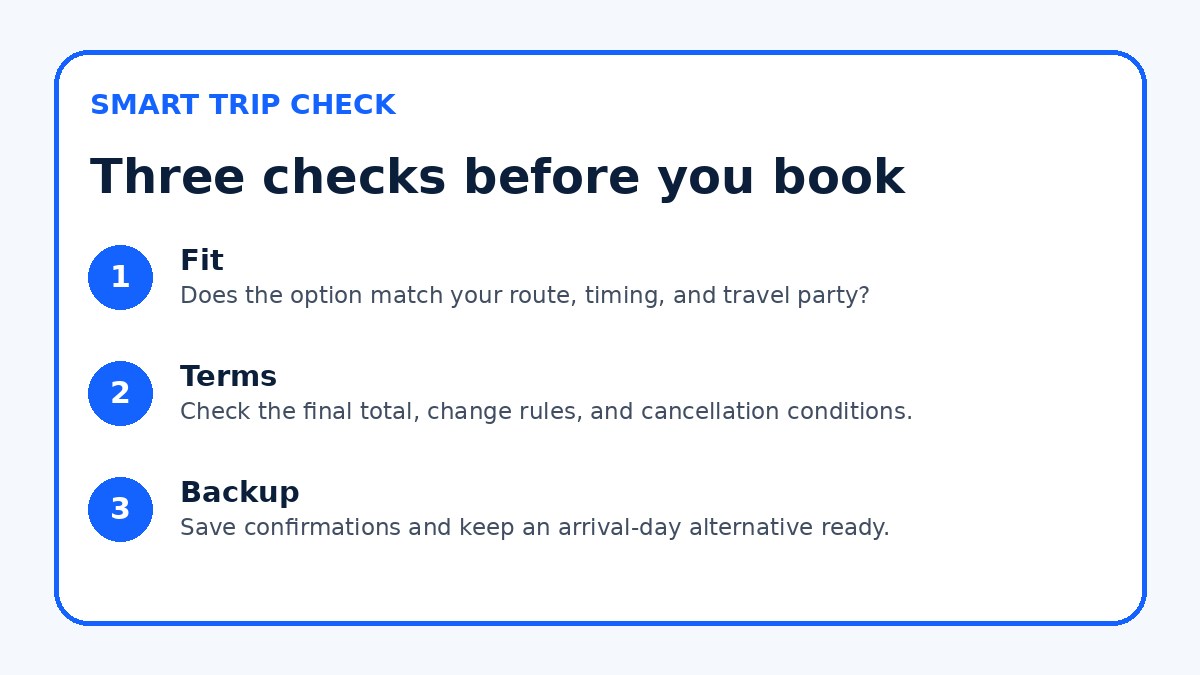
- Pin your top three daily priorities on a map and note nearest metro, tram, and main bus lines to each.
- Filter hotels by walking distance (in minutes) to your most-used transport node rather than by kilometers.
- Message the property to confirm bed configuration, elevator access, luggage storage, and late check-in procedures.
- Compare transport links on the hotel page with a public transit map and a route-planning app for peak and off-peak frequency.
- Verify cancellation policy, city tax, and whether transfers or parking are extra on the provider’s final booking page.
- Check recent street-level photos for walkability at night and confirm the hotel’s official taxi pick-up point if you expect late arrivals.
Final booking terms: what to check before you confirm
Always read the provider’s final booking page for cancellation and change policies, check-in and check-out windows, and any city tax details. These elements change frequently and vary by hotel and booking platform; do not assume flexibility. Verify arrival instructions for late check-in, whether the hotel holds luggage before standard check-in time, and if there are additional fees for early check-in or late check-out. If you need airport transfers, compare the hotel’s offering with public transport options; confirm the exact meeting point and whether the transfer is private or shared on the booking page.
Check transport details on the listing itself: exact distance to the nearest metro, tram, bus stop, or train station, and whether the route requires stairs or long underpasses. For safety and convenience, verify the neighborhood’s lighting and nighttime foot traffic through recent reviews or street-level map imagery. If you’re using a booking site, confirm the displayed photos reflect the room type you select and that bed configuration, accessibility features, and total occupancy match what you need.
Hotel Guide questions travelers ask
Which Rome area gives the best mix of walking access and transport links for a first visit?
For a balanced first visit, look at staying between Centro Storico and Roma Termini—areas like Esquilino bridge walking access to the Colosseum and Forum with close rail and metro connections. This lets you walk to many central attractions while keeping quick links for day trips and airport trains. If you prioritize evenings outdoors, cross the river to Trastevere, but expect more transfers for some daytime routes. Use a transit map to confirm that your chosen hotel sits within a short walk to a metro line or a frequent bus corridor.
How do I evaluate transport convenience from a hotel listing?
Check the listing for exact distances or stated walking times to named metro stations, tram stops, or main bus routes—then verify on a map. Confirm whether the route requires stairs, long underground passages, or a municipal bus transfer that may be slower. Look at transit frequency using a route planner for your likely travel times; a stop that looks close can be frustrating if buses run infrequently. If details are missing, contact the property directly to ask about the nearest stop, typical wait times, and the recommended route to key sights.
Should I pick a hotel near Termini if I don’t arrive by train?
Termini is worth considering even if you arrive by air because it’s Rome’s main transit hub for metro, many bus lines, and regional trains—handy for day trips and airport connections. The neighborhood is practical rather than picturesque; it suits travelers who value quick access over atmospheric streets. If you prefer charm and quiet, choose a nearby neighborhood with good transit links to Termini or other stations instead, ensuring you won’t spend time and money in taxis for routine connections.
Final decision note
Choose the neighborhood first, then pick a hotel that minimizes the transport friction your itinerary will create. For first-time visitors, the practical trade is between the charm of staying inside the Centro Storico and the convenience of being steps from a metro or train line. Match room layout to your party size and confirm accessibility and luggage options before booking. Always read the booking page for cancellation terms, check-in rules, and how the hotel describes its proximity to transport nodes. If you want to compare live availability while you shortlist areas, you can check a booking site such as Trip.com, but verify every operational detail on the hotel’s official listing before finalizing.
Continue planning
Check current options and final conditions
Use the provider page to confirm live availability, the final total, cancellation terms, and every condition that matters to your trip.
This evergreen planning guide was created with AI-assisted drafting and a structured quality review. It does not display live prices, schedules, availability, visa guidance, or provider rankings. Verify current details before booking. Some links are affiliate links; we may earn a commission at no additional cost to you.