Practical answer first: use flexible dates to run head-to-head comparisons of the same itinerary before you book—same travelers, same nights, same transport—then choose a package only if its inclusions and change rules match your priorities. For a first-time trip to London, small timing shifts (weekday vs weekend, early-week departures, mid-month stays) can alter flight and hotel options enough to change what’s included in a bundle or the value of booking pieces separately. Start with the non-negotiables: arrival airport or rail station, must-see neighbourhoods, and maximum acceptable transfer time. Those constraints let you narrow which bundled extras actually save money or convenience for you. As you compare, watch the fine print: refundability, change fees, baggage rules, and exactly which attractions or rail passes are included. Always verify those details on the provider’s final booking page before you pay; if you want a single place to compare live options, Trip.com is one of several sites you can check.

Test package value fairly
| Booking approach | Best for | Tradeoff to check |
|---|---|---|
| Fully bundled package (flight + hotel + extras) | Travelers who value convenience and one-stop support for an unfamiliar trip. | May lock you into change rules and inclusions that are hard to alter or refund. |
| Book flight and hotel separately, add extras ad hoc | Flexible independent travellers who want choice on each element. | Requires more time to manage bookings and may lose bulk-negotiation perks. |
| Hotel plus activities bundle, book flights separately | Those prioritising a worry-free local schedule while hunting for better flight deals. | Flight change policies remain separate; coordination could be needed if delays occur. |
| Meta-search + single suppliers (mix-and-match) | Shoppers who compare multiple provider policies and cherry-pick the best terms. | Higher administrative effort and potential for inconsistent customer support across suppliers. |
Check current package and separate options
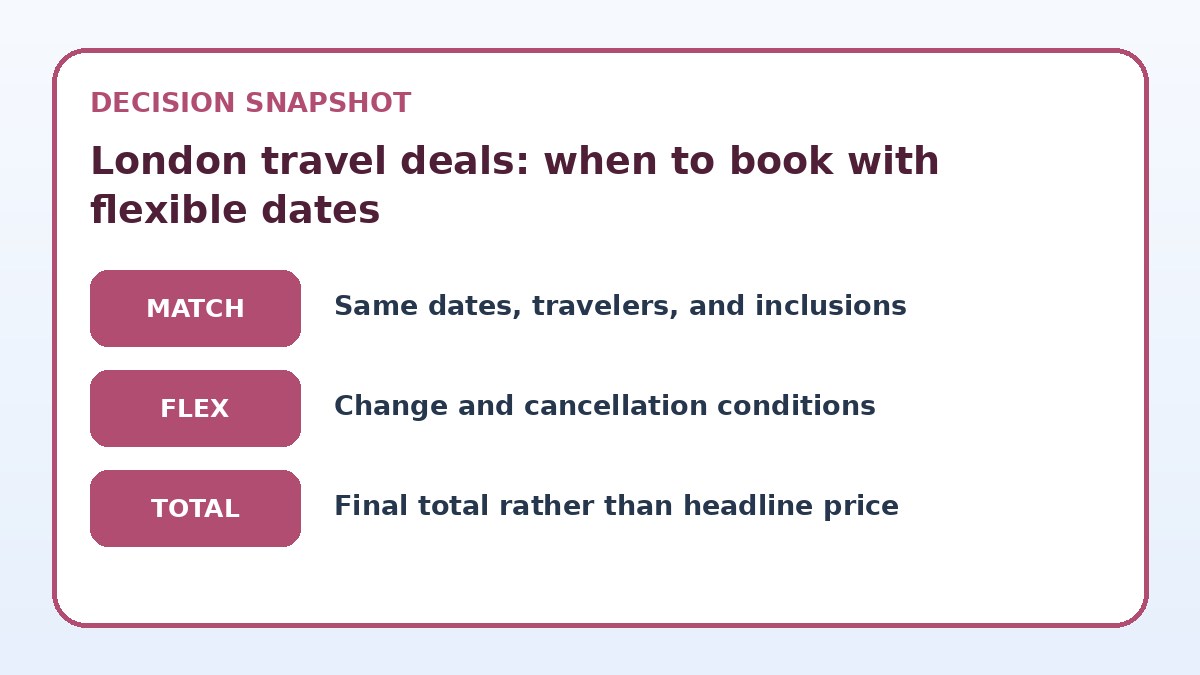
Use identical dates, travelers, room needs, baggage, and flexibility so the comparison stays meaningful.
What to compare before judging a bundle
Before accepting a package deal, set a baseline: the exact dates you can move by a few days, the number of travellers, and the minimum accommodation standard you want. Use flexible dates to generate two or three candidate date ranges and price each as a bundle and as separate bookings. That apples-to-apples comparison avoids the common trap where a bundle looks cheaper because it quietly shortens the stay, downgrades the room, or excludes checked baggage. Make sure the transport segments you compare are the same type—if you look at a flight-inclusive package, also price comparable flights (direct vs one-stop) for the same arrival and departure times you find acceptable.
When you compare, put aside headline savings and inspect inclusions line by line. Does the package list a specific hotel category or a named property? If it’s a category, verify the precise hotel and room type at checkout. Check whether attractions are sold as reserved-entry tickets or flexible passes: reserved tickets may protect you from sellouts, but flexible passes offer date freedom. Finally, note which party holds responsibility for missed connections or cancellations; that allocation of risk matters far more to a first-time visitor unfamiliar with London’s transport logistics.
Inclusions that actually change value
Certain inclusions add real convenience for first-time visitors and can justify a bundle even if the headline price is similar to separate bookings. Airport transfers save time and stress if you arrive late or with a lot of luggage; a prebooked transfer can also avoid the need to navigate public transport with bags. Attraction passes that skip queues or combine transport with museum entry can save both money and hours—provided the pass covers the specific sites you plan to visit. Breakfast included in a central hotel eases early touring days and removes the need to hunt for morning options on unfamiliar streets.
Conversely, some inclusions add little value if they duplicate what you’d do anyway or restrict flexibility. A bundled guided tour is only useful if its timing fits your schedule; otherwise it can force a full-day commitment you didn’t want. Meals with set menus may not suit travellers with dietary needs. Always check whether included items are transferrable, refundable, or date-changeable. If a bundle locks you into non-changeable attraction tickets or rigid transfer times, the convenience may be outweighed by the loss of flexibility that first-time visitors often need.
Look past the headline total
Compare inclusions and change conditions before deciding whether a package is genuinely useful for this trip.
Deal comparison checklist
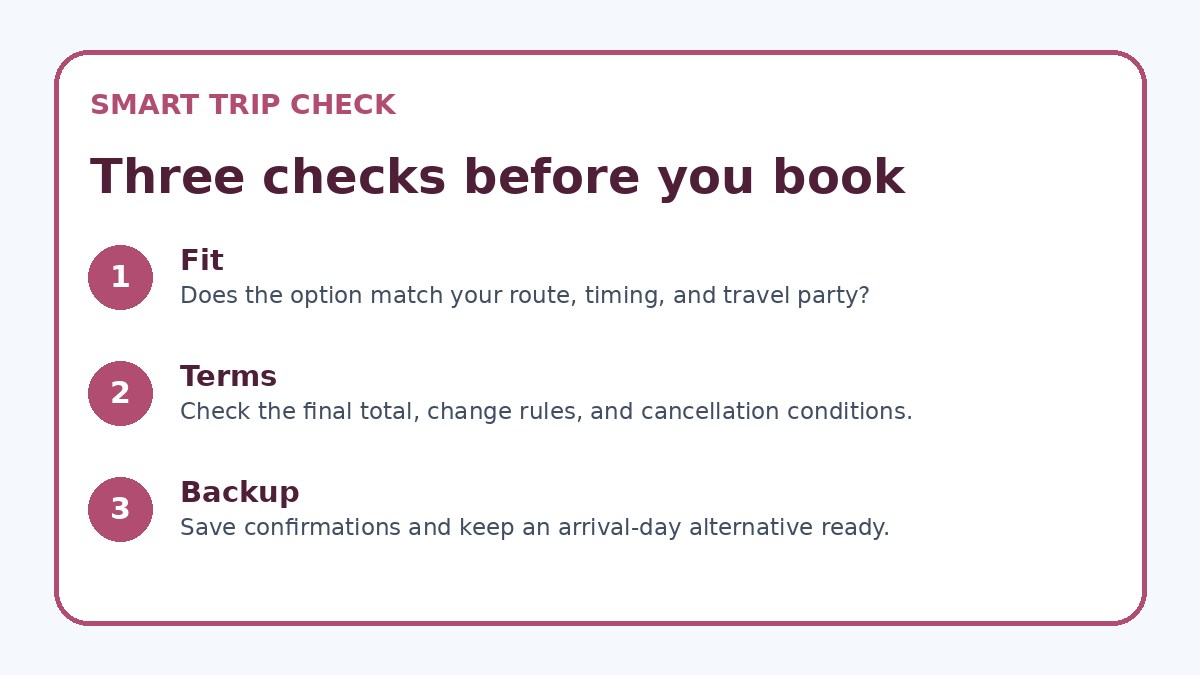
- Pick two or three date ranges you can accept and price the trip as both package and separate bookings for the same dates.
- Write down all inclusions (airport transfer, breakfast, tickets) and verify whether each is reserved, refundable, or changeable on the provider’s final page.
- Confirm the exact hotel name and room type before completing a package purchase; do not rely on category descriptions alone.
- For flights, check fare class rules, checked-baggage allowances, and change fees on the airline’s official checkout.
- Map the hotel and included transfers against your must-see list to ensure location and timing match your plans.
- Save screenshots or PDFs of the provider’s cancellation and change policy shown at checkout in case of later disputes.
Flexibility rules: what to verify on the final page
Flexibility looks different across suppliers. On the final checkout page verify change and cancellation windows, exact penalties, and whether refunds are cash or travel credit. For flights, check fare class rules for rebooking, whether taxes are refundable, and the baggage allowance attached. For hotels, confirm the room type, whether breakfast is genuinely included (sometimes it’s a voucher), and cancellation cut-off times. If a bundle combines sectors (flight + hotel), determine whether each element follows the supplier’s own policy or a single bundled change policy.
Also check who you call for support if something goes wrong: the airline, the hotel, or the package provider. That distinction matters if you need same-day changes in London because each party may offer different response times and remedies. For attraction reservations, verify whether booking confirmations list timed entry and whether names/dates are editable. If you’re unsure, contact the provider’s customer service and save screenshots of the policies shown at checkout. These are the details that will matter when weather, strikes, or illness force a change.
Traveler-specific value: pick by profile
Match the bundle’s strengths to how you travel. Families often benefit from the simplicity of a bundled transfer and a room with family amenities; these reduce transit stress and provide a base near child-friendly attractions. Couples on a short break might prefer central hotels with included breakfasts and a couple of prebooked experiences. Solo travellers or budget travellers may find more savings by booking low-cost fares and a centrally located budget hotel separately, keeping itinerary flexibility to add pay-as-you-go attractions or last-minute theatre tickets.
Think also about mobility needs, luggage, and arrival time. If you have limited mobility or arrive late, a package with a guaranteed accessible room and a private transfer can be worth the premium. If you plan to rely on London’s public transport and want a walkable base, ensure the bundled hotel’s location is explicit in the terms—an unnamed ‘central area’ may still be several zones away. Always map the included hotel and transfers against your must-see list to confirm the bundle delivers real convenience, not just a tidy invoice.
Travel Deals & Booking Strategy questions travelers ask
How much flexibility should a first-time London visitor expect in a bundled deal?
Expect variation: some bundles offer fully refundable elements while others bundle non-refundable tickets. For a first trip, lean toward bundles that allow date changes or offer partial refunds. On the final booking page, verify change windows, fees, and whether refunds are monetary or travel credit. If these details aren’t clear, contact customer support and ask for written confirmation. Remember that combining flight and hotel under one booking can mean a single policy governs both, which may reduce your flexibility compared with separate bookings.
Can flexible dates really save money on London travel deals, or is it mostly a matter of timing?
Flexible dates can reveal price differentials—weekday arrivals, mid-month stays, and avoiding major events often lower costs—but savings depend on how airlines and hotels price those days. The practical use of flexibility is to test several adjacent date ranges with identical travel parameters: same number of nights, same number of travellers, and same room standard. That way you see if a cheaper date also changes inclusions or forces inconvenient schedules. The goal is to balance savings against the loss of preferred timings or convenience.
If I find a package that looks cheaper, what are the most important fine-print checks before booking?
Review the package’s inclusions list line by line and verify each item on the provider’s final booking page: exact hotel and room type, whether airport transfers are private or shared, attraction tickets’ reservation status, and whether meals are pre-booked or vouchers. Check cancellation and change terms and which party handles customer service. For flights, inspect fare class and baggage allowances. If anything is ambiguous, ask the provider for explicit confirmation because unclear terms are the main reason apparent savings become costly later.
Final decision note
Using flexible dates effectively means treating date shifts as a testing tool, not a guess. Run date variants for the same itinerary, compare a bundled and separate price with identical travelers and inclusions, and scrutinize the change and cancellation rules on the final booking page. Decide based on which option reduces your trip friction—transfers, ticketed attractions, or guaranteed rooms—rather than headline savings alone. If you want a single comparison snapshot, consult a travel meta-search or Trip.com for current offers, but always confirm every policy on the supplier’s checkout before you pay. With that routine, first-time visitors can choose the deal that actually fits their London priorities.
Continue planning
Check current options and final conditions
Use the provider page to confirm live availability, the final total, cancellation terms, and every condition that matters to your trip.
This evergreen planning guide was created with AI-assisted drafting and a structured quality review. It does not display live prices, schedules, availability, visa guidance, or provider rankings. Verify current details before booking. Some links are affiliate links; we may earn a commission at no additional cost to you.