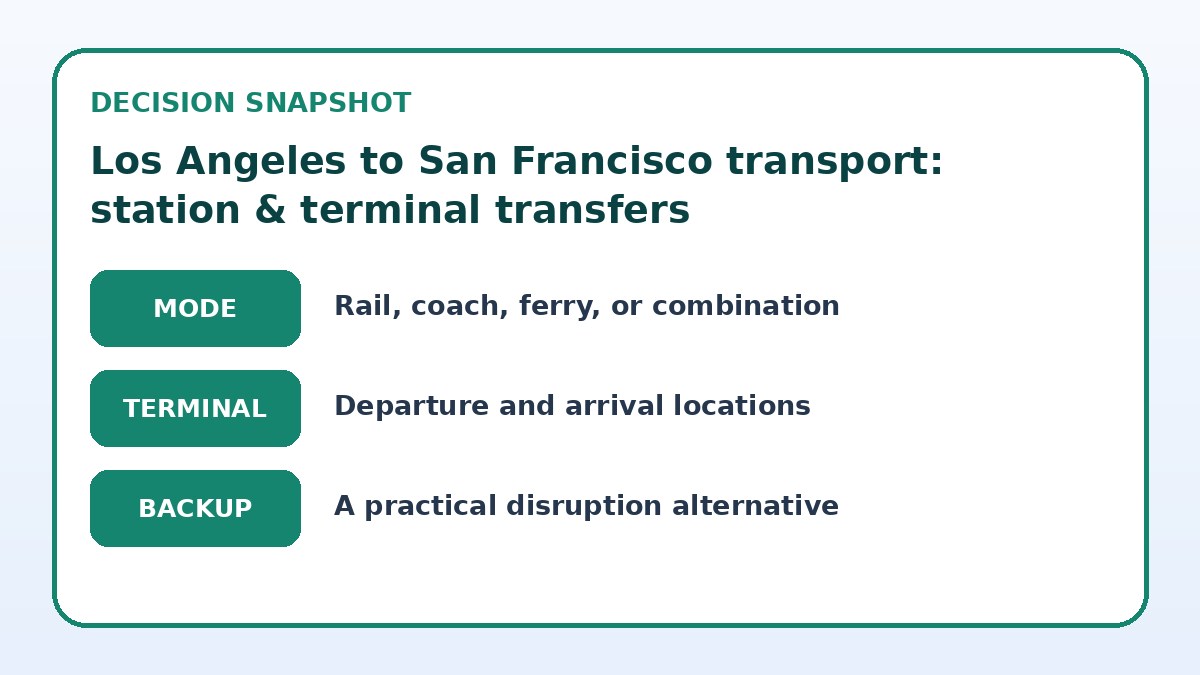
Practical answer first: choose the main travel mode (train, coach, or a mix with short flights) based on how comfortable you want transfers to be, then map start and end terminals so every handoff is timed. For many first-timers the clearest win is a single-operator rail or coach that departs and arrives at major stations with straightforward ground transport links. If you pick a combination—for example, a short flight plus a bus or train—you must plan extra buffer time and a concrete plan for luggage and onward transfers. Below I explain how to weigh terminal fit, luggage friction, timing flexibility, and disruption backups so you can pick an end-to-end door-to-door plan that keeps stress low and options open.
Choosing the mode: rail, coach, flight, or a hybrid
Decide first whether you want fewer handoffs or faster door-to-door time. Trains and intercity coaches usually center on a single station to station flow with simpler terminal layouts; that means fewer transfers and easier navigation for people unfamiliar with local transit. A short flight can cut travel hours but introduces airport check-in and security, likely requiring earlier arrival at the terminal and at least one extra transfer to and from airports on both ends. Hybrid itineraries—flight plus rail or coach—can work well when ground connections link directly to an airport terminal, but they demand stricter timing and a contingency plan.
When comparing modes, consider the number of times you will physically move baggage and the complexity of each terminal. A rail or coach trip that arrives at a city-center station often means immediate access to public transit, taxis, or a short rideshare, making the onward journey predictable. If you prefer fewer location changes, choose the single-mode itinerary with minimal intermodal transfers. If speed matters more than simplicity, the hybrid route might be appropriate, but accept that your buffer margins should be larger and that you will need clear instructions for each transfer.
Choose the end-to-end journey plan
| Journey approach | Best for | Friction to check |
|---|---|---|
| Single-mode train or coach door-to-door | Travelers prioritizing fewer transfers and straightforward terminals | May be slower than flying but minimizes transfer complexity and luggage handling |
| Hybrid flight plus short ground transfer | Those who value shorter overall travel time over simplicity | Introduces airport security and two extra terminal handoffs, requiring larger buffers |
| Self-drive or rideshare end-to-end | Groups carrying lots of luggage or seeking direct door-to-door control | Can be more expensive and vulnerable to road congestion; parking and drop-off logistics matter |
| Flexible multi-operator plan with built-in alternates | Risk-averse travelers who want contingency options | Requires more planning and monitoring of separate bookings and connection windows |
Check live intercity options
Look beyond the ride itself and compare terminals, transfers, luggage, and arrival fit.
Terminal fit and local ground connections
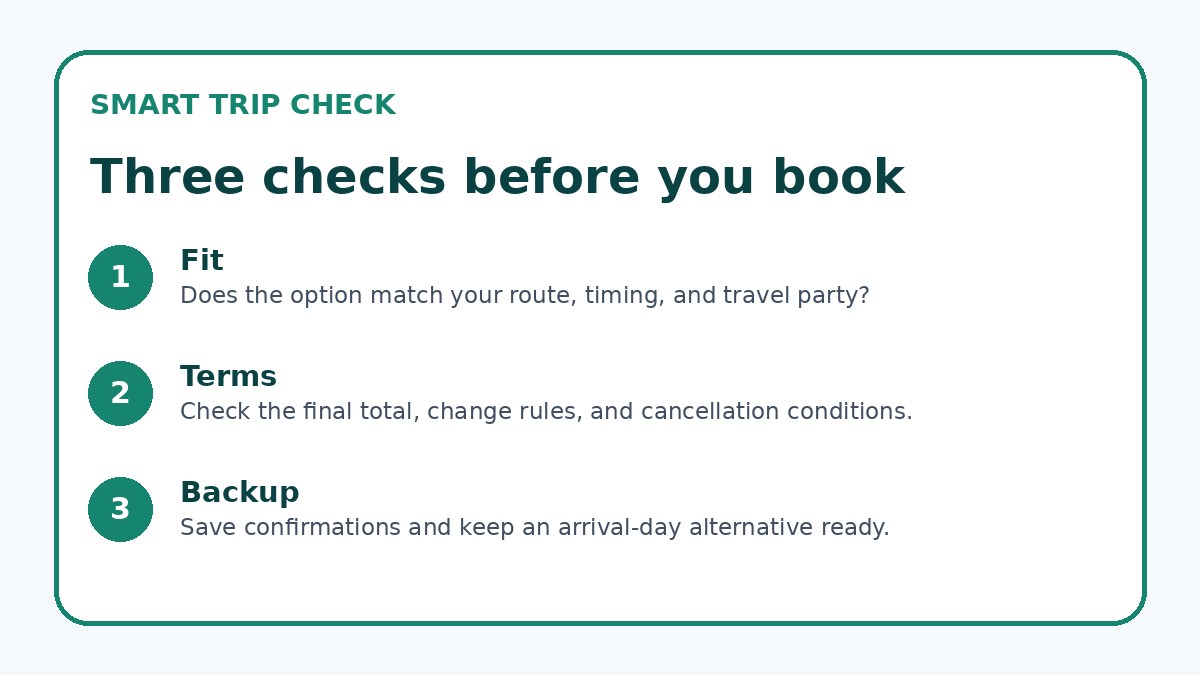
Map the exact departure and arrival hubs before you book. Stations and airports are not interchangeable: some are centrally located with direct subway, regional rail, or bus links, while others sit on city edges requiring an extra ride. For first-time visitors, a centrally located terminal reduces uncertainty—shorter, simpler transfers and more predictable taxi or rideshare availability. Check the final booking page of your chosen carrier to confirm which terminal or station is used and what local transit or shuttle services serve it; policies and connections can change, so verify this right before purchase.
Think about arrival-time practicality: arriving at a downtown station late at night is different from arriving at an airport with frequent ground transfers. Confirm whether the terminal has elevators, escalators, luggage trolleys, or step-free access if you’re carrying heavy bags or traveling with mobility needs. If the terminal has multiple platforms or concourses, write down or screenshot how to reach the street level and where official rideshare or taxi pick-up points are located. These simple verifications reduce confusion on arrival and keep transfers smooth.
Luggage, transfer friction, and timing flexibility
Assess your luggage situation against the operator’s baggage rules, not third-party summaries. Heavy or multiple bags increase friction dramatically during transfers between platforms, curb zones, or terminals. If you prefer minimal handling, look for services offering checked baggage or easy step-free boarding. When transfers require public transit, count stairs and platform gaps; when rideshares are part of the plan, check whether pick-up points are curbside or remote shuttle lots. Each of these factors can add 10–30 minutes to transfer time, so factor them into your schedule.
Timing flexibility matters more than speed when transfers are involved. A faster scheduled journey with tight connections is useful for risk-tolerant travelers but adds stress and higher rebooking risk. Build realistic transfer buffers—enough to collect luggage, move between concourses, and reach departure gates or platforms without running. If you value flexibility, prioritize itineraries with later departures or arrival windows that connect to regular onward services, rather than ones that force an immediate next-step transfer with little room for delays.
Compare the practical alternatives
Use the final page to confirm what is actually offered on your dates and save a workable fallback.
Intercity travel checklist
- Confirm the exact departure and arrival terminal names on the provider’s official booking page and screenshot those details.
- Measure luggage needs against the operator’s baggage rules and plan for checked baggage or step-free transfers if needed.
- Add a realistic transfer buffer to each handoff—enough time to collect bags, move between concourses, and reach pick-up points.
- Locate and note rideshare and official taxi pick-up points, including any remote shuttle stops, on arrival terminals.
- Identify one alternate route or station you could use if your initial transfer is missed and save contact details for local taxis.
- Store digital copies of all confirmations, and keep a charged phone with maps and the provider’s help line accessible during travel.
Disruption backup: plans that avoid last-minute scrambling
Create a short disruption playbook before you travel. Identify one lower-stress alternate route (for example, a different station or coach service that runs more frequently) and note how to get there from your arrival terminal. Keep contact info or booking links for local taxi and rideshare services handy and confirm where those pick-up points are. If you book a combination of providers, check their change and refund policies on their official booking pages and prepare to show receipts or confirmation codes—those details are essential if you need to change plans mid-route.
Also plan where you could wait without losing options: a station with luggage storage, a nearby hotel lobby with short-stay options, or a cafe near major terminals can buy time while you sort an alternate connection. Keep electronic copies of all tickets and a portable charger because moving between terminals often means more phone use and less opportunity to recharge. Lastly, check a current travel-comparison site like Trip.com for availability and provider notices before departure, but always verify details on the provider’s final booking page.
Rail & Intercity Transport questions travelers ask
How long should I allow for transfers between train or coach stations and airports?
Allow enough time to exit the arrival vehicle, collect luggage, and travel to the new terminal’s check-in or boarding area without rushing. For many first-time visitors, that means planning at least an hour for simple on-campus transfers and more if you must navigate public transit, heavy luggage, or peak traffic. If your plan crosses modes—like arriving by coach and catching a flight—double-check the airline’s recommended arrival time and add extra buffer for unexpected delays. Always verify transfer distances and transit options on the providers’ booking pages.
Can I rely on station staff or terminal wayfinding if I’m unfamiliar with the area?
Station staff and terminal signage are helpful but vary by location and time of day. Use official maps and service pages to learn platform and exit layouts beforehand, and screenshot directions to the nearest rideshare or taxi points. If you have mobility needs or lots of luggage, contact the provider’s assistance desk on the booking confirmation page to request help or to confirm elevator and step-free routes. Prepare for busy periods when staff may be occupied; having a backup rideshare or taxi option reduces stress.
What’s the best way to handle luggage if I have multiple transfers?
Minimize the number of times you move heavy bags by choosing services that allow checked baggage or have easy on-board storage. If transfers are unavoidable, pack a small day bag with essentials so you can leave larger suitcases in a secure storage area if needed. Research whether your arrival station or airport offers luggage storage and the process to access it—verify that information on the facility’s or provider’s website before you travel. When using rideshares, confirm whether drivers can help with loading and whether pick-up points are curbside or require a short walk.
Final decision note
Plan transfers with the same care you give the main journey: choose the mode that matches your tolerance for handoffs, verify exact terminal names and ground connections on provider pages, and build transfer buffers that reflect luggage and mobility needs. For first-time visitors traveling between Los Angeles and San Francisco, a simpler station-to-station rail or coach itinerary often reduces friction, while hybrid options trade simplicity for speed. Keep an alternate route and a local pickup plan ready, store digital confirmations, and verify all terminal and baggage details on the carrier’s final booking page before you go. A little advance mapping of terminals and transfers makes the whole trip feel far more relaxed.
Continue planning
Check current options and final conditions
Use the provider page to confirm live availability, the final total, cancellation terms, and every condition that matters to your trip.
This evergreen planning guide was created with AI-assisted drafting and a structured quality review. It does not display live prices, schedules, availability, visa guidance, or provider rankings. Verify current details before booking. Some links are affiliate links; we may earn a commission at no additional cost to you.