If your Taipei itinerary is mostly inside central business districts—Xinyi, Zhongshan, or near Taipei Main Station—public transport and ride-hail options usually save time and stress. Drive when your schedule includes multiple out-of-center meetings, site visits outside MRT coverage, or equipment transfers that are hard to manage by taxi. Renting a car changes planning: you gain flexibility but add pickup and return logistics, local insurance wording to decode, parking hassles, and unpredictable traffic during peak hours. This guide gives a direct recommendation up front, then walks through route value, insurance and rental wording you must verify, pickup/return friction at airports and downtown locations, and a practical non-driving fallback plan so you can finalize bookings with confidence.
Route value: which itineraries actually benefit from driving
Assess each appointment’s location and schedule before deciding to rent. Taipei’s MRT covers core business districts, major hotels, and convention centers; if your meetings cluster within a single line or a tight transfer, doors-to-door time often beats driving once you factor in parking and traffic. Driving delivers clear advantages for itineraries that require sequential stops across different suburban districts, early-morning or late-night site checks where transit frequency is low, or logistics involving bulky samples or equipment. Make a simple map of stops and note the nearest MRT stations, bus links, and typical taxi yards to judge whether a single vehicle will save you hours.
Also consider calendar flexibility and contingency time. If your schedule tolerates a 10–20 minute buffer between meetings, public transit plus a short taxi ride can be reliable and avoid rental overhead. For back-to-back meetings in suburban science parks or industrial zones with poor transit links, the car’s route value increases dramatically. Always compare estimated door-to-door times for transit and driving during the actual hours you’ll travel, not broad averages; rush-hour congestion, one-way streets, and loading zones can flip the advantage.
Decide whether driving earns its place
| Mobility strategy | Best for | Cost or friction to check |
|---|---|---|
| Rent a car for the whole trip | Multiple suburban or off-network meetings and moving equipment between sites. | Higher pickup/return friction, parking costs, and careful reading of insurance wording are required. |
| Use public transit (MRT + buses) | Dense central-business-area schedules and predictable meeting clusters near MRT stations. | Limited reach outside the network and less convenient for bulky items or late-night transfers. |
| Taxi and ride-hail on demand | Flexible city travel without parking or insurance responsibilities; useful for ad hoc meetings. | Per-trip cost can add up and availability varies during peak periods or late nights. |
| Hybrid: short-term rental or chauffeur for specific days | When a few out-of-center days need a vehicle but most meetings fit public transit. | Requires careful scheduling and increases complexity with multiple bookings and pickups. |
Check live rental choices only after the route test
Use the exact driver, dates, pickup point, and return plan to compare current conditions.
Insurance wording: what to verify on the rental contract
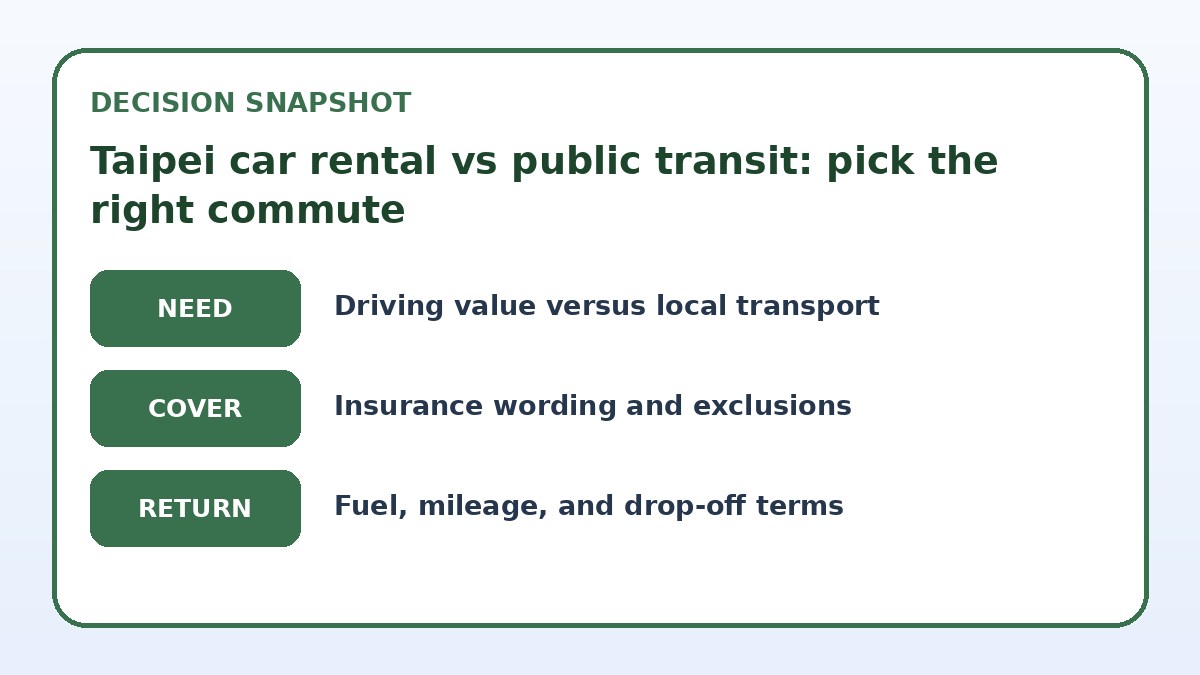
Rental contracts use specific language that determines your financial exposure. Look for collision damage waiver (CDW) terms, deductible amounts, third-party liability limits, and whether loss-of-use, administrative, or towing fees are charged after an incident. Confirm who is listed as an authorized driver, whether corporate cards or personal cards trigger different coverages, and whether any local exclusions apply—some policies exclude off-road driving or use on non-highway roads. Don’t rely on general statements; request the exact phrasing you will sign and, if possible, a PDF to compare with your company’s travel policy.
If you plan to rely on personal or corporate credit card coverage, verify the card’s country-specific terms and whether a secondary or primary role applies. Ask the rental desk whether the CDW offered by the supplier reduces your liability to zero or simply lowers the deductible, and whether there are additional waivers to remove administrative fees after a claim. Finally, check whether cross-border driving (for example, into outlying counties) is permitted and whether your insurance or the rental company demands an extra fee or paperwork for that.
Compare the full rental conditions
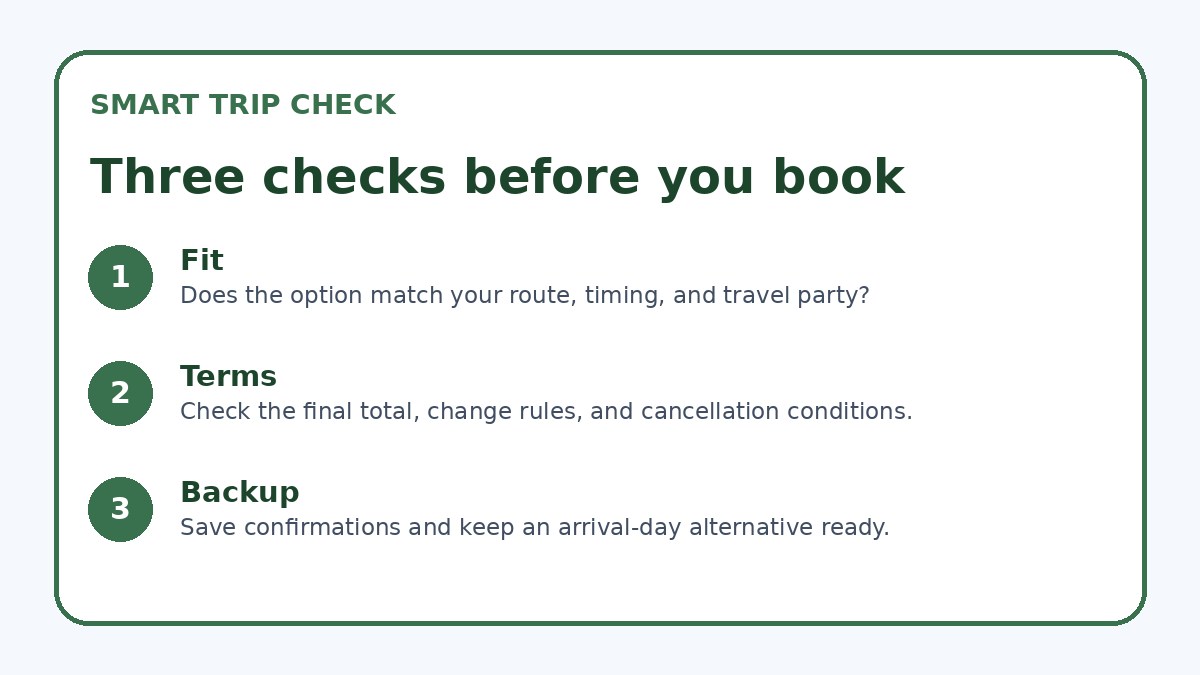
Confirm insurance wording, exclusions, deposit, fuel, mileage, and return terms on the final page.
Pickup and return friction: minimizing wasted time
Pickup and drop-off add friction that often negates the perceived freedom of driving. Airport locations usually have dedicated counters and shuttle times; downtown city-center offices may be quicker but could be harder to reach from some hotels. Confirm the rental desk’s precise address and the vehicle handover process—will an agent meet you curbside, or must you take a shuttle? Ask how long the pickup typically takes, whether there’s a fast-track for corporate renters, and what documents accelerate the process. Consider collecting the car outside peak arrival windows to reduce wait times and the chance of paperwork errors.
Return logistics are just as important. Late-evening returns may require after-hours drop boxes, additional checks, or pending charges that take days to reconcile. If your flight departs early, calculate extra time for refueling, inspection, and potential traffic to the terminal. Ask about fuel policies and whether providing a fuel receipt is acceptable instead of refilling for you. Clarify cleaning and damage inspection procedures so you can photograph the car at pickup and return—timestamped photos resolve most disputes quickly.
Car rental terms to verify
- Map every meeting location and mark nearest MRT stations, bus stops, and taxi ranks to compare door-to-door times.
- Request a PDF of the rental agreement and highlight CDW, deductible, third-party limits, and any exclusions to send to your travel manager.
- Confirm exact pickup and drop-off addresses, expected wait times, and whether after-hours return procedures apply to your flight schedule.
- Photograph the vehicle (exterior and interior) with timestamps at pickup and before return; keep copies for expense reporting.
- Identify two reliable taxi companies and download a ride-hail app for quick transitions when a car becomes impractical.
- Ask your company card provider or insurer for written confirmation of rental coverage specifics and whether it acts primary or secondary.
A non-driving fallback: build a clear plan if you decide not to rent
Even if you plan to rent, prepare a “no-car” contingency in case delays, paperwork, or changing schedules make driving impractical. Identify the closest MRT stations to your main meeting venues, save the relevant line maps offline, and list reliable taxi stands or ride-hailing pickup points near those stations. Keep a buffer of time in case you must switch mid-trip from driving to transit, and pre-download apps you’ll need for taxis, mapping, and contactless payments. This fallback ensures you won’t miss critical meetings if the car becomes unavailable or traffic renders driving inefficient.
Also prepare logistics for moving samples or equipment without a rental: check whether hotels offer luggage transfer or temporary storage, and whether local courier services can move materials between sites on short notice. When possible, schedule important client or site visits at locations near major transit hubs to make the transition easier. Having phone numbers for a couple of trusted local taxi companies, your hotel concierge, and a ride-hail app account saves time and reduces stress when plans change.
Car Rental & Road Trip questions travelers ask
Is driving in Taipei difficult for business travelers used to Western cities?
Driving in Taipei is manageable but differs from many Western cities: traffic can be dense during peak hours, lanes are narrower, and scooters weave through traffic. Signage includes English on major roads and exits, but local driving habits and frequent short-distance lane changes require attentive defensive driving. If unfamiliar with city driving or the local signage, consider hiring a driver for complex itineraries or rely on public transit during central-city meetings. Always verify whether your rental agreement and insurance cover you for city driving and any possible traffic violations.
Can I rely on my company credit card’s rental insurance in Taiwan?
Credit card coverage varies by issuer and country rules. Some cards offer primary coverage and others only secondary protection, meaning your personal or company liability could be exposed. Confirm the exact terms with your card provider before booking: ask whether coverage applies in Taiwan, which types of vehicles are included, whether a deductible applies, and whether certain uses (like transport of goods or off-road driving) are excluded. Ask for written confirmation to present at the rental counter if asked.
How should I handle parking and fines during a short business trip?
Parking space is limited in central Taipei and many commercial areas use paid parking lots or meters; check whether your hotel or meeting venue offers validated parking. Use official parking lots rather than curbside parking to avoid fines or towing. If a traffic ticket or parking fine occurs, note the issuing authority and document the citation; many fines require payment through designated municipal channels, so keep receipts. If unsure, ask the rental company how fines are handled—some pass administrative fees to renters—so you can proactively budget for potential charges.
Final decision note
For most business travelers spending the bulk of their time inside Taipei’s core business districts, public transit combined with occasional taxis is the practical, low-stress choice. Drive when your schedule forces travel to outlying districts, multiple sites in a single day, or when you must move bulky materials; do so only after you’ve mapped stops, verified insurance wording, and planned pickup and return logistics. Whatever you choose, prepare a non-driving fallback with transit routes, local taxi contacts, and digital maps. Before finalizing any rental, read the contract’s exact phrasing on liability and ask your insurer or card issuer for written coverage confirmation so you can travel with confidence.
Continue planning
Check current options and final conditions
Use the provider page to confirm live availability, the final total, cancellation terms, and every condition that matters to your trip.
This evergreen planning guide was created with AI-assisted drafting and a structured quality review. It does not display live prices, schedules, availability, visa guidance, or provider rankings. Verify current details before booking. Some links are affiliate links; we may earn a commission at no additional cost to you.