If you’re travelling from Sydney to Canberra with extra luggage, first decide whether you prioritise simplicity, cost, door-to-door convenience, or speed. For most people with bulky or numerous bags, the practical choice leans toward road-based options (private car, rideshare or coach) for minimal handling. Trains can work well if you value onboard space and a stable ride, but you must check luggage allowances and station transfer friction. Flights are seldom convenient once you include transfers and security time when carrying lots of gear. This guide focuses on real, end-to-end decisions: how each mode fits at terminals, handling at pick-up/drop-off points, transfer logistics in both cities, timing flexibility, and what to do if your plan is disrupted. Read on to weigh tradeoffs so you can choose an approach that keeps your luggage manageable from door to door.
Choose a mode: rail, coach, drive, or a mix
Start by matching your luggage profile to transport attributes. If you have oversized boxes, sports equipment, or several large suitcases, a private car or scheduled coach often demands the least manual handling — luggage typically stays in the vehicle hold or the boot until you arrive. A train provides a smooth ride and room for items, but getting to and from stations may involve stairs, lifts, or short taxi rides that add handling. Consider whether you can consolidate bags into fewer, sturdier pieces; fewer items are easier to move through terminals and into vehicles.
A mixed plan — for example, driving to a suburban train station with free parking, then taking the train for the main leg — can balance convenience and comfort. That requires planning parking permits and understanding station facilities. Also weigh door-to-door time: while trains can be faster on paper, the actual time to load heavy bags into a station, ride elevators, and transfer at your destination can be longer. Always list each transfer point and imagine moving your luggage through it to judge friction.
Choose the end-to-end journey plan
| Journey approach | Best for | Friction to check |
|---|---|---|
| Private car or hire with driver | Maximum control over door-to-door transfers and minimal bag handling. | Usually higher cost and parking or drop-off restrictions in city centres. |
| Scheduled coach service | Low-handling of luggage with loading into holds and central drop-off points. | Fixed schedules and potential walking distance from coach terminals to final door. |
| Rail (train) with consolidated transfer | Smooth ride and onboard space if you can manage station transfers. | Station access, stairs and short transfers can increase handling and time. |
| Mixed plan (drive to station or courier ahead) | Balancing convenience, cost and ride comfort while reducing handling at busy hubs. | Requires coordination, parking planning, or trust in a courier to handle luggage safely. |
Check live intercity options
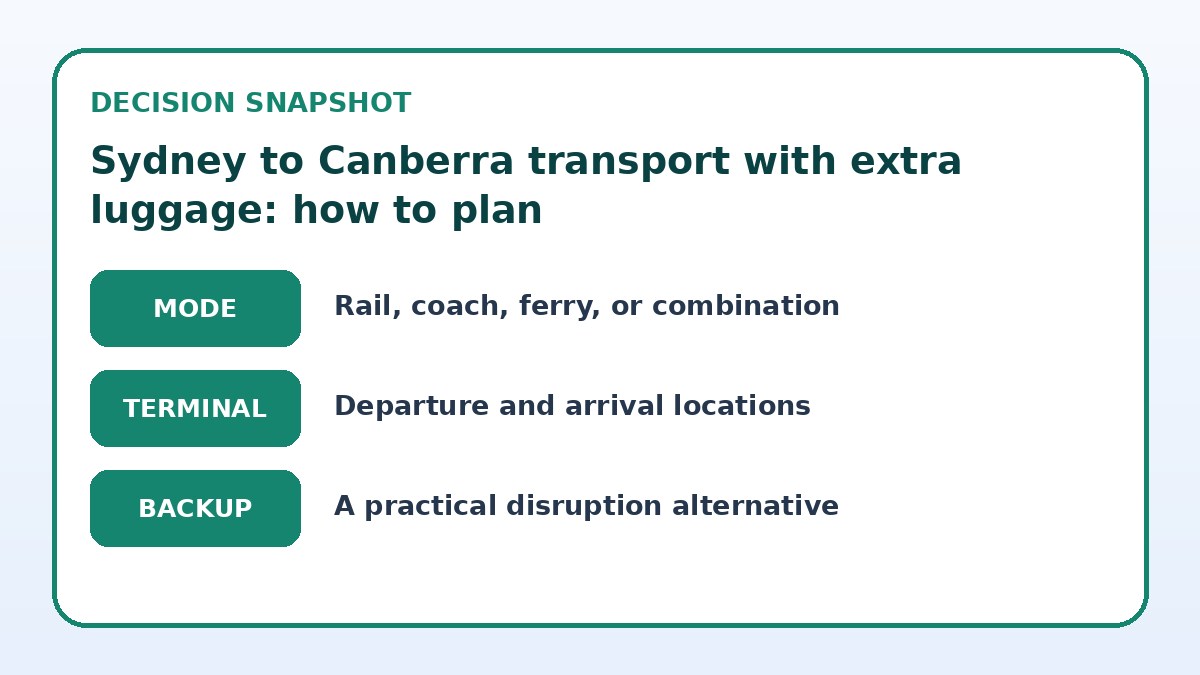
Look beyond the ride itself and compare terminals, transfers, luggage, and arrival fit.
Terminal fit and transfer friction
Examine the terminals and transfer steps at both ends: your home pickup, Sydney departure point, Canberra arrival, and final drop-off. Ask if there are dedicated drop-off zones, short-term parking, or lift access. For train travel, check whether platforms have lifts or ramps and how far the platform is from station exits. For coach services, find out where coaches stop — central coach terminals are usually closer to city bus links and taxis, reducing last-mile handling. If you’re driving or using a rideshare, verify how large vehicles are admitted to kerbside drop-offs.
Transfer friction isn’t just physical infrastructure — it includes timing and personnel. If you need assistance loading luggage, arrange for help ahead of time or bring a collapsible trolley. For places with limited staff, plan a portable ramp or extra hands. If you expect to arrive late at night, confirm lighting and safety for handling heavy items at the drop-off. Where possible, map the walking distance between transport hubs and your final door and measure whether carrying a bag that distance is feasible.
Timing flexibility and scheduling for large luggage
Timing matters more when you have extra luggage because longer loading and unloading times add up. If you chase the cheapest or earliest departure without considering luggage, you could get stuck with tight transfer windows and insufficient help. Choose services with flexible boarding windows or those that accommodate early check-in of larger items. When booking a coach or private transfer, specify bag volume and dimensions so the operator can allocate the correct vehicle. For trains, check if carriages have dedicated luggage spaces and whether staff allow storing bulky items in vestibule areas.
Build buffer time into every leg of your trip. Allow for slower movement through stations, parking the car and walking with bags to the terminal, or potential re-routing if a vehicle can’t access a narrow street. If you’re using public transport at either end to reach accommodations, check whether the taxi rank or ride-hailing pickup point is large-vehicle friendly. For overnight stays en route, pick accommodations with easy access and a known luggage handling policy to avoid multiple heavy lifts.
Compare the practical alternatives
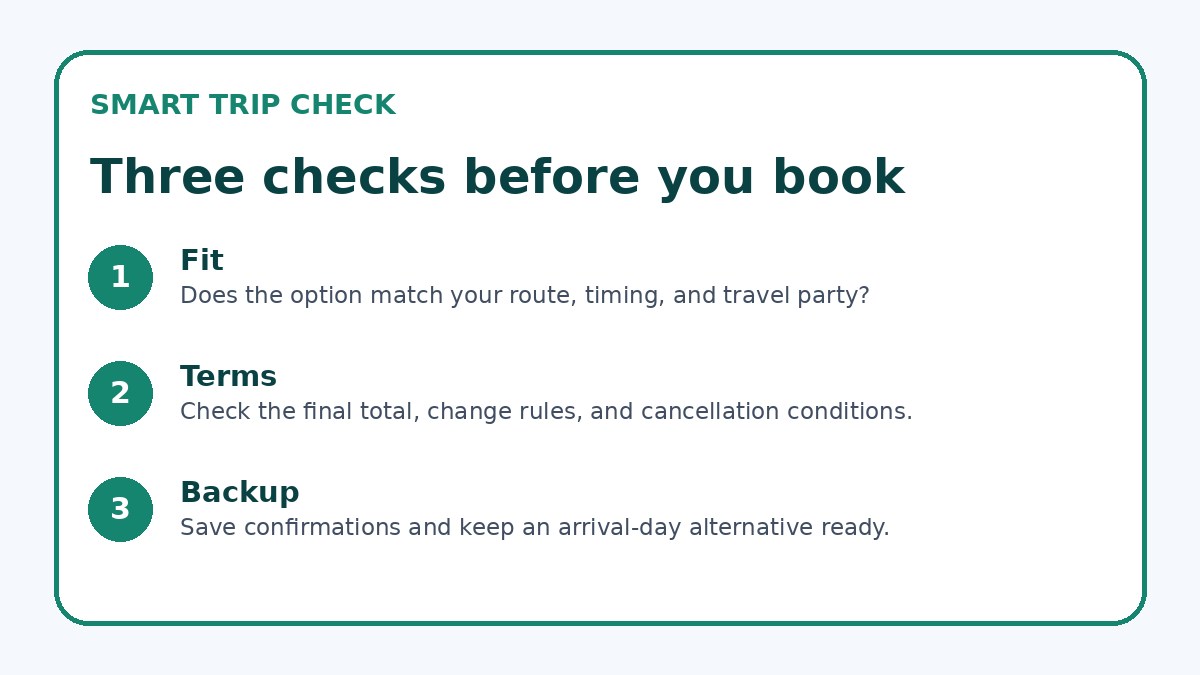
Use the final page to confirm what is actually offered on your dates and save a workable fallback.
Intercity travel checklist
- Measure and photograph each bag, note contents and keep a digital copy of measurements and photos on your phone and cloud.
- Call or check the provider’s booking page to confirm luggage dimensions, weight limits and whether oversized items are accepted.
- Book a vehicle or coach with adequate hold space and specify bulky items when you reserve to ensure appropriate allocation.
- Arrange help for station or terminal transfers: porter, hotel bell service, friend or paid loader at pickup and drop-off.
- Pack a compact, sturdy trolley or shoulder straps for shorter walks and consolidate items into as few bags as practical.
- Identify two contingency options (alternate service, taxi company, or local courier) and save their contact details on your phone.
Disruption backup and contingency planning
Large luggage magnifies the pain of delays or cancellations. Before you travel, identify at least two fallback options for each leg: an alternate coach or train, a taxi company that operates larger vehicles, or a local courier that can move a box ahead of you. Keep digital and printed copies of confirmation numbers and photographs of your luggage so you can prove ownership if items are separated. Have a charged phone, portable battery and contact numbers for help. If you anticipate fragile or high-value items, consider short-term insurance and itemized packing lists.
Communicate your plan with helpers at both ends — hosts, hotel staff or pickup drivers — so they’re ready for your arrival window. If a scheduled connection is missed, prioritize solutions that minimize additional handling: a direct taxi or courier to move luggage while you catch a later public-service leg is often the simplest split strategy. Finally, when you book, verify baggage rules, vehicle size options and terminal pickup locations on the provider’s final booking page — including any notes about oversized items or special assistance.
Rail & Intercity Transport questions travelers ask
Can I take oversized sports equipment or multiple suitcases on trains between Sydney and Canberra?
Train policies vary by operator and can change, so always check the operator’s baggage rules on their booking page before you travel. Many trains accommodate standard suitcases and some equipment if you can safely store it in luggage racks or vestibule areas, but very large items may need prior approval. If station access involves stairs or narrow platforms, consider arranging assistance or using a local taxi for the station-to-door leg. When in doubt, splitting the journey into a road transfer and shorter rail segment usually reduces handling risk.
Is it better to ship luggage ahead of time or carry everything with me?
Shipping luggage can save you effort on the day of travel, especially for heavy or bulky items, but it adds coordination: scheduling pickup, drop-off addresses, and insurance coverage. If your items are fragile, valuable, or urgently needed on arrival, carrying them reduces the chance of loss or delay. For non-urgent, bulky goods, a reputable courier can deliver directly to your Canberra address and let you travel lighter. Compare door-to-door convenience, transit time, and the reliability of local couriers; verify terms and pick-up/drop-off windows on the courier’s booking page.
What should I check when booking a coach or private transfer with extra luggage?
Confirm the vehicle type and luggage capacity, and explicitly describe any oversized pieces when booking. Ask where the coach or car will load and unload in both Sydney and Canberra and whether kerbside drop-off is permitted. Check pickup and drop-off flexibility: some services allow door-step collection for an extra fee, which can be worth it if you have heavy bags. Finally, save the operator’s contact details and re-confirm your luggage requirements shortly before departure so the provider can allocate space or a suitably sized vehicle.
Final decision note
Traveling from Sydney to Canberra with extra luggage is a planning exercise as much as a booking decision. Focus on modes and combinations that minimise handling and transfers: private cars and coaches reduce repeated lifts, trains offer comfort if station access is easy, and mixed strategies can combine strengths. Verify luggage policies, vehicle size and terminal access on the provider’s final booking page before you commit. Keep contingency contacts for taxis or couriers, bring tools such as a trolley and straps, and allow extra time at each transfer. With those steps you’ll reduce stress, protect your belongings and make the journey as straightforward as possible. For live availability and to compare current schedules, you can check Trip.com as one of several comparison points.
Continue planning
Check current options and final conditions
Use the provider page to confirm live availability, the final total, cancellation terms, and every condition that matters to your trip.
This evergreen planning guide was created with AI-assisted drafting and a structured quality review. It does not display live prices, schedules, availability, visa guidance, or provider rankings. Verify current details before booking. Some links are affiliate links; we may earn a commission at no additional cost to you.