If you’re moving between Kuala Lumpur and Singapore with oversized suitcases, musical instruments, or several checked bags, the practical choice isn’t only the fastest ride — it’s the door-to-door friction. Start by deciding whether you want fewer handoffs (private transfer or direct coach), more storage room and comfort (train or private van), or the lowest-physical-effort option for getting luggage through customs and between terminals. This article gives a straight answer up front: for most travelers with extra luggage, a private or pre-booked airport-style door-to-door transfer wins on total convenience; if that isn’t possible, choose a scheduled coach with checked-baggage handling or a point-to-point train with minimal transfers. Read on for how to evaluate terminal fit, transfer friction, timing flexibility, and a disruption backup for each approach so you can book with clear expectations and fewer surprises.
Terminal fit: where luggage meets the curb
Before choosing rail, coach, private transfer, or a mixed option, map how each terminal or station aligns with your start and end points. Some coaches and trains use central bus terminals or city railway stations that put you within walking distance of hotels, while others use peripheral terminals that require a final taxi or rideshare. Consider whether the pick-up and drop-off points have sheltered loading zones, luggage trolleys, escalators/elevators, or long walkways — these factors matter more than travel time when you’re handling heavy suitcases.
Ask practical questions: can the vehicle load directly at curbside, or will you need to haul bags across a plaza or down stairs? If you’re traveling with fragile or heavy items, check whether a transfer driver will assist with loading and unloading. For arrivals in Singapore, also think about terminal layout for immigration and baggage reclaim when comparing door-to-door times — a longer ride with minimal transfers often beats a shorter ride that dumps you at a distant terminal.
Choose the end-to-end journey plan
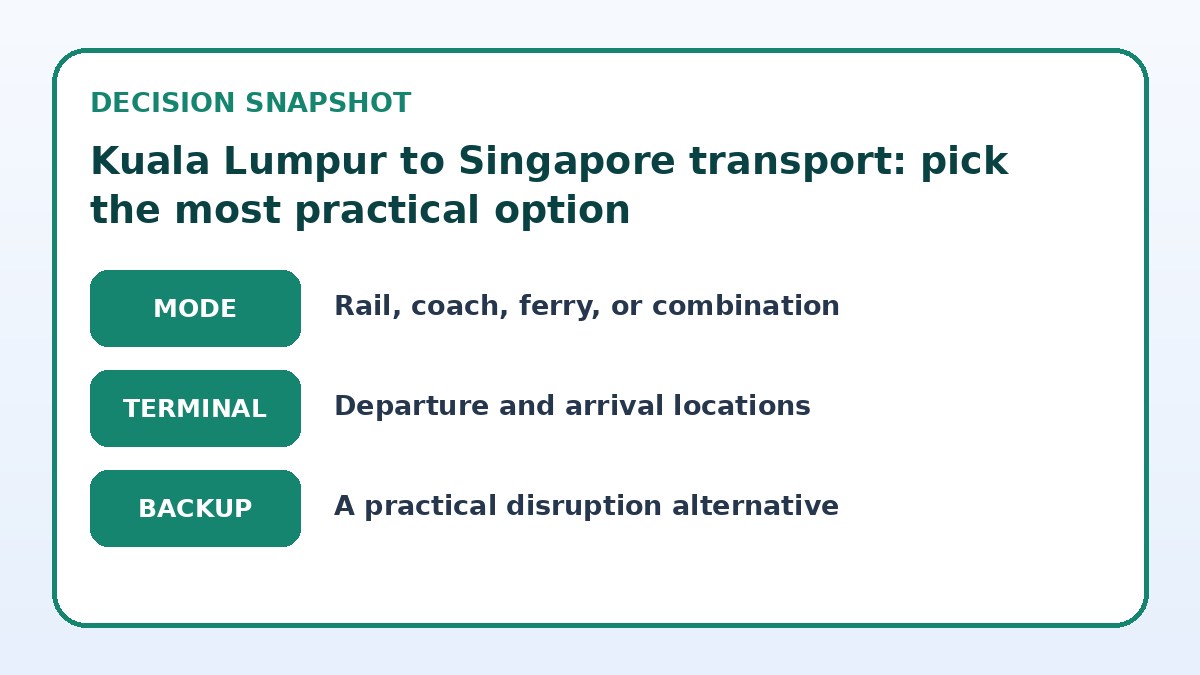
| Journey approach | Best for | Friction to check |
|---|---|---|
| Pre-booked private door-to-door transfer | Travelers prioritizing minimal handling, direct pickup and hotel drop-off with guaranteed vehicle space for large items. | Higher cost and need to confirm vehicle size and driver assistance when booking; verify final booking page for vehicle limitations. |
| Scheduled long-distance coach with checked-baggage handling | Those wanting a balance of lower cost and reduced bag-carrying during the ride with staff-managed loading. | Fixed departure times and terminal locations may require a taxi at either end; confirm luggage policies on the booking page. |
| Point-to-point train plus short taxi or rideshare | Travelers who prefer a smooth ride and onboard storage but can manage one quick transfer at each end. | Station locations and platform access affect door-to-door time; check station layouts and elevator availability before booking. |
| Mixed approach (coach/train + pre-booked last-mile transfer) | Budget-conscious travelers who want predictable last-mile handling and fewer heavy lifts while keeping costs moderate. | More bookings to coordinate and slightly higher complexity; verify each provider’s luggage rules and connection windows. |
Check live intercity options
Look beyond the ride itself and compare terminals, transfers, luggage, and arrival fit.
Luggage and transfer friction: hands-on realities
Count every handoff. Each time you move luggage between vehicle and terminal you add time, sweat, and risk. A private transfer that meets you at your hotel and drops you at your Singapore door typically involves two handoffs: loading and unloading. A scheduled coach with checked luggage may handle loading for you at the terminal but often requires you to walk from the coach stall to the ticket hall or a connecting transport spine. Factor in the comfort and staffing level of each mode; staffed services reduce friction.
Measure friction not only by number of handoffs but by quality — is there a luggage compartment, are there ramps or lifts, does the service accept odd-sized items, and will staff help? If you must use a train for part of the route, verify platform access (elevators vs. stairs) and whether onboard storage is secure. Finally, plan for peak times when terminals and access points get crowded; even a small extra bag becomes a problem when every corridor is jammed.
Timing flexibility: schedules, windows, and buffer planning
Your tolerance for strict schedules should drive the choice. If you need to arrive at a specific time, private transfers or point-to-point rides offer predictability because they depart on your schedule and avoid fixed timetable constraints. Scheduled coaches and trains are typically cheaper but run on fixed timetables; if you miss one, you may face long waits or a complex rebooking process while managing cumbersome luggage.
When choosing a fixed-schedule service, build buffer time around immigration, customs, and possible traffic delays. Cross-border journeys can incur additional waiting at border control that isn’t reflected in tabled travel time. If you prefer flexibility, consider a hybrid plan: take a coach or train for the main leg but reserve a short taxi or rideshare near each terminal to absorb timing slips without over-stressing your luggage handling capacity.
Compare the practical alternatives
Use the final page to confirm what is actually offered on your dates and save a workable fallback.
Intercity travel checklist
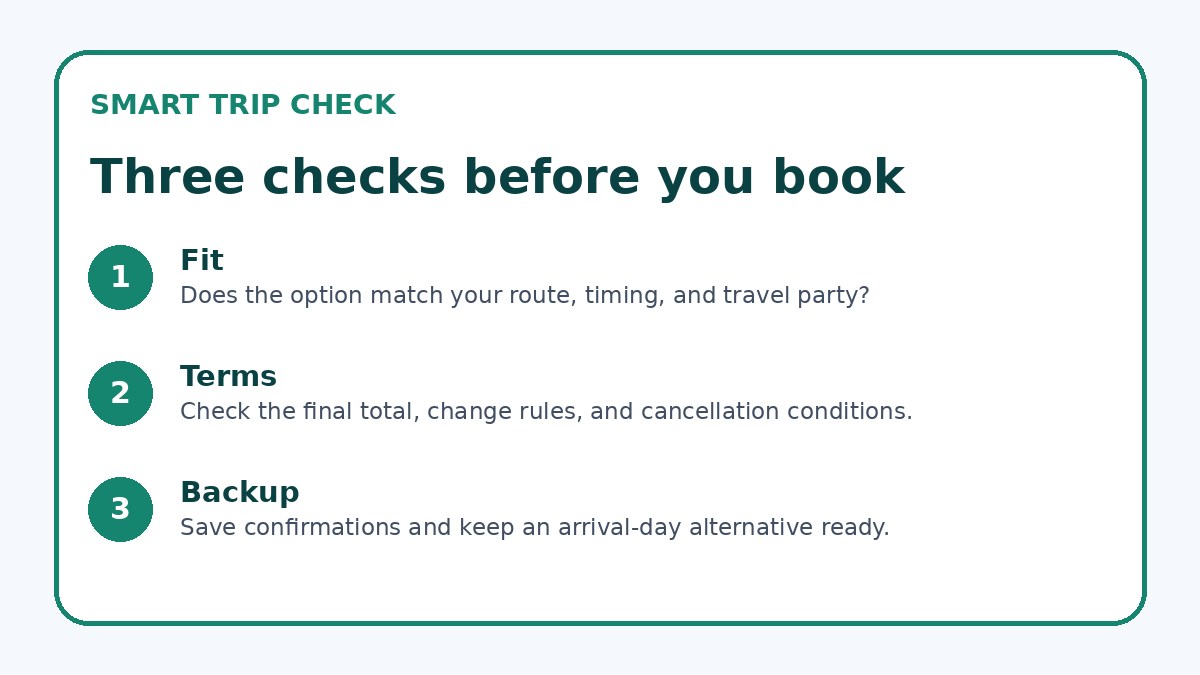
- Measure luggage dimensions and total count, then compare them with the vehicle size you will request or the carrier’s stated allowance before booking.
- Call or message your chosen operator to confirm curbside pickup/drop-off points, driver assistance for loading, and whether odd-sized items are accepted.
- Plan door-to-door timing that includes expected immigration, customs, and a buffer for cross-border delays rather than just advertised on-road time.
- Download or screenshot booking confirmations, driver contact numbers, and booking reference codes for offline access during the journey.
- Pack a light carry-on with essentials and valuables so you can separate immediate needs from bulky checked items in case of a delay.
- Identify an emergency backup (local taxi company, a rideshare app, or an alternate coach) and set aside a small contingency budget for last-minute transfers.
Disruption backup: what to prepare for if plans go wrong
Every plan should include a clear disruption fallback. For travelers with extra luggage, that backup often needs to prioritize minimizing additional handling. If a coach is canceled, having a list of reliable taxi or vehicle-for-hire companies that accept large luggage is essential. If you’re aboard a train and face delays, know where the nearest secure luggage storage or staffed station is so you can avoid carrying bags during long waits. Keep digital and printed copies of booking confirmations and a photo of your luggage for easier recovery if items are misplaced.
Also plan financially and logistically: set aside a small fund for an unplanned private transfer, and pack a light day bag with essentials you can carry if main luggage is delayed. Make contingency calls before departure to confirm loading policies and assistance options with your chosen carrier. Finally, verify final booking pages for the provider you select — whether coach, operator, or private-transfer company — so you understand their luggage allowances, vehicle types, and any service-level guarantees.
Rail & Intercity Transport questions travelers ask
Can I take oversized or sports equipment between Kuala Lumpur and Singapore?
You can often transport oversized items, but rules vary by mode and operator. Before booking, check the provider’s final booking page or contact customer service to confirm length, weight, and packaging limits. For private transfers, specify item dimensions so the company can allocate an appropriate vehicle. For coaches and trains, verify whether items count as checked baggage, if special handling fees apply, and whether staff will load them. If your equipment is fragile, consider hard cases and extra padding, and ask about liability or damage policies on the carrier’s booking page.
How should I evaluate pickup and drop-off locations for the least walking with bags?
Start by locating the exact terminal names and street addresses rather than just the city name. Use mapping tools to view walking routes from the drop-off point to your lodging and spot stairs, elevators, and long corridors. If the listed stop is a central bus terminal, check whether coaches unload curbside or in a separate bay requiring luggage transfer. For trains, confirm platform access and whether elevators serve both platforms. When in doubt, call the operator to request curbside loading and request that arrival notes include a specific meeting point to reduce searching with heavy bags.
What should I verify on a provider’s final booking page before I confirm?
On the provider’s final booking page, verify the exact pickup and drop-off addresses, vehicle type and capacity, luggage allowances (number, size, and weight), any extra fees for oversized items, cancellation/change terms, and contact instructions for on-day communication. Also confirm meeting time windows, boarding procedures, and whether driver assistance is explicitly included. If transfers cross borders, confirm who handles immigration waits and whether there are scheduled stops. If availability matters, you can check Trip.com or the provider’s official page for current options, but always rely on the carrier’s booking confirmation for final rules and limits.
Final decision note
Choosing the most practical Kuala Lumpur to Singapore transport when you have extra luggage comes down to minimizing handoffs and matching terminal locations to your door-to-door plan. If convenience and fewer lifts are top priorities, a pre-booked private transfer provides the most straightforward experience — provided you confirm vehicle size and driver assistance at booking. Scheduled coaches and trains remain excellent alternatives if you verify luggage handling, station access, and build buffers for border processing. Whichever option you pick, confirm all luggage rules on the provider’s final booking page, prepare a light carry-on for essentials, and have a clear disruption backup so luggage doesn’t become the trip’s weak link.
Continue planning
Check current options and final conditions
Use the provider page to confirm live availability, the final total, cancellation terms, and every condition that matters to your trip.
This evergreen planning guide was created with AI-assisted drafting and a structured quality review. It does not display live prices, schedules, availability, visa guidance, or provider rankings. Verify current details before booking. Some links are affiliate links; we may earn a commission at no additional cost to you.