Practical answer first: for most families making the trip from Seoul to Taipei, choose the Seoul airport that minimizes total door-to-door time and the number of transfers — not necessarily the one with the lowest headline fare. The route-vs-fare tradeoff matters: a cheaper ticket out of a less convenient airport can increase travel stress, extra transit costs, and baggage-handling risk. Before you search prices, pin down exact travel dates, number and ages of travelers, stroller or car seat needs, and whether you need checked baggage or extra legroom. With those details ready you can compare total travel time, connection complexity, and fare conditions — then decide whether saving money is worth extra time and hassle for your family.
See live routes for your exact travel day
Compare direct and connecting choices with the same baggage and traveler details.
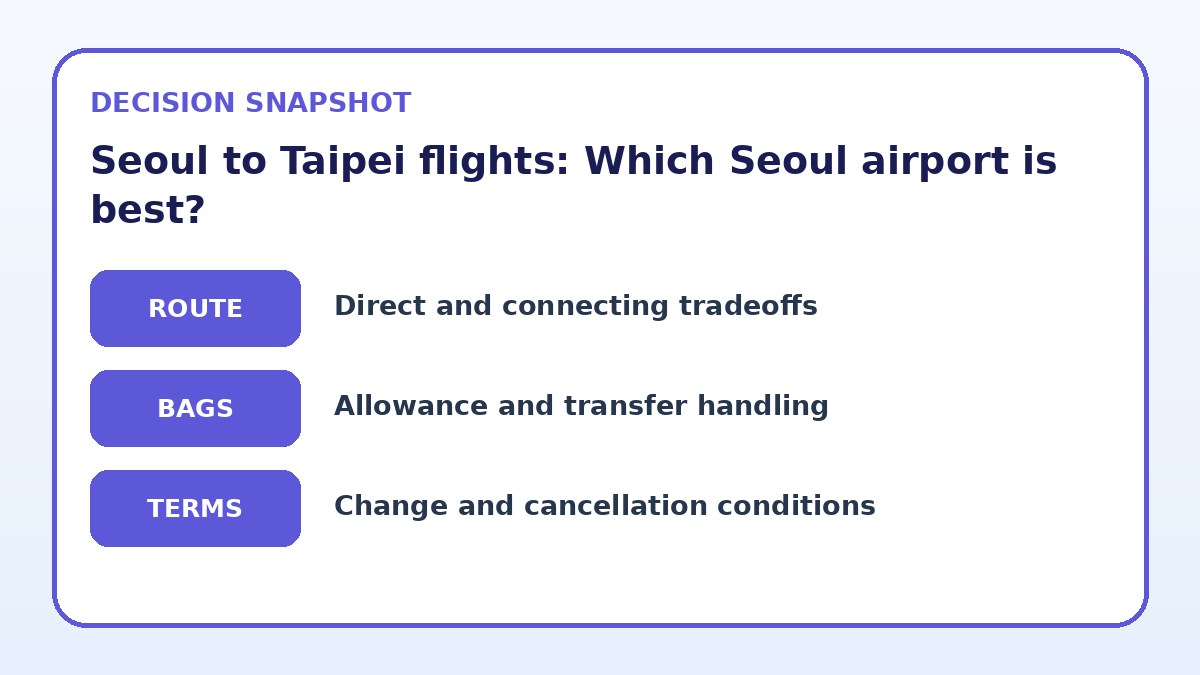
Routing: direct vs connecting and airport convenience
When planning Seoul to Taipei flights for a family, map out the full routing options from each Seoul airport. A direct flight from the most convenient airport will usually be the least disruptive option: fewer boarding lines, fewer security checks, and less chance of lost luggage. But direct services may depart from one airport while cheaper or more frequent connections depart from another. For families, those tradeoffs should be considered in terms of time spent transferring, the logistics of moving children and baggage between terminals, and whether the transfer requires leaving and re-entering security or changing transport modes.
Airport convenience includes how you reach the terminal from your home or hotel. One airport may be faster by car but require longer public transit time; the other might be easier to access by airport limousine or a single direct train. Also check ground-side amenities at each departure airport—family lanes, elevators, diaper rooms, and play areas matter when you have young children. When comparing routing, sketch the full day: travel to the airport, check-in and security, potential transfer waits, and arrival logistics in Taipei. This full timeline helps families see whether a lower fare is worth extra travel time or complexity.
Baggage and connection risk: what families need to avoid
Baggage handling represents a major pain point for families. Every transfer multiplies the chance of delayed or mishandled baggage, and juggling checked bags with strollers or car seats increases stress. If a lower-priced option requires an inter-airport transfer or an additional connecting carrier, confirm whether the airlines protect through-checked baggage and who handles baggage transfers. If carriers don't transfer baggage through to the final destination, you may need to collect and re-check luggage — a time-consuming and tiring process with children in tow.
Also check whether the airport layout forces long walks, shuttle rides, or multiple security checks when connecting. Those physical demands matter if you travel with toddlers or grandparents who need assistance. Verify stroller gates, priority boarding, and early boarding options when comparing airports and carriers. Where possible, favor routings that minimize bag handling and eliminate terminal changes. On your shortlist, write down where you would pick up and re-check baggage for each option and how long local authorities recommend for inter-terminal transfers.
Compare flight-selection strategies
| Flight strategy | Best for | Risk to check |
|---|---|---|
| Fly from the nearest Seoul airport regardless of fare | Families prioritizing shortest door-to-door time and minimal transfers | May pay more per ticket; fewer flight choices on some dates |
| Choose the cheapest airport fare after comparing total costs | Budget-conscious families willing to accept extra transfers or travel time | Extra transit and baggage handling can add hidden costs and stress |
| Pick an airport with more frequent service and schedule flexibility | Families who value backup options and easy rebooking on short notice | Might require longer ground travel to the airport or slightly higher fares |
| Prioritize routings that allow through-checked baggage and single-ticket connections | Families with multiple checked items and infants needing simplified transfers | These tickets can cost more but reduce the risk of self-transfer complications |
Recheck the complete itinerary
Confirm airports, connection handling, baggage, and change conditions before deciding.
Schedule fit: timing, flexibility, and family routines
Flight times should sync with your family’s routines: naps, meal times, and bedtimes. A very early departure that reduces fare might force an uncomfortable wake-up and longer pre-flight time; a later flight might increase hotel costs or add waiting time on arrival. Look beyond departure time and evaluate the whole schedule: arrival time in Taipei, potential delays during the day, and whether you’ll be traveling to your accommodation late at night. For families, minimizing disruption often means choosing schedules that match sleep windows and reduce the likelihood of missed naps or cranky children.
When plans are uncertain — a sick child, or a tight connecting train home to the airport — flexible tickets or refundable options are helpful. Compare the frequency of flights from each Seoul airport on your chosen dates: more departure options from a single airport can be a safety net if you need to change times. Also consider ground connections at the destination: arriving during daylight may make transfers easier and safer. Keep a list of acceptable time windows for your group and use those to filter search results rather than only chasing the lowest fare.
Flight details to verify
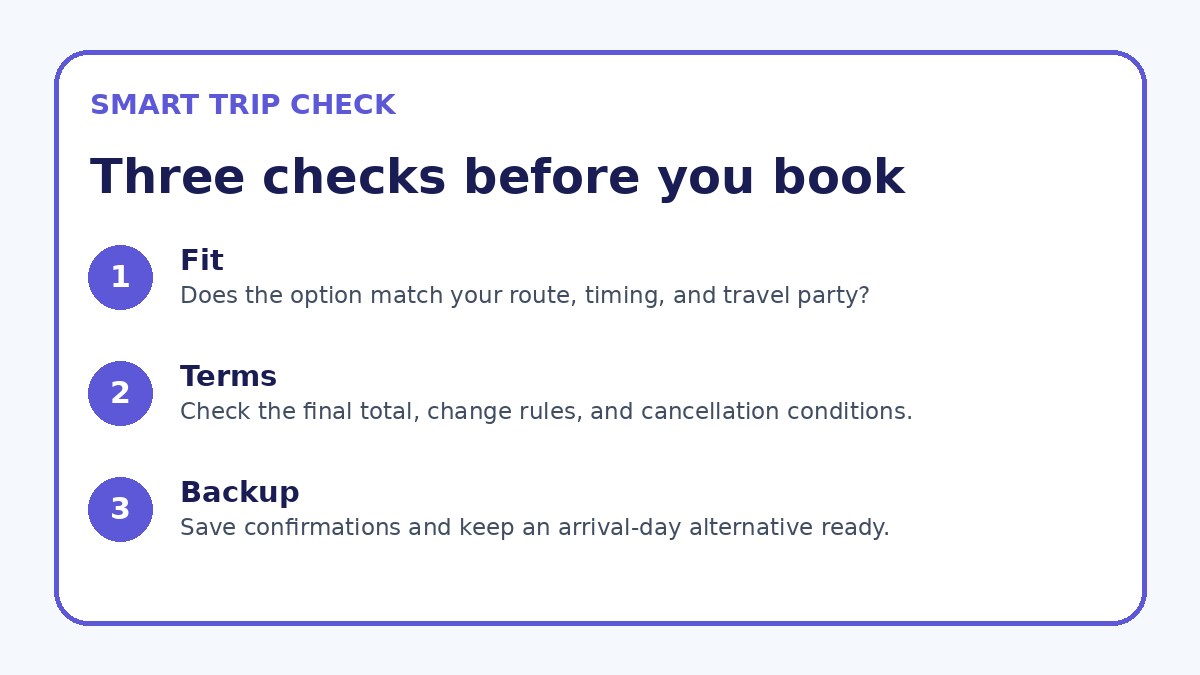
- Write down exact travel dates, number of adults and children, ages, and any infant equipment (stroller/car seat) before searching flights.
- Measure door-to-door time: estimate transit to each Seoul airport at your planned travel time to compare total trip duration.
- Confirm whether the ticket allows through-checked baggage for any connections and whether you must re-check luggage between legs.
- Compare fare rules on the airline’s final booking page: change fees, cancellation terms, included baggage, and seat selection policies.
- Plan for airport logistics: find family facilities, priority lanes, and transfer procedures at each Seoul airport on official airport pages.
- Save alternative flight times and airports in case you need to rebook; note carrier phone numbers and the original booking reference before travel.
Fare conditions and what to verify before booking
Fare conditions can change the practical value of any ticket. Families should verify change and cancellation rules, baggage allowances, seat selection policies, and whether infant fares or child discounts apply. Low-cost options sometimes look appealing but often charge extra for essentials like checked bags, seat assignments, and priority boarding — all valuable for families. Before you commit, read the fare and fare-basis on the carrier’s booking page to confirm what is included and what costs extra; the final provider page is the authoritative source for those details.
Also confirm whether your chosen ticket allows through-ticketing for connections and whether separate tickets require self-transfer. If booking through third-party sites compare the provider’s change and refund handling with the airline’s published policy. Trip.com can be one place to check availability and conditions, but always verify final baggage rules, connection allowances, and boarding policies on the airline’s official booking page before purchase. Add a quick row to your comparison with exact dates, passenger ages, and baggage needs so you can read relevant fare notes accurately.
Flight Guide questions travelers ask
Should I always pick the closest Seoul airport when flying to Taipei with kids?
Not always. The closest airport can be the best choice if it offers a direct flight that matches your schedule and baggage needs, reducing transfers and transit time. But if the nearest airport only has limited service on your dates or forces an early/late departure that disrupts children’s routines, a slightly farther airport with better timing or fewer transfers may be preferable. Compare total door-to-door time, the number of handoffs for luggage, and whether you can realistically manage ground travel at the planned hours.
How do I check whether baggage will be transferred automatically between connecting flights?
Look for language about through-checking or interline baggage on the carrier booking page or in fare rules. If both legs are on the same ticket or are marketed as connecting flights, airlines often transfer baggage, but policies vary by carrier pair and fare class. When booking separate tickets, assume you must collect and re-check baggage unless the airline explicitly confirms otherwise. Always verify this detail on the airline’s final confirmation page and keep contact information handy in case you need assistance at the airport.
What schedule features matter most for families when selecting a Seoul departure?
Prioritize departure times that fit sleep and meal routines, minimize overnight arrivals, and reduce the need for long waits. Also consider flight frequency from the airport on your dates — more options reduce the impact of delays or last-minute changes. If traveling with infants, look for flights offering bassinets or extra legroom seats, and check boarding priority for families. Finally, factor in airport access: a flight five minutes earlier from a distant airport can be worse than a slightly later flight from the closer airport if it forces a rushed, stressful commute.
Final decision note
For families flying Seoul to Taipei, the most practical departure airport is the one that minimizes total travel time, reduces the number of transfers, and aligns with your children’s routines — even if the ticket costs a little more. Start by documenting exact travel dates, passenger details, and baggage needs; then compare complete itineraries rather than headline fares. Verify fare conditions, baggage transfer rules, and airport transfer logistics on the airline’s final booking page before purchase. By prioritizing schedule fit and lower connection risk, you’ll reduce stress and increase the odds of a smoother family journey to Taipei.
Continue planning
Check current options and final conditions
Use the provider page to confirm live availability, the final total, cancellation terms, and every condition that matters to your trip.
This evergreen planning guide was created with AI-assisted drafting and a structured quality review. It does not display live prices, schedules, availability, visa guidance, or provider rankings. Verify current details before booking. Some links are affiliate links; we may earn a commission at no additional cost to you.