Practical answer first: for most couples deciding between rail, coach, private car, or a mixed itinerary between Brisbane and Sydney, pick the option whose ticket flexibility matches how fixed your plans are and how much transfer and luggage hassle you want. If dates are fluid, look for changeable or refundable tickets and options that make same-day changes easy—if your plans are firm, a less flexible, lower-friction ticket might save stress. Consider where each terminal sits relative to your accommodation, how much walking or connecting transport you'll tolerate, and whether both travellers need identical booking protections. This article shows how to weigh terminal fit, luggage and transfer friction, timing flexibility, and a disruption backup for couples planning door-to-door practical travel rather than just the ride itself.
Terminal fit: where tickets leave you standing
Start by mapping both ends of the trip to your likely accommodations. Trains and major coaches usually serve central terminals; that can be a win for couples staying in downtown hotels because transfers are short, but it can add cost if your lodgings are elsewhere. A private car or hired driver drops you at the door; that’s convenient when carrying luggage or arriving late, but it shifts cost and cancellation policy risk onto a single provider. When you compare ticket flexibility, always factor in how far the terminal is from where you’ll be and whether travel time to and from terminals adds to the overall journey.
For each ticket you consider, check the terminal address, typical transfer options, and whether the operator sells integrated transfers. If a ticket type allows changes, find out whether changes are permitted only at stations or must be handled through a website or call centre. Couples should also consider splitting responsibilities—one partner managing luggage and the other handling check-in—so terminal layout matters. If you plan to combine modes (for example, coach into a regional hub then rail), verify platform and bay transfers to avoid long walks carrying baggage.
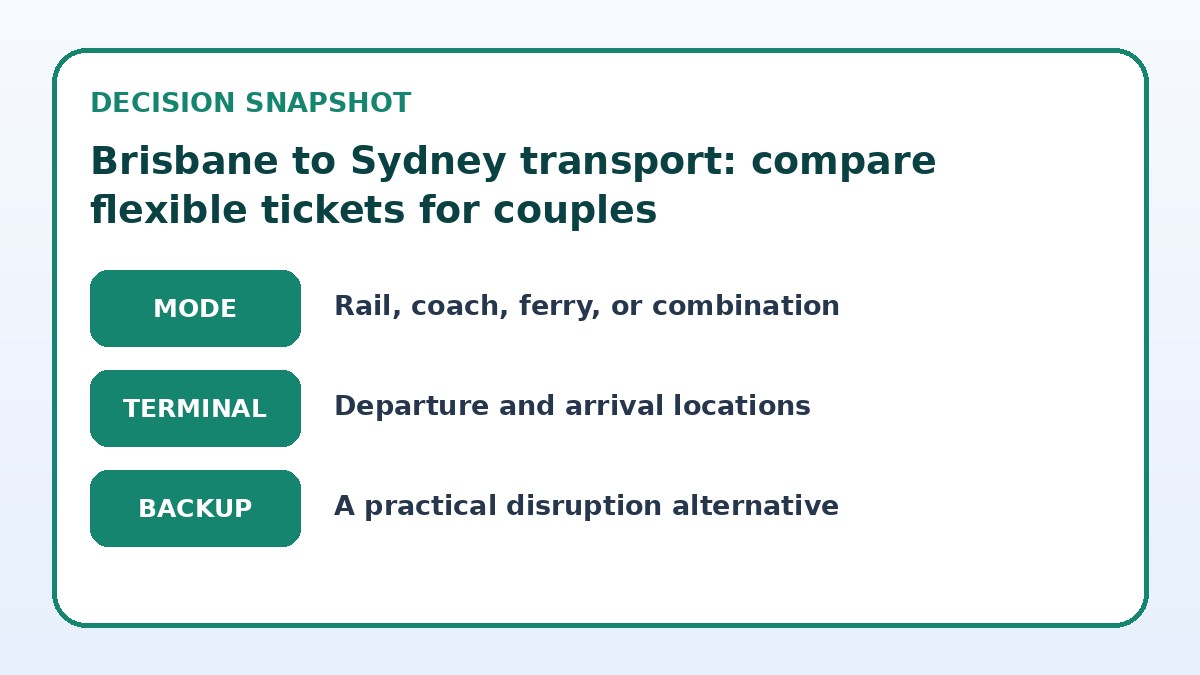
Choose the end-to-end journey plan
| Journey approach | Best for | Friction to check |
|---|---|---|
| Train-first approach (central terminals, reserved seats) | Couples staying in city centres who value comfort and predictable connections | May require earlier arrival to stations and verify reservation change rules for both travellers |
| Coach-first approach (direct stops, simpler fares) | Couples prioritising straightforward point-to-point routing and fewer transfers | Check baggage allowances and how easy it is to change dates or rebook after disruptions |
| Private car or chauffeur (door-to-door control) | Couples wanting privacy, flexible departure times and no terminal transfers | Higher cost and single-provider cancellation or change policies to confirm before booking |
| Mixed-mode plan (combine rail, coach, and local transfers) | Couples balancing cost, schedule options, and best terminal fit across the route | Requires careful verification of each ticket’s change policy and extra transfer coordination |
Check live intercity options
Look beyond the ride itself and compare terminals, transfers, luggage, and arrival fit.
Luggage and transfer friction: packing, pickups, and connections
Ticket flexibility isn’t only about date changes: luggage rules and transfer policies influence door-to-door practicality. Some intercity coaches and trains have generous space for suitcases, while others limit the number or size of items and may require heavy bags to be stored beneath the vehicle. Couples travelling with bulky gear should prioritise options that allow easy loading and unloading and that clearly state baggage allowances on the booking page. If you’ll change modes mid-route, ensure the connecting operator accepts transfer luggage and confirm whether you must reclaim and recheck baggage.
Think through transfer friction at both ends: a single direct transfer from hotel to terminal reduces the need to coordinate multiple rides and lowers missed-connection risk. If you’re comparing flexible ticket classes, find out how they treat missed connections and whether you can rebook onto the next service without penalty. Also check whether ticket types include assistance for mobility issues or stroller storage if that’s relevant. For couples, sharing one booking or holding separate flexible tickets can affect how baggage claims and rebookings are handled when plans change.
Timing flexibility: change policies, rebooking, and seat reservations
When flexibility matters, the key detail is how the provider processes changes and what fees apply. Some tickets let you change dates online with minimal cost and do not require contacting customer service, which is ideal when plans shift at short notice. Other fares may allow changes only through a phone line, require a fee or fare difference, or restrict rebooking windows. Couples should decide whether they both need identical change rights—sharing one ticket might be simpler, but separate tickets can offer independent flexibility if one partner’s schedule is more variable.
If seat reservations are used, confirm whether a flexible ticket allows free seat swaps or requires paying extra to change assigned seats on a different service. For journeys that might include connections, check whether a single flexible ticket covers the full itinerary or whether you’ll be holding multiple operator-specific tickets—this affects how easily you can rebook when a single leg changes. Always read the provider’s full change and cancellation policy on the booking confirmation page before you finalise payment.
Compare the practical alternatives
Use the final page to confirm what is actually offered on your dates and save a workable fallback.
Intercity travel checklist
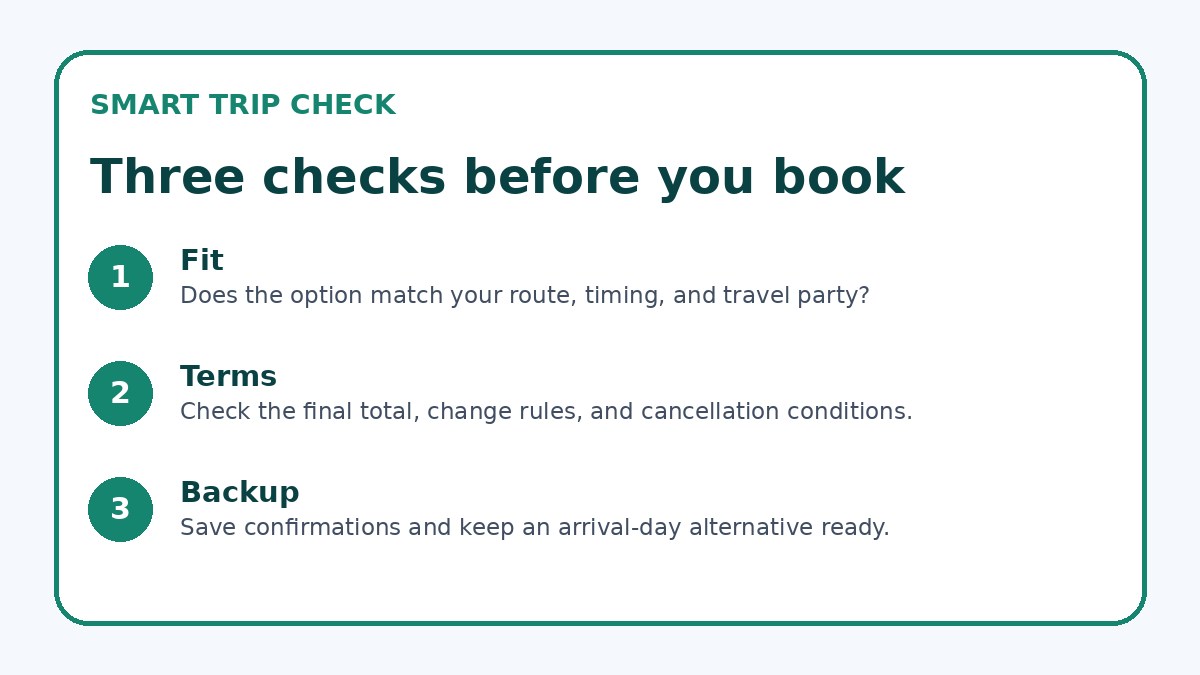
- Confirm terminal addresses and estimate door-to-door travel time from your accommodation on both ends.
- Read the ticket change and cancellation policy on the provider’s final booking page before you pay.
- Compare luggage allowances and whether you must reclaim or recheck bags during connections.
- Decide whether to book a single shared ticket or two separate flexible tickets and note implications.
- Save operator contact details and alternative transport options on your phone and a printed note.
- If disruption tolerance matters, shortlist backup modes and check how quickly you can rebook.
Disruption backup: practical plans if things go wrong
Build a realistic backup that deals with delays, cancellations, and missed connections. Flexible tickets that include same-day rebooking or vouchers are useful, but you must verify the exact terms before purchase. For couples, decide whether to buy higher-flex tiers that explicitly cover disruptions or rely on separate insurance—each approach shifts the balance between upfront cost and stress if the unexpected occurs. Also plan simple local backups, like knowing a nearby coach service or having a contact for a local driver to cover urgent segments.
Before you travel, store provider refund and change contacts for both partners, note alternative departure points, and identify at least one different transport mode you’d accept if your original leg fails. If you use third-party booking sites, double-check any change windows and fees on the operator’s final booking page—Trip.com can be useful to compare current availability, but always verify terms with the operator. Finally, for a truly door-to-door approach, consider booking flexible last-mile transfers that can be cancelled or moved without large penalties.
Rail & Intercity Transport questions travelers ask
Should couples buy one joint ticket or two separate flexible tickets for the Brisbane to Sydney route?
Choosing a joint ticket can simplify check-in and may keep your bookings linked for rebooking, but it ties both travellers to the same change rules. Two separate flexible tickets give each person independence to alter plans without affecting the other, which helps if one partner’s schedule is more uncertain. Consider how the operator handles group changes, whether shared tickets block adjacent seats when you need them, and whether the cost or penalties differ between single and separate bookings. Always verify change rules on the final booking page before deciding.
How do I compare flexibility across different transport modes for this route?
Compare the practical end-to-end consequences: where the terminal is relative to where you’ll stay, how luggage is handled, and exactly what the change and cancellation steps are. Look for tickets that let you change online quickly and check whether seat reservations transfer to new services. For mixed-mode plans, determine if a single ticket covers the whole itinerary or if you’ll manage multiple bookings. Verify these details on the operator’s booking confirmation pages, and use a comparison site like Trip.com as a starting point but confirm terms with the provider.
What’s the best disruption backup for couples travelling between Brisbane and Sydney?
A practical backup layers options: buy tickets with clear same-day rebooking or refund pathways when possible, keep alternative tickets available on a second booking channel if your schedule is critical, and know local coach or private car providers you could use at short notice. Make sure both travellers have access to booking confirmations and contact numbers. If you prefer not to buy higher-flex fares, consider travel insurance that covers missed connections, but verify how that insurance interacts with the operator’s refund or rebooking policies on their booking page.
Final decision note
For couples travelling between Brisbane and Sydney, flexibility is a tradeoff between cost, convenience, and control. Start by deciding how fixed your dates are, how much door-to-door friction you’ll tolerate, and whether you need independent change rights. Prefer modes and ticket classes that place terminals near your accommodation, provide clear luggage rules, and offer online rebooking when plans shift. Always read the provider’s full change and cancellation terms on the booking page before paying, and keep contact details and backup transport options ready. That way you’ll balance practical door-to-door planning with the ticket flexibility you need for a smoother trip.
Continue planning
Check current options and final conditions
Use the provider page to confirm live availability, the final total, cancellation terms, and every condition that matters to your trip.
This evergreen planning guide was created with AI-assisted drafting and a structured quality review. It does not display live prices, schedules, availability, visa guidance, or provider rankings. Verify current details before booking. Some links are affiliate links; we may earn a commission at no additional cost to you.