Practical answer first: before you search live, pick exact travel dates and the number of checked bags and carry-ons for every traveler, then compare direct versus one-stop options for total travel time and connection risk. For Los Angeles to Honolulu flights you’ll usually trade off a slightly higher fare for a nonstop that saves time and connection anxiety, or save money with a connection that increases complexity and baggage handling steps. Start by writing down departure airport (LAX or nearby), desired arrival window in Honolulu, number and size of bags, and any mobility or timing constraints. With those facts you can compare itineraries for schedule fit, baggage fees and transfer rules, and fare conditions like change/cancellation flexibility. This article walks you through routing choices, baggage and connection risks, scheduling tips, and what to verify on the carrier’s booking page before purchasing.
See live routes for your exact travel day
Compare direct and connecting choices with the same baggage and traveler details.
Routing: direct versus connecting options
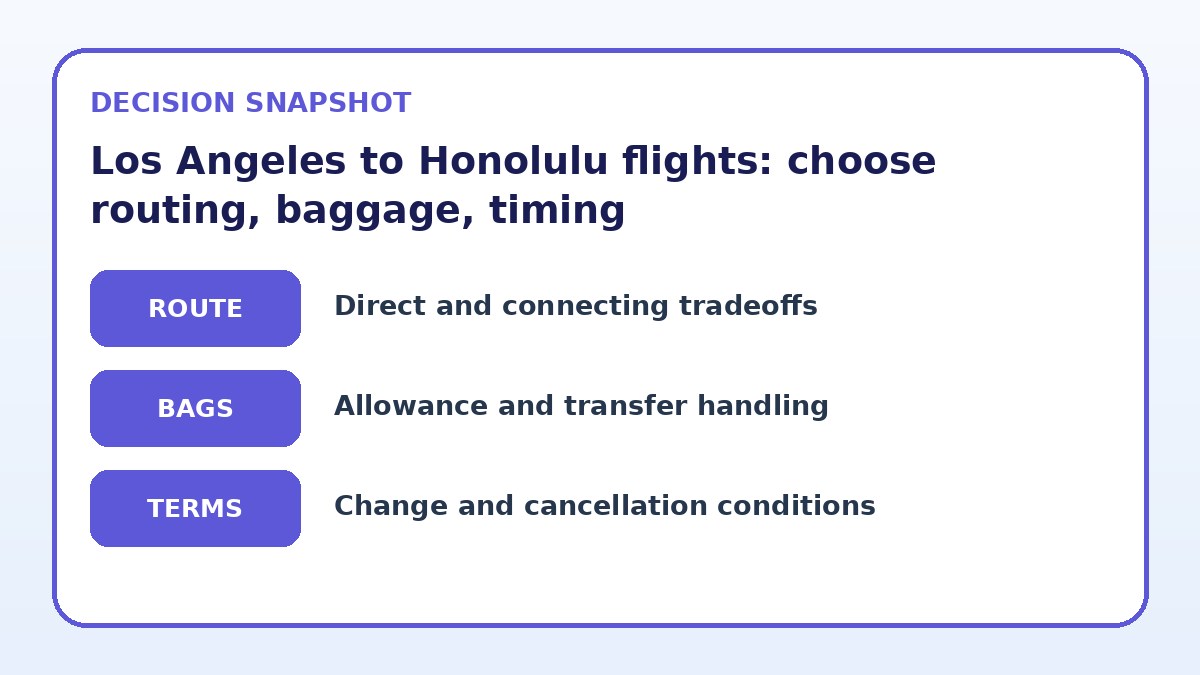
The main routing choice on Los Angeles to Honolulu trips is typically a direct nonstop versus a one-stop itinerary. Nonstops keep you within two airport movements: depart Los Angeles and arrive in Honolulu, which reduces the chance of missed connections and lowers the number of times baggage is handled. If your priority is time efficiency or minimizing the stress of transfers, a nonstop usually wins. However, direct flights can be scheduled at less convenient hours or priced higher; that tradeoff matters most when you have flexible travel dates.
Connecting flights introduce at least one additional airport interaction, which increases total travel time and means baggage may be transferred between carriers or terminal areas. If you take a one-stop ticket, check whether the fare is on a single itinerary (protected connection) or two separate tickets; single itineraries typically include protection for missed connections, while separate tickets shift risk to you. Also compare total door-to-door travel time rather than just airborne time: a cheap connection might add hours waiting on the ground, which negates the monetary saving for many travelers.
Baggage planning and re-check risks
Before booking, list every traveler’s bags: number of checked pieces, their approximate weight, and carry-on items. Airline baggage allowances differ by fare class and carrier; some low-fare economy tickets exclude checked bags entirely or restrict carry-on size. For connecting itineraries, confirm whether checked luggage tags are issued through to Honolulu or must be claimed and rechecked at the connection airport. If you must recheck, allow time to collect bags, clear domestic transfer security or baggage claim areas, and return to the departure terminal.
If you plan to travel with specialty items — surfboard, oversize luggage, or bulky camera cases — check each airline’s rules and handling procedures during booking because oversized items often require prebooking and incur separate fees. For sensitive or valuable items, consider carrying them as cabin baggage where allowed and feasible. Label every checked bag with your contact information and place a copy of your itinerary inside each checked suitcase in case tags separate. Finally, read the carrier’s final booking page for exact weight limits, dimensions, and fees before you pay; policies can change and the booking page is authoritative.
Compare flight-selection strategies
| Flight strategy | Best for | Risk to check |
|---|---|---|
| Book nonstop, higher fare | Travelers prioritizing time savings and fewer baggage/connection risks | Usually pays more upfront and may offer fewer convenient departure times |
| Book one-stop on a single itinerary | Those wanting lower fares with airline-protected connections | Longer total travel time and more baggage handling, but missed connections are generally covered |
| Mix separate tickets for segments | Flexible planners aiming to minimize cost by combining carriers | Higher risk: you must recheck bags and handle missed connections yourself |
| Choose flexible fare with generous change rules | Travelers needing schedule flexibility or uncertain dates | Greater initial cost but saves time and stress if plans change |
Recheck the complete itinerary
Confirm airports, connection handling, baggage, and change conditions before deciding.
Schedule fit: building practical airport time
Work backwards from your desired arrival window in Honolulu to select flights that match your energy levels and on-arrival plans. If you prefer to land in daylight or need time to get to an onward reservation, choose flights that deliver you in that window. For departures from the Los Angeles area, allocate time for ground transportation to the airport given local traffic variability; rush-hour traffic or events near LAX can add large, unpredictable delays. Aim to arrive at the airport early enough to handle check-in and security lines, especially during holiday or peak travel periods.
For airport-side timing, a useful baseline is to allow extra time beyond the published check-in recommendation if you have checked bags, are traveling during busy periods, or are unfamiliar with the terminal layout. If you’re using curbside check-in or premium security lanes, factor those changes in. For connections, plan minimum connection times plus a buffer; if a tight connection is the only affordable option, weigh whether you can realistically make tight gate transfers given terminal sizes and potential delays. Remember that late-arriving passengers may face rebooking queues and missed-baggage complications.
Flight details to verify
- Write down exact travel dates, preferred departure airport (LAX or nearby) and arrival time window in Honolulu before searching fares.
- List the count, weight, and dimensions of each checked and carry-on bag; verify allowances on the airline’s final booking page.
- Decide whether nonstop convenience outweighs any extra fare by comparing total door-to-door travel time for each option.
- If choosing a connecting itinerary, confirm whether checked luggage is tagged through to Honolulu or must be claimed and rechecked.
- Allow extra time for airport arrival from home for traffic, check-in, and security, especially if you must drop checked bags.
- Before payment, read the fare’s change and cancellation rules and confirm whether connection protection applies on the carrier’s site.
Fare conditions, protections and what to verify
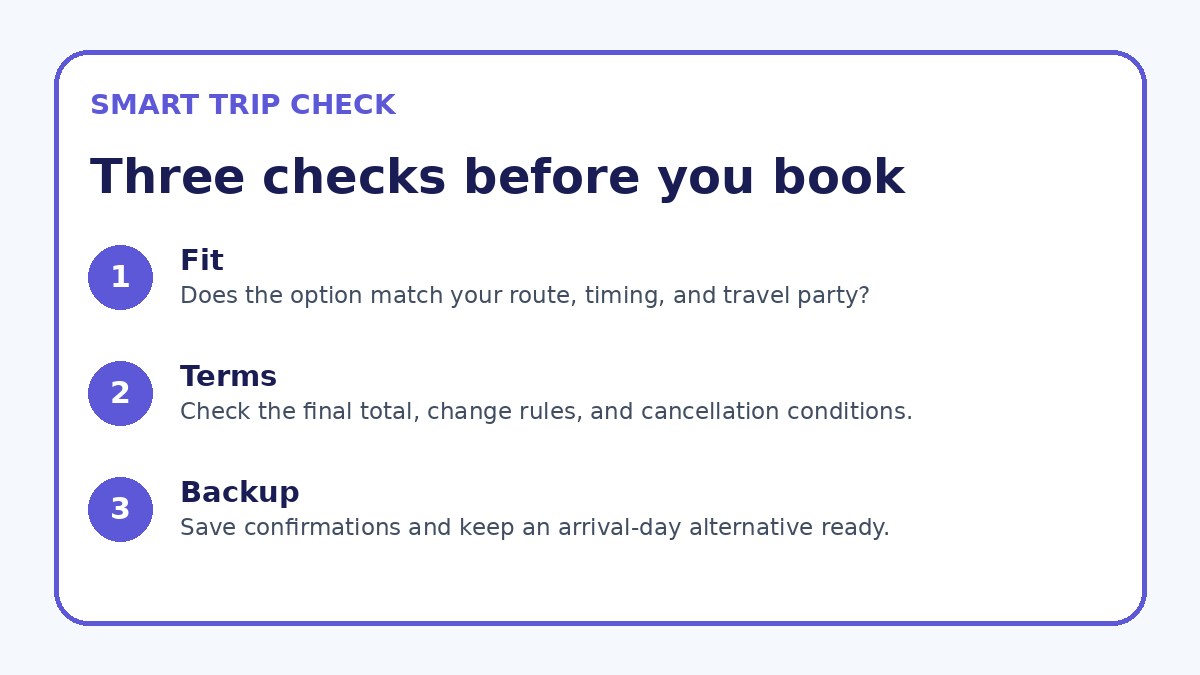
Fare conditions govern changes, cancellations, and baggage allowances — they also determine whether a disrupted itinerary will be rebooked at no extra cost. Before you purchase a Los Angeles to Honolulu flight, read the fare rules on the airline or travel agent booking page. Look specifically for change and cancellation fees, waiver rules for irregular operations, and whether the fare allows name changes or refunds. If you anticipate schedule flexibility, prioritize fares with free or low-cost changes even if the upfront price is higher.
When comparing offers, verify the operating carrier and whether the itinerary is marketed versus operated by different airlines; that affects who handles baggage and irregular operations. Also confirm whether the quote includes all required taxes and the baggage allowance for each passenger; don’t assume a refundable or flexible fare if it isn’t explicitly labeled. Lastly, check whether the ticket provides connection protection for missed flights, and if booking through a third party such as Trip.com, verify the final terms on the airline’s own page before completing payment.
Flight Guide questions travelers ask
How much time should I allow at LAX before a Los Angeles to Honolulu flight?
Aim to arrive at the airport earlier than the airline’s minimum check-in recommendation if you’ve never used that terminal. For first-time flyers departing LAX with checked luggage, allow at least 90 to 120 minutes before scheduled departure during normal hours; add more if traveling at peak times, with family, or needing to park. If you only have carry-on and have checked in online, you can shorten that time, but still factor in unpredictable security wait times and transit time from parking or drop-off zones to the terminal.
Will my checked bag automatically transfer on a connection to Honolulu?
It depends on whether your itinerary is on a single ticket and whether carriers have interline agreements. If your booking is one itinerary with connecting flights, checked luggage is often tagged through to the final destination; if you booked separate tickets, you typically must collect and recheck bags. Always verify baggage tag routing during check-in and confirm it on the carrier’s booking page. If the connection requires terminal changes, build extra time to retrieve and re-deposit checked items.
How do baggage fees and size limits affect seat selection and carry-on planning?
Baggage allowances can influence the overall cost and convenience of a ticket: a fare that appears cheaper may exclude checked bags or limit carry-on size, forcing you to purchase upgrades or pay fees at the airport. Before selecting seats, decide whether you’ll gate-check any carry-ons to avoid overhead competition on full flights. Check the airline’s published dimension and weight limits on the booking page; if you need extra cabin space for medical or fragile items, reserve a seat and contact the carrier directly to arrange appropriate handling.
Final decision note
Start your Los Angeles to Honolulu flight planning by collecting the concrete facts: exact dates, departure airport, number and size of bags, and arrival time preference. Use those details to weigh nonstop convenience against lower-fare connecting options, remembering that connections increase baggage handling and transfer risk. Verify baggage allowances, size limits, and change/cancellation rules on the airline’s final booking page before you complete payment, and build realistic buffers for traffic, check-in, and security at LAX. If you want a single place to compare live options, Trip.com can be used to view availability, but always confirm final fare rules and baggage allowances with the operating carrier before you buy.
Continue planning
Check current options and final conditions
Use the provider page to confirm live availability, the final total, cancellation terms, and every condition that matters to your trip.
This evergreen planning guide was created with AI-assisted drafting and a structured quality review. It does not display live prices, schedules, availability, visa guidance, or provider rankings. Verify current details before booking. Some links are affiliate links; we may earn a commission at no additional cost to you.