Practical answer first: for most couples visiting central Seoul, public transport—subway, buses, and taxis—is the simpler, faster choice; rent a car mainly if you plan day trips outside Seoul, want privacy for late-night travel, or are carrying bulky gear. Choosing between driving and public transport depends on your itinerary, comfort with unfamiliar roads, and how much you value flexibility versus convenience. Couples who want romantic, low-stress city time usually favor public transport paired with occasional taxis or ride-hailing. Those planning to explore Jeju, the DMZ area tours, nearby mountains, or multiple small towns will find a car more useful. Below I’ll explain tradeoffs, help you decide where to base your stay depending on the choice, and list the checks to do before booking either a car or central accommodation.
When public transport is the smarter couple’s choice
Seoul’s subway and bus network connects most central neighborhoods, attractions, and many suburbs. For couples planning a short urban stay—museums, palaces, shopping districts, Han River strolls and evenings in Hongdae, Itaewon, or Gangnam—the system keeps you moving without the overhead of parking or dealing with one-way streets. Subways are frequent, simple to navigate with English signage at major stations, and remove the stress of unfamiliar driving. Public transport also makes evenings easier: taxis and ride-hailing cover short late-night trips, and you can drink responsibly when you are not the designated driver.
Public transport is also efficient for couples who want to split priorities between relaxed city mornings and lively nights. Use the subway to reach different neighborhoods quickly, then enjoy leisurely walks together once you arrive. If you have mobility concerns or are carrying a lot of shopping, plan your base near elevators and a main station entrance. When sightseeing requires many short hops inside the city, public transit will usually save time and let you relax rather than waste time searching for parking or dealing with congestion.
When renting a car makes sense for couples
Consider renting if your couple’s trip emphasizes day trips beyond Seoul’s center: national parks, scenic coastal drives, rural temples, or multiple small towns on the same day. A car gives flexibility for spontaneous stops, timing choices for sunrise or sunset, and comfort when carrying hiking gear or photographic equipment. It also suits couples who prefer privacy for long transfers or want to avoid the constraints of tour timetables. If you enjoy designing an itinerary of offbeat spots, a car can turn a long, logistically complex day into a romantic road trip at your own pace.
However, driving in Seoul itself can be stressful: dense traffic, unfamiliar signage, and limited parking near popular neighborhoods. If you do rent, plan mixed use—keep accommodation central for city days and pick up the car only for planned excursions. Verify driving rules, required permits for foreign drivers, toll systems, and what insurance and fuel policies the rental company offers before booking. Also check parking options where you plan to stop; some scenic areas have limited lots that fill early on peak days.
| Approach | Best for | Tradeoff to check |
|---|---|---|
| Public transport (subway, buses, taxis) | Couples focused on city sightseeing, dining, and nightlife without parking hassle | Less flexibility for multi-stop day trips outside Seoul; dependent on schedules and transfers |
| Rent a car for day trips | Couples wanting flexible itineraries to nearby towns, parks, or coastal areas | Added responsibility for driving, parking, and route planning; more logistics to manage |
| Hybrid approach (stay central; rent selectively) | Couples who want best of both: easy city days and self-driven day trips | Requires extra planning—pickups, returns, and accommodation with parking arrangements |
| Taxis and ride-hailing without renting | Couples seeking late-night convenience and door-to-door travel without driving | More expensive than public transit for many short rides and limited for long day trips |
Where to stay depending on your transport choice
If you choose public transport, prioritize neighborhoods with easy subway access and good walking options. Areas like Jongno, Myeongdong, Insadong, and Hongdae provide compact access to major sights and lively dining options within walking distance. Staying near a major interchange simplifies late returns and makes it easier to split activities if each person wants a different morning. Look for accommodations with clear instructions for the nearest station entrance and note elevator locations if steps are a concern. For sightseeing by foot, a central base shortens travel time and increases spontaneity.
If you plan to rent a car for day trips, pick a hotel that balances city access with easy car pickup and parking. Choose places near a major highway exit or car rental hub so you won’t drive through heavy urban traffic first thing in the morning. Confirm whether your lodging offers secure on-site parking or has an arrangement with a nearby lot; downtown parking can be scarce and expensive. Consider staying slightly outside the densest central blocks where streets are less chaotic but still a short subway ride from attractions for your non-driving days.
Before you book
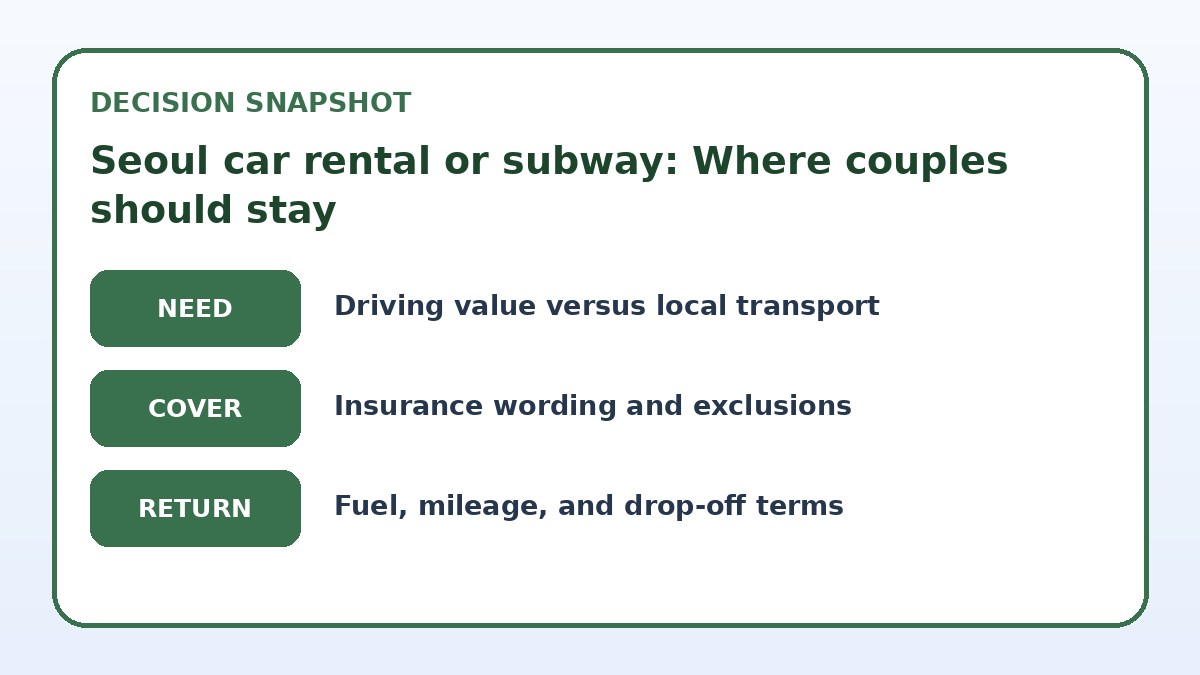
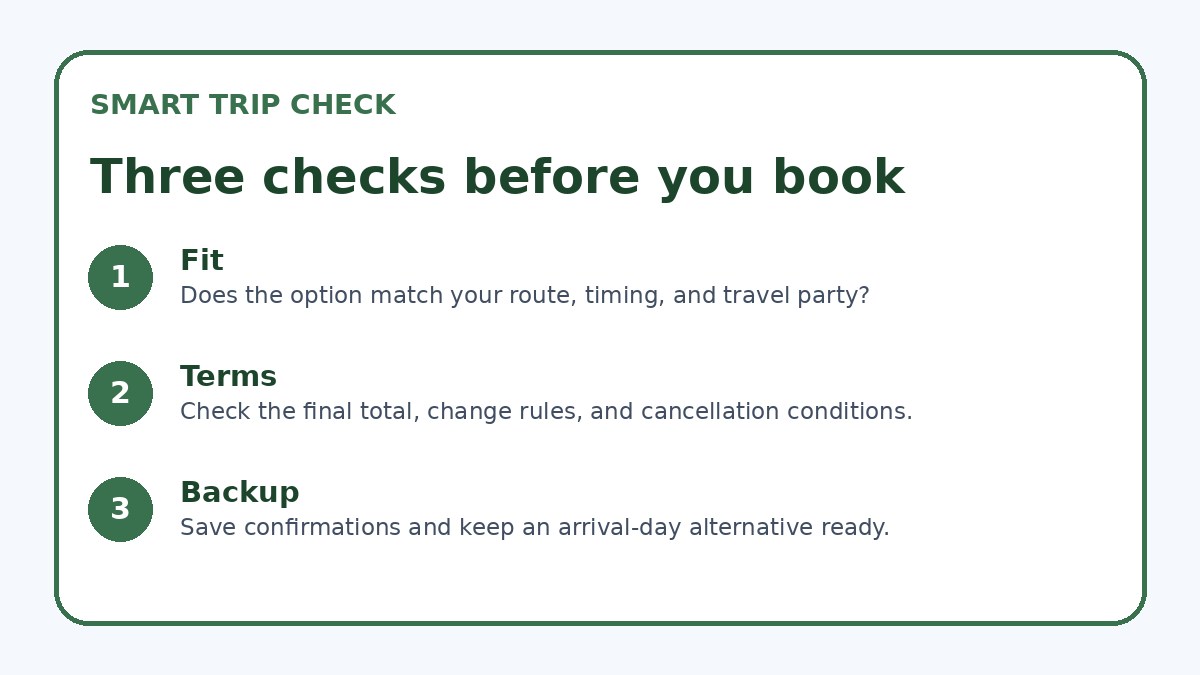
- Map your daily itinerary and mark which days need a car for out-of-city stops before booking any rental.
- Confirm what driver’s documentation (foreign license, IDP) and credit card are required on the rental provider’s final booking page.
- Choose accommodation with clear parking details if you will pick up a car; verify on the hotel or rental page how parking is arranged.
- Check subway line access and station exits for your shortlisted hotels so evening and early-morning travel is straightforward.
- Decide who will handle navigation and tolls in the car; download an offline map or navigation app to avoid being stuck without service.
- Compare travel insurance and rental insurance coverage carefully and confirm what incidents are excluded on the provider’s terms page.
Costs, hassle, and safety tradeoffs for couples
Cost comparisons depend on itinerary. Public transport fares are predictable and usually cheaper inside the city for two people; you’ll avoid parking fees and many bridge or highway tolls. Using taxis for late nights or to reach a specific location can be cost-effective for short distances, and splitting a ride keeps it affordable. The main non-monetary benefit is lower stress: you don’t need to navigate, park, or keep an eye on local traffic customs, which can make the trip more relaxed and romantic.
Driving increases flexibility but adds responsibilities that affect the couple dynamic. You’ll need to manage navigation, fuel, parking and potential fines. For safety and legal reasons, confirm what license, IDP, or documentation rental companies require and whether your travel insurance covers driving in South Korea. If one partner will not drive, plan who will handle city driving versus country roads, and designate rest periods. A shared plan about navigation duties, music, and stop preferences keeps driving from becoming a source of friction on your trip.
Frequently asked questions
How hard is driving in Seoul for visitors?
Driving in Seoul can feel intense due to dense traffic, many lanes, and frequent lane changes. Central districts have heavy flows during peak hours and limited parking. Outside the central area, roads widen and driving becomes more relaxed. If you are comfortable with city driving and local signage, renting can be manageable; otherwise using the subway and taxis can reduce stress. Always verify rental company instructions, required documents, and insurance specifics on their booking page before committing.
Can a couple get by in Seoul without a car?
Yes—many couples visit Seoul entirely without a car. The subway and bus network covers most tourist sites, and taxis or ride-hailing services fill gaps, especially late at night. Staying near a major subway line makes moving between neighborhoods quick and saves time. For occasional excursions beyond the metro area, consider a one-day guided tour or a short rental, depending on how much flexibility you need. Check schedules and transfer details for any planned regional travel before you leave.
If we rent a car, what should we verify before pickup?
Before pickup, confirm the exact pickup location and hours, what identification and licenses are required, and whether an International Driving Permit is necessary. Verify what insurance is included and what optional coverage you might want, plus rules on cross-border travel if relevant. Ask about fuel policy, toll systems, and how to reach roadside assistance. Always read the rental company’s final booking page and terms so you know cancellation policies and any additional fees before you sign.
Final planning note
For most couples staying in central Seoul, public transport paired with occasional taxis tends to be the least stressful and most efficient way to travel—especially if your focus is dining, museums, nightlife and walking neighborhoods. Rent a car when your itinerary includes multiple off-city day trips, rural or coastal destinations, or when you want the privacy and timing control of a road trip. The practical compromise is a hybrid plan: stay central for easy city days and arrange a short rental only for the specific days you need it. Follow the checklist above, compare final provider terms (you can use Trip.com to view current options if you like), and make decisions based on your planned activities, patience for driving, and comfort with navigation.
Continue planning
Check current options and final conditions
Use the provider page to confirm live availability, the final total, cancellation terms, and every condition that matters to your trip.
This evergreen planning guide was created with AI-assisted drafting and a structured quality review. It does not display live prices, schedules, availability, visa guidance, or provider rankings. Verify current details before booking. Some links are affiliate links; we may earn a commission at no additional cost to you.