Short answer: many visitors benefit from a rental car in Queenstown, but not everyone needs one. If your plans include day trips across the region—wine valleys, Glenorchy, or Fiordland—or you want flexible departure times, a car usually unlocks more of the South Island without relying on fixed schedules. Conversely, if you plan to stay downtown, use guided excursions, or avoid driving in alpine conditions, public shuttles, local buses, and tours can cover the essentials. This article explains the tradeoffs—cost, convenience, driving difficulty, parking and where a car is clearly the better choice—so you can compare options and make a confident booking decision.
When a rental car is the right choice
A rental car becomes valuable when your itinerary includes dispersed attractions or starts and finishes away from Queenstown’s compact centre. Self-driving suits visitors who want to explore at their own pace — adjusting stops for scenery, photos, and winery visits — or who travel with family and carry gear like bikes or ski equipment. It also saves waiting for fixed-departure tours and allows spontaneous detours to lesser-known viewpoints and picnic spots that are harder to reach by shuttle.
Choose a car if your schedule includes early starts or late returns that clash with shared-transport timetables, or if your trip mixes multiple towns such as Wanaka, Cromwell, or Te Anau. Vehicles in the region also make it easier to reach trailheads and side roads where public transport is sparse. Finally, if you value privacy and comfort after long travel days, a hire car avoids the transfers and baggage juggling that can make a short trip feel rushed.
When to skip the rental car
Skipping a rental car can be smarter if you plan to use Queenstown as a single base with most activities booked as guided day tours. Popular excursions like Milford Sound or local adventure activities often include hotel pick-up and drop-off, which reduces the need for your own transport. Staying primarily within the compact town centre makes walking, cycling, and short taxi rides efficient. If you prefer not to drive unfamiliar mountain roads or want to avoid parking fees and finding secure overnight parking, public options could be more relaxing.
Budget-minded travelers should also weigh the hidden costs of a hire car: fuel, parking, insurance excesses, and potential one-way drop fees if returning the vehicle to a different location. Winter travelers who are uncomfortable with snow and ice driving may find guided transfers safer. Finally, if your itinerary is tightly scheduled around specific tour departure times, a rental’s flexibility may be unnecessary and possibly more expensive than group transport.
| Approach | Best for | Tradeoff to check |
|---|---|---|
| Rent a car for self-driving | Travelers wanting full flexibility and multiple day trips from Queenstown. | Higher total cost, parking hassle, and responsibility for alpine driving conditions. |
| Base in Queenstown and take guided tours | Visitors focused on convenience and single-day highlights without driving stress. | Less flexibility on timing and fewer opportunities for spontaneous detours. |
| Use shuttles and local buses | Budget travellers and those staying within the town centre and nearby suburbs. | Schedules limit itinerary choices and some scenic locations are harder to reach. |
| Combine car hire for part of the trip | Visitors splitting time between town-based days and independent regional exploration. | Requires careful coordination of pick-up/drop-off and may include one-way fees. |
Practical tradeoffs: cost, parking, and insurance
Rental cost is only part of the equation; budget for fuel, parking charges in town, tolls if applicable, and insurance options. Compare daily rental rates with aggregated transport costs—transfers, shuttle fares, and paid tours—to see which approach provides better value for your exact plan. If carrying bikes, skis, or large luggage, check provider policies and roof- or tow-mounted equipment options. Also consider vehicle size: compact cars are cheaper and easier to park, while SUVs give more comfort and likely better performance on gravel or in adverse weather.
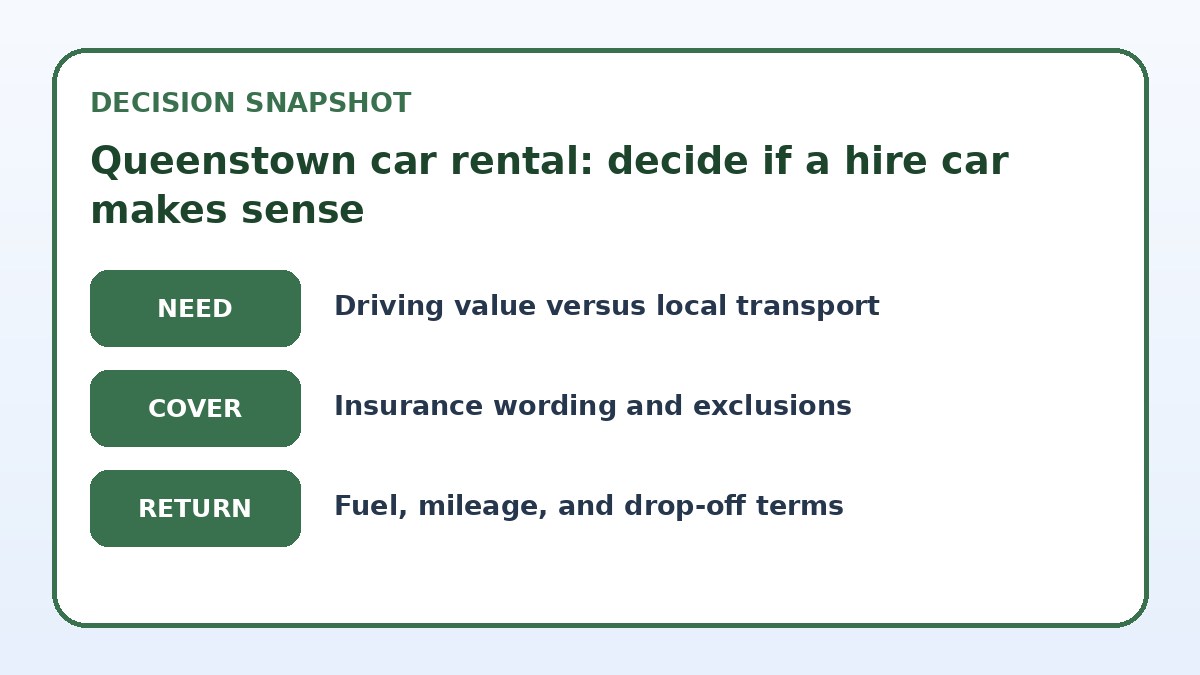
Insurance choices can alter the economics. Standard policies commonly limit liability but include large excess amounts; consider whether to pay for reduced excess or a third-party collision damage waiver through the rental company or a reputable insurer. Before booking, verify the rental firm’s fuel policy, mileage limits, and whether cross-island travel is permitted. When you reach the provider’s final booking page, confirm pick-up/drop-off locations, included kilometres, and the exact coverages offered to avoid surprises at the counter.
Before you book
- List your planned day trips and mark which require a car to reach trailheads, wineries, or remote viewpoints.
- Estimate total transport costs (rental, fuel, parking, insurance excess) and compare them to combined shuttle and tour prices for your dates.
- Check seasonal driving conditions and whether your planned routes might need snow chains or a higher-clearance vehicle.
- Confirm the rental’s pick-up/drop-off locations, mileage limits, fuel policy, and any one-way fees on the provider’s booking page.
- Decide what vehicle features matter—cargo space, roof racks, fuel type, or all-wheel drive—and filter options before booking.
- Plan parking at your accommodation and key stops; verify whether overnight parking is allowed or charged where you’ll stay.
Driving realities around Queenstown and season tips
Roads around Queenstown are scenic but can be narrow, winding, and sometimes steep; expect single-lane bridges on country routes and occasional gravel stretches. In summer, long daylight makes exploring comfortable, but tourist traffic can slow progress on popular sections such as the road toward Glenorchy or Arrowtown weekends. In winter, weather is the main variable: snow and ice can appear quickly at higher elevations. If you intend to drive in winter months, consider a vehicle with good traction and check whether snow chains are required for certain roads.
Plan realistic travel times—distances on maps don’t always reflect driving speed on winding alpine roads. Build in buffer time for stopping at viewpoints, for roadworks, or for slower traffic during holiday periods. If you are uncomfortable with seasonal conditions, book guided transfers for alpine passes or choose routes that stay at lower elevations. Always check local road conditions and transport service notices before you travel, and confirm any vehicle restrictions or chain requirements on the rental company’s final booking page.
Frequently asked questions
Is driving in Queenstown difficult for overseas visitors?
Driving in and around Queenstown is manageable for drivers comfortable with left-side driving and narrow, winding roads. Town streets are easy to navigate, but regional routes include steep gradients and occasional gravel sections. Seasonal challenges—winter snow and ice—raise complexity, so if you’re unfamiliar with mountain driving, consider guided transfers or a hire vehicle with good traction and winter equipment. Allow extra time for each trip, practice simple maneuvers in low-traffic areas, and confirm any local driving restrictions on the rental company’s final booking page.
Can I rely on public transport and tours instead of a rental car?
Yes. Queenstown has regular local buses, private shuttles, and an extensive network of day tours that serve major attractions. For visitors staying in the town centre and planning guided activities like Milford Sound cruises or adventure excursions, public transport and tours can be convenient and cost-effective. However, some scenic backroads and smaller wineries are difficult to reach without a car. Compare the convenience and departure times of tours with the flexibility a car gives, and check current schedules and pick-up arrangements with providers before deciding.
What should I check with rental companies before I book?
On the provider’s final booking page verify the exact pick-up and drop-off points, included kilometres, fuel policy, insurance coverage and any excess amounts, and restrictions on where the vehicle may travel. Ask about additional driver fees, equipment such as roof racks or child seats, and one-way drop charges if you plan to return the car to a different town. Also confirm whether cross-island travel is allowed and whether any temporary local regulations or chain requirements apply. If anything is unclear, contact the company directly to get it in writing before you finalize the booking.
Final planning note
Deciding whether to rent a car in Queenstown comes down to your itinerary, comfort with alpine driving, and how much flexibility you value. Choose self-drive when multiple day trips, remote stops, or equipment transport are central to your plan. Opt for tours and shuttles if you prefer convenience, fixed schedules, or want to avoid weather-related driving responsibilities. Many travelers find a blended approach—renting a car for a few days and using tours on other days—gives the best balance. Before you commit, list exact destinations, compare full transport costs, and verify all rental terms on the provider’s booking page so there are no surprises at pick-up.
Continue planning
Check current options and final conditions
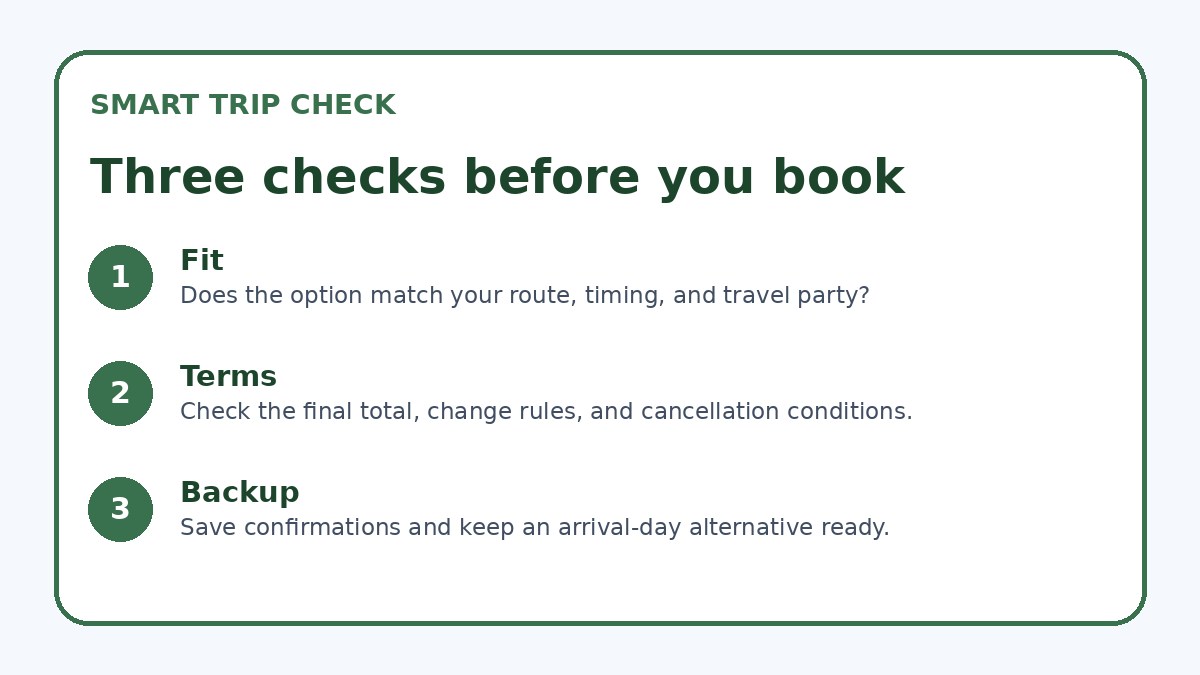
Use the provider page to confirm live availability, the final total, cancellation terms, and every condition that matters to your trip.
This evergreen planning guide was created with AI-assisted drafting and a structured quality review. It does not display live prices, schedules, availability, visa guidance, or provider rankings. Verify current details before booking. Some links are affiliate links; we may earn a commission at no additional cost to you.