For business travelers, the core decision on Melbourne to Queenstown flights is not only schedule and travel time but how easily you can change or cancel when plans shift. The practical answer: prioritize fare classes and flexible policies over a marginally cheaper ticket if your meeting dates or attendees are likely to change. Start by deciding whether you need fully refundable or change-permitted fares, then compare connection risk and baggage rules that affect rerouting options. Before booking, have exact travel dates, the traveler’s full name as on passport, and company payment or approval details ready. Verify the airline’s change fees, the refund process, timing for credits, and whether fare differences apply on the final booking page; if you want a quick marketplace check, Trip.com can be used to compare availability and the presented policy language.
See live routes for your exact travel day
Compare direct and connecting choices with the same baggage and traveler details.
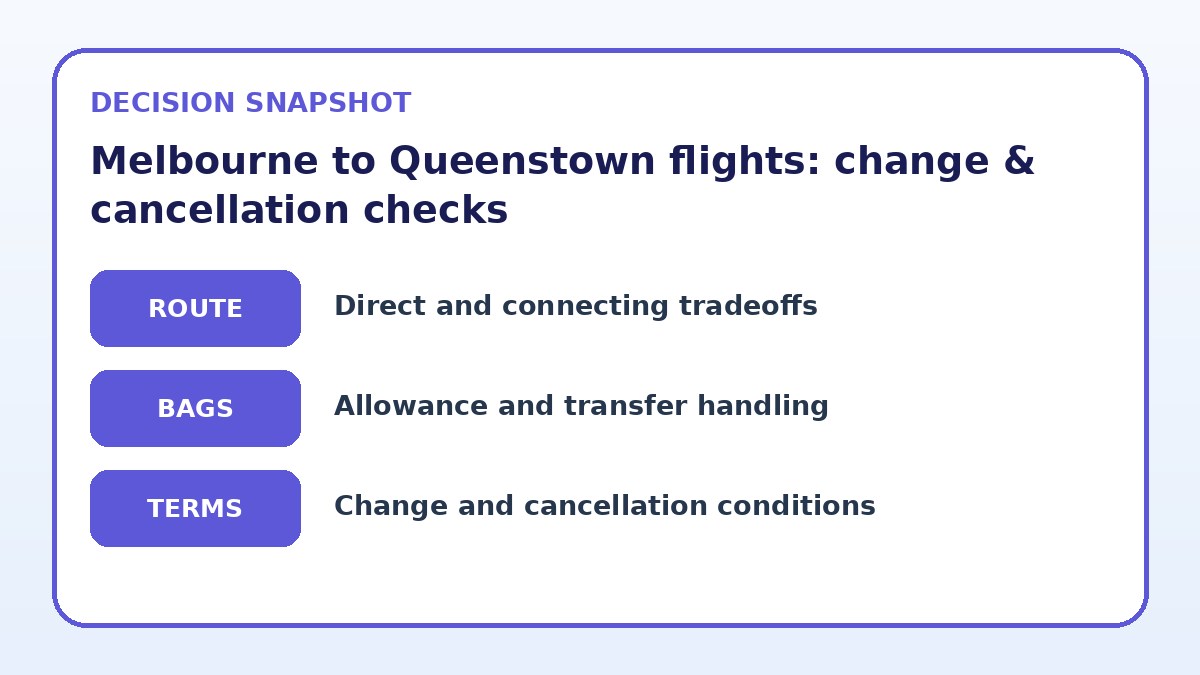
Routing: direct versus connecting options and how changes behave
Melbourne to Queenstown itineraries can include one or more connections depending on airline and schedule. For a business traveler, the routing tradeoff is simple: fewer connections reduce the points of failure when flights are disrupted or when you need to change dates. A single-connection itinerary typically means fewer separate tickets and one fare rule set to negotiate for changes or refunds; connecting itineraries with different carriers or separate tickets increase the chance you’ll need to manage multiple policies and pay separate change fees. When checking options, identify whether the booking is through a single airline or a codeshare/partner combination—this determines who controls rebooking and how protective your ticket is when an upstream change occurs.
If you anticipate potential date shifts, prefer itineraries sold as a single ticket with through-checked baggage and protected connections. These allow the operating carrier to reroute you under the same fare conditions more easily. Conversely, if the itinerary is built from separate tickets (common when mixing low-cost legs), changing one segment may not compel the other carrier to accommodate you; you could face full-price rebookings. On the provider’s final booking screen, confirm whether the itinerary lists a single ticket number, which carrier handles each segment, and any minimum connection times that could affect recovery options during disruptions.
Baggage and connection risk: how fees and hold times affect flexibility
Baggage rules interact directly with change and cancellation risk. If your fare includes checked bags, a single-ticket booking typically moves baggage through to the final destination, reducing the need to pick up and re-check bags during a connection. That lowers the chance of missed onward flights and simplifies rebooking when a delay occurs. For business travelers carrying laptop bags and one checked bag, consider fares that guarantee at least one piece checked—if you must switch flights at short notice, that included allowance reduces surprise costs and administrative steps required to reroute your luggage.
Conversely, low-fare or basic economy-style tickets often exclude checked baggage and limit changes; these restrictions can make last-minute rebookings both more expensive and slower. Also verify minimum connection times and whether an itinerary requires self-transfer; tight transfer windows increase the odds of missed connections that trigger full rebooking under separate tickets. On the booking page, verify whether baggage is included, how many segments the baggage allowance covers, and any notes about self-transfer or through-baggage—these details determine how easy it will be to modify your trip on short notice.
Compare flight-selection strategies
| Flight strategy | Best for | Risk to check |
|---|---|---|
| Buy a flexible/business fare with change-free rebooking | Frequent date changes and high-value meetings | Higher upfront cost but minimal headache when plans move |
| Purchase a standard refundable fare | If cancellations are likely and refunds are required to company accounting | Refundable fares are more expensive and may still have processing times |
| Choose the cheapest non-refundable fare with added travel insurance | Predictable itineraries where change risk is low and insurance covers cancellations | Insurance may not cover all change fees or missed-connections caused by separate tickets |
| Book a mixed itinerary (cheap connecting legs) for lower base fare | When saving cost outweighs change convenience and you accept self-transfer risk | Multiple policies and higher rebooking costs if any single segment changes |
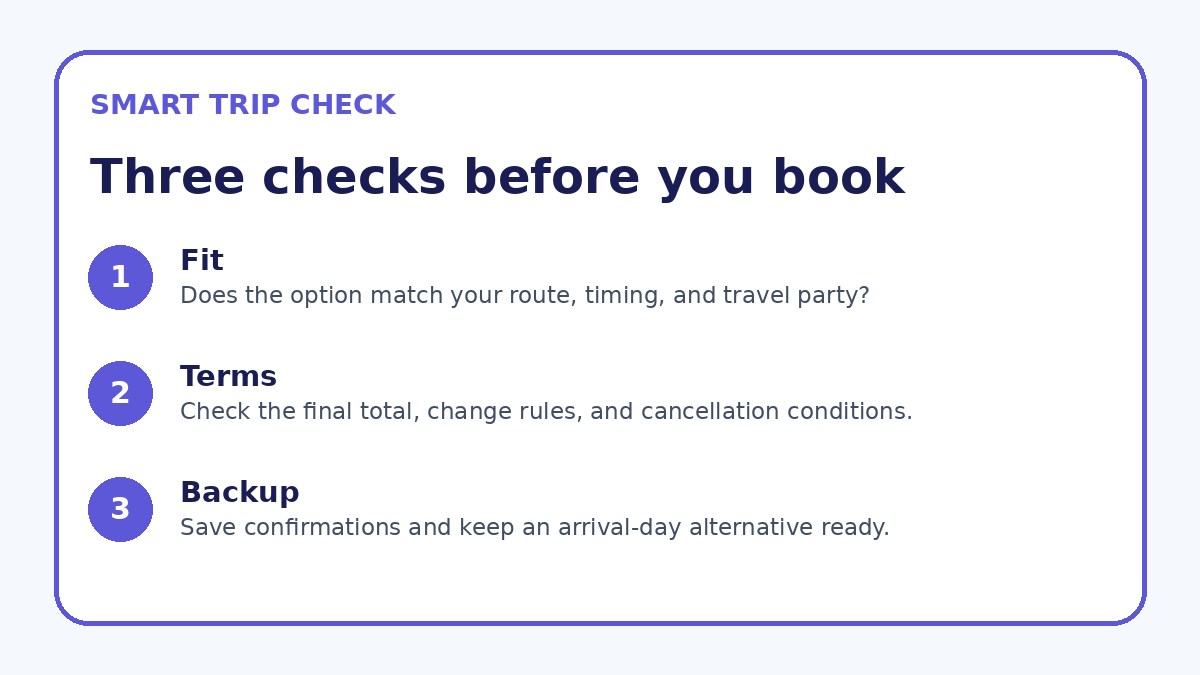
Recheck the complete itinerary
Confirm airports, connection handling, baggage, and change conditions before deciding.
Schedule fit and business needs: timing, standby, and corporate rules
Business travel decisions are about schedule confidence. For Melbourne to Queenstown, flights timed around morning meetings, evening arrivals, or same-day return options can influence whether you need the option to change without penalty. If your schedule is rigid but occasionally shifts, choose a fare that allows same-day changes or reduced change penalties to preserve your day. Also check whether the airline permits standby or same-day confirmed changes for a fee or complimentary status benefit; those policies can salvage a schedule without a full reissue when an appointment shifts by hours rather than days.
Corporate travel programs and credit card protections can modify the practical value of fare flexibility. Some companies negotiate corporate change terms or allow agency-managed modifications with negotiated fees; others rely on employees to follow standard published rules. Before booking, consult your travel policy and, if using a corporate card or travel agency, confirm who will handle change requests, how approvals are obtained, and whether the agency can rebook under negotiated corporate terms. The booking page and your corporate travel office should be the final verification points for any special change or standby provisions.
Flight details to verify
- Confirm full passenger name, travel document details, and company billing before you start booking.
- Open and read the full fare rules on the final airline or booking-agent page; screenshot or save the text for later reference.
- Verify whether the ticket is a single ticket number covering all segments or multiple separate tickets.
- Check baggage allowance and whether checked bags are through-checked to Queenstown on the ticket.
- Ask your travel manager or corporate travel agency about negotiated change fees or standby privileges before purchase.
- Record the airline’s stated refund process (credit vs. refund to card) and the expected processing timeline shown on the booking page.
Fare conditions: reading rules, refunds, credits, and what to verify
Fare conditions are the decisive factor for business travelers who may need to change or cancel. Look for the fare class code and the rules summary on the booking page—these reveal whether changes are allowed, what change fees apply, and how refunds or travel credits are processed. Some flexible fares offer fee-free changes with payment only of any fare difference; others impose fixed penalties or require travel credits that expire. Confirm whether refunds are issued to the original form of payment or as airline credit, the credit’s expiry, and whether taxes and fees are refundable if you cancel.
When evaluating listings, open the fare rules fully rather than relying on summary lines. Verify who issues refunds (operating carrier vs. ticketing carrier), how long the refund process takes, and whether rebooking can be made online or requires an agent. If your company needs traceable refunds or chargebacks, ensure the airline supports a documented process your finance department accepts. Always copy the fare rule text or screenshot the final booking policy before purchase; this is what customer support will reference in any later dispute or reissue.
Flight Guide questions travelers ask
How do I know if a Melbourne to Queenstown ticket allows free changes?
Tickets that permit fee-free changes will state the change policy in the fare rules and on the booking confirmation—look for phrases like “changes permitted without fee” or “no change fee.” However, fee-free changes still often require payment of any fare difference between the old and new flights. Always expand and read the full fare rules on the airline or agent’s final booking page; the summary line can omit restrictions, blackout dates, or limitations on routing changes. If in doubt, contact the carrier or your corporate travel agent to get written confirmation of the exact terms you will rely on.
If I book two separate tickets to save money, what change risks should I expect?
When segments are on separate tickets, each ticket follows its own fare rules—if one flight is delayed or canceled, the carrier of the unaffected segment is not obligated to rebook you or protect you on the next flight. That can lead to paying full fare for a replacement segment, inability to hold baggage through to the final destination, and more complex refund processing. For business travel, this increases administrative burden and potential costs. If you decide on separate tickets, allow generous connection time, buy flexible legs where possible, and consider travel insurance for missed connections due to covered delays.
What should I verify on the booking page before completing a corporate booking?
Before finishing payment, confirm the full fare rules, whether changes or cancellations incur a fee, and whether refunds are issued to the original card or as airline credit. Check the ticketing carrier and whether the itinerary is a single ticket number. Verify baggage allowances, any included seat benefits, and minimum connection times. Also ensure passenger name exactly matches travel documents and that the booking uses the correct corporate billing or fare code. Save or screenshot the final policy language displayed on the booking page—this is your reference if you need to dispute fees or request a reissue.
Final decision note
For business travelers on Melbourne to Queenstown flights, the most practical approach is to prioritize predictable change and cancellation terms over minimal upfront cost. Decide whether you need refundable tickets, flexible change allowances, or simply solid connection protection, then compare itineraries as single-ticket versus separate-ticket purchases. Confirm baggage rules, who issues refunds, and corporate policy coverage before you pay. Keep passenger and billing details ready to speed the process, and save the fare rule text from the final booking page. That preparation protects you and your company from disruption and makes rebooking straightforward if meetings move.
Continue planning
Check current options and final conditions
Use the provider page to confirm live availability, the final total, cancellation terms, and every condition that matters to your trip.
This evergreen planning guide was created with AI-assisted drafting and a structured quality review. It does not display live prices, schedules, availability, visa guidance, or provider rankings. Verify current details before booking. Some links are affiliate links; we may earn a commission at no additional cost to you.