If you and your partner are flexible by a few weeks or willing to accept mixed weather, shoulder seasons in Ho Chi Minh City can unlock quieter streets and better value. Before you judge a package’s worth, compare the same travel dates, the same travelers, identical inclusions (flights, hotels, transfers, activities), and cancellation or change terms. That side-by-side comparison shows whether a bundle truly packages savings or simply repackages costs with less flexibility. This guide walks couples through what to check, how to weigh inclusions versus freedom, and the questions to ask on the booking page so you leave nothing to guesswork. Use the checklist at the end to confirm key contract details before you click pay.

Test package value fairly
| Booking approach | Best for | Tradeoff to check |
|---|---|---|
| All-in-one package (flight + hotel + transfers + tours) | Couples wanting a turn-key, low-planning trip and predictable logistics. | Often less flexible and changes to one component can affect the whole bundle. |
| Flight + hotel bundle with add-on activities | Couples who want core components locked in but keep activity choices open. | Bundled pricing may limit activity refunds and can hide variation in tour quality. |
| Separate flight and hotel bookings, reserve transfers and tours individually | Couples prioritizing flexibility to modify parts of the trip without rebooking everything. | Requires more research and coordination; may miss small bundled conveniences. |
| Hotel-first booking with pay-as-you-go flights and activities | Couples who want a reliable base and maximum spontaneity for day-to-day plans. | Potentially higher flight costs and less protection if you need coordinated changes. |
Check current package and separate options
Use identical dates, travelers, room needs, baggage, and flexibility so the comparison stays meaningful.
What to compare first when judging a package
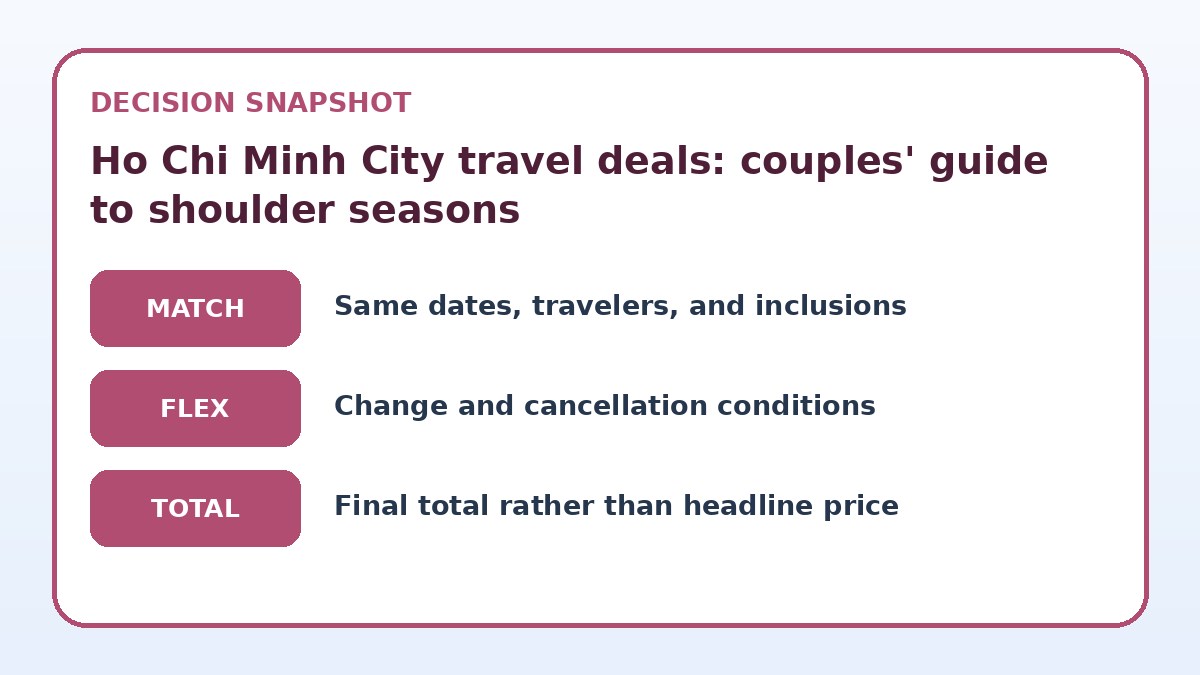
Start by lining up the exact same elements for both package and separate booking scenarios. That means matching travel dates, number of travelers, seat and room classes, baggage rules, meet-and-greet or transfer services, and included activities. If a package advertises breakfast or a city tour, confirm frequency, timing, and whether the tour is private, group-based, or subject to minimum participants. Don’t assume packages automatically include the same airport transfers or taxes—these are frequent sources of surprise fees at checkout.
Next, bring cancellation and change terms into the comparison. Packages sometimes require all or part of the itinerary to be altered together, while separate bookings let you change one piece—flight or hotel—without affecting the other. For couples balancing work schedules, pregnancy, or family commitments, the ability to modify only the affected reservation is often more valuable than a small upfront saving. When in doubt, open the supplier’s final booking page and copy the specific change and refund language to compare apples to apples.
Inclusions: what genuinely adds value for couples
For couples, inclusions that reduce daily friction often add the most value: priority airport transfers, late check-out for relaxed mornings, a welcome amenity timed to your arrival, and at least one private experience—cooking class, private river cruise, or a guided neighborhood walk. Group excursions or breakfast-only offers can be useful but check the scale and scheduling: a morning tour starting before you arrive or a buffet breakfast tied to inconvenient hours isn’t helpful. Also verify whether included experiences allow both partners to participate together or limit accompanying guests.
Look beyond the headline and confirm operational details on the supplier’s booking page. For example, if a package includes an evening city tour, confirm the meeting point, duration, and whether English-language guides are available. Verify whether transfers are shared shuttles or private cars and whether luggage handling is included. These specifics are what turn a promising inclusion into practical convenience or into a mismatched expectation that costs time and money on arrival.
Look past the headline total
Compare inclusions and change conditions before deciding whether a package is genuinely useful for this trip.
Deal comparison checklist
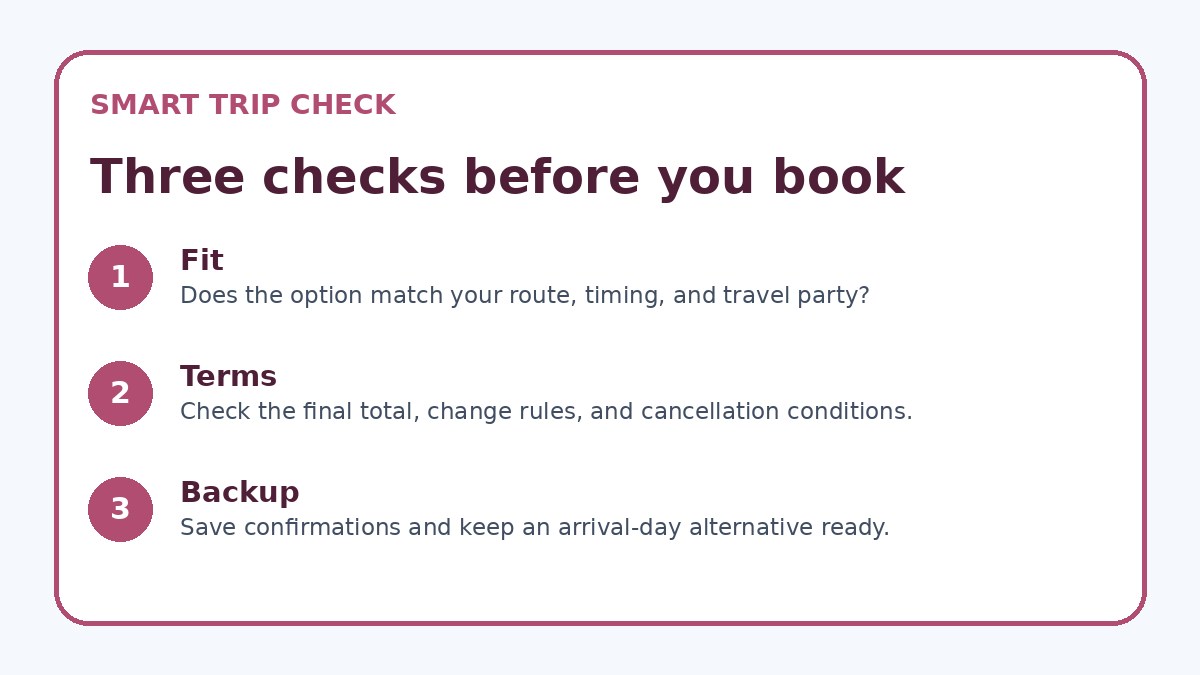
- Match travel dates, traveler names, room type, and baggage allowances between package and separate quotes before comparing prices.
- Copy and compare exact cancellation and change policy language from each supplier’s final booking page.
- Confirm whether airport transfers are private or shared, pickup windows, and any waiting or late-arrival fees.
- Verify what each included activity actually provides—duration, group size, language, and meeting point.
- Check currency and tax treatment on the payment page to identify fees added at checkout.
- Ask the supplier how they handle day-of emergencies and get a direct contact or support procedure in writing.
Flexibility and traveler-specific value
Every couple has different tolerance for schedule rigidity. If you both want spontaneity—late nights, last-minute plans, or switching neighborhoods—separate bookings usually offer easier adjustments. If your priority is a low-fuss milestone trip with everything prearranged, a package that bundles airport pick-up, a centrally located hotel, and a few organized activities may reduce planning stress. Evaluate how likely you are to change dates or passengers; the more likely, the more valuable flexible ticket or refundable rates become.
Consider health, mobility, and personal travel styles. Packages that include private transfers and easy-room access might be worth a premium for partners with mobility concerns. Conversely, couples who enjoy local discovery may prefer booking accommodations and a couple of activities separately, leaving room to choose neighborhood restaurants or street food finds on the fly. Always check whether included services can be downgraded, upgraded, or transferred to another date without penalty.
Final terms to verify before booking
On the provider’s final booking page, read the cancellation, amendment, and refund policies line-by-line. Note deadlines for free changes, any non-refundable deposit requirements, and whether changing one component forces re-pricing of the entire bundle. Confirm which currency charges will be processed in and whether taxes, resort fees, or city charges are included or added at payment. If a third-party operator provides an activity, identify the operator and verify their cancellation terms as well.
Also check practical arrival details: how airport transfer timing is handled for late or early flights, whether the hotel holds rooms for late check-in, and the provider’s contact method for day-of issues. If pre-paid activities require vouchers or specific meeting times, ensure those are issued electronically and transferable between travelers. If you want an extra verification resource, compare availability and contract language on a reputable aggregator such as Trip.com, but rely on the supplier’s booking page as the final authority.
Travel Deals & Booking Strategy questions travelers ask
When are Ho Chi Minh City’s shoulder seasons and how do they affect deals?
Shoulder seasons fall between the city’s wet and dry periods, typically meaning fewer tourists and softer demand for rooms and tours. That can produce better availability and more negotiating room for room upgrades or evening activities. However, weather variability increases, so couples should plan weather-flexible activities and confirm refundable terms for key bookings. Rather than relying on advertised discounts, compare identical itineraries across providers and verify cancellation rules on the booking page before committing.
Are bundled transfers and pre-booked activities worth it for couples?
Bundled transfers and one or two pre-booked activities can reduce arrival stress and create ready-made memories—valuable if you prefer a low-fuss trip. For couples who treasure spontaneity, the cost of convenience might not outweigh the flexibility lost. Decide based on how likely you are to arrive late, how comfortable you are navigating the city, and whether included activities match your pace. Always check whether bundled items are refundable or transferable, and whether private options exist if privacy matters to you.
How can couples avoid false savings when evaluating packages?
Avoid false savings by comparing like-for-like: same dates, same room category, identical baggage rules, and equivalent refunds. Look at the total cost after taxes and fees, not just the headline price. Confirm whether a bundle’s quoted price requires non-refundable deposits or forces re-pricing if one traveler cancels. If possible, get the supplier’s full terms in writing and, for a cross-check, look at availability and contract wording on a reputable aggregator such as Trip.com while treating the supplier page as authoritative.
Final decision note
Couples planning Ho Chi Minh City travel during shoulder seasons should prioritize a careful comparison of inclusions, flexibility, and final booking terms. Bundles can simplify logistics and provide conveniences that matter most to two people traveling together, but only when the included items match your needs and change policies align with your schedule risks. Conversely, separate bookings give more freedom to pivot and customize, which may be preferable if you value spontaneity. Use the checklist to verify identical conditions across quotes and read the supplier’s booking page thoroughly before you pay—clarity on cancellation, transfers, and included services will save time and disappointment once you arrive.
Continue planning
Check current options and final conditions
Use the provider page to confirm live availability, the final total, cancellation terms, and every condition that matters to your trip.
This evergreen planning guide was created with AI-assisted drafting and a structured quality review. It does not display live prices, schedules, availability, visa guidance, or provider rankings. Verify current details before booking. Some links are affiliate links; we may earn a commission at no additional cost to you.